
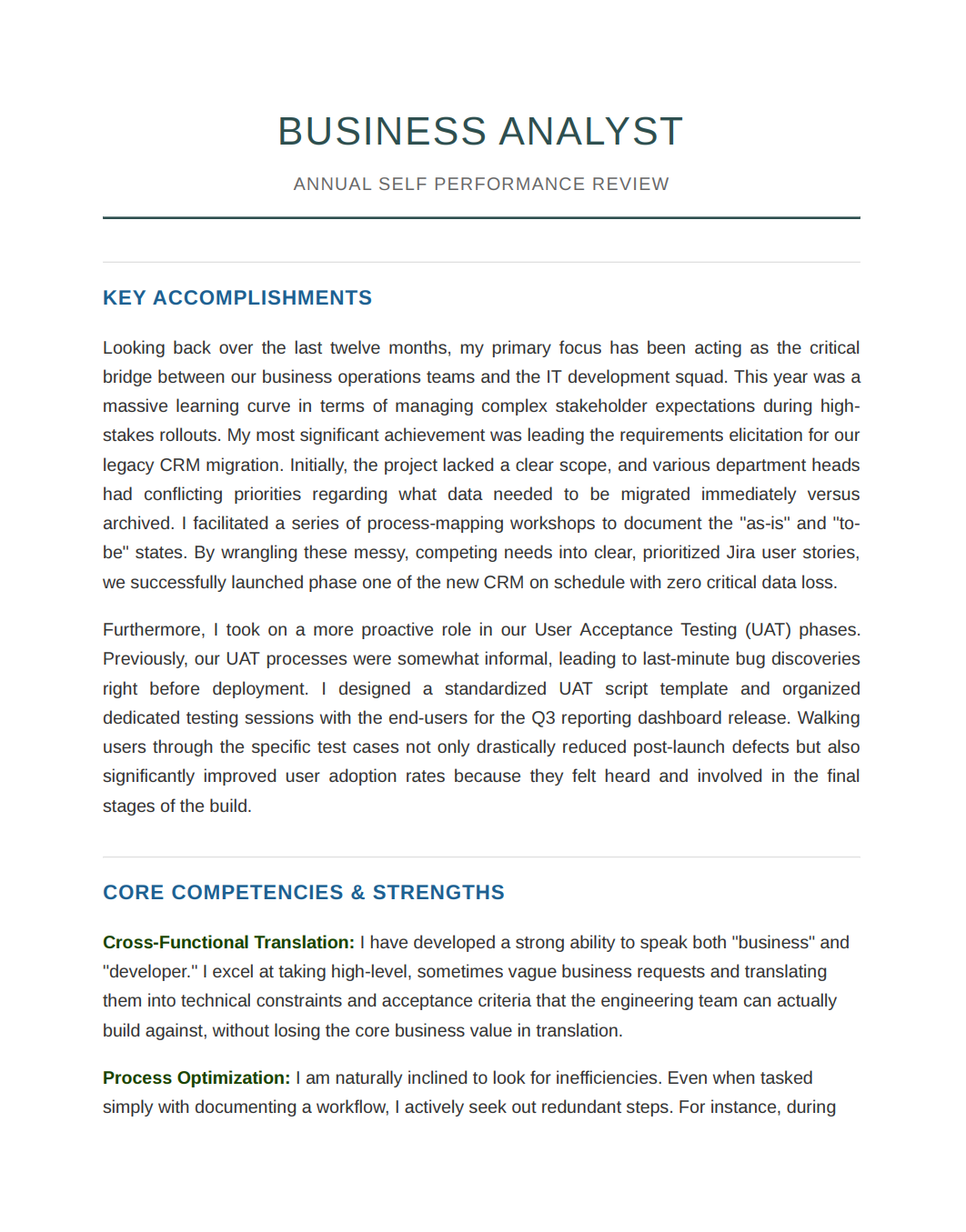
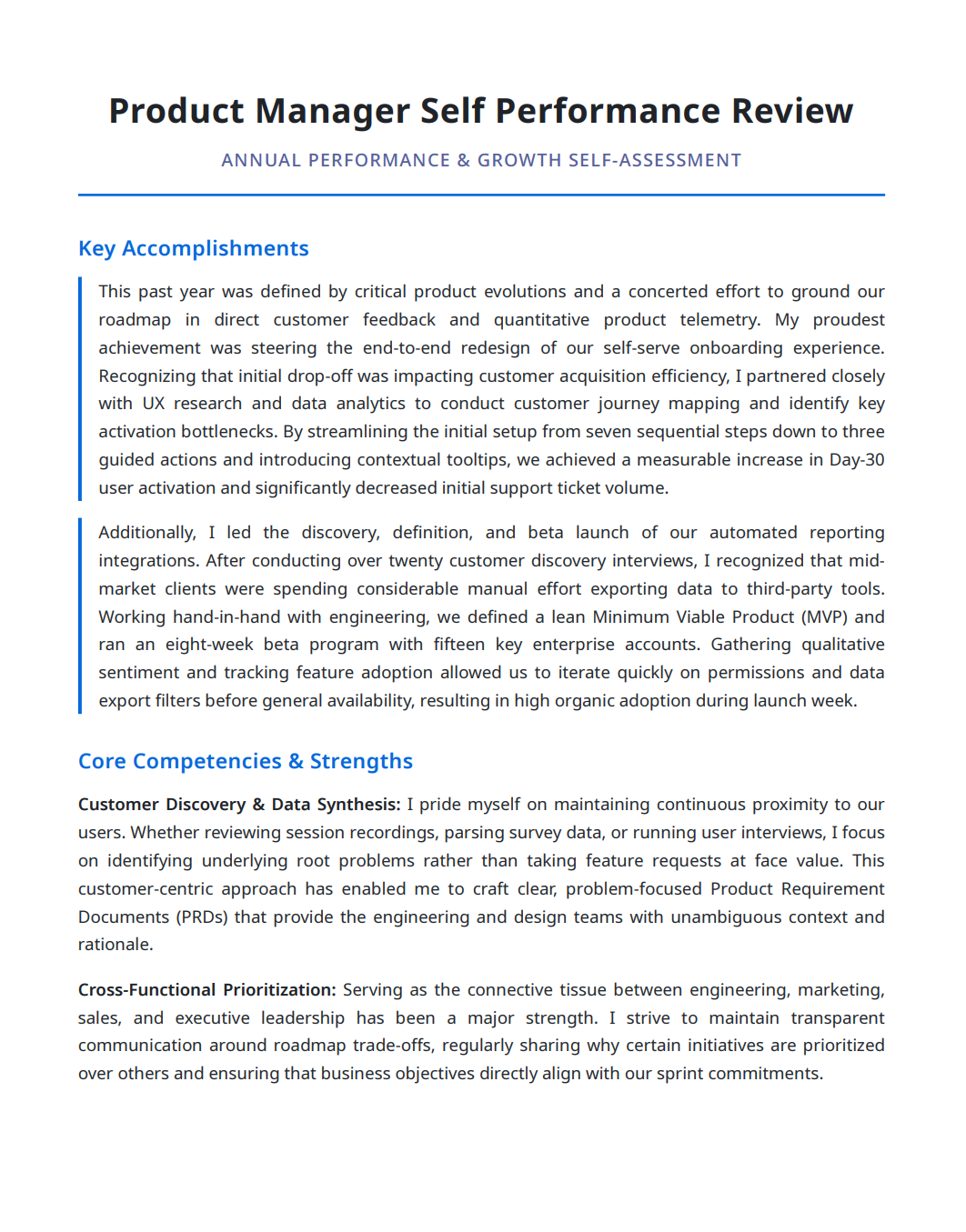
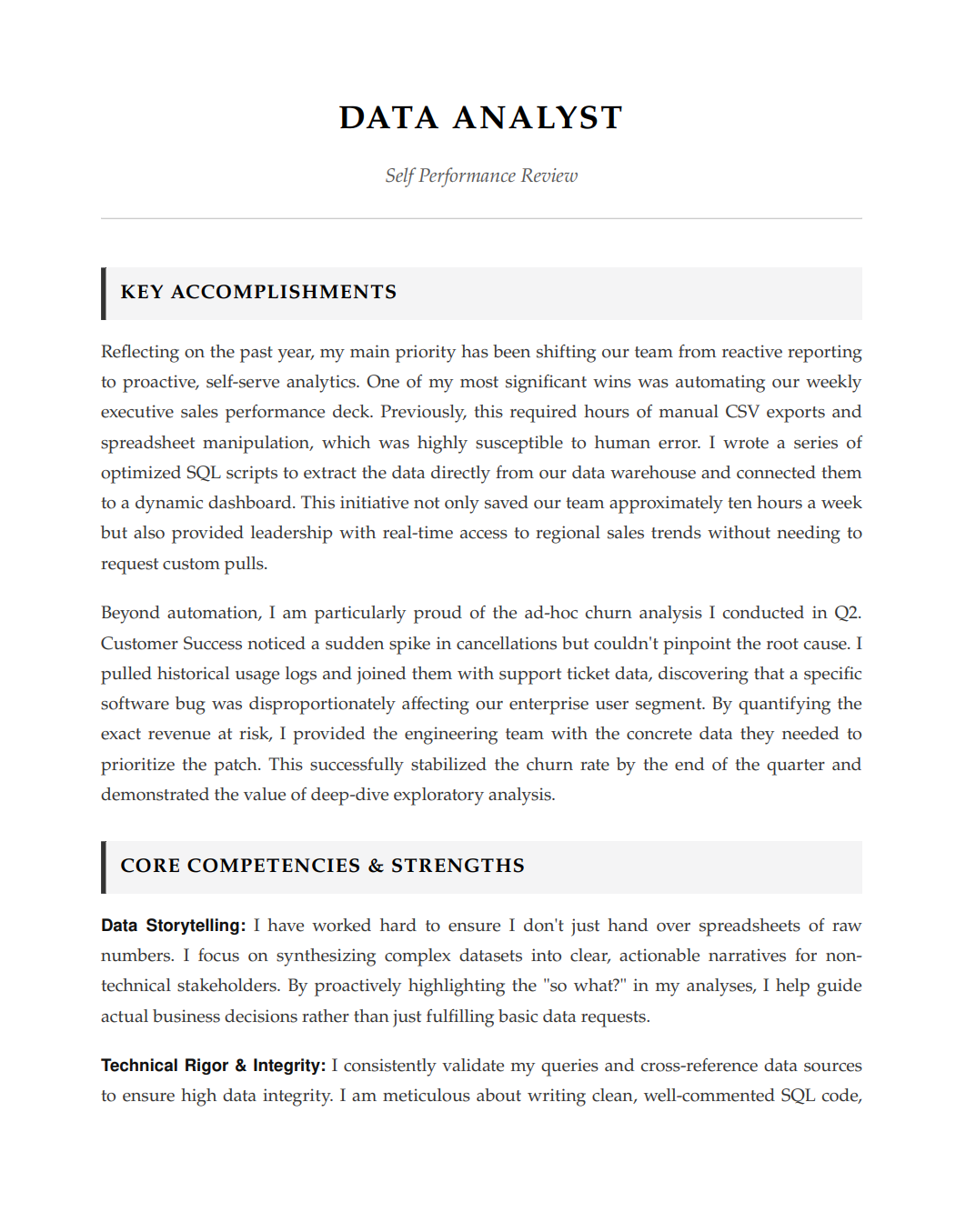
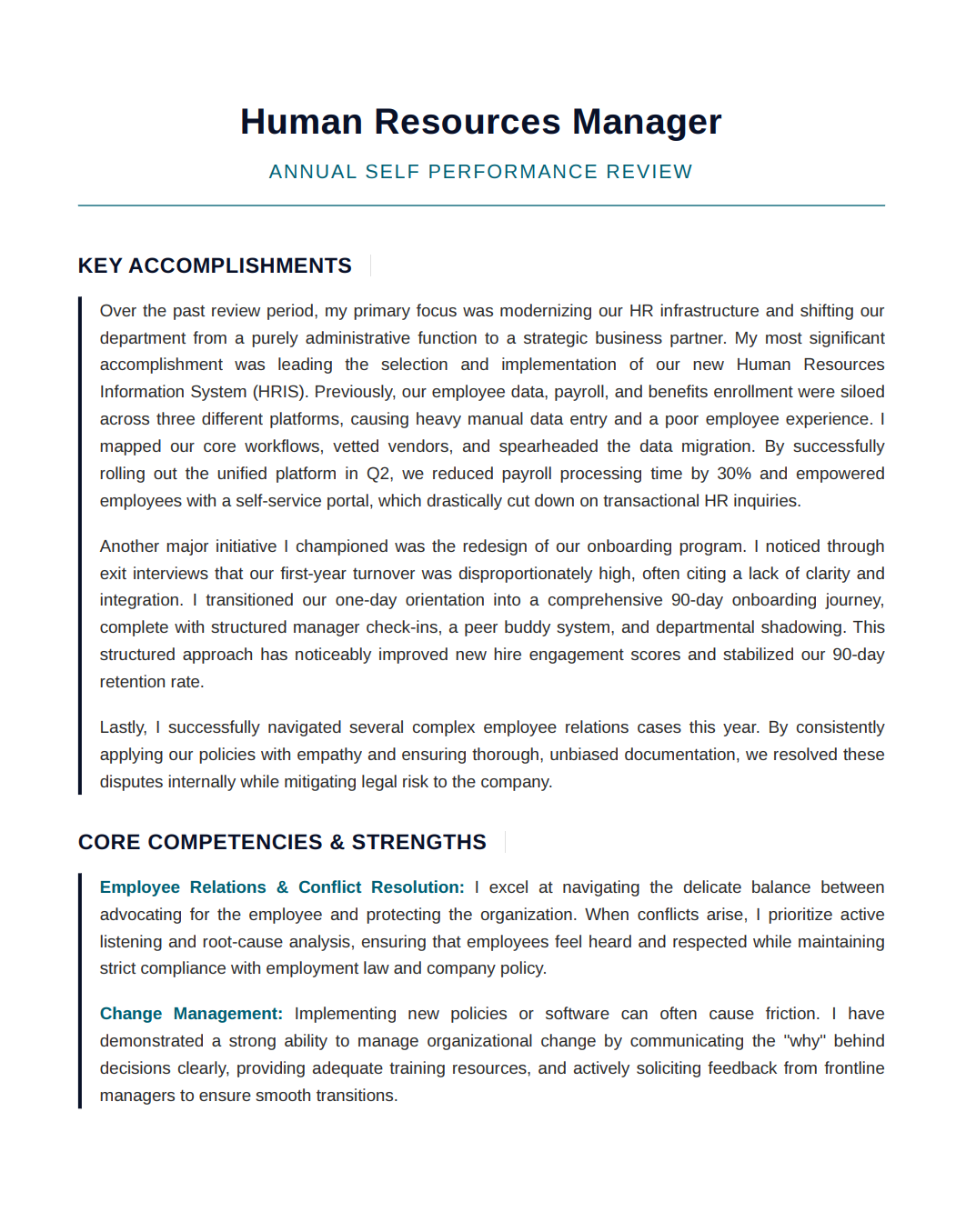
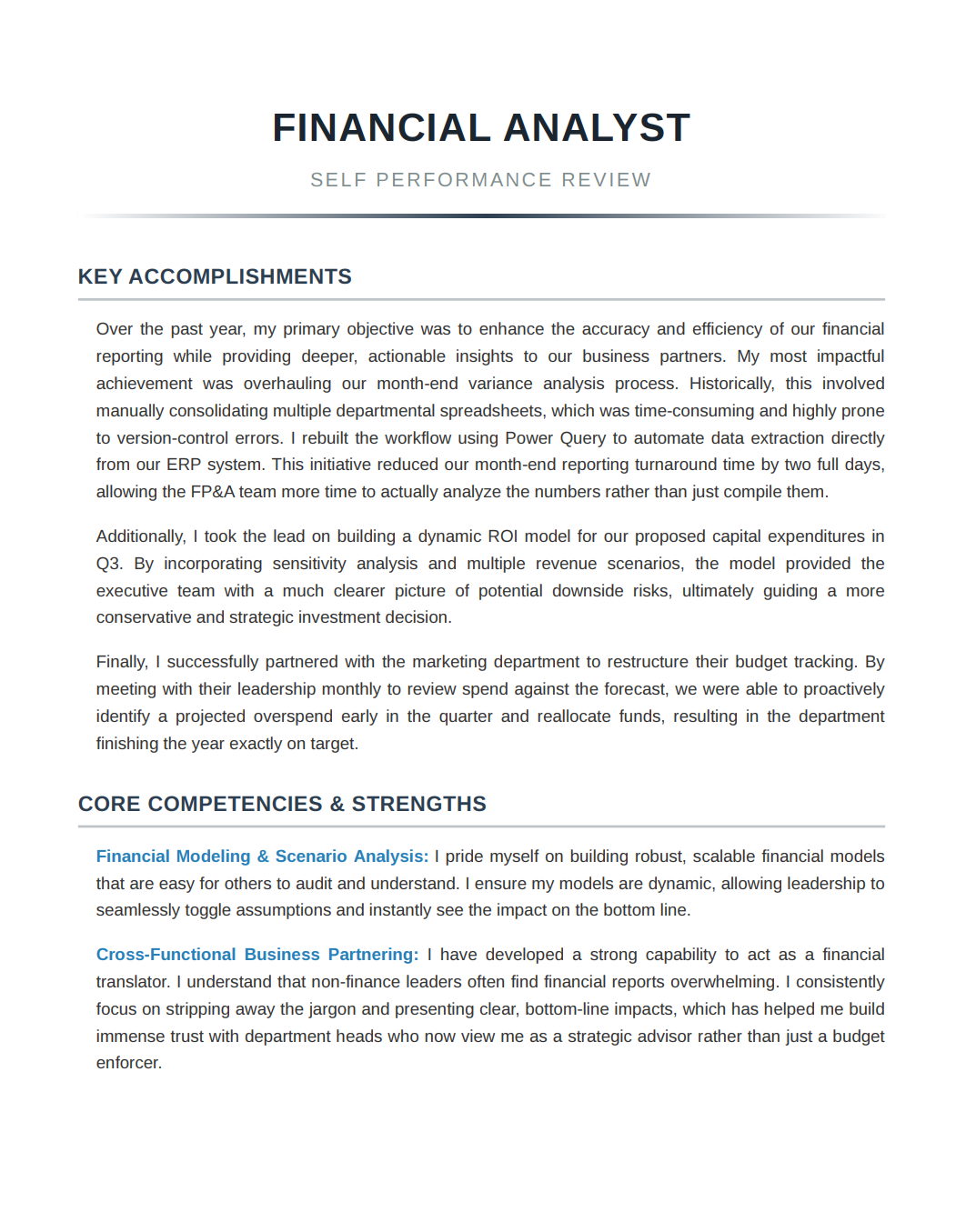
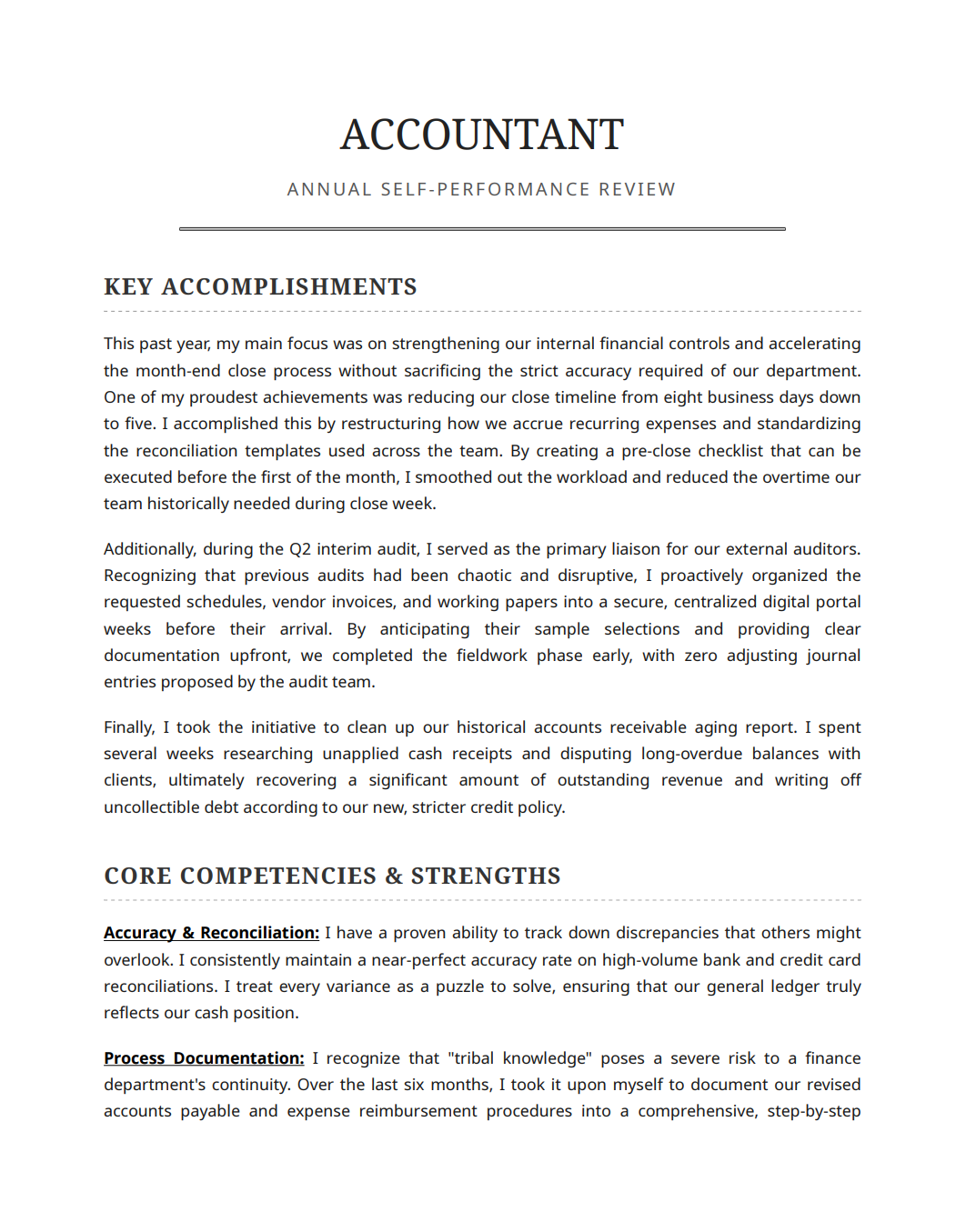
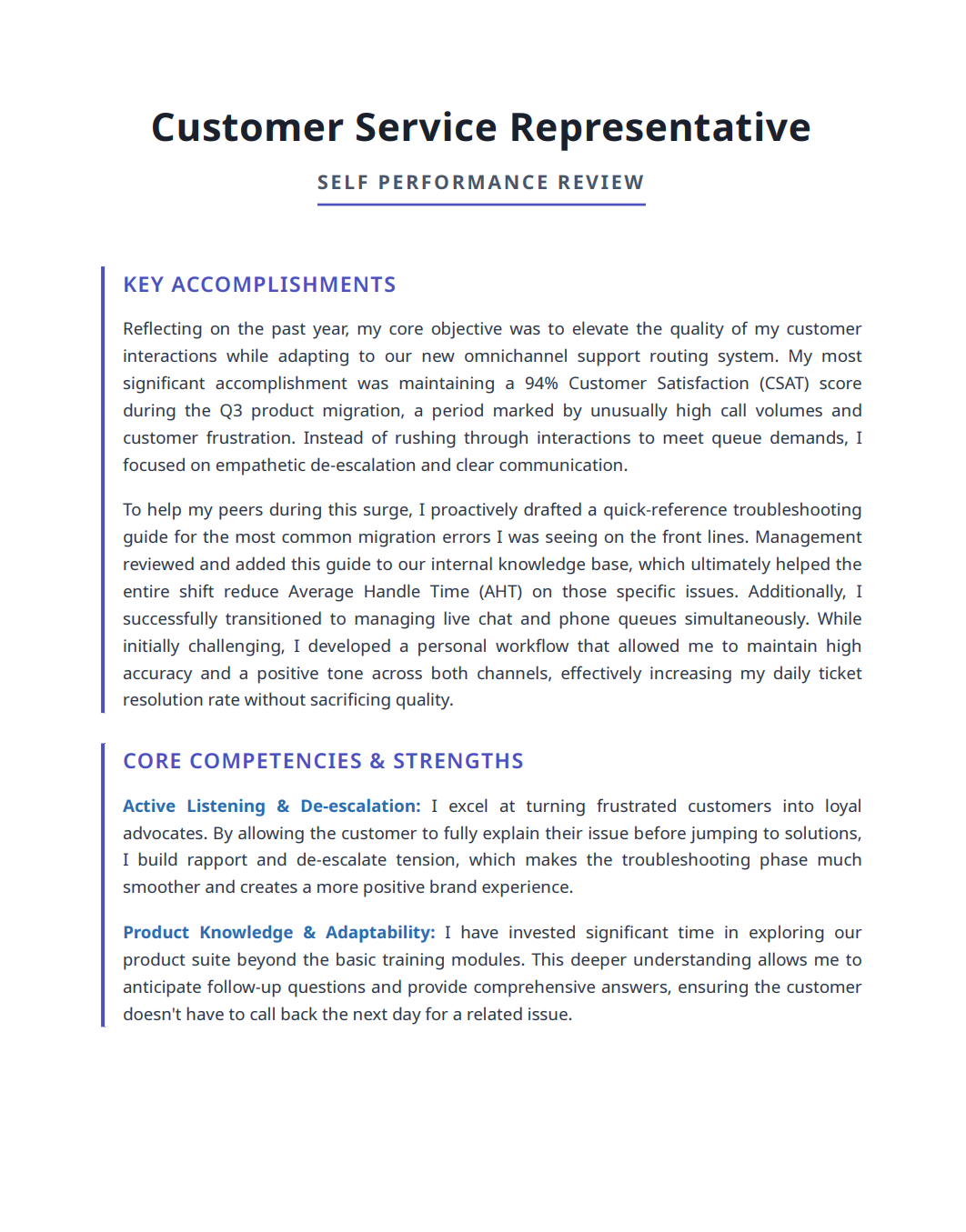
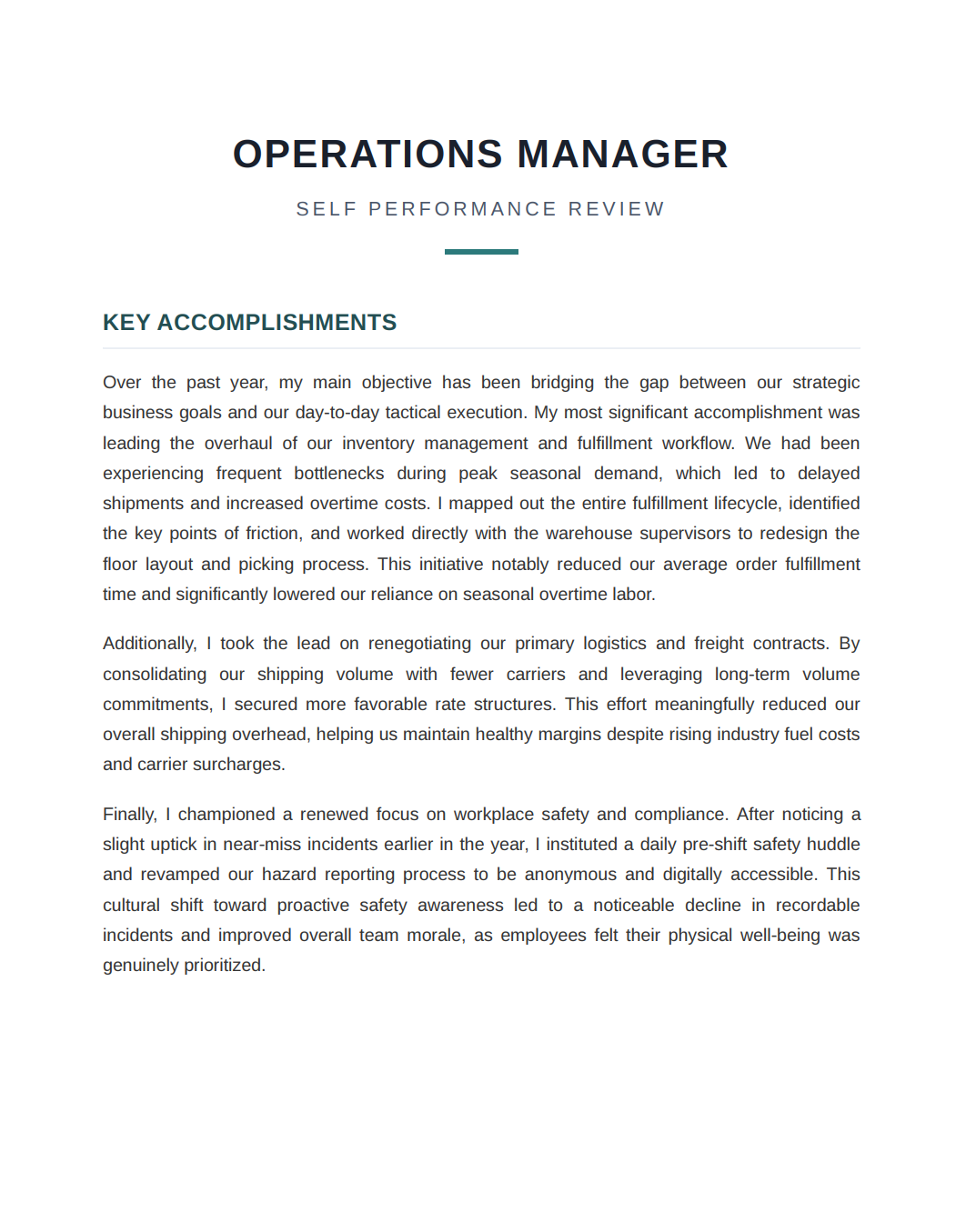
A self performance review is a written assessment in which an employee evaluates their own work, achievements, strengths, challenges, skills, and progress during a specific review period. Unlike a general description of job duties, a self performance review explains what you accomplished, how you contributed, what you learned, and where you can improve.
What Is a Self Performance Review?
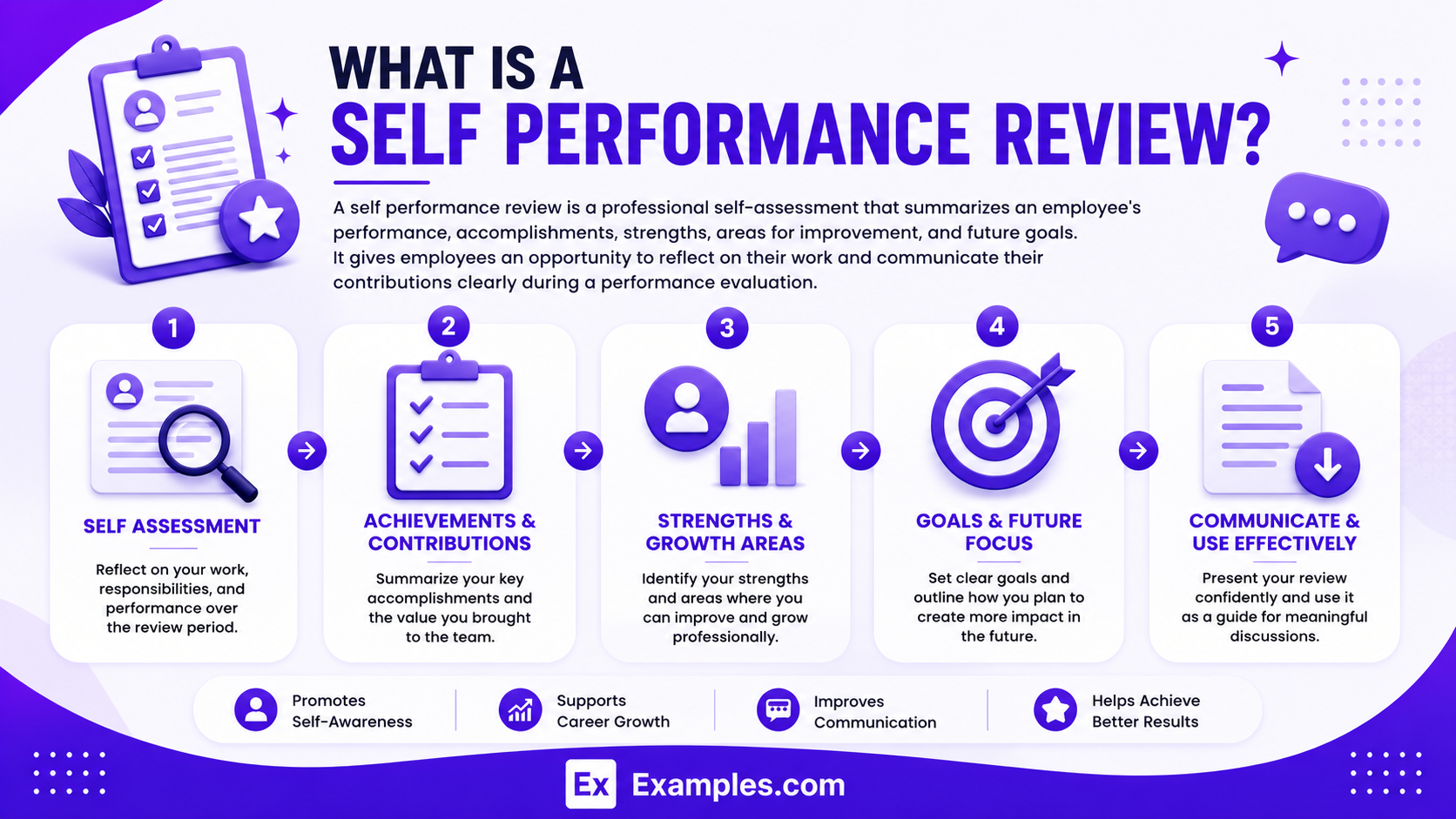
A self performance review is a professional self-assessment that summarizes an employee’s performance, accomplishments, strengths, areas for improvement, and future goals. It gives employees an opportunity to reflect on their work and communicate their contributions clearly during a performance evaluation.
What Are the Different Types of Self Performance Reviews?
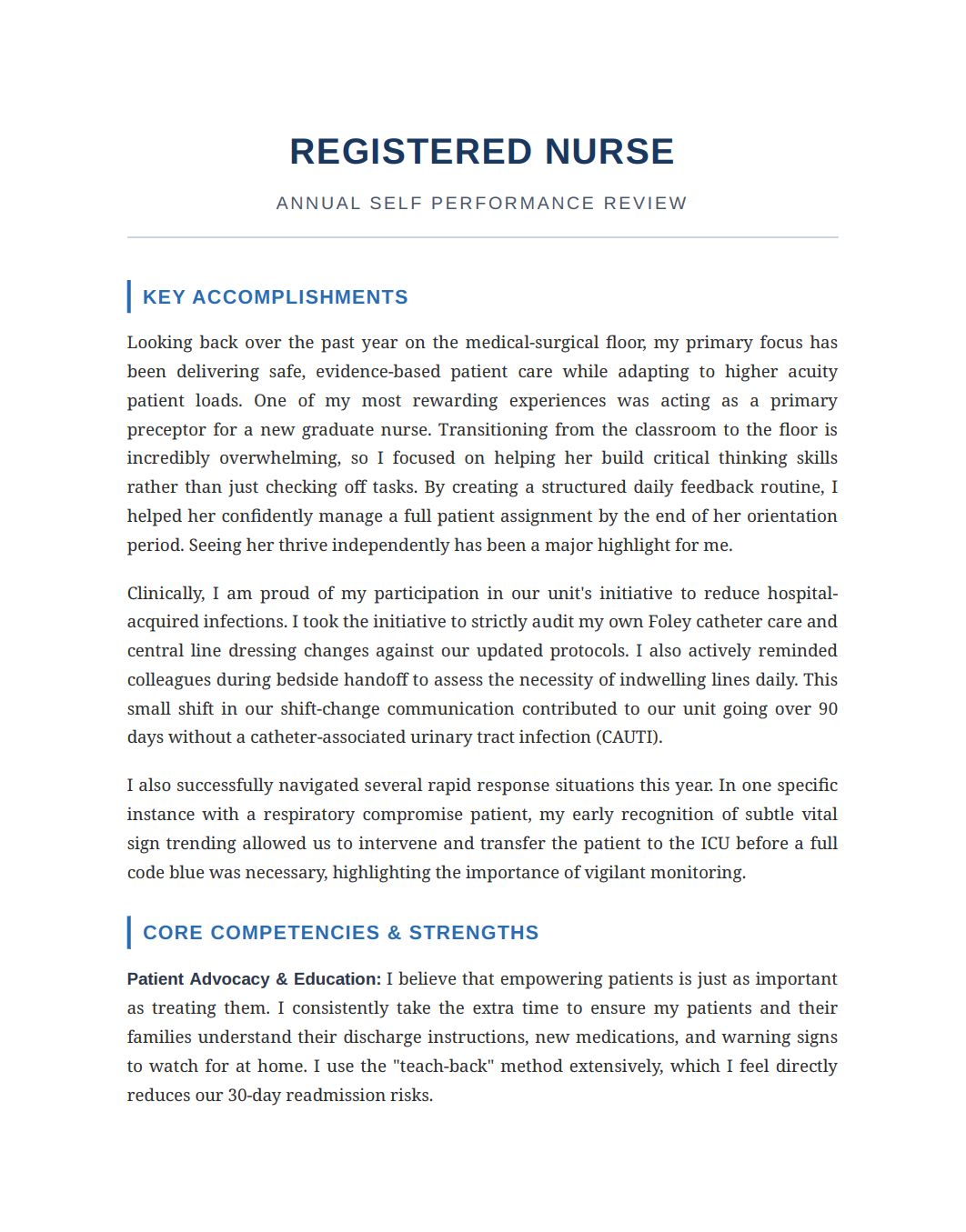
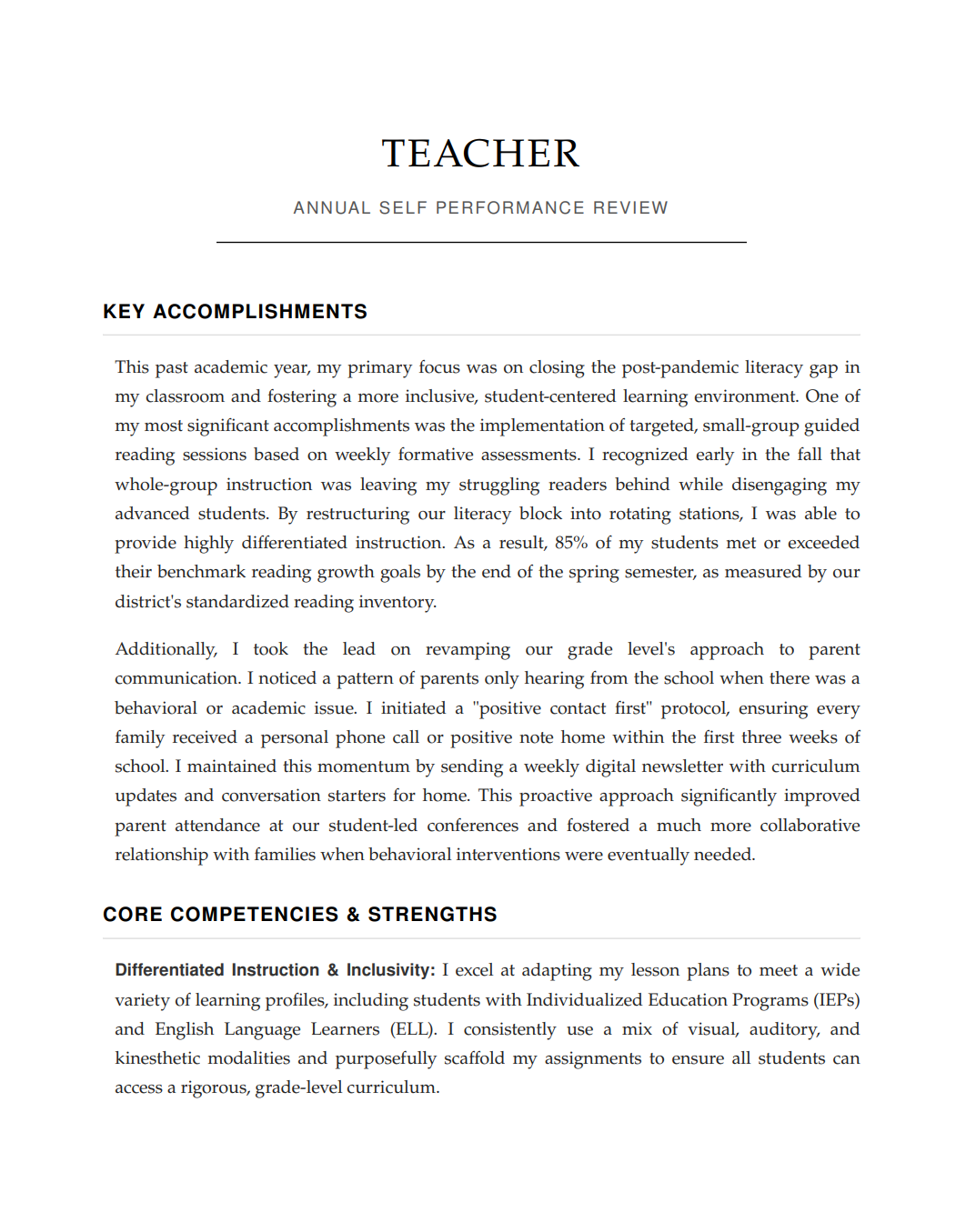
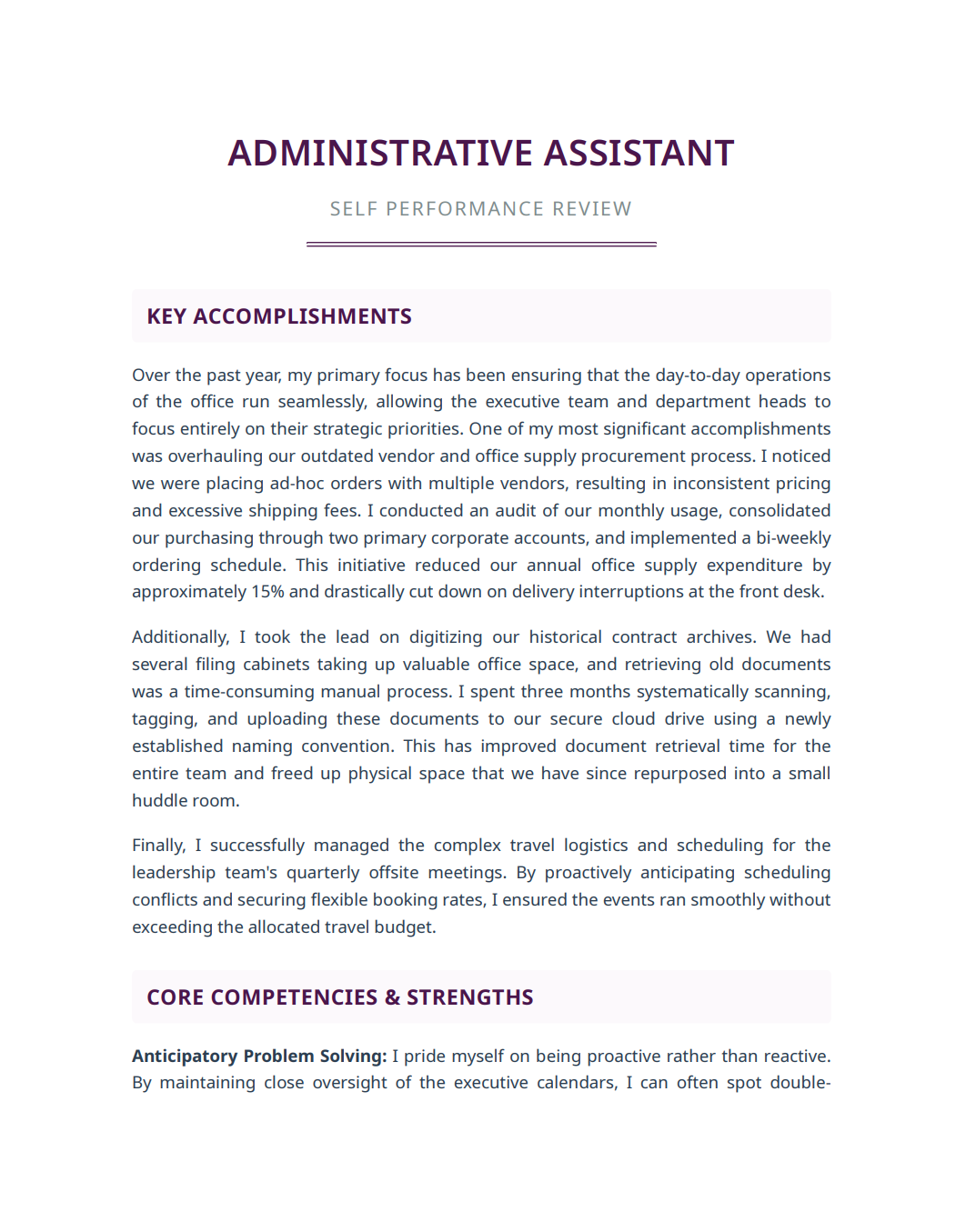
Annual Self Performance Review
An Annual Self Performance Review evaluates an employee’s accomplishments, responsibilities, strengths, challenges, and professional development throughout the year.
Quarterly Self Performance Review
A Quarterly Self Performance Review focuses on achievements, progress, challenges, and goals completed during a three-month review period.
Career Development Self Review
A Career Development Self Review focuses on professional growth, newly developed skills, career objectives, training, and opportunities for advancement.
Achievement-Based Self Review
An Achievement-Based Self Review highlights major accomplishments, completed projects, measurable results, awards, and contributions to organizational goals.
Strengths-Based Self Review
A Strengths-Based Self Review focuses on the skills, abilities, behaviors, and professional qualities that contribute to successful job performance.
Improvement-Focused Self Review
An Improvement-Focused Self Review identifies performance gaps, challenges, lessons learned, and specific actions for professional development.
Team Contribution Self Review
A Team Contribution Self Review explains how an employee supports colleagues, collaborates on projects, communicates effectively, and contributes to team success.
Promotion Self Performance Review
A Promotion Self Performance Review highlights achievements, increased responsibilities, leadership capabilities, skills, and contributions that demonstrate readiness for career advancement.
Employee Growth Self Review
An Employee Growth Self Review examines how an employee has developed professionally through new responsibilities, skills, experiences, feedback, and continuous learning.
How Do I Generate a Self Performance Review Using Real Examples?
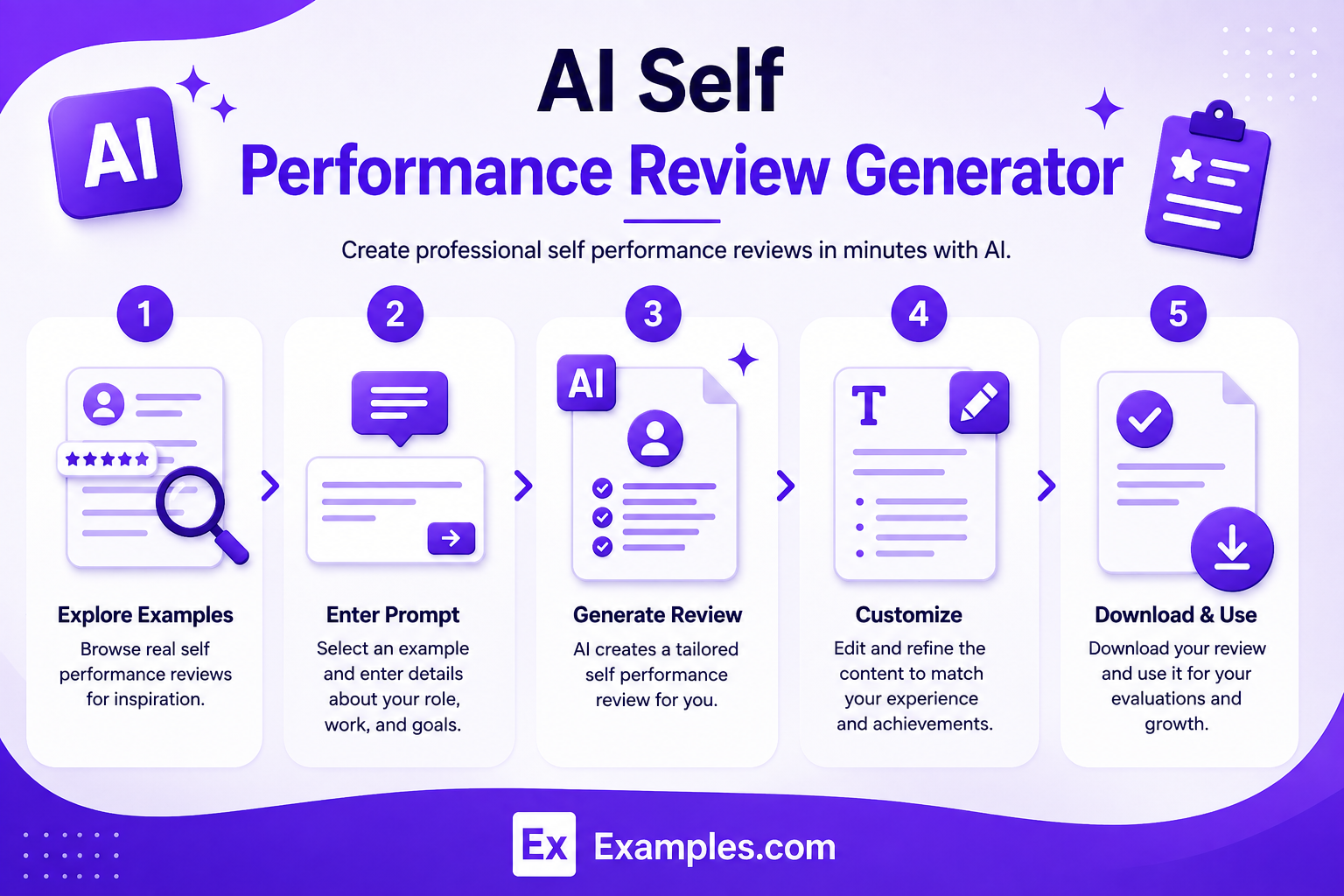
Explore Real Self Performance Review Examples
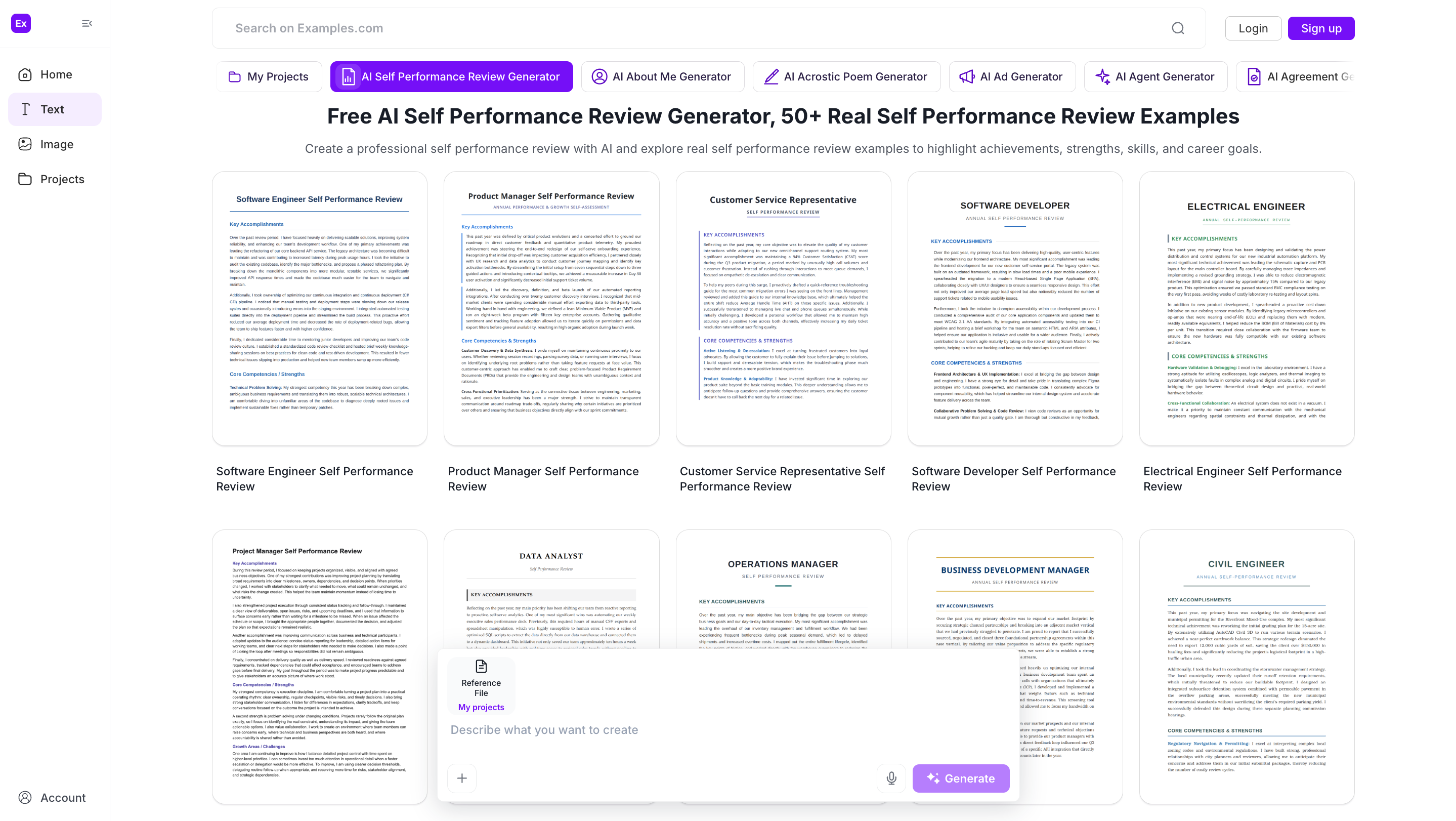
Review real self performance review examples to understand how employees describe their accomplishments, responsibilities, strengths, challenges, and professional goals. Examples can help you understand how to turn basic work information into clear and professional performance statements.
Choose a Reference Example and Enter an AI Prompt
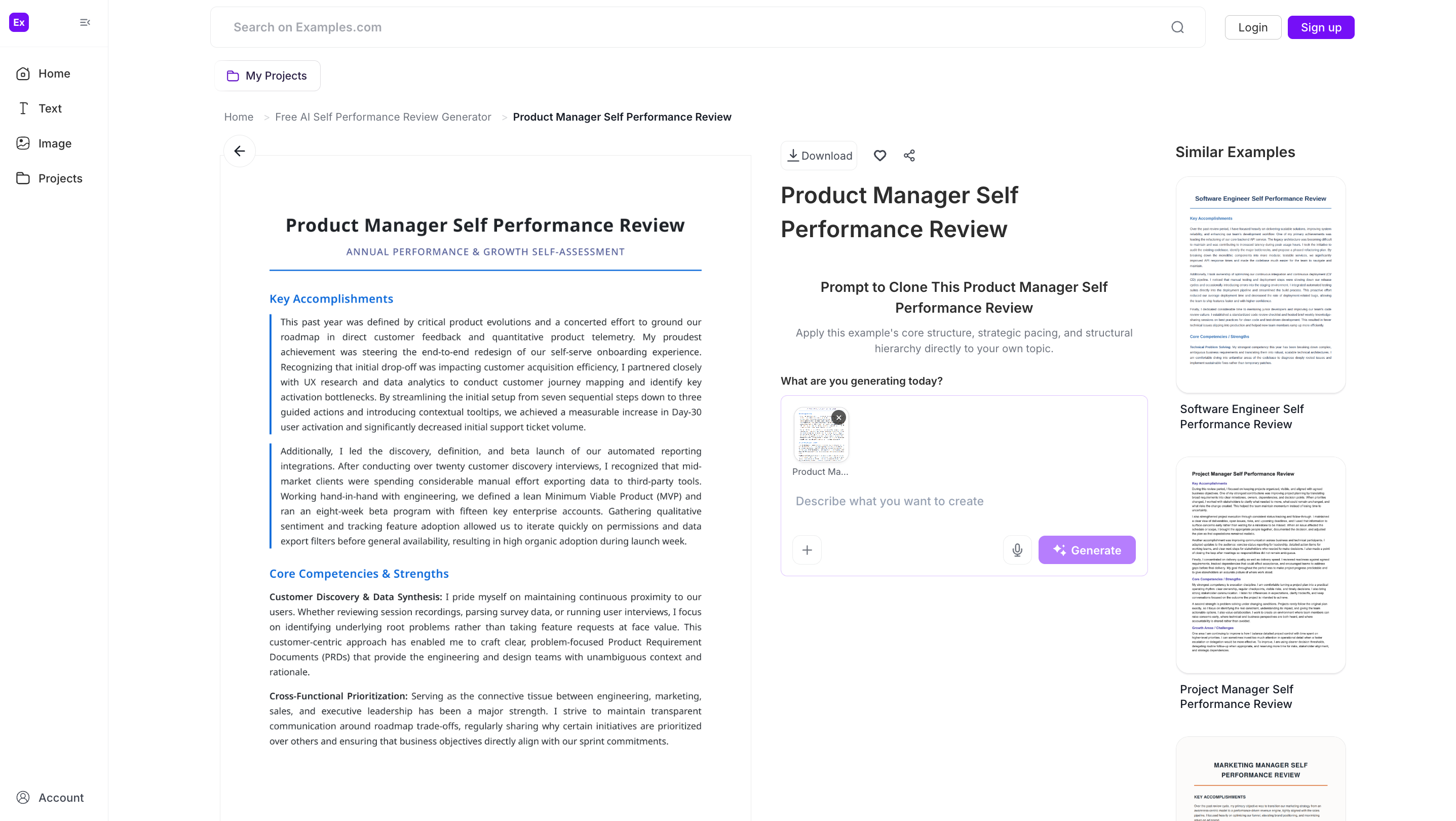
Choose a reference self performance review and describe what you need in your prompt, including your job role, responsibilities, accomplishments, strengths, challenges, skills, and career goals. A specific prompt helps produce a focused review that reflects your actual work experience.
Generate a New AI Self Performance Review
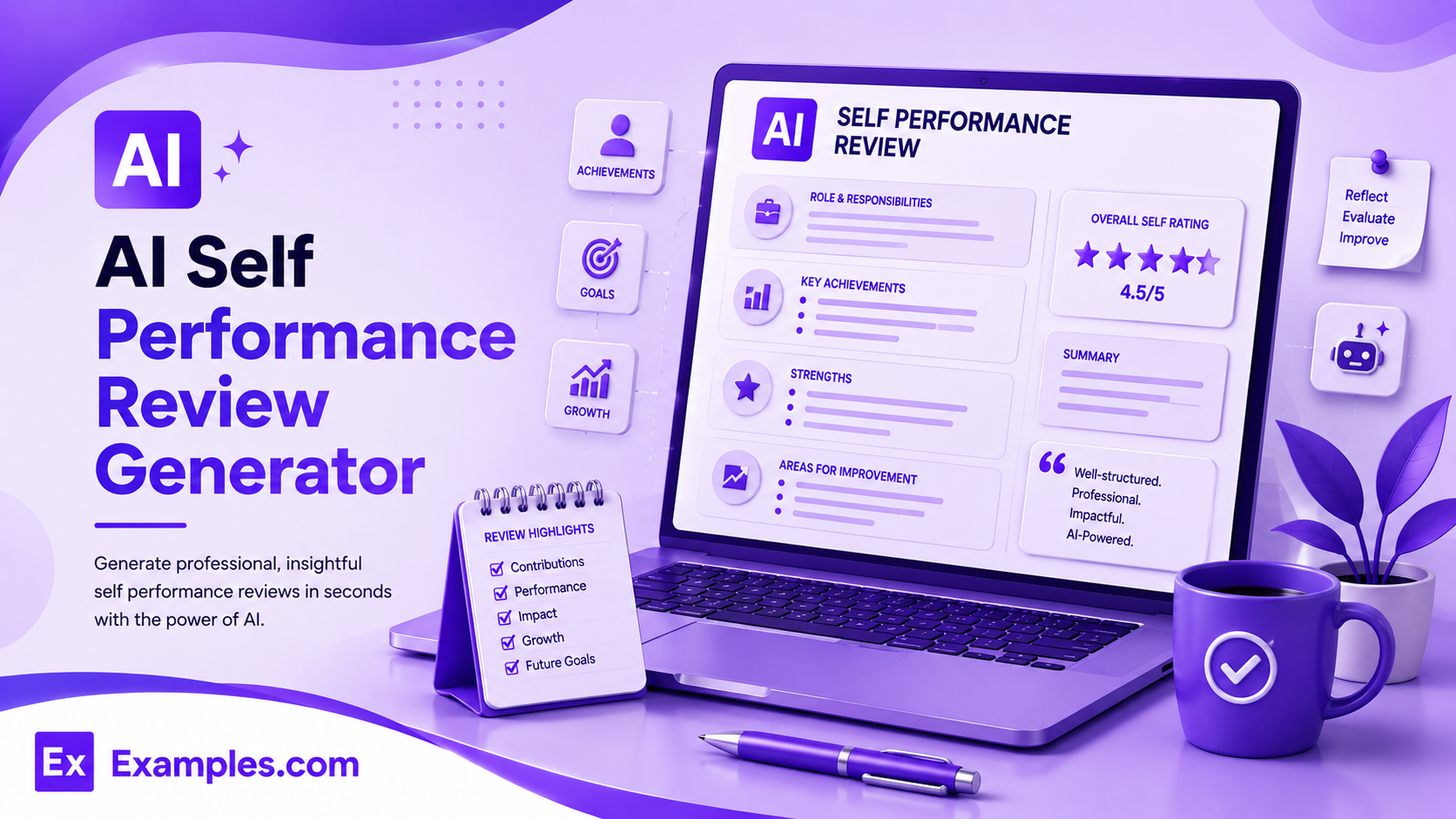
Generate a new self performance review from your prompt. The AI can organize your work experience into professional statements covering achievements, strengths, areas for improvement, contributions, and future goals.
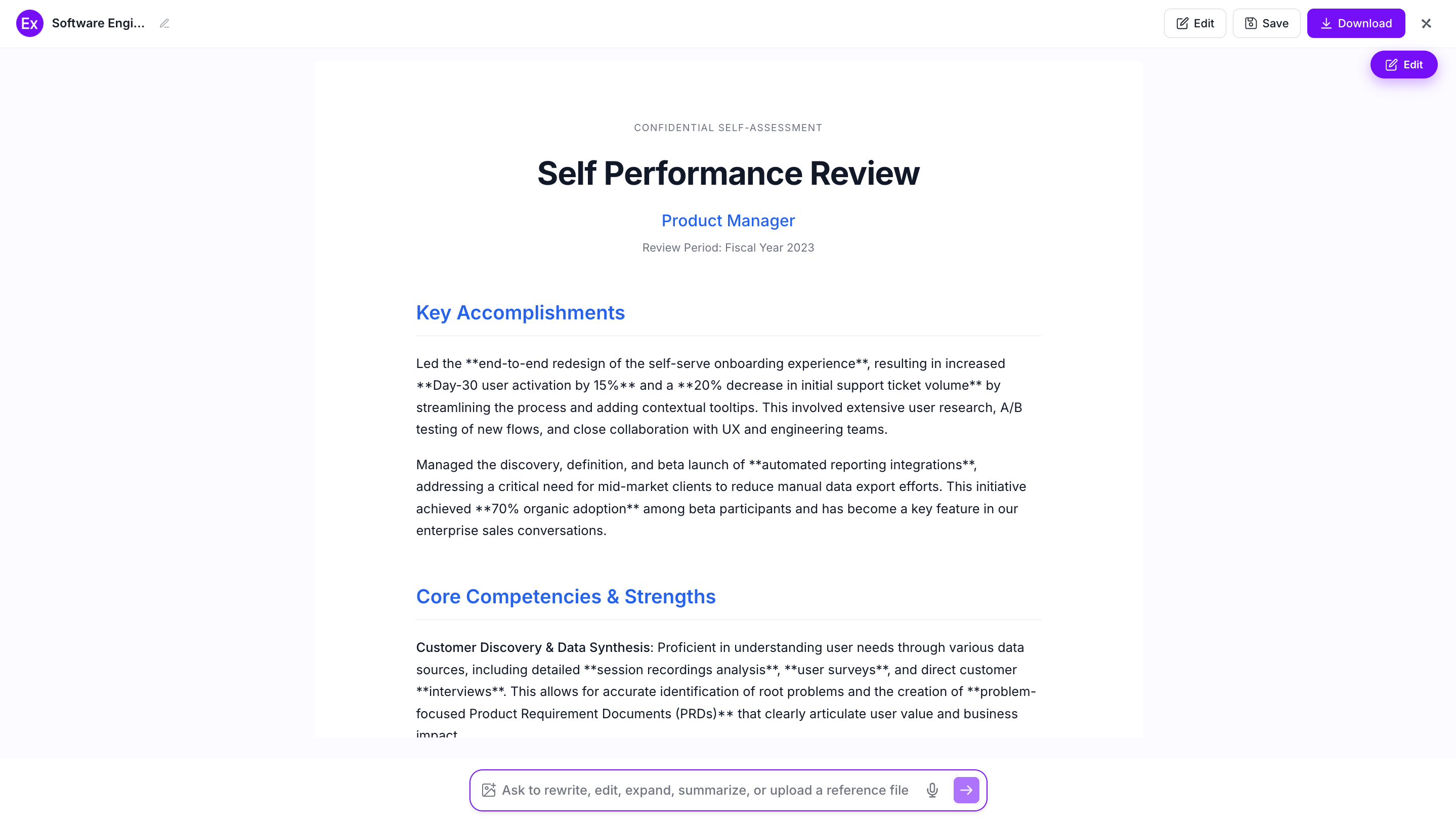
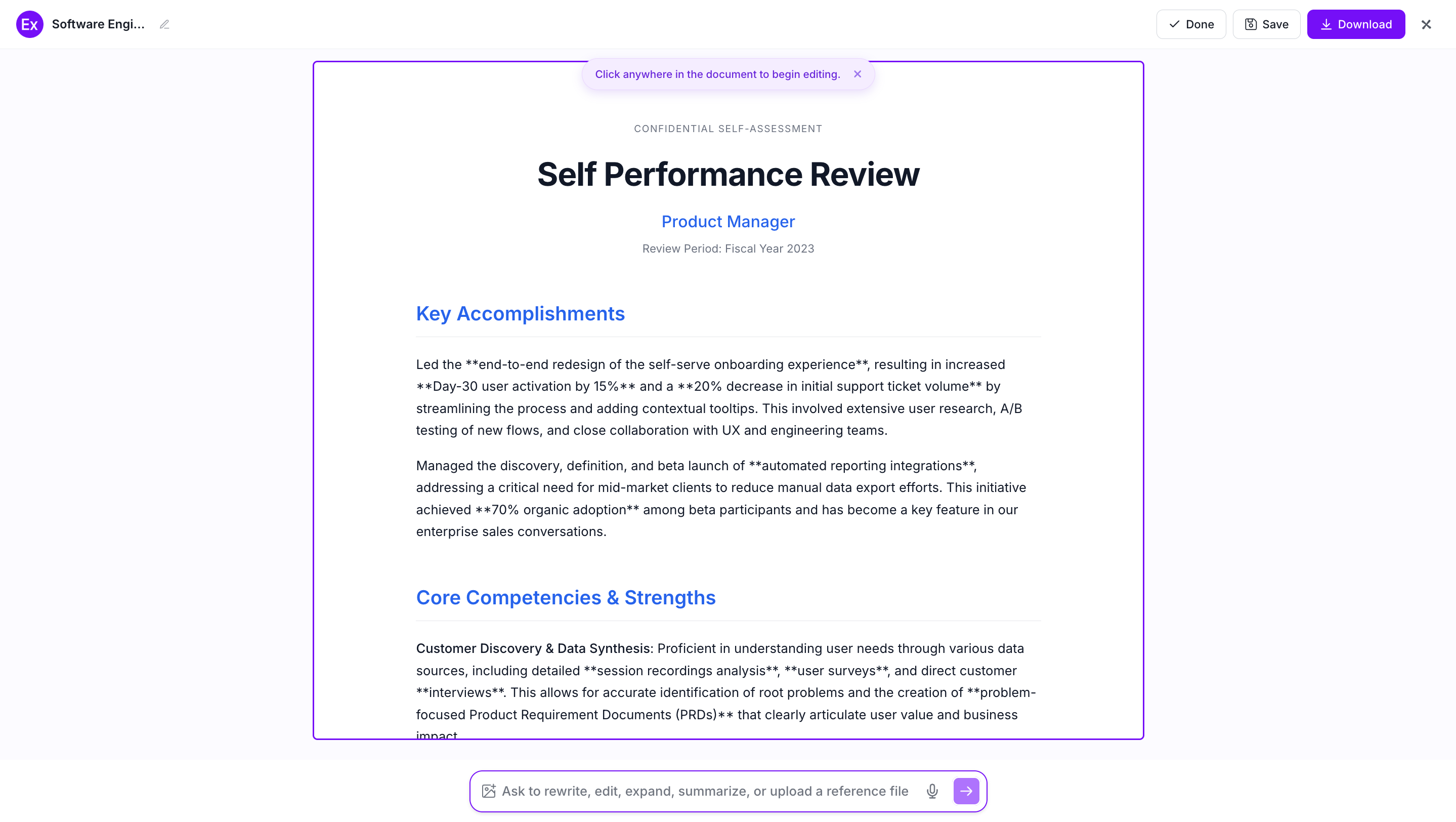
Customize the Self Performance Review in the Online Editor
Refine the wording, tone, achievements, and goals of the generated self performance review in the online editor. Add specific results, metrics, responsibilities, and experiences to make the review accurate and relevant to your actual performance.
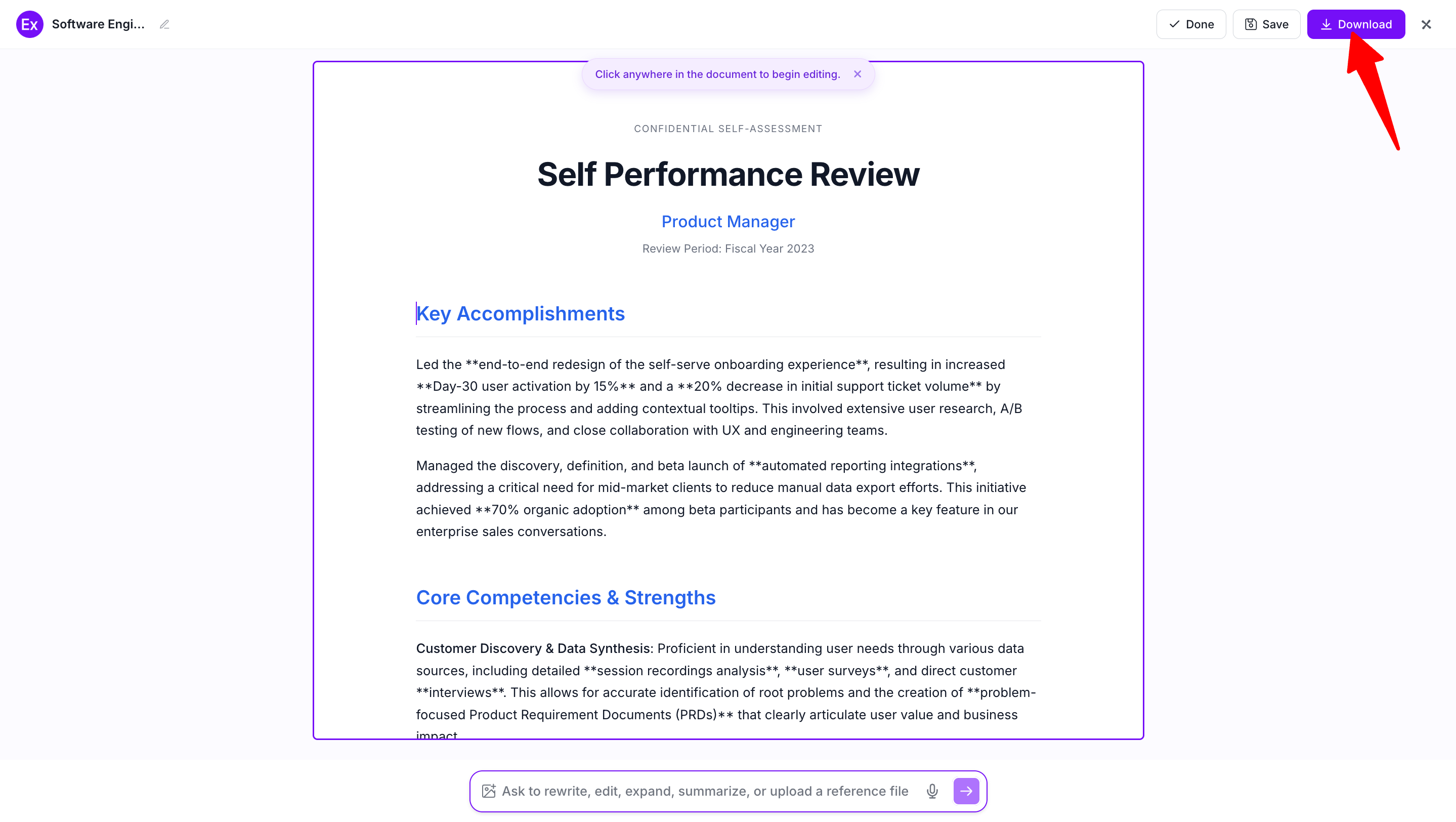
Download and Use Your Self Performance Review
Download your completed self performance review in PDF format for reviewing, printing, organizing, or using as a reference while preparing for performance evaluations, career discussions, and professional development conversations.
What Makes a Good Self Performance Review?
A good self performance review is a clear, honest, specific, and professional assessment of an employee’s work. It should explain key accomplishments, responsibilities, strengths, challenges, skills developed, and areas for improvement. Strong self performance reviews use specific examples and measurable results when available rather than relying on vague claims. They should also demonstrate self-awareness, acknowledge opportunities for growth, and establish realistic goals for future performance.
AI Self Performance Review Editing Features
AI Self Review Generation
Generate professional self performance reviews based on your job role, responsibilities, achievements, strengths, challenges, and career goals.
Smart Performance Editing
Rewrite, shorten, expand, or refine self performance statements to make accomplishments, contributions, and professional growth clearer.
Achievement-to-Statement Conversion
Turn basic accomplishments such as completed projects, improved processes, or increased productivity into clear and professional performance statements.
Self Review Customization
Adjust the wording, tone, focus, and level of detail to create a self performance review that matches your role, workplace, and performance evaluation.
Professional Growth Refinement
Organize areas for improvement, skills developed, challenges, and career goals into constructive statements that demonstrate professional growth.
Instant PDF Download
Download your completed self performance review in PDF format for reviewing, printing, organizing, or using as a reference.
What Are the Essential Elements of a Self Performance Review?
- Job Responsibilities: Describe the primary duties, tasks, and expectations associated with your role.
- Key Achievements: Highlight important accomplishments, completed projects, improvements, or measurable results.
- Performance Results: Explain the outcomes or impact of your work using specific evidence when available.
- Professional Strengths: Identify the skills, qualities, and behaviors that contributed to your success.
- Team Contributions: Explain how you supported colleagues, collaborated with others, or contributed to team objectives.
- Challenges: Describe significant challenges and explain how you addressed or learned from them.
- Areas for Improvement: Identify realistic skills or performance areas that you want to develop.
- Skills Developed: Mention new knowledge, technical abilities, professional skills, or experience gained during the review period.
- Future Goals: Establish clear and relevant objectives for your next performance period.
- Professional Reflection: Summarize what you learned and how your experiences contributed to your continued professional development.
How Do I Write a Self Performance Review?
- Review Your Responsibilities: Identify the main duties, projects, objectives, and expectations associated with your role.
- List Your Achievements: Write down important accomplishments, completed projects, improvements, awards, and measurable results.
- Identify Your Strengths: Consider the skills and professional qualities that helped you perform effectively.
- Explain Your Contributions: Describe how your work supported your team, department, customers, or organization.
- Discuss Challenges: Identify difficult situations and explain how you responded to them.
- Describe Your Growth: Mention new skills, knowledge, training, or experience you developed during the review period.
- Identify Improvement Areas: Choose realistic areas where you can strengthen your performance.
- Set Future Goals: Establish specific and achievable objectives for the next review period.
- Use Specific Examples: Support important claims with projects, results, numbers, or other relevant evidence.
- Review and Refine: Make sure the final review is accurate, professional, balanced, and focused on your actual performance.
Why Should I Use Real Self Performance Review Examples to Create My Own Self Review?
- Real examples show how employees describe their accomplishments professionally.
- They help you understand the difference between vague statements and specific performance statements.
- They provide useful wording patterns for describing strengths, contributions, and professional growth.
- They show how to discuss challenges and areas for improvement constructively.
- They help you understand how to include measurable achievements and results.
- They make it easier to organize your own responsibilities, accomplishments, and career goals.
What Common Self Performance Review Mistakes Should I Avoid?
- Using Vague Statements: Avoid statements such as “I did a good job” without explaining what you accomplished.
- Listing Responsibilities Only: A performance review should describe your results and contributions, not simply repeat your job description.
- Exaggerating Achievements: Keep your claims accurate and support accomplishments with evidence when possible.
- Ignoring Challenges: A balanced review can acknowledge challenges and explain how you addressed them.
- Being Too Negative: Focus on constructive improvement rather than presenting weaknesses without an action plan.
- Leaving Out Results: Explain the impact of your work whenever measurable results are available.
- Ignoring Team Contributions: Mention meaningful collaboration, support, leadership, and teamwork.
- Avoiding Areas for Improvement: Showing self-awareness can make a review more balanced and credible.
- Using an Unprofessional Tone: Keep the language confident, respectful, and appropriate for the workplace.
- Copying Generic Examples: Use examples as guidance, but customize the final review with your actual experience.
What Is the Difference Between a Self Performance Review and a Performance Review?
| Self Performance Review | Performance Review |
|---|---|
| Written by the employee about their own performance. | Usually conducted or written by a manager or supervisor. |
| Focuses on the employee’s perspective. | Focuses on the manager’s or organization’s assessment. |
| Highlights personal achievements, strengths, challenges, and goals. | Evaluates performance against organizational expectations and objectives. |
| Helps employees reflect on their work. | Helps managers provide formal performance feedback. |
| Can identify areas where the employee believes they can improve. | Can identify performance strengths and development opportunities from a management perspective. |
| Supports preparation for performance discussions. | Often forms part of a formal employee evaluation process. |
Self Performance Review Ideas for Different Job Roles
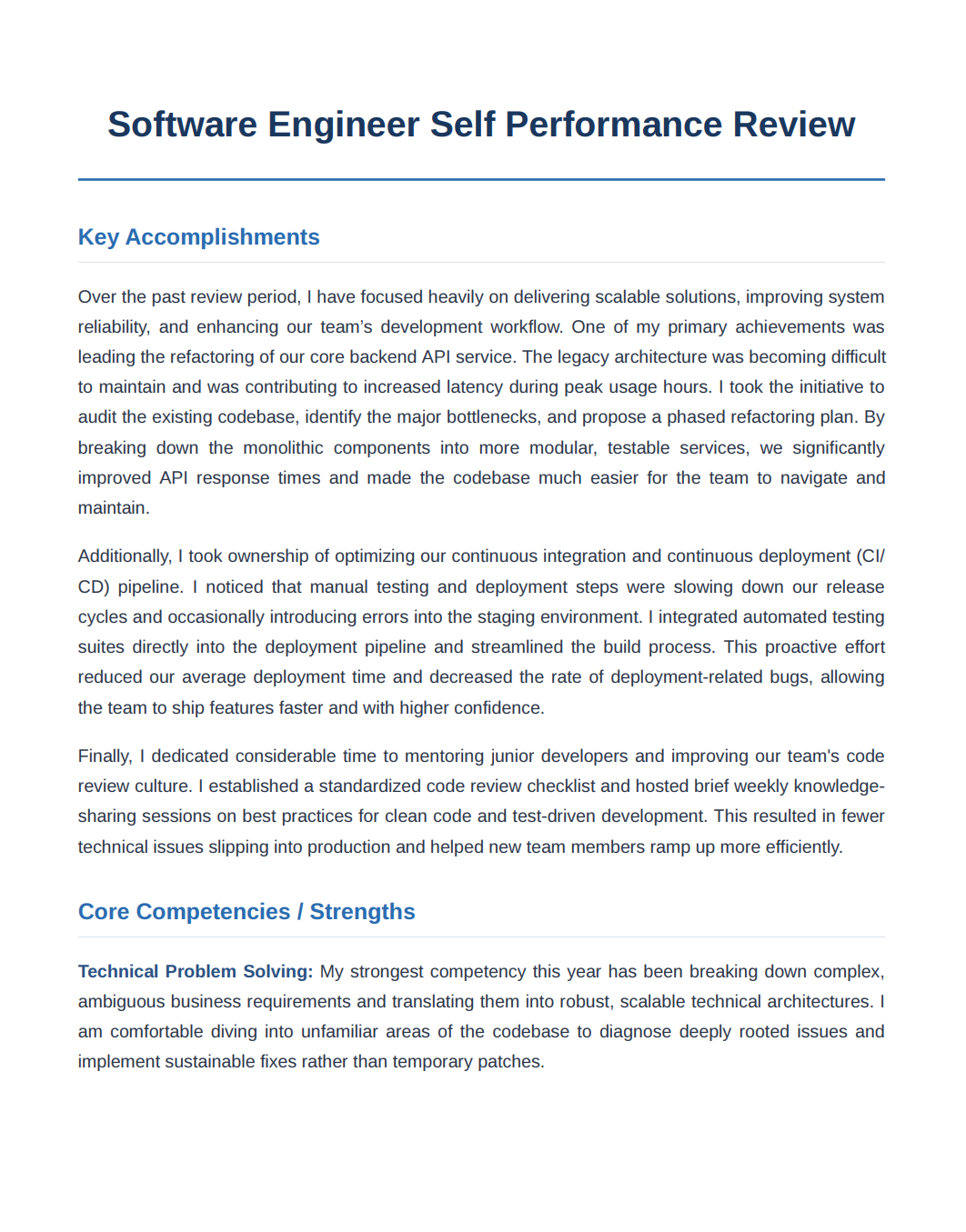
- Software Engineer: Highlight completed features, code quality, technical problem-solving, system improvements, collaboration, and technical skills developed.
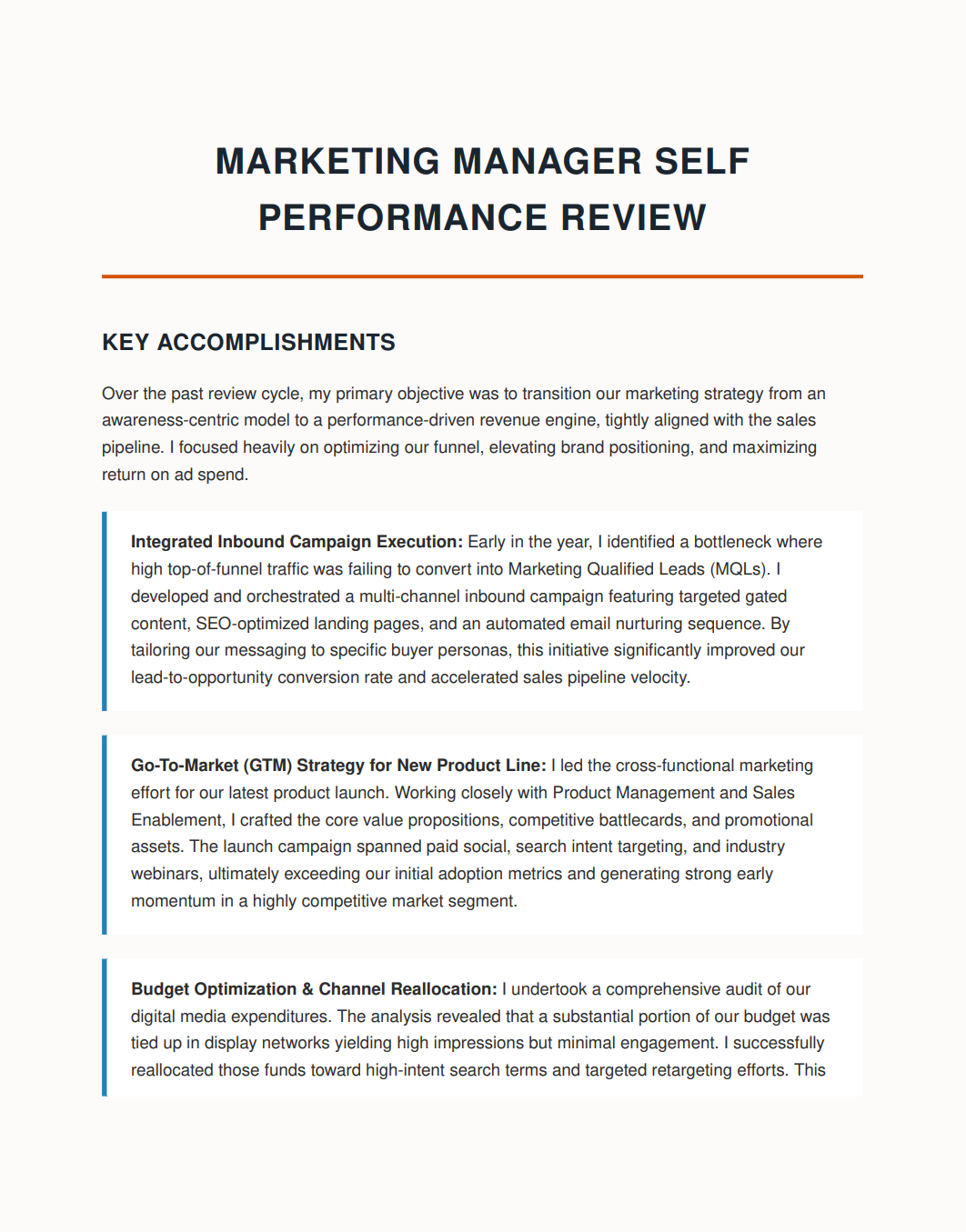
- Marketing Manager: Highlight campaigns, audience growth, engagement, conversions, marketing results, strategy improvements, and team leadership.
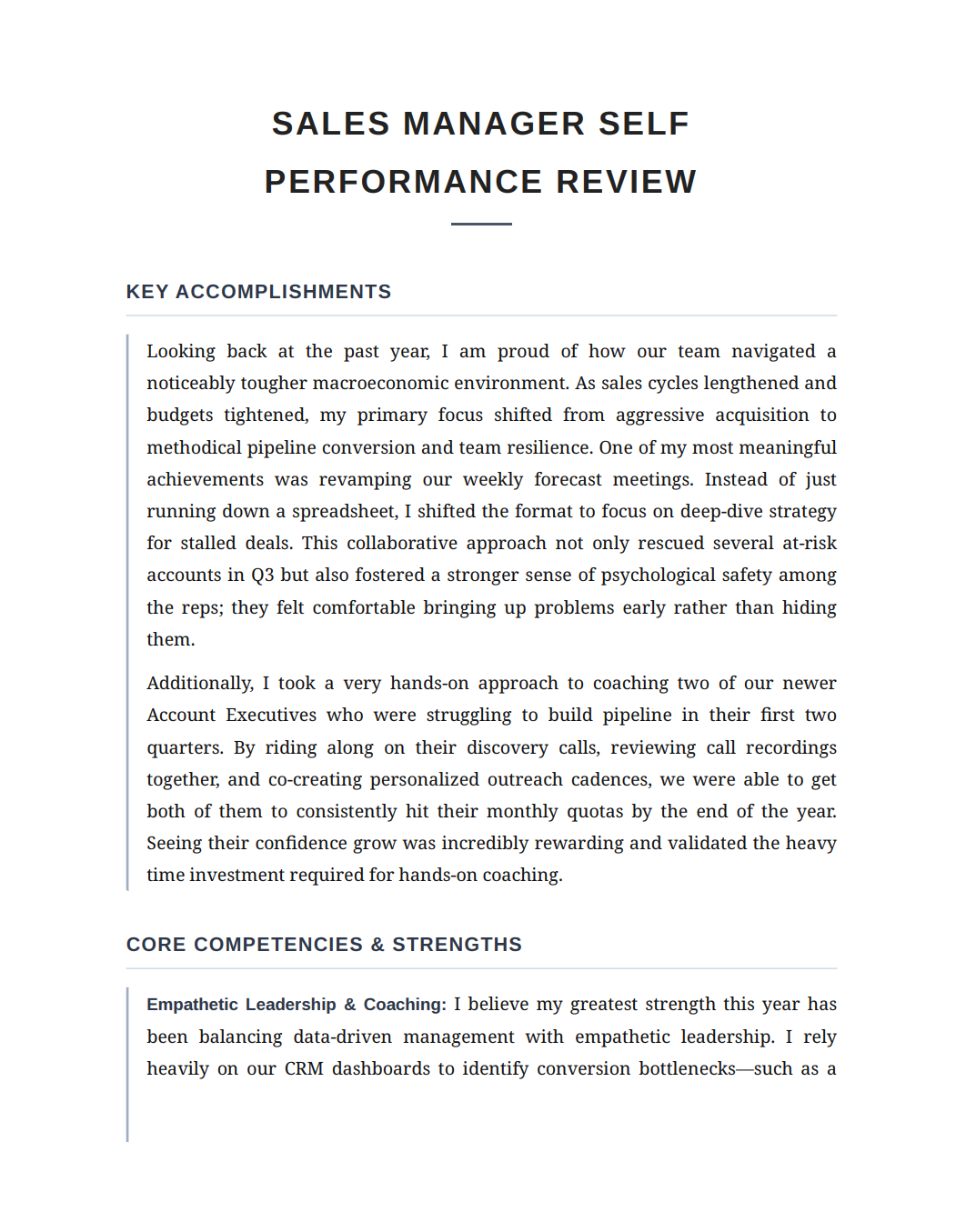
- Sales Representative: Highlight sales targets, revenue, customer acquisition, retention, client relationships, and pipeline development.
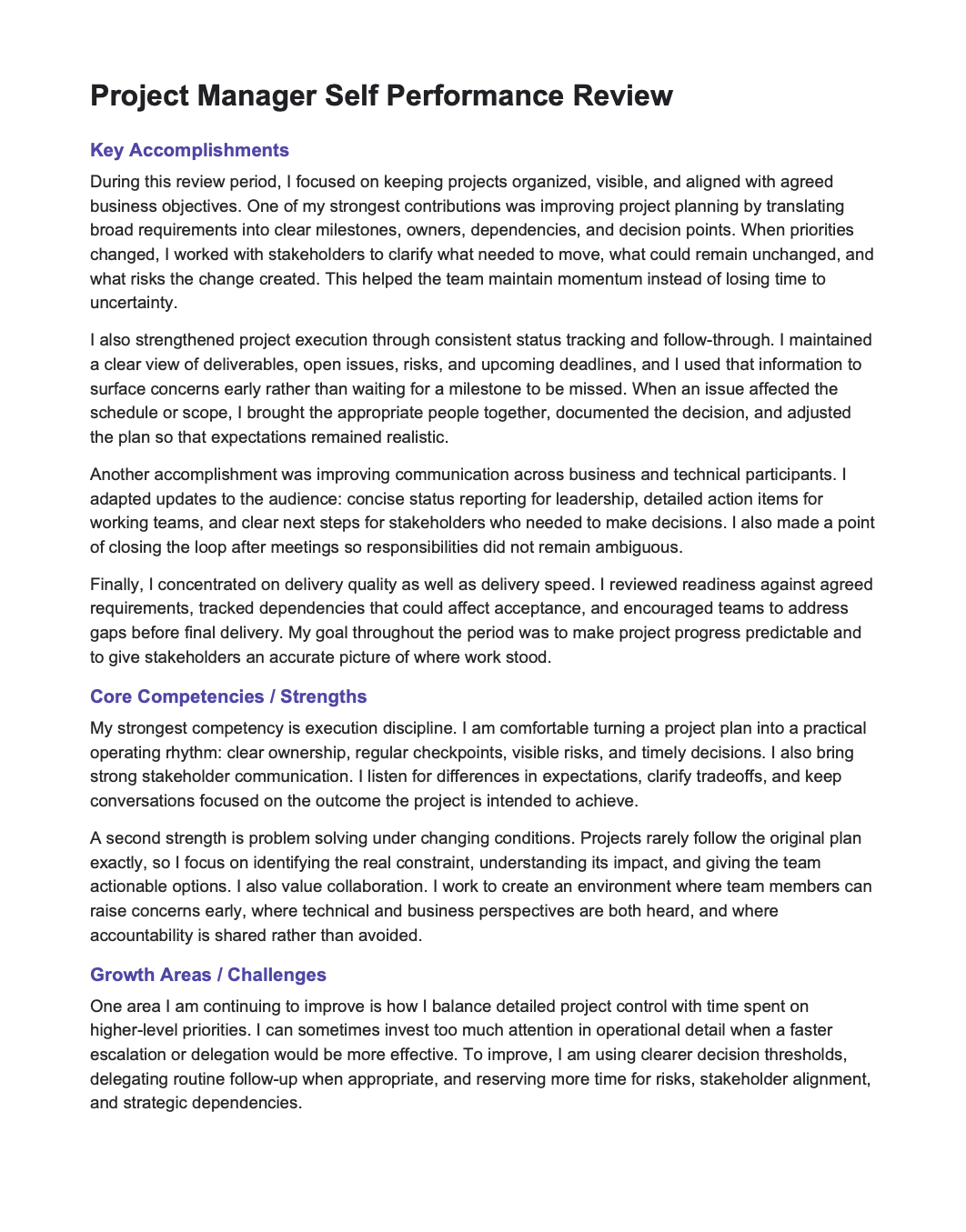
- Project Manager: Highlight completed projects, deadlines, budgets, stakeholder communication, risk management, and process improvements.
- Teacher: Highlight lesson planning, student engagement, classroom improvements, professional development, and teaching strategies.
- Customer Service Representative: Highlight customer satisfaction, response times, issue resolution, communication, and service improvements.
- HR Manager: Highlight recruitment, employee engagement, training, retention, workplace initiatives, and HR process improvements.
- Financial Analyst: Highlight financial analysis, reporting accuracy, forecasting, cost savings, data analysis, and business insights.
- Graphic Designer: Highlight completed designs, creative projects, brand consistency, client satisfaction, and design skills.
- Administrative Assistant: Highlight organization, scheduling, communication, documentation, workflow improvements, and administrative efficiency.
FAQs
What Is a Self Performance Review?
A self performance review is an employee’s written assessment of their own job performance, achievements, strengths, challenges, areas for improvement, and future goals.
Include your key responsibilities, achievements, strengths, contributions, challenges, skills developed, areas for improvement, and goals for the next review period.What Should I Include in a Self Performance Review?
Start by briefly describing your role and overall performance during the review period. Then highlight your most important responsibilities and accomplishments.How Do I Start a Self Performance Review?
A self performance review should be long enough to explain your major accomplishments, contributions, development areas, and goals without unnecessary information. Keep the content focused and relevant to the review period.How Long Should a Self Performance Review Be?
Describe weaknesses as areas for improvement and explain what actions you are taking to develop those areas. This demonstrates self-awareness and a commitment to professional growth.How Do I Talk About Weaknesses in a Self Performance Review?
Yes, when relevant. Numbers, percentages, completed projects, time saved, revenue, productivity improvements, customer results, and other measurable outcomes can make your accomplishments more specific.Should I Include Numbers in a Self Performance Review?
Choose strengths that are relevant to your role and support them with specific examples. Explain how each strength helped you complete tasks, solve problems, support your team, or achieve results.How Do I Highlight My Strengths in a Self Performance Review?
Write goals that are specific, relevant to your role, achievable, and measurable. Connect them to your areas for improvement, professional development, or future responsibilities.How Do I Write Goals in a Self Performance Review?
Yes. A self performance review can help document accomplishments, increased responsibilities, leadership contributions, skills, and results that demonstrate professional growth and readiness for additional responsibilities.Can a Self Performance Review Help With a Promotion?
Yes, AI can help organize your responsibilities, accomplishments, strengths, challenges, and goals into clear professional statements. You should review and personalize the generated content to ensure it accurately represents your actual performance.Can AI Help Me Write a Self Performance Review?