






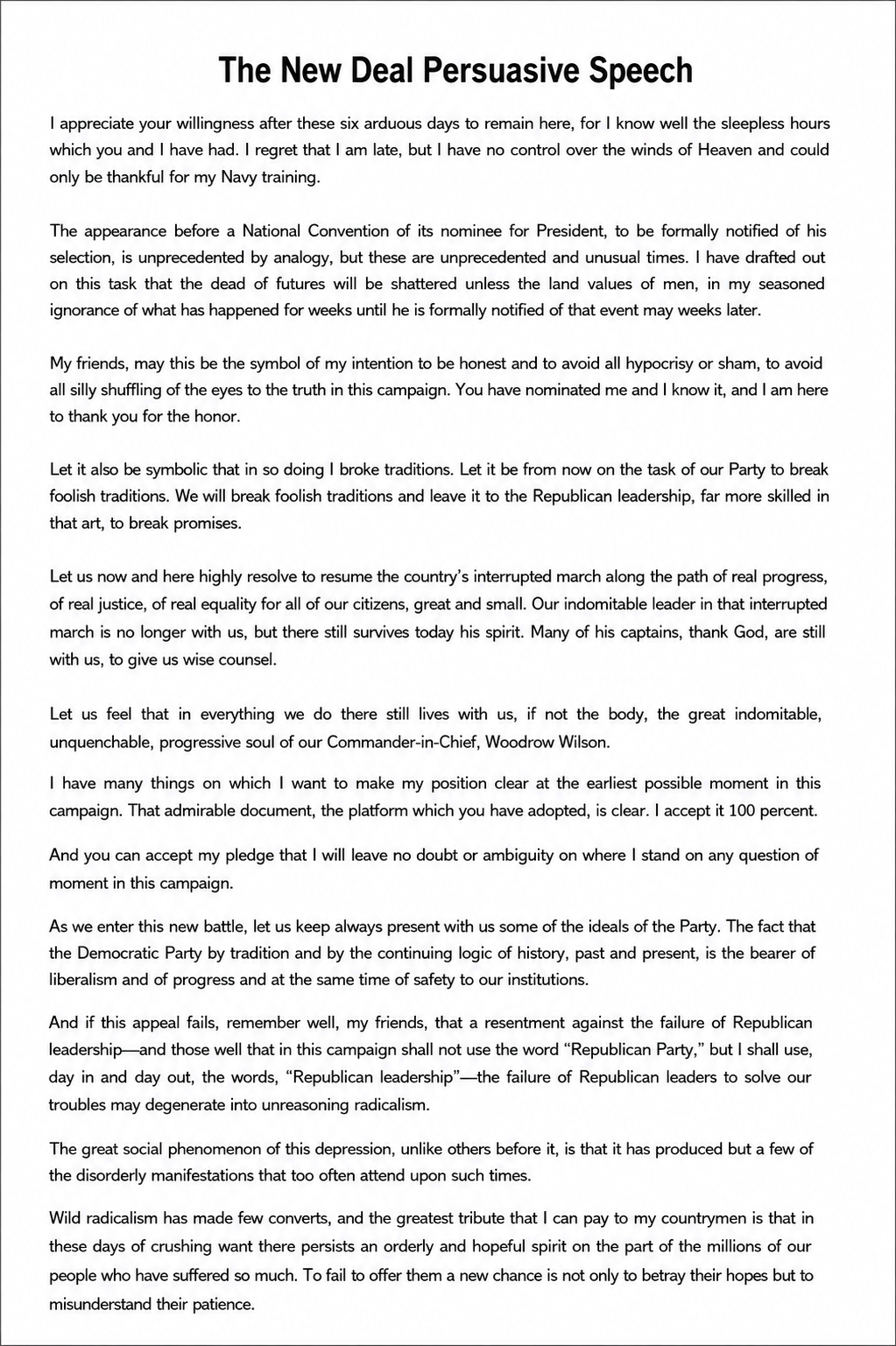
A persuasive speech is a targeted talk designed to convince an audience to change their minds, adopt a new perspective, or take a specific action. A strong persuasive speech combines credibility, emotion, and logic to make an argument convincing and memorable. Whether you are choosing a topic, writing your speech, or preparing to deliver it, understanding how persuasion works can help you present your ideas clearly and encourage your audience to respond.
What Is a Persuasive Speech?
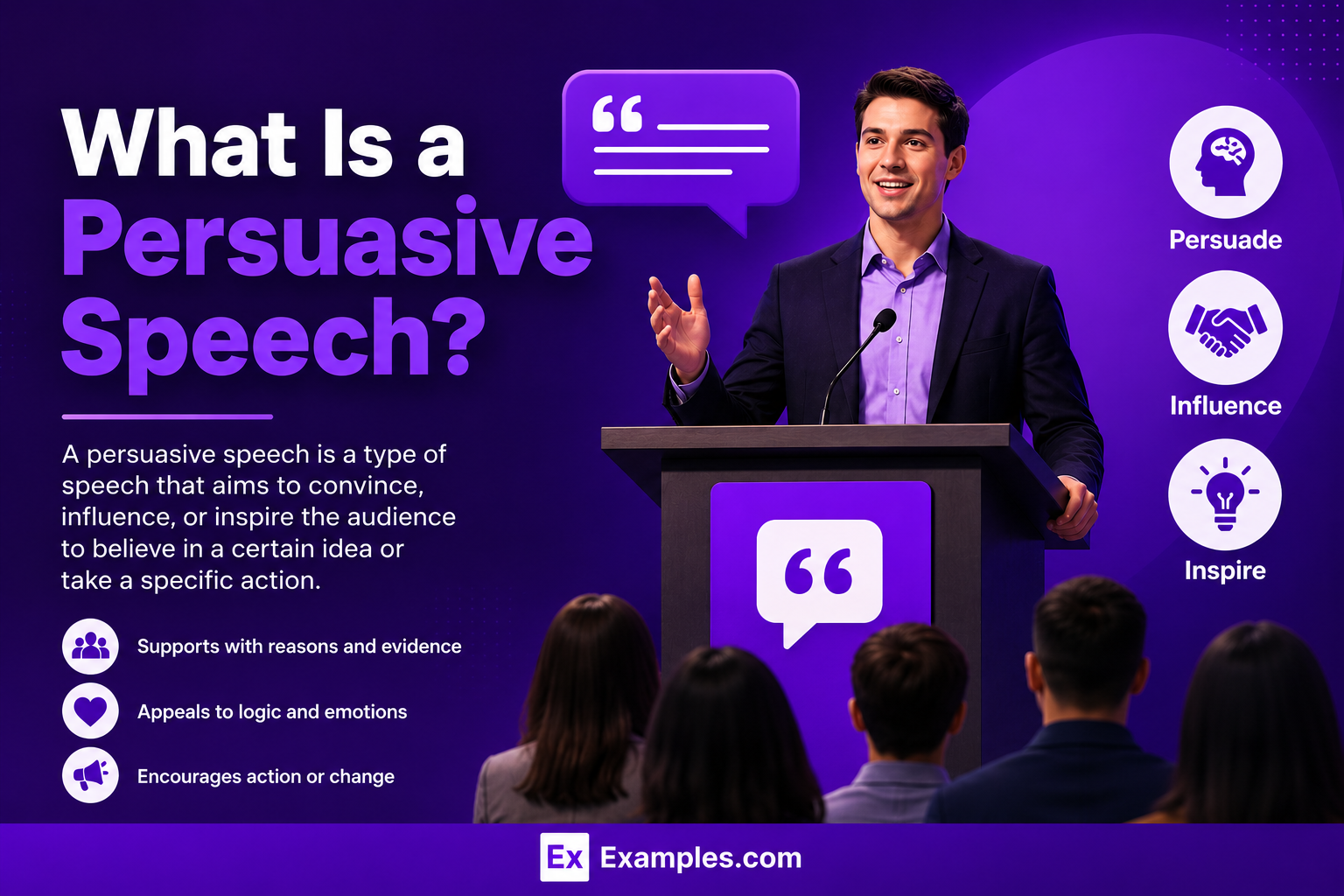
A persuasive speech is a targeted talk designed to convince an audience to change their viewpoint, accept a new perspective, or take a specific action. It uses clear arguments, credible information, emotional appeal, and logical reasoning to make the speaker’s message more convincing and encourage the audience to respond.
What Are the Different Types of Persuasive Speeches?
Policy Persuasive Speech
A Policy Persuasive Speech argues for or against a specific policy, rule, law, or proposed course of action and encourages the audience to support a change.
Value Persuasive Speech
A Value Persuasive Speech argues whether something is right, wrong, good, bad, ethical, or important based on specific standards or principles.
Fact Persuasive Speech
A Fact Persuasive Speech uses evidence and reasoning to convince the audience that a particular claim, condition, or interpretation is true.
Educational Persuasive Speech
An Educational Persuasive Speech aims to change how an audience thinks about a subject by presenting information, arguments, and supporting evidence.
Environmental Persuasive Speech
An Environmental Persuasive Speech encourages audiences to support environmental protection, conservation, sustainability, or changes in everyday behavior.
Social Persuasive Speech
A Social Persuasive Speech addresses a social issue and encourages the audience to reconsider a viewpoint, support a cause, or take meaningful action.
Business Persuasive Speech
A Business Persuasive Speech is designed to convince an audience to support a business idea, proposal, strategy, product, or organizational decision.
Health Persuasive Speech
A Health Persuasive Speech encourages audiences to adopt healthier behaviors, consider health-related issues, or make informed decisions about their well-being.
How Do I Generate a Persuasive Speech Using Real Persuasive Speech Examples?
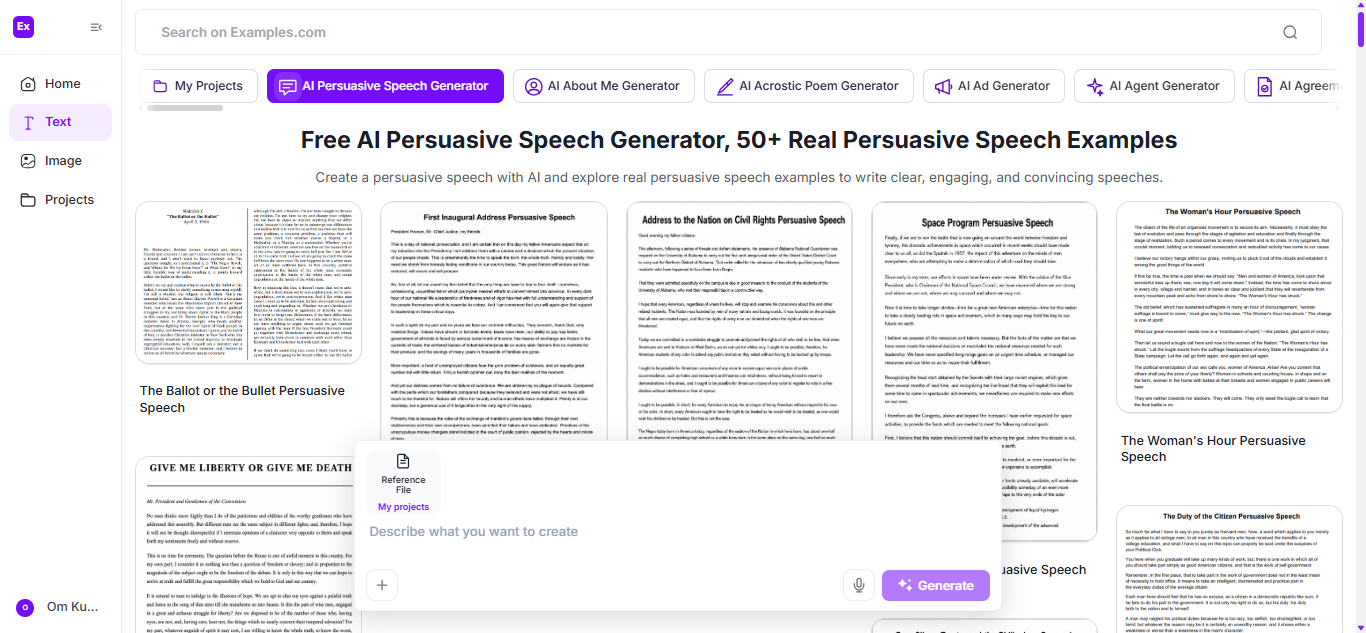
Explore Real Persuasive Speech Examples
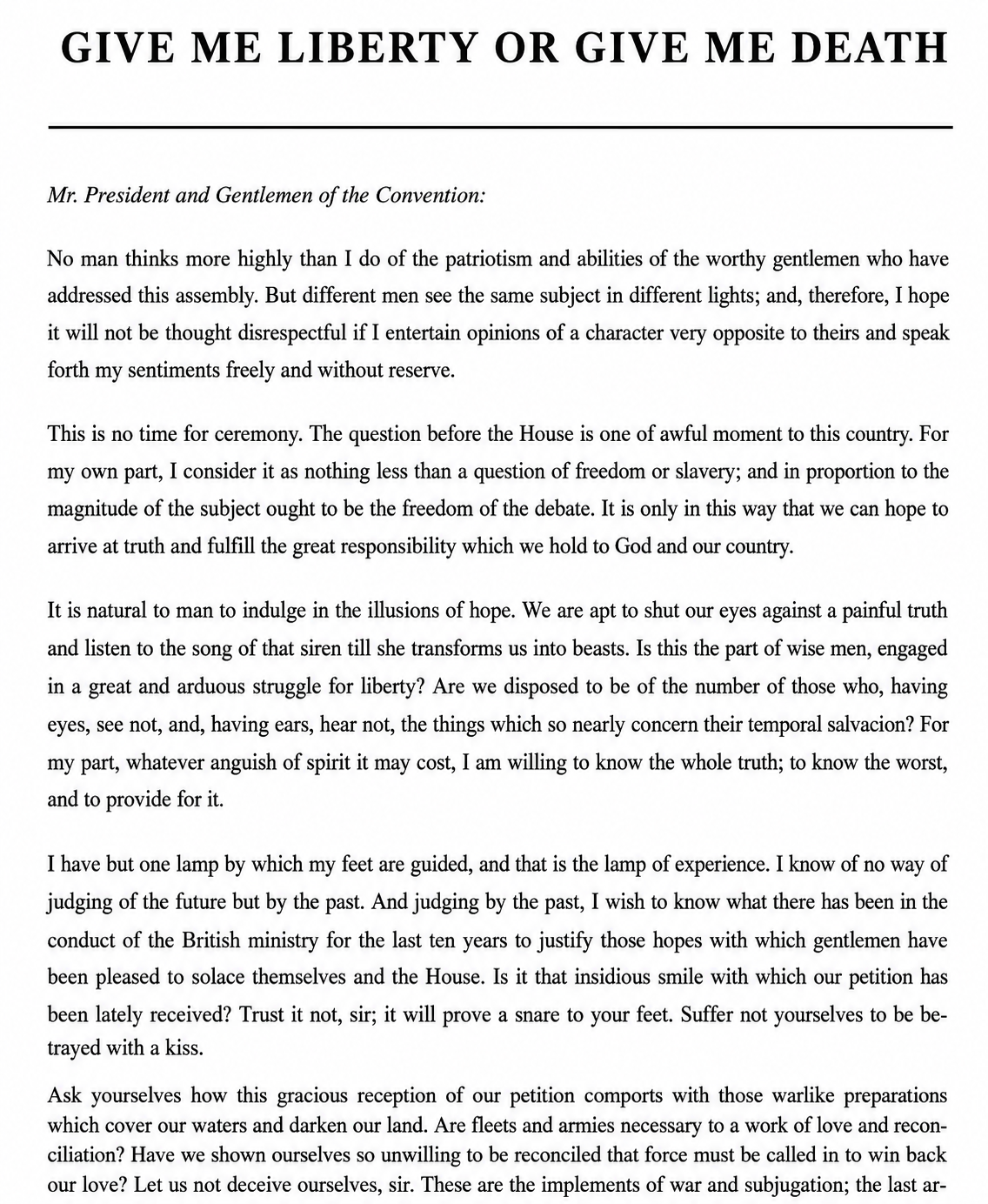
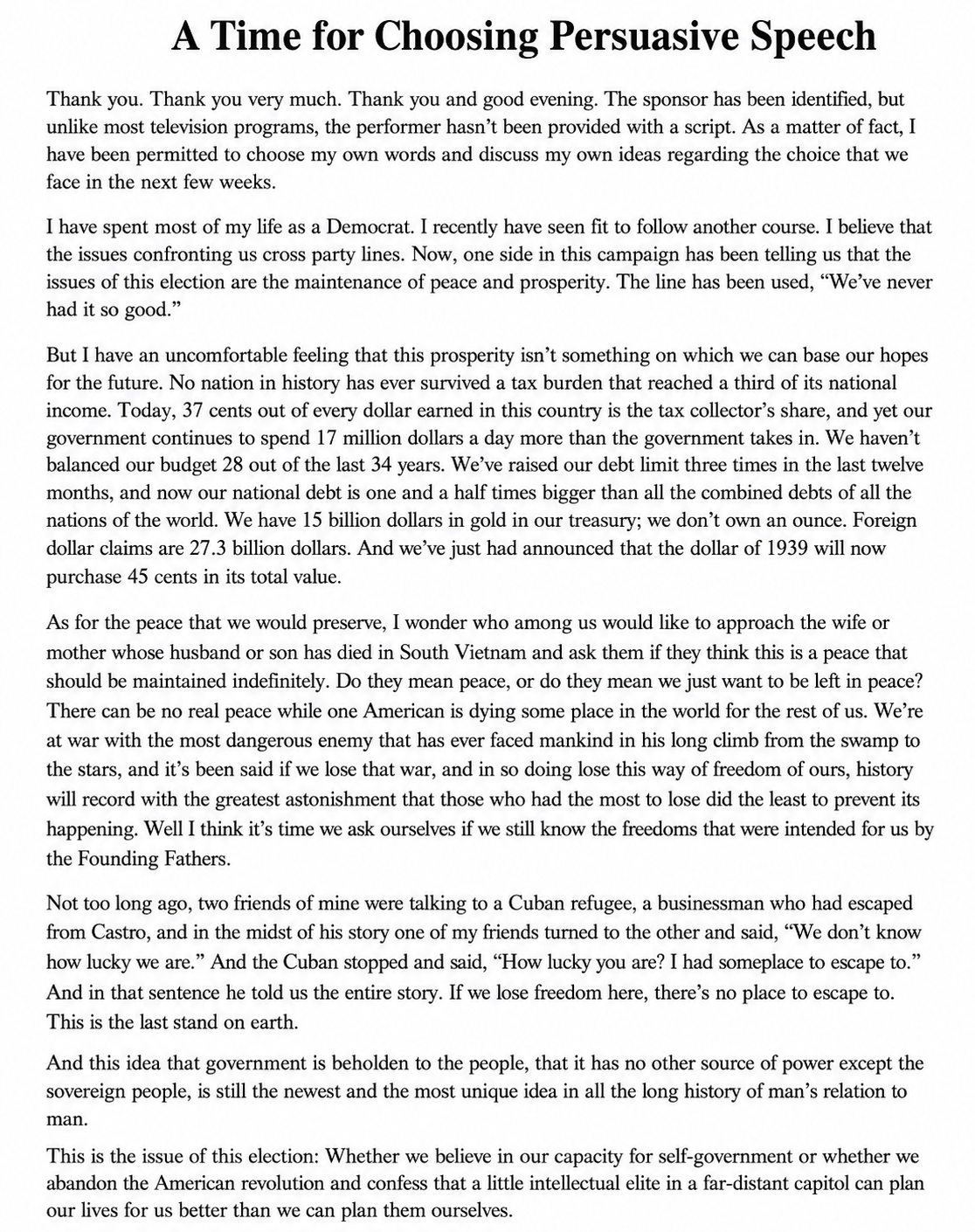
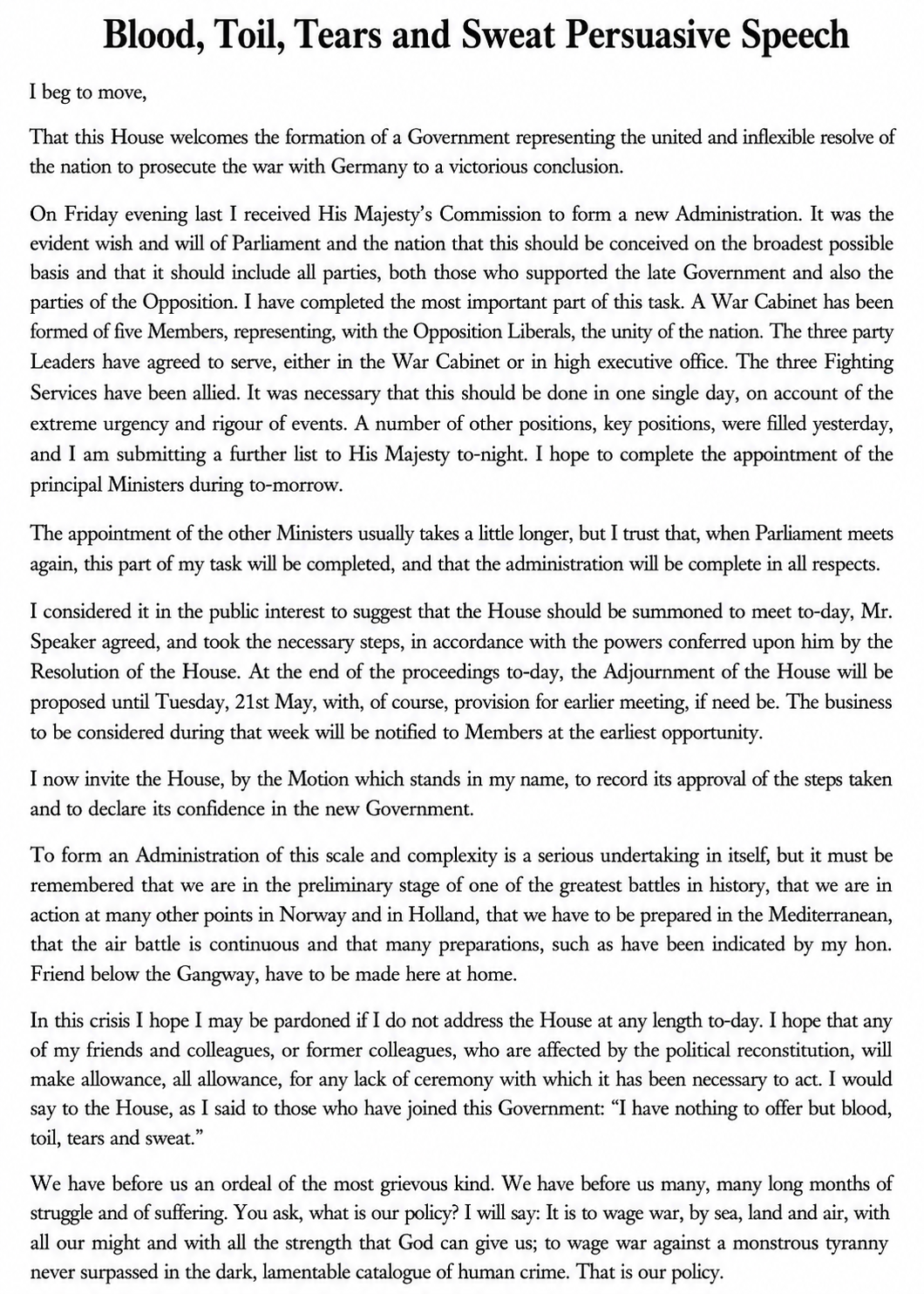
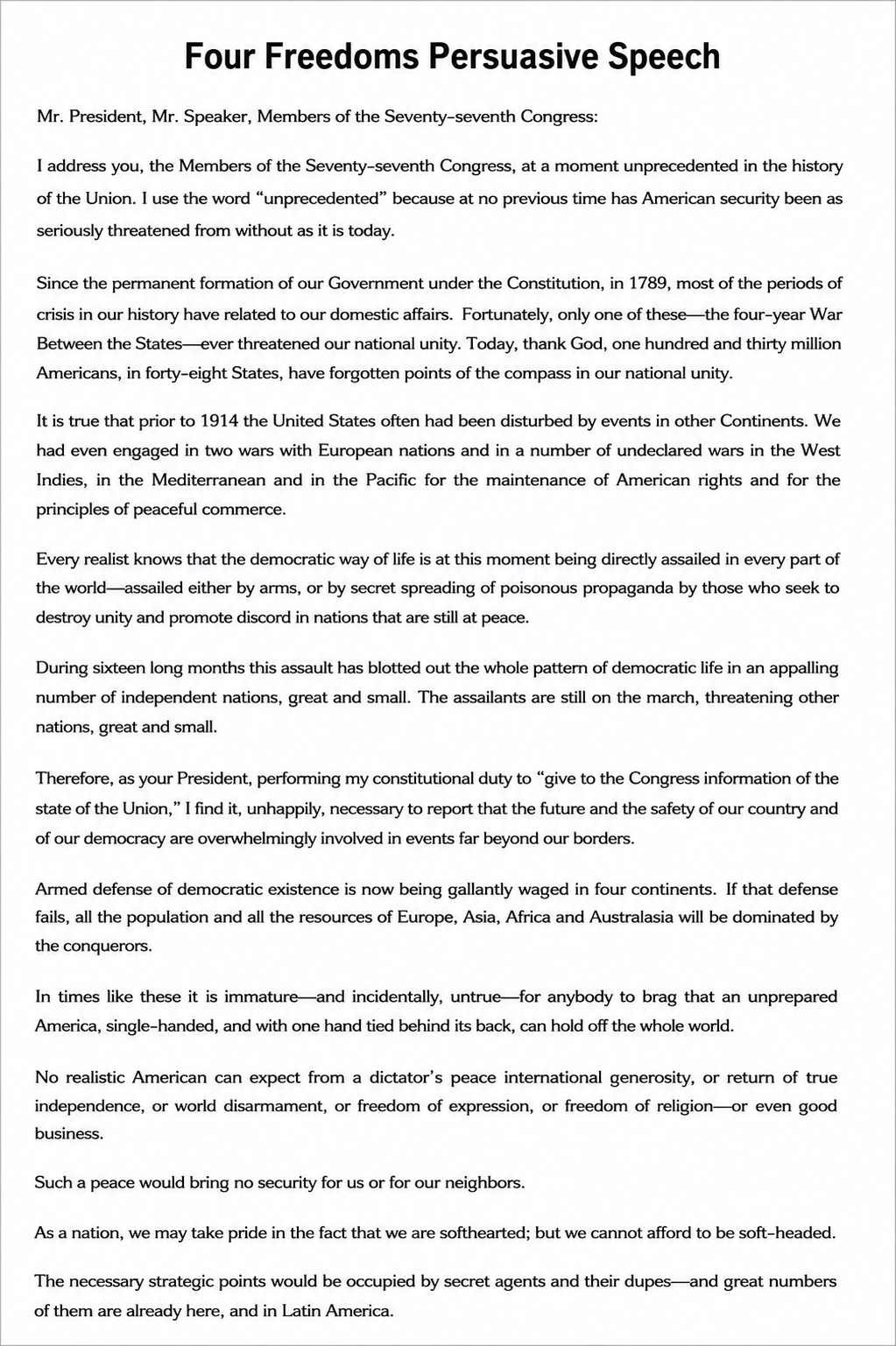
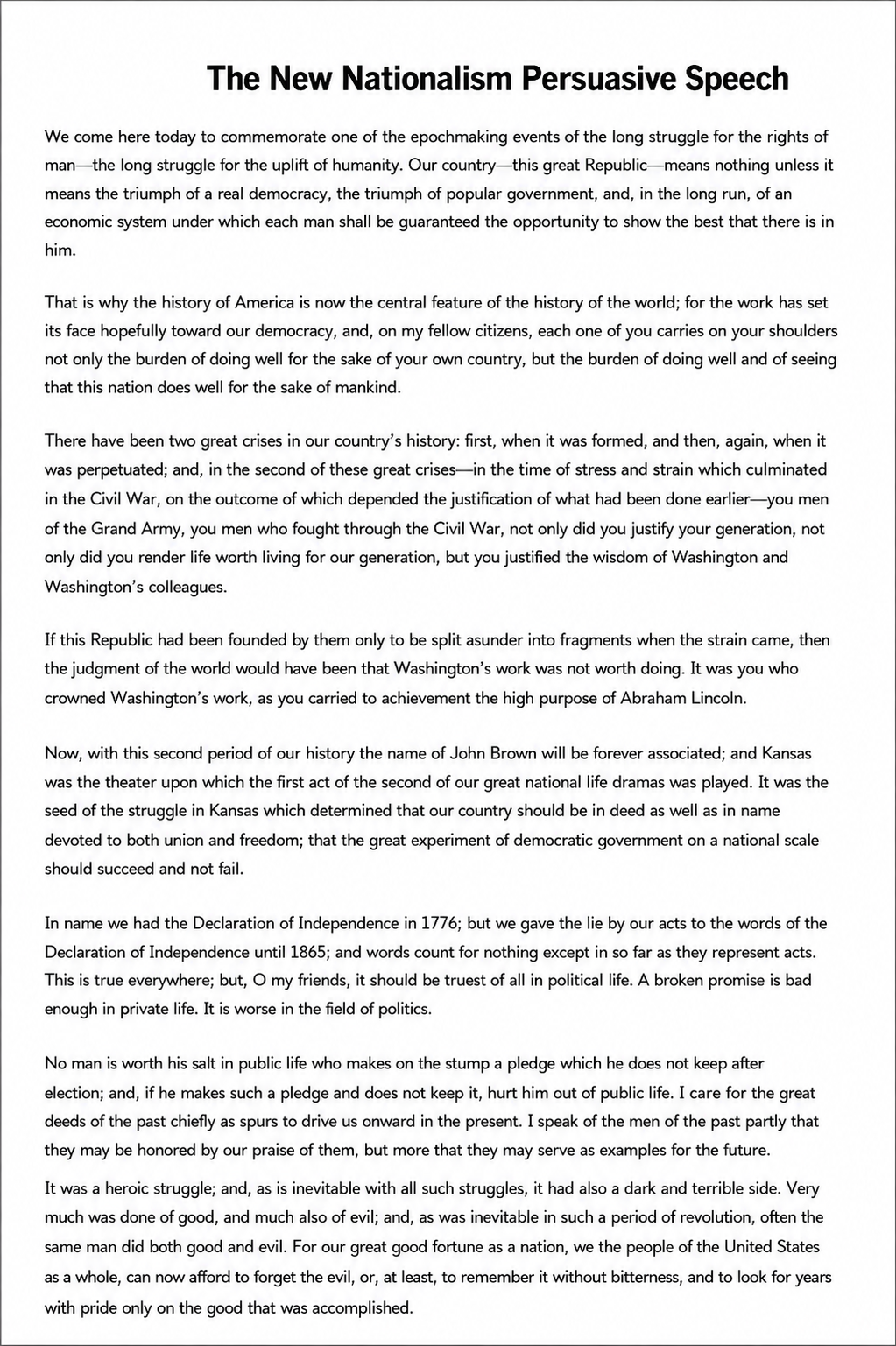
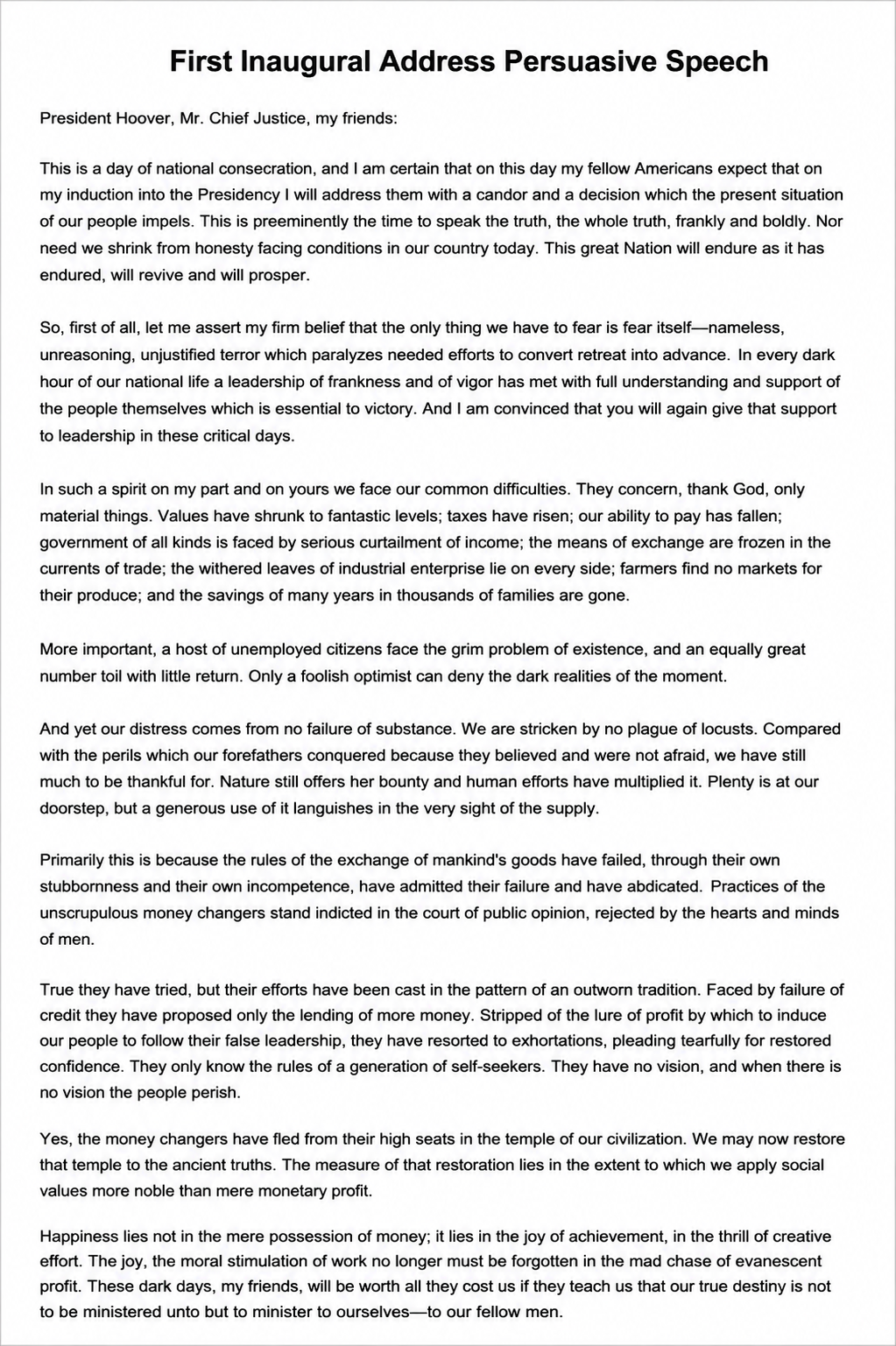
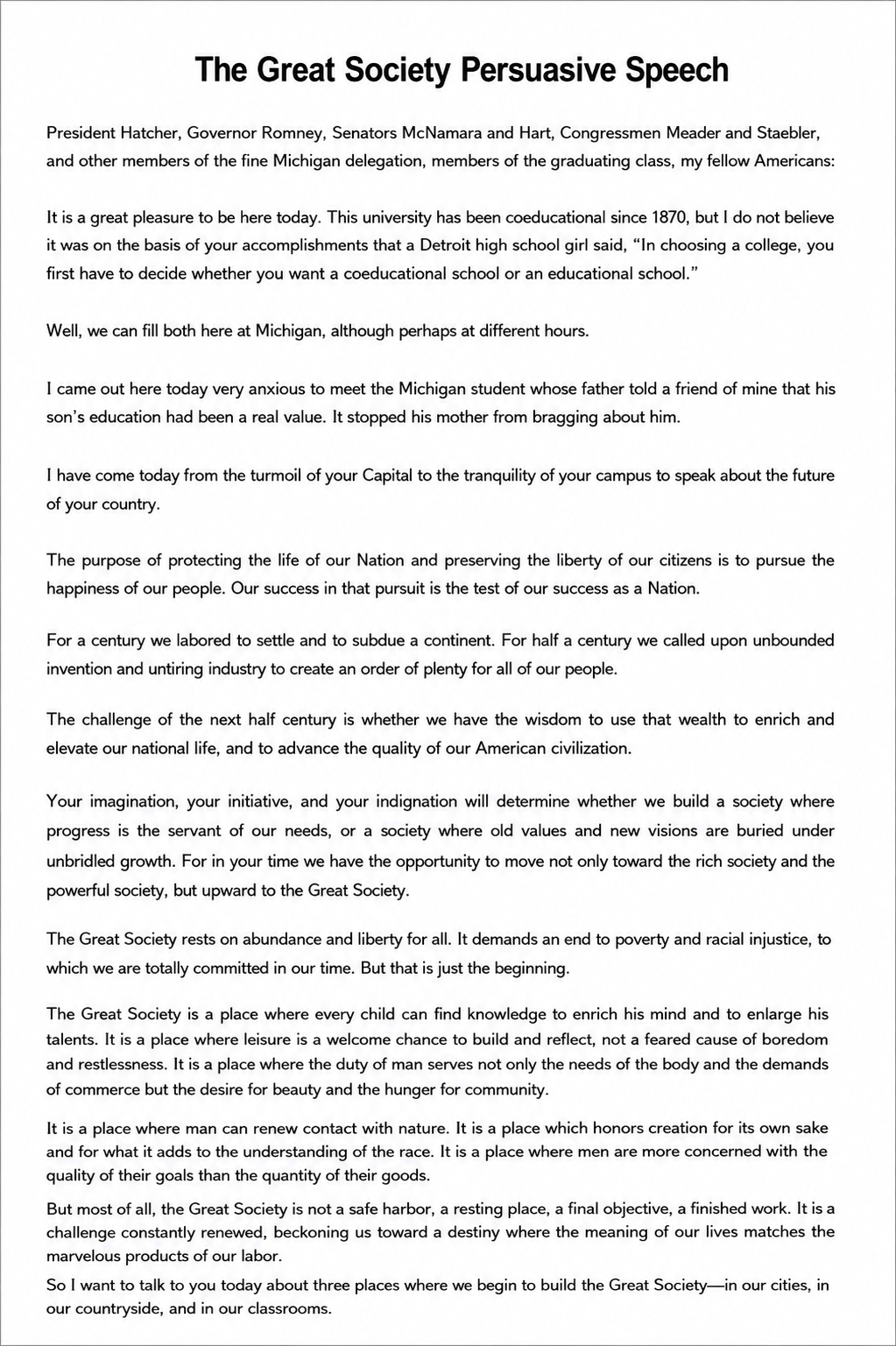
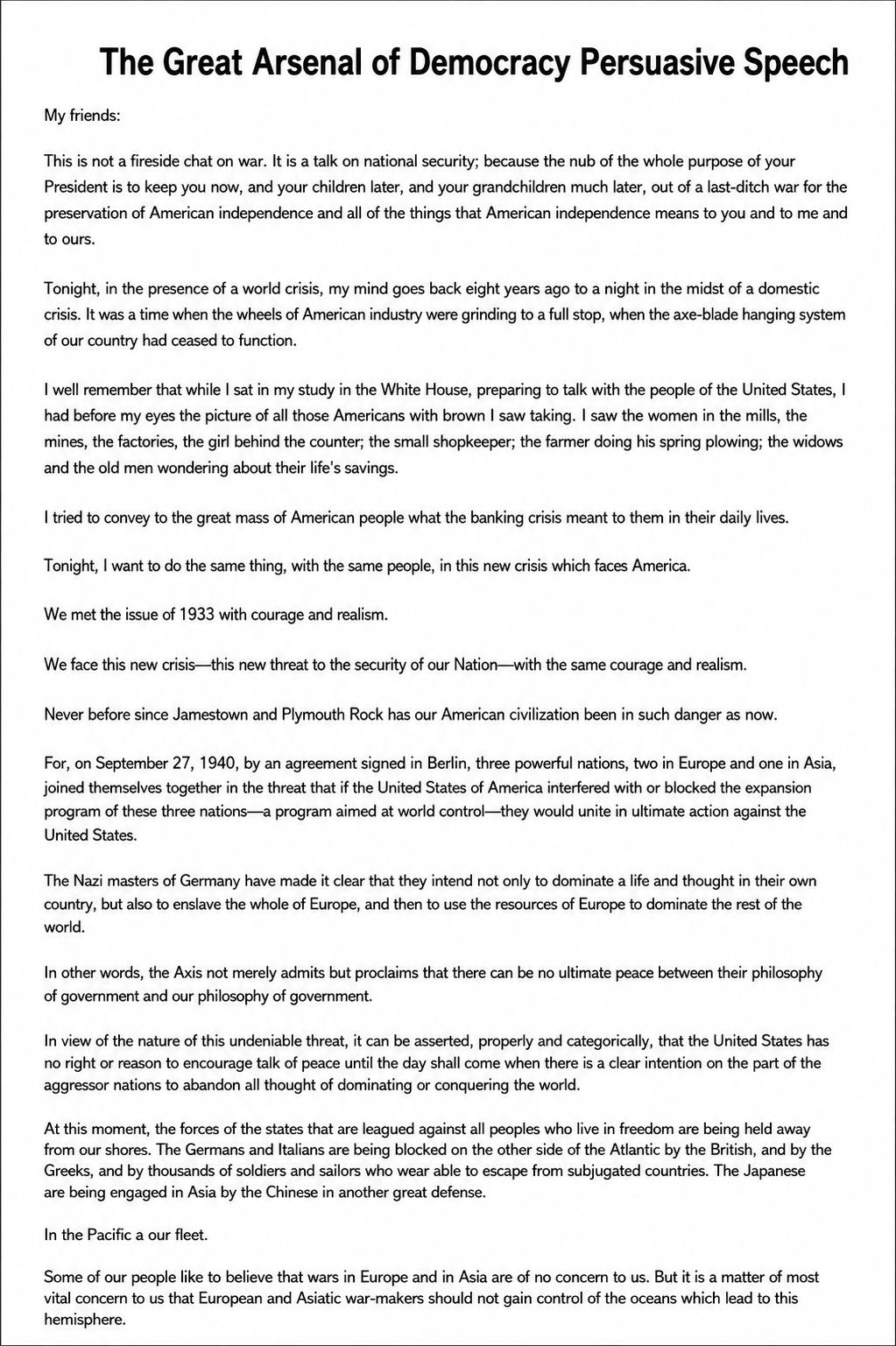
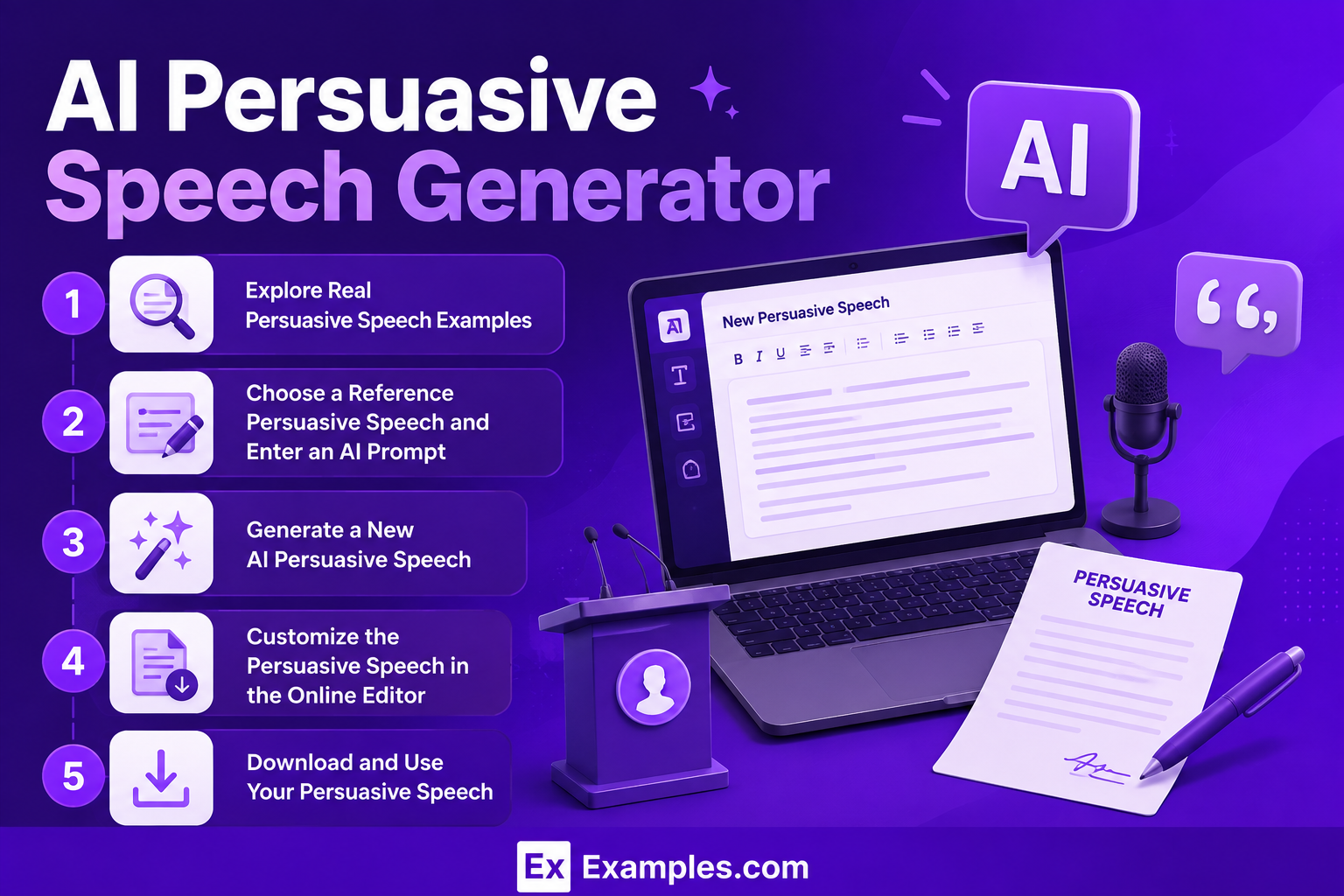
Browse real persuasive speech examples to understand speech structure, arguments, persuasive techniques, supporting evidence, and effective language. Reviewing examples helps you identify how strong speeches present ideas and influence an audience.
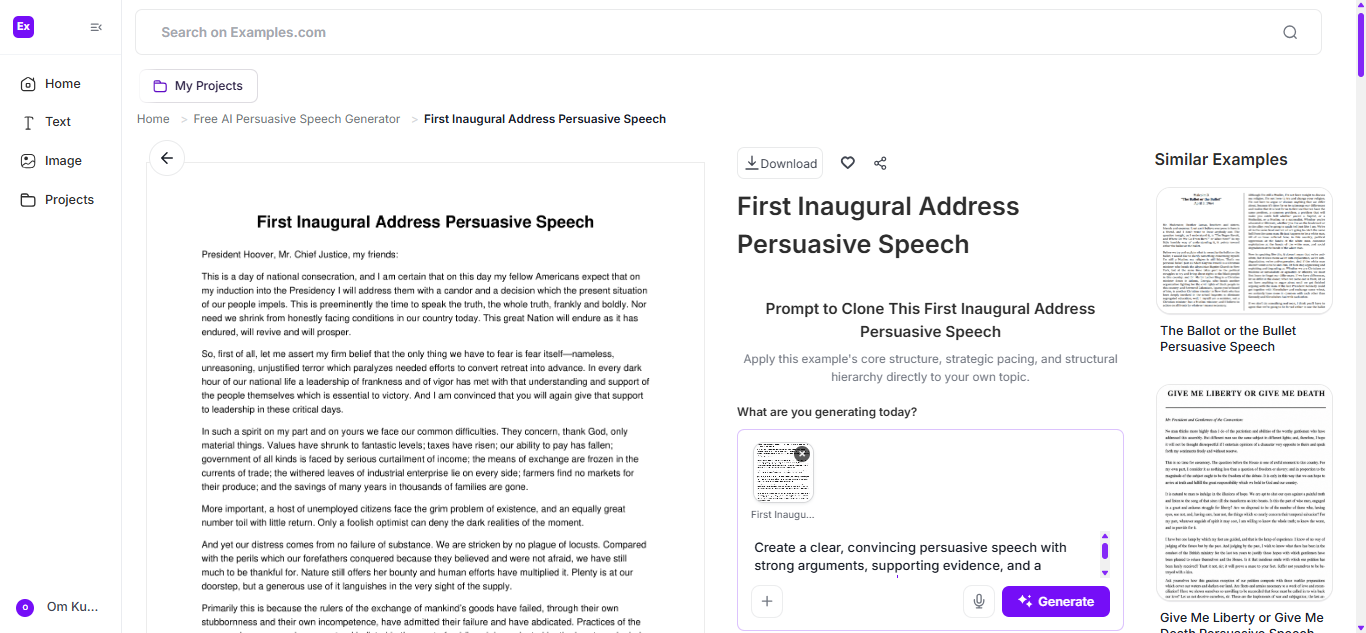
Choose a Reference Persuasive Speech and Enter an AI Prompt
Select a reference persuasive speech and describe your requirements, including the topic, audience, position, key arguments, supporting points, tone, and desired speech length.
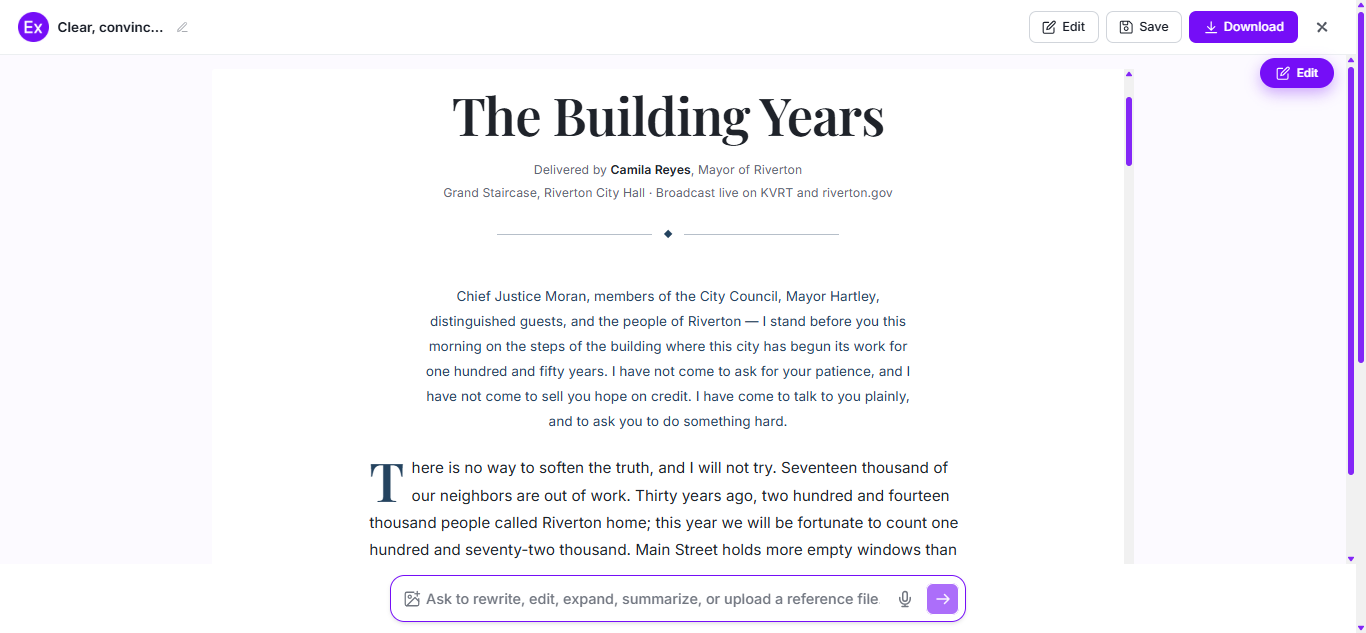
Generate a New AI Persuasive Speech
The AI generates a customized persuasive speech based on your prompt, organizing the introduction, arguments, supporting evidence, counterarguments, and conclusion into a clear structure.
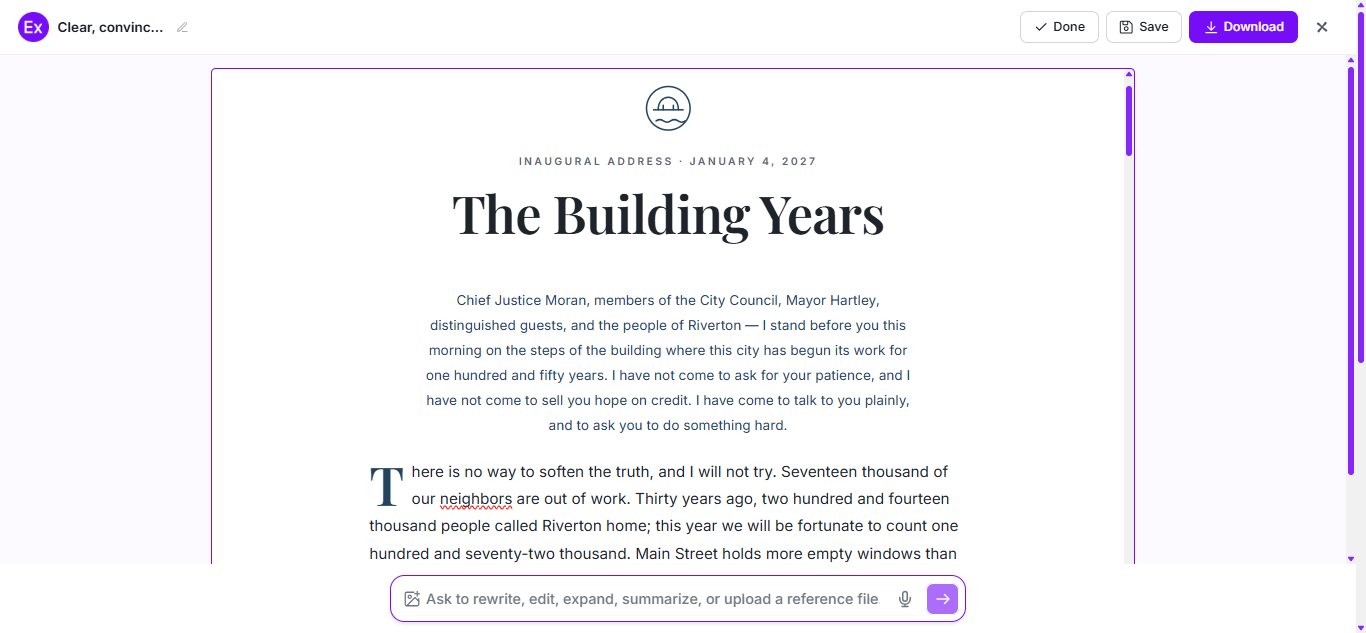
Customize the Persuasive Speech in the Online Editor
Edit the topic, arguments, examples, evidence, tone, wording, and conclusion to make the persuasive speech better suited to your audience and purpose.
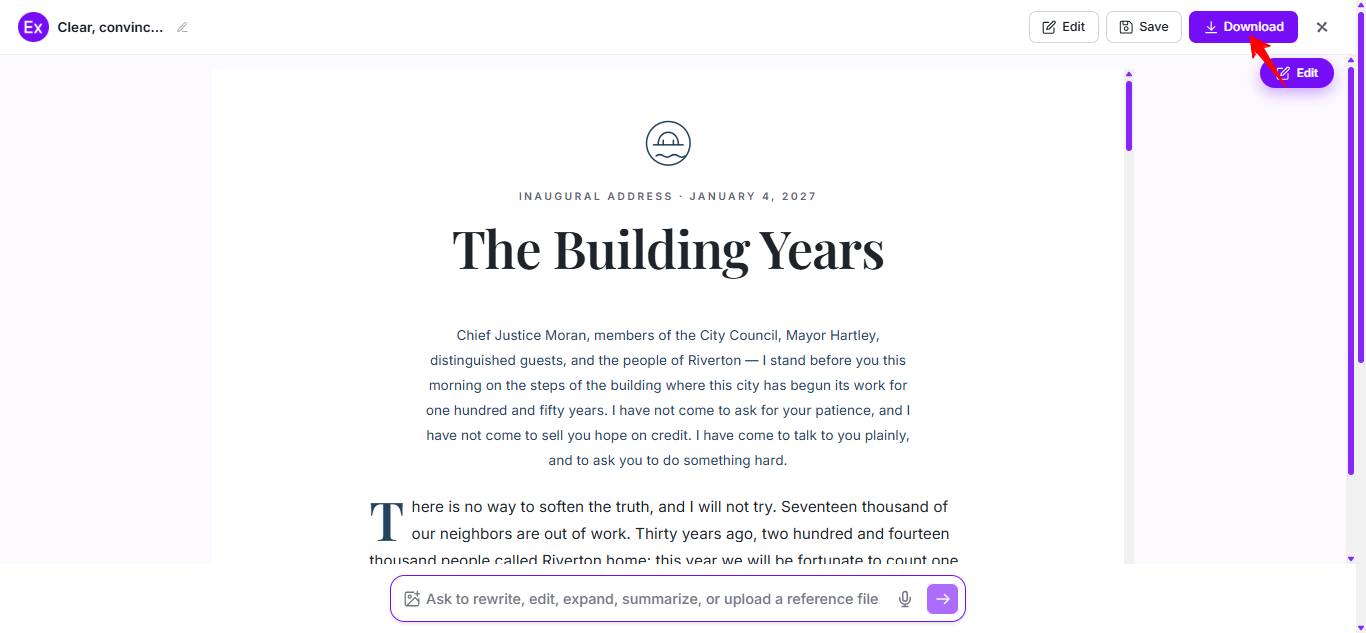
Download and Use Your Persuasive Speech
Download your completed persuasive speech in PDF format for reviewing, practicing, printing, or keeping as a reference while preparing for your presentation.
AI Persuasive Speech Editing Features
AI Speech Generation
Generate a structured persuasive speech based on your topic, audience, purpose, arguments, and desired tone.
Smart Argument Editing
Add, remove, or refine arguments, supporting points, and counterarguments to make your speech more convincing.
Auto Formatting
Automatically organize introductions, main arguments, supporting evidence, and conclusions into a clear speech structure.
Speech Customization
Update the topic, examples, tone, language, audience focus, and other speech details to match your presentation needs.
Instant PDF Download
Download your completed persuasive speech as a PDF for reviewing, practicing, printing, or preparing for delivery.
Which Essential Elements Should I Include in Every Persuasive Speech?
- Clear Purpose: State exactly what you want your audience to believe, support, or do.
- Strong Introduction: Capture attention and quickly establish why the topic matters.
- Central Claim: Present a clear and specific position that guides the entire speech.
- Logical Arguments: Provide well-organized reasons that support your central claim.
- Supporting Evidence: Use relevant facts, examples, statistics, and explanations to strengthen your arguments.
- Ethos: Establish credibility by showing knowledge, experience, fairness, or trustworthiness.
- Pathos: Connect with the audience through emotions, stories, relatable situations, or meaningful examples.
- Logos: Use logical reasoning and evidence to make your argument clear and convincing.
- Counterargument: Address an opposing viewpoint and explain why your position is stronger.
- Call to Action: Give the audience a specific action to take after hearing your speech.
- Strong Conclusion: Reinforce your main message and leave the audience with a memorable final thought.
How Do I Write a Strong Persuasive Speech?
Start With a Strong Hook
Open with a question, surprising fact, brief story, or powerful statement that immediately captures your audience’s attention.
Introduce Your Position
Clearly state the main idea or position you want your audience to understand, support, or act on.
Know Your Audience
Consider your audience’s interests, concerns, values, and existing opinions so you can make your arguments more relevant and convincing.
Build Strong Arguments
Present clear and focused arguments that directly support your central claim and move your audience toward your desired conclusion.
Add Supporting Evidence
Strengthen your arguments with relevant facts, statistics, examples, explanations, and other credible supporting information.
Use Persuasive Appeals
Combine ethos, pathos, and logos to establish credibility, create an emotional connection, and support your ideas with logical reasoning.
Address Counterarguments
Acknowledge an opposing viewpoint and explain why your position is more reasonable, effective, or beneficial.
End With a Call to Action
Tell your audience exactly what you want them to believe, support, change, or do after hearing your speech.
Create a Memorable Conclusion
Briefly reinforce your main argument and finish with a strong statement that leaves your audience thinking about your message.
Practice Your Delivery
Read your persuasive speech aloud and improve your pacing, pauses, emphasis, tone, and confidence before presenting it.
How Do I Make a Persuasive Speech More Convincing?
Make a persuasive speech more convincing by presenting a clear position, using credible evidence, and connecting your argument to the audience’s interests and concerns. Combine ethos to establish credibility, pathos to create an emotional connection, and logos to provide logical reasoning. Address opposing viewpoints, use relevant examples, maintain a confident conversational tone, and finish with a specific call to action that encourages the audience to respond.
Why Should I Use Real Persuasive Speech Examples to Create My Own Persuasive Speech?
- Real persuasive speech examples help you understand how effective introductions, arguments, supporting points, and conclusions are organized.
- They show how ethos, pathos, and logos can be used to build credibility, create emotional connections, and support an argument with logical reasoning.
- Reviewing examples can provide inspiration when you are choosing a topic, developing a position, or deciding which arguments to present.
- Examples demonstrate how strong claims can be supported with relevant evidence, facts, statistics, explanations, and real-world examples.
- Studying different speeches helps you learn how persuasive language, questions, stories, and relatable ideas can keep an audience engaged.
- Real examples can show you how to create a stronger opening that immediately introduces the topic and gives the audience a reason to listen.
- They can also help you understand how to develop a conclusion that reinforces the main message and encourages the audience to take action.
- Comparing different persuasive speeches allows you to see how structure, tone, evidence, and presentation can change according to the topic and audience.
- Using examples as references can make the writing process easier by giving you a practical model for organizing your own ideas.
- Most importantly, real persuasive speech examples should guide your understanding of effective techniques while your final speech uses your own original ideas, arguments, evidence, and wording.
What Common Persuasive Speech Mistakes Should I Avoid?
- Starting Without a Clear Purpose: Avoid beginning your persuasive speech without knowing exactly what you want your audience to believe, support, or do.
- Using Weak Arguments: Avoid making claims without clear reasoning or strong supporting points that connect directly to your main position.
- Ignoring Your Audience: Do not use arguments, examples, or language that fail to match your audience’s interests, concerns, knowledge, or values.
- Relying on Unsupported Claims: Avoid presenting opinions as facts. Support important points with relevant evidence, examples, statistics, or logical explanations.
- Overusing Emotional Appeals: Emotion can strengthen a persuasive speech, but relying on emotion alone can make your argument less balanced and convincing.
- Ignoring Counterarguments: Avoid pretending that opposing viewpoints do not exist. Address reasonable objections and explain why your position remains stronger.
- Using Too Much Information: Do not overload your speech with unnecessary facts or lengthy explanations. Focus on the strongest points that support your central message.
- Having a Weak Introduction: Avoid a generic opening that fails to capture attention or explain why the topic matters to your audience.
- Ending Without a Clear Call to Action: Do not leave your audience wondering what to do next. Clearly state the action, change, or response you want.
- Failing to Practice: Avoid delivering your persuasive speech without preparation. Practice your pacing, tone, pauses, emphasis, and overall confidence before presenting.
How Can I Deliver a Persuasive Speech Effectively?
- Know Your Speech: Understand your main points and argument before presenting.
- Practice Your Delivery: Rehearse to improve confidence, timing, and clarity.
- Maintain Eye Contact: Look at your audience to create a stronger connection.
- Speak Clearly: Use an appropriate volume, tone, and pace.
- Use Natural Gestures: Let your facial expressions and movements support your message.
- Engage Your Audience: Use relatable examples and questions to maintain attention.
- Emphasize Key Points: Use pauses and vocal emphasis for important arguments.
- End Strongly: Deliver your conclusion and call to action with confidence.
Persuasive Speech Ideas for Different Audiences and Occasions
- Students: School rules, technology, education, and healthy habits.
- Parents: Screen time, child education, and family health.
- Teachers: Classroom methods, technology, and student engagement.
- Employees: Workplace flexibility, wellness, and productivity.
- Community Groups: Recycling, public safety, and local development.
- Business Audiences: Customer service, innovation, and workplace improvements.
- General Audiences: Health, education, technology, environment, and social issues.
FAQs
What Makes a Persuasive Speech Effective?
A persuasive speech is effective when it combines a clear claim, strong evidence, audience awareness, logical reasoning, and compelling emotional appeal.
How Long Should a Persuasive Speech Be?
A persuasive speech should be long enough to develop its argument clearly while maintaining audience attention and avoiding unnecessary information.
What Is the Best Way to Start a Persuasive Speech?
Start with a compelling question, surprising fact, brief story, or powerful statement that immediately introduces the topic and captures attention.
How Do I Choose a Persuasive Speech Topic?
Choose a focused topic that interests your audience, supports meaningful discussion, and gives you enough evidence to develop arguments.
What Is the Difference Between Persuasive and Informative Speeches?
A persuasive speech aims to influence beliefs or actions, while an informative speech primarily explains, describes, or teaches information.
How Do Ethos, Pathos, and Logos Work in Persuasive Speeches?
Ethos establishes credibility, pathos creates emotional connection, and logos uses evidence and reasoning to make an argument more convincing.
How Can I Keep My Audience Interested During a Persuasive Speech?
Use relatable examples, engaging questions, varied delivery, concise arguments, and relevant stories to maintain attention throughout your persuasive speech.
Should I Include Opposing Views in a Persuasive Speech?
Yes, addressing opposing views demonstrates fairness and allows you to explain why your argument provides a stronger or more reasonable position.
How Can I End a Persuasive Speech Strongly?
Summarize your central message, reinforce your strongest point, and finish with a clear call to action or memorable statement.
Can I Use Real Persuasive Speech Examples for Inspiration?
Yes, real examples can help you study structure, arguments, persuasive techniques, and delivery while developing your own original speech.