
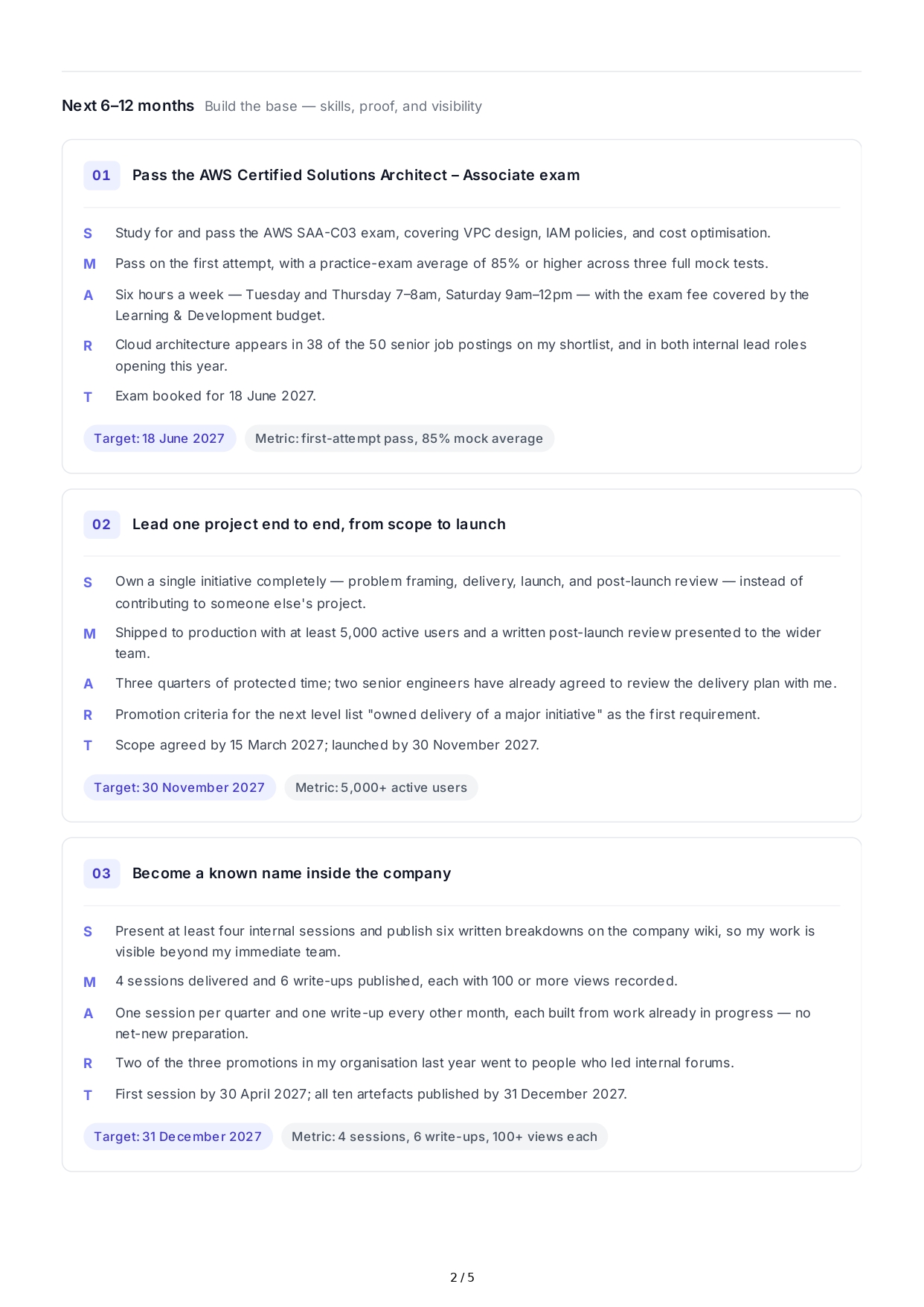
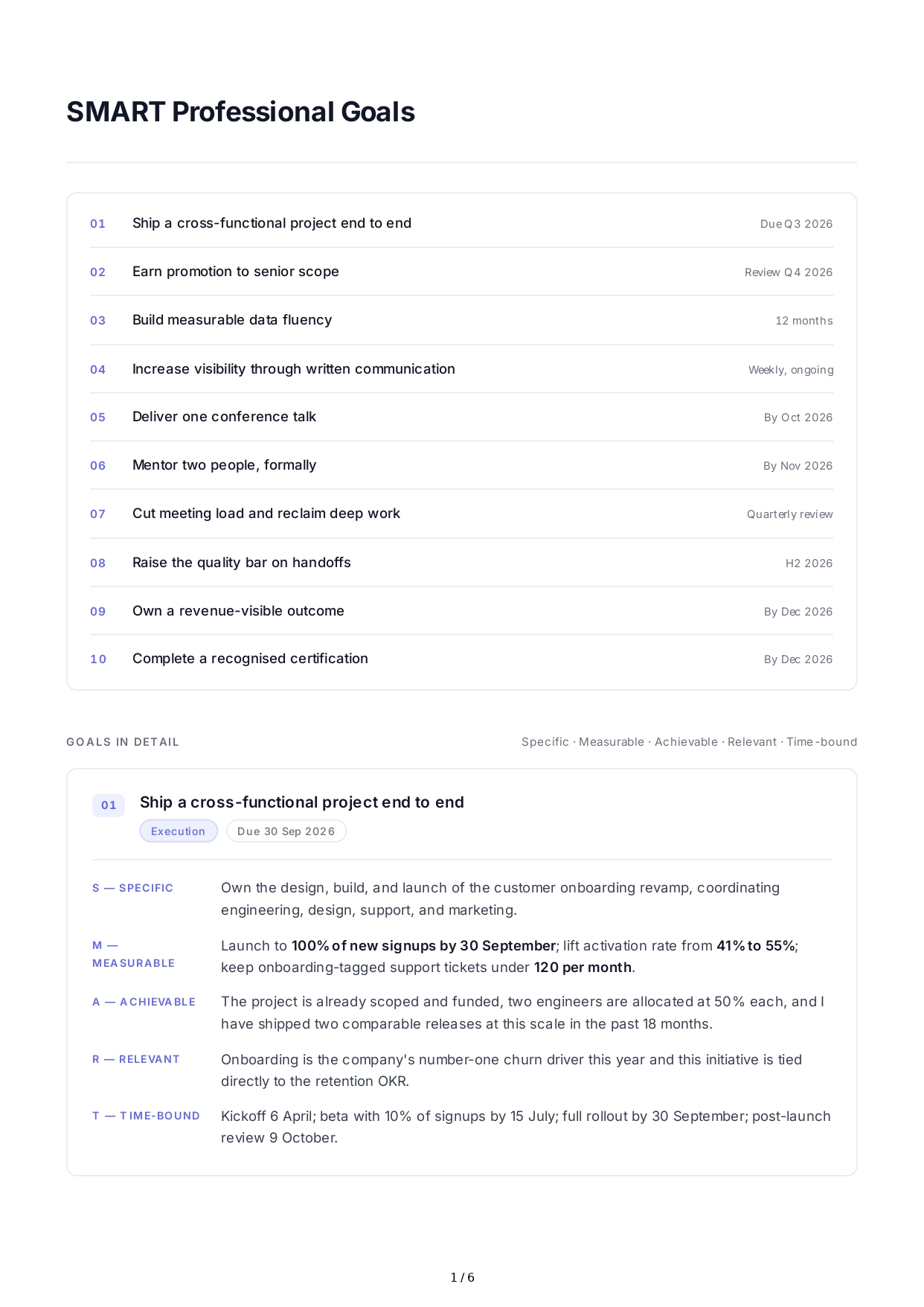
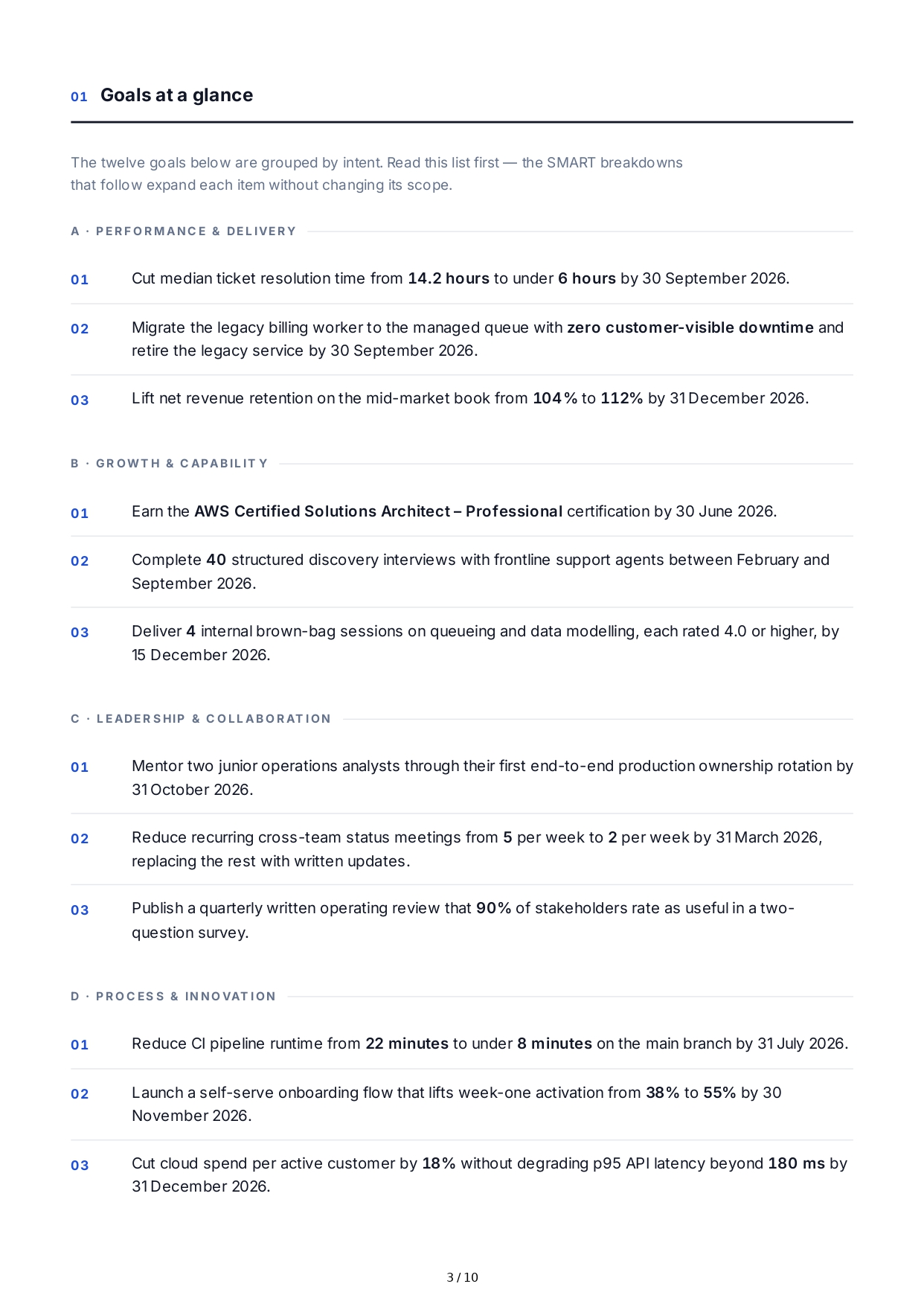
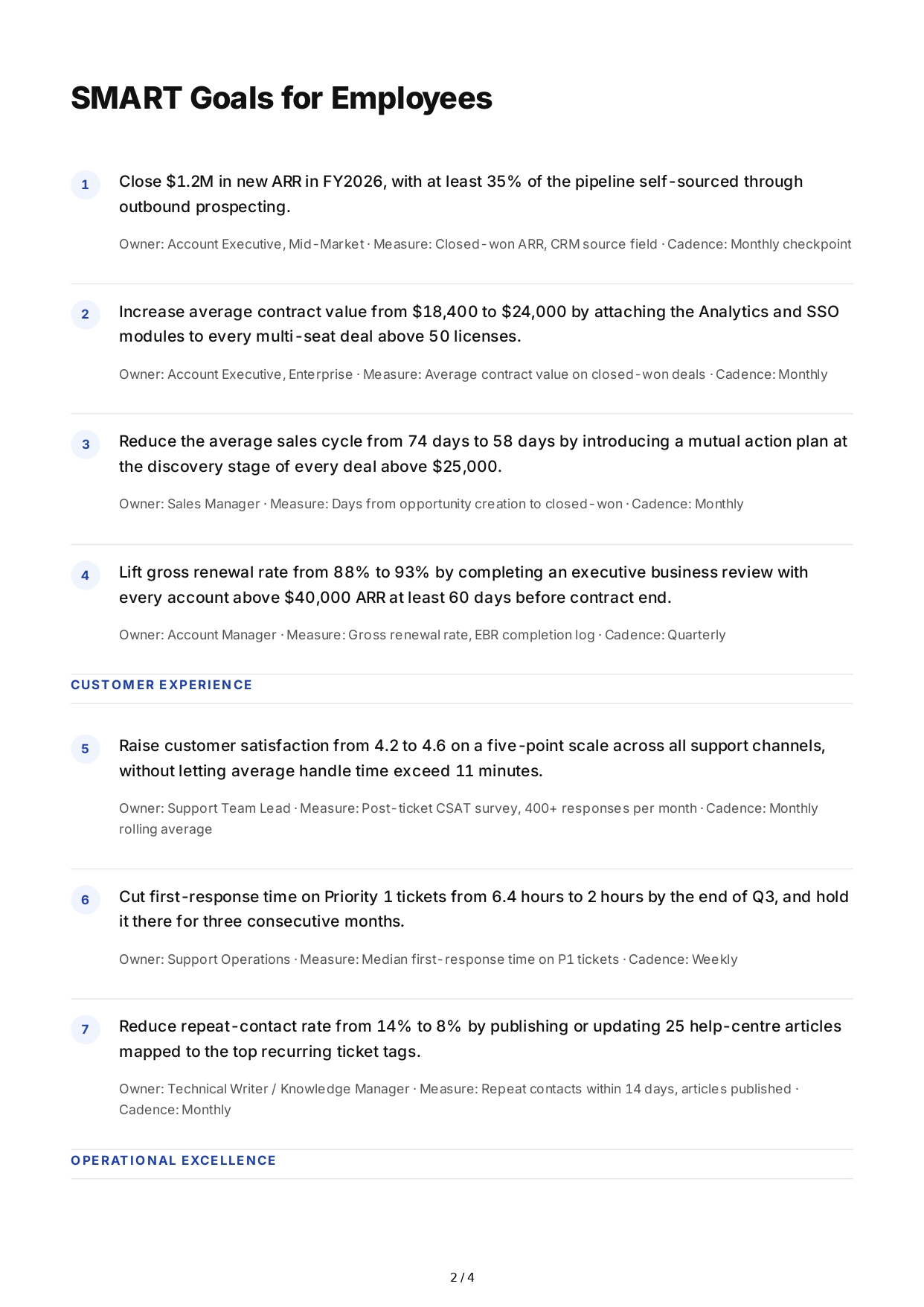
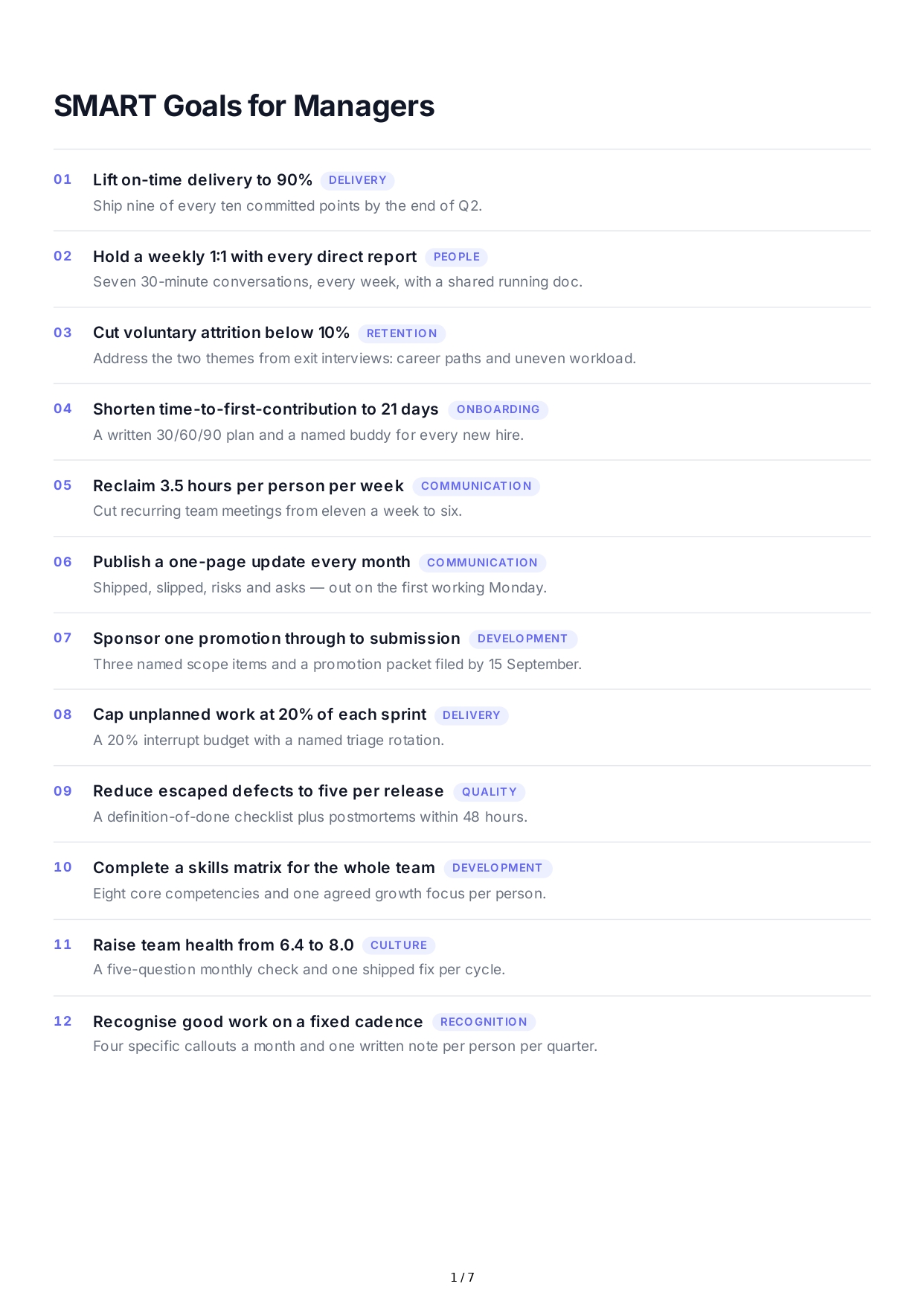
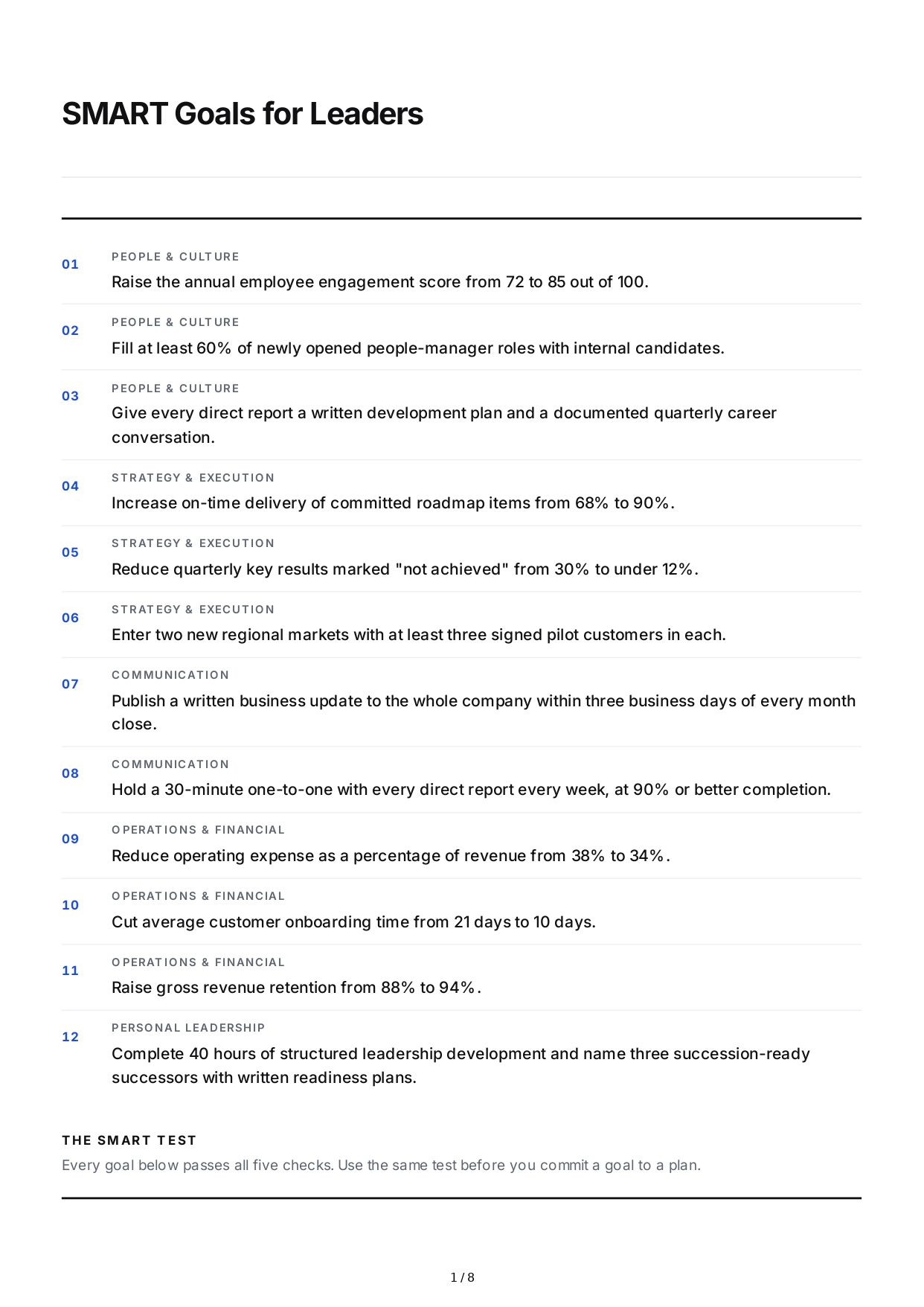
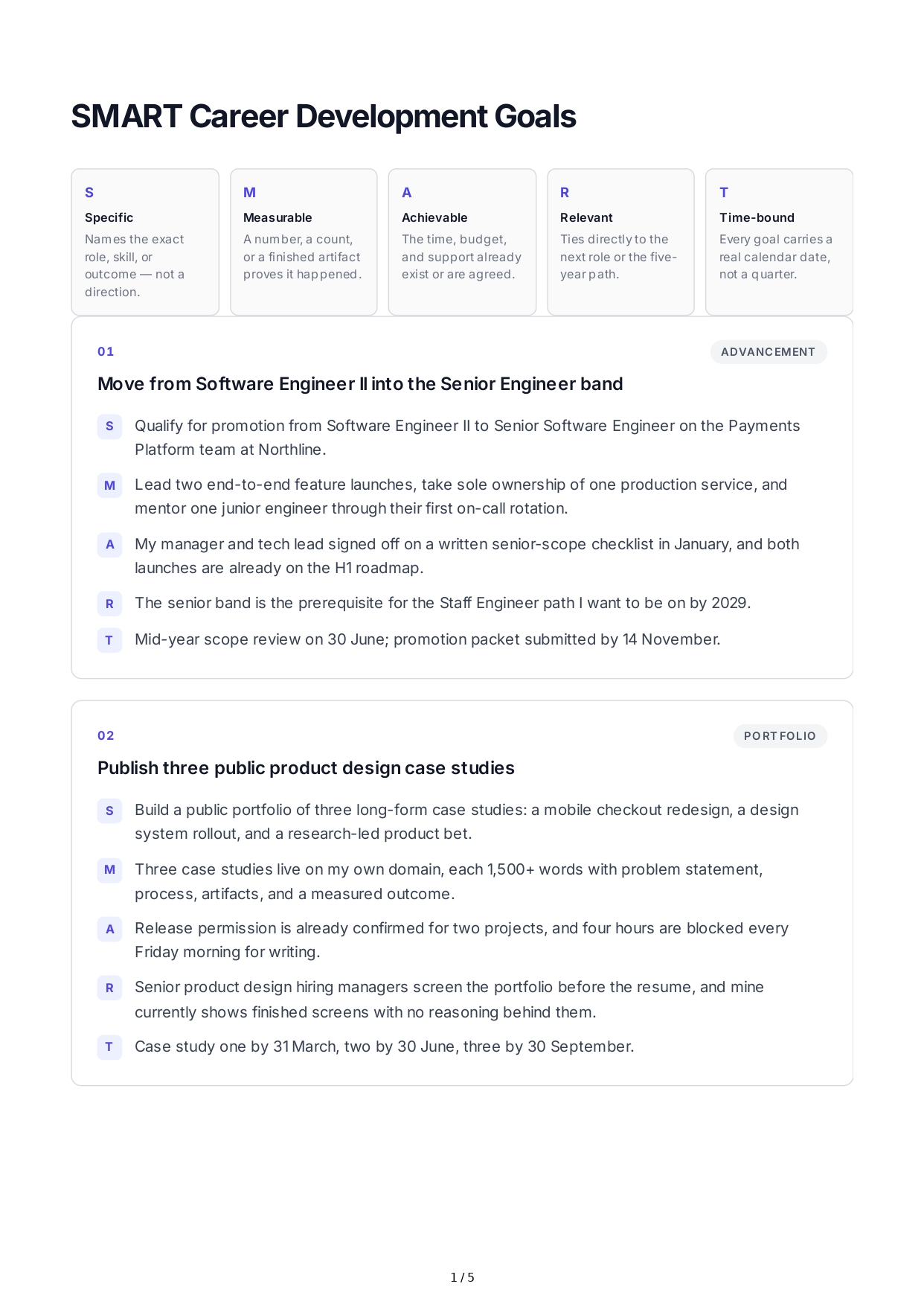
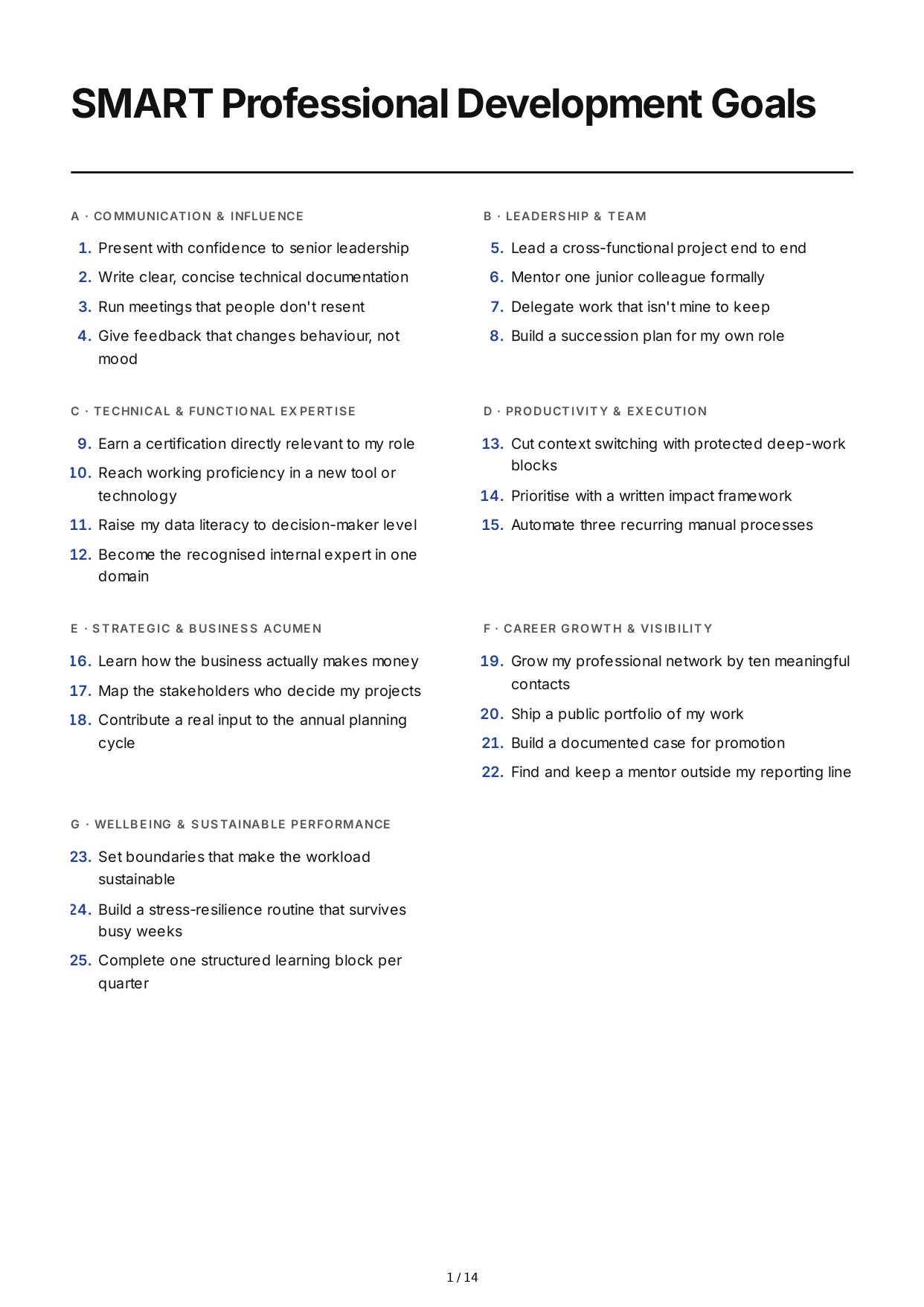

SMART goals are clear objectives designed around five criteria: Specific, Measurable, Achievable, Relevant, and Time-bound. They help turn broad intentions into actionable goals that can be tracked through measurable progress and deadlines. SMART goals can be used for career development, education, health, finances, business, productivity, and personal growth.
Whether you want to earn a promotion, complete a certification, improve your fitness, save money, or build a new habit, SMART Goals Examples can help you define exactly what you want to accomplish and how you will measure progress.
What are SMART Goals?
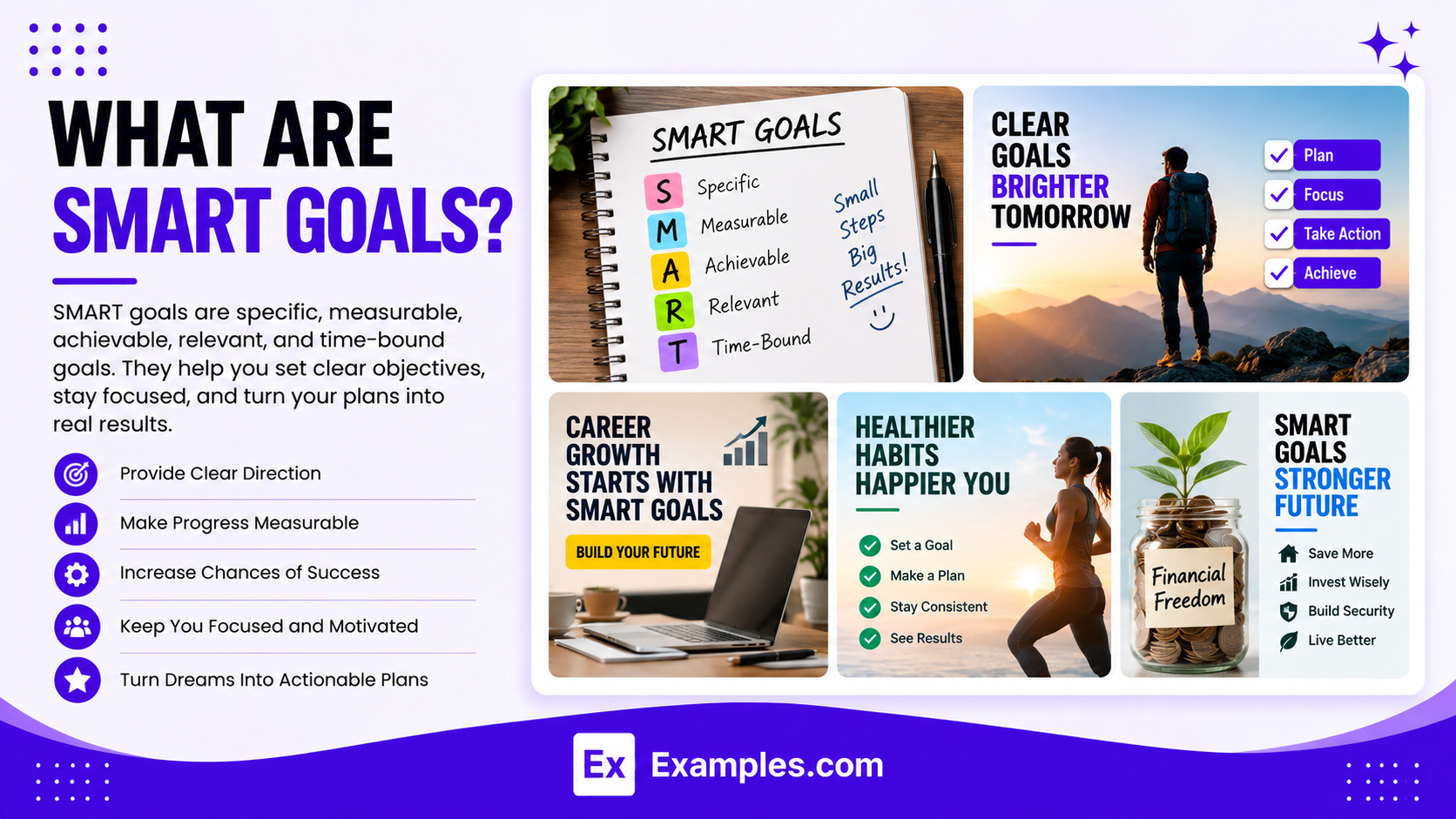
SMART goals are structured objectives that make it easier to understand what you want to accomplish, how you will measure it, whether it is realistic, why it matters, and when it should be completed. The five components are Specific, Measurable, Achievable, Relevant, and Time-bound.
Instead of setting a vague goal such as “I want to improve my career,” a SMART goal could be:
“I will complete a professional certification within six months by studying for five hours each week and completing all required practice assessments.”
This goal identifies the desired result, includes measurable actions, establishes a realistic timeframe, connects to career development, and provides a clear deadline.
Popular Types Of SMART Goals
SMART goals can be adapted to almost any area where you need a measurable objective. Common categories include:
Career SMART Goals
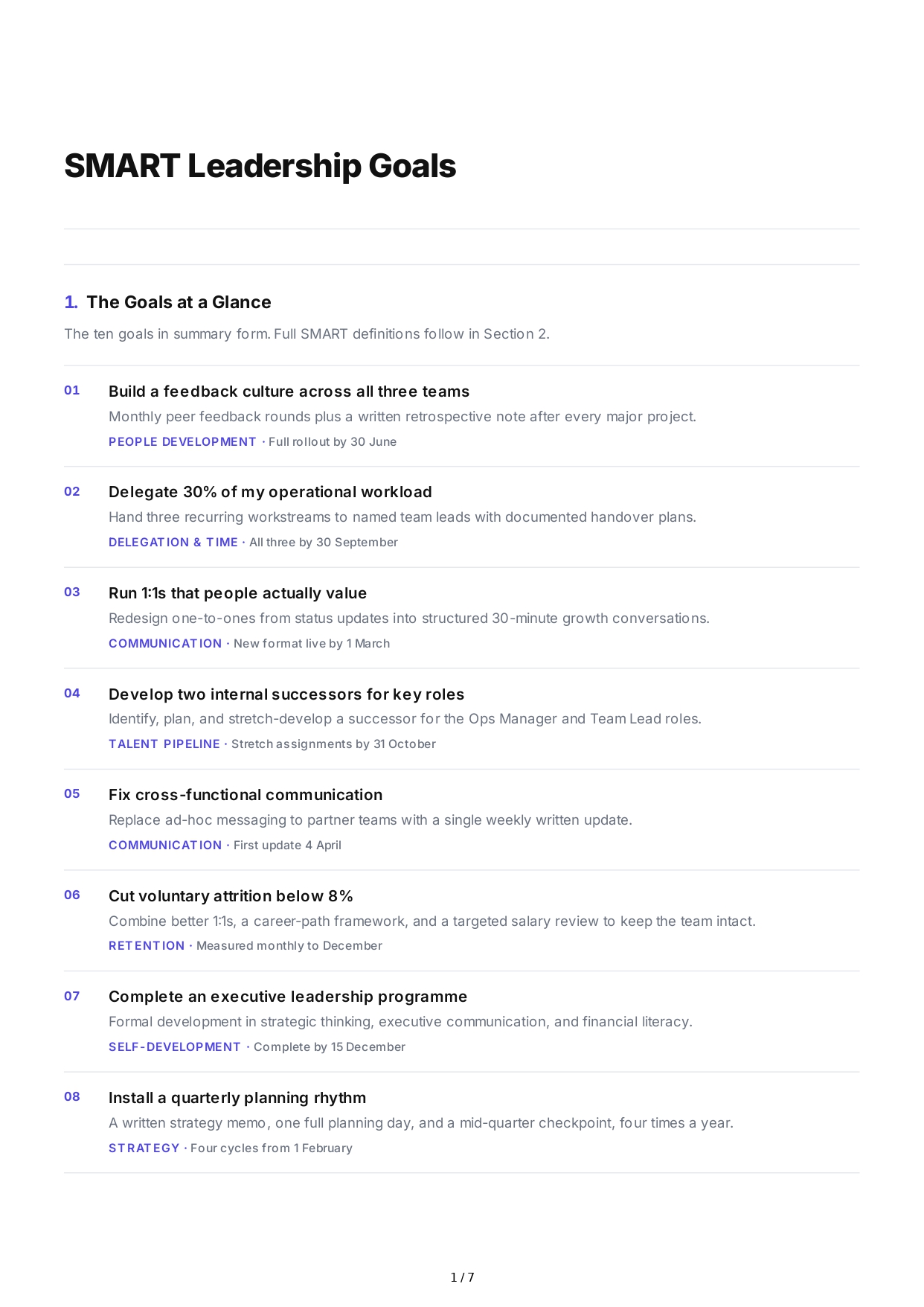
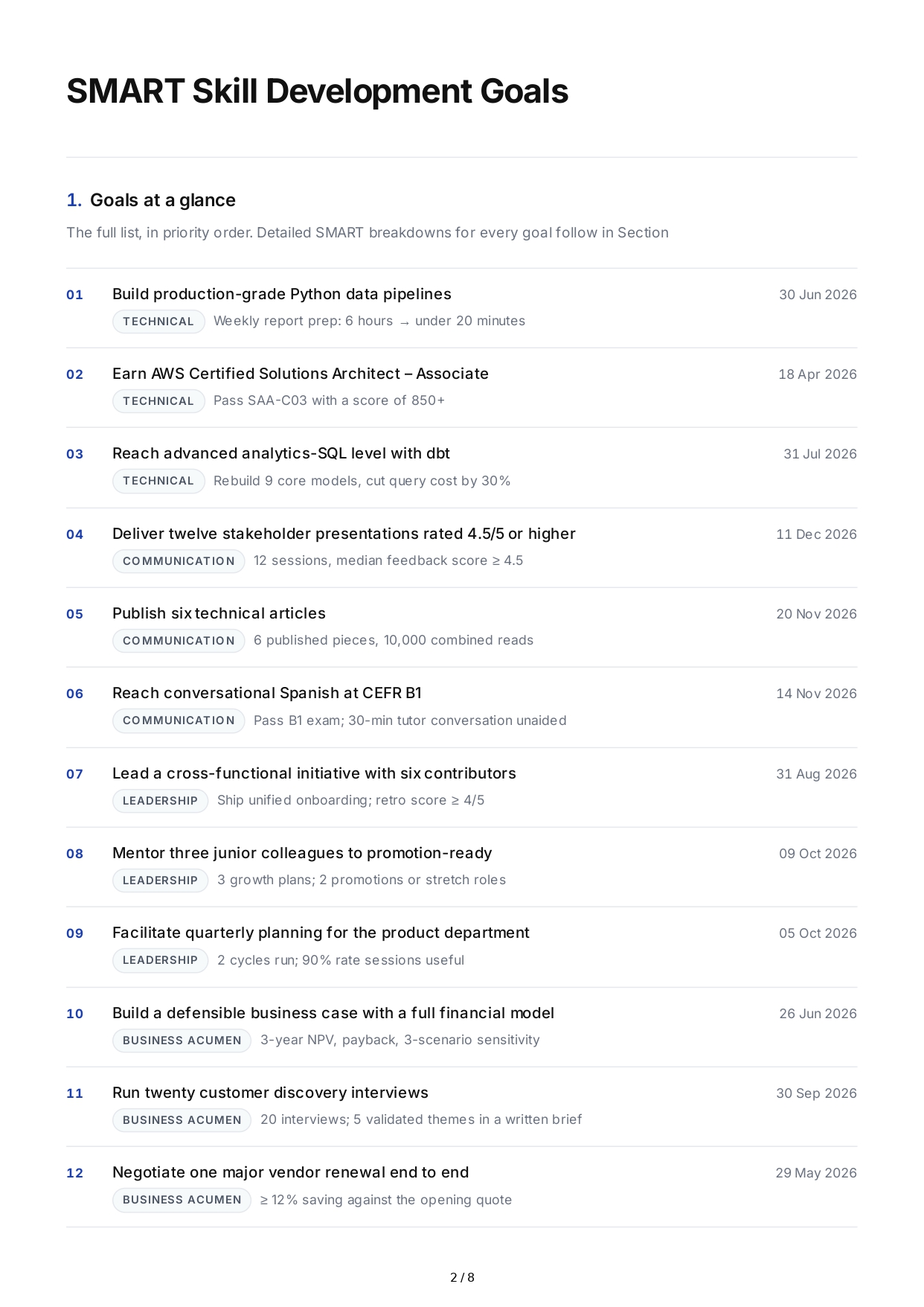
Career SMART goals focus on professional growth, skills, performance, promotions, or career transitions.
Example: “I will complete an advanced project management certification within eight months by studying four hours every weekend.”
Education SMART Goals
Educational goals can focus on grades, certifications, courses, study habits, or academic milestones.
Example: “I will increase my mathematics grade from 75% to 85% by the end of the semester by completing three additional practice sessions each week.”
Financial SMART Goals
Financial goals can address saving, budgeting, debt reduction, investing, or building an emergency fund.
Example: “I will save $6,000 within 12 months by setting aside $500 from my monthly income.”
Health and Fitness SMART Goals
These goals can focus on exercise, nutrition, sleep, or other measurable lifestyle objectives.
Example: “I will walk 8,000 steps at least five days a week for the next three months.”
Personal Development SMART Goals
Personal development goals can involve reading, communication, confidence, creativity, or learning new skills.
Example: “I will read one personal development book each month for the next six months and write a one-page summary after each book.”
Business SMART Goals
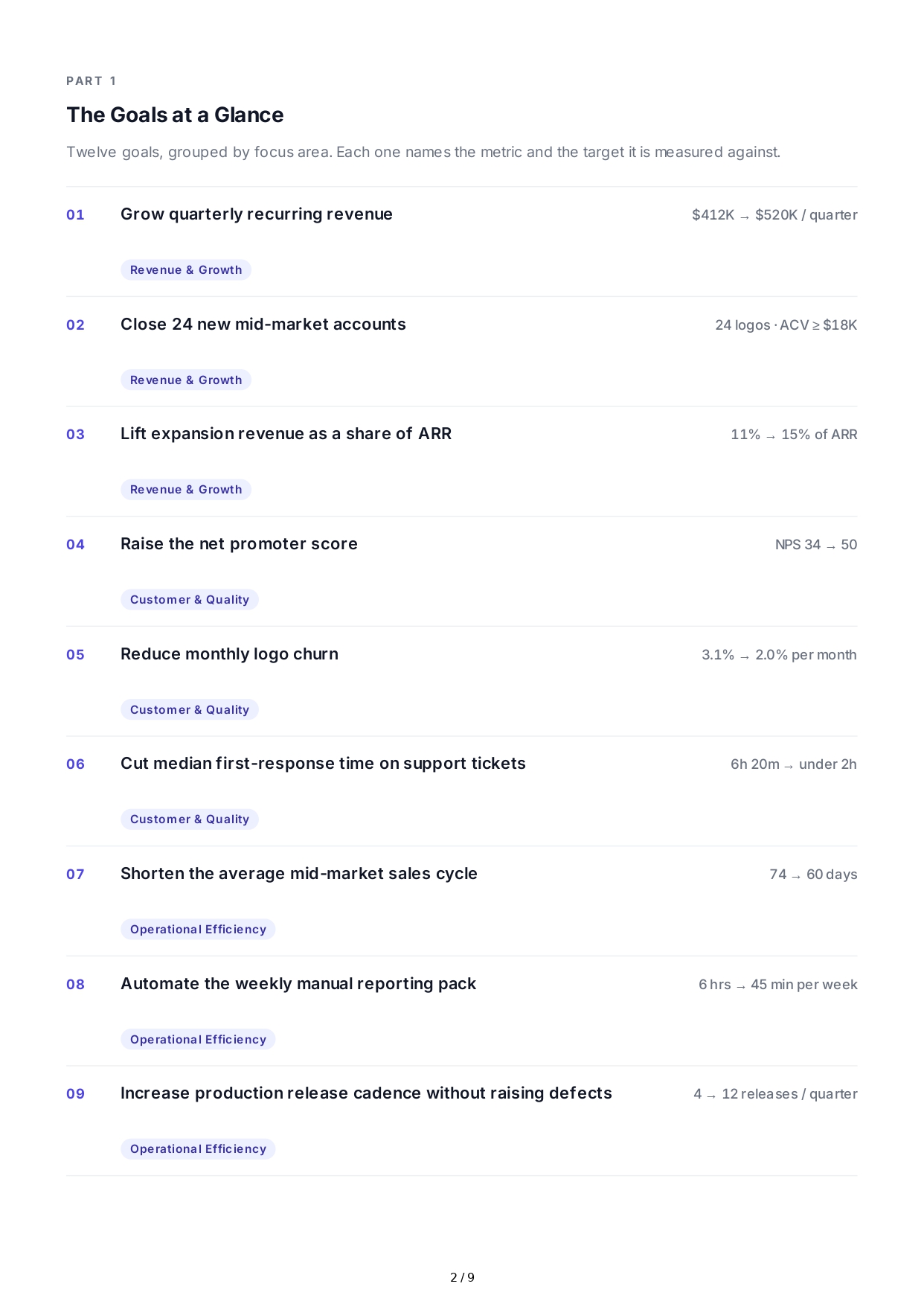
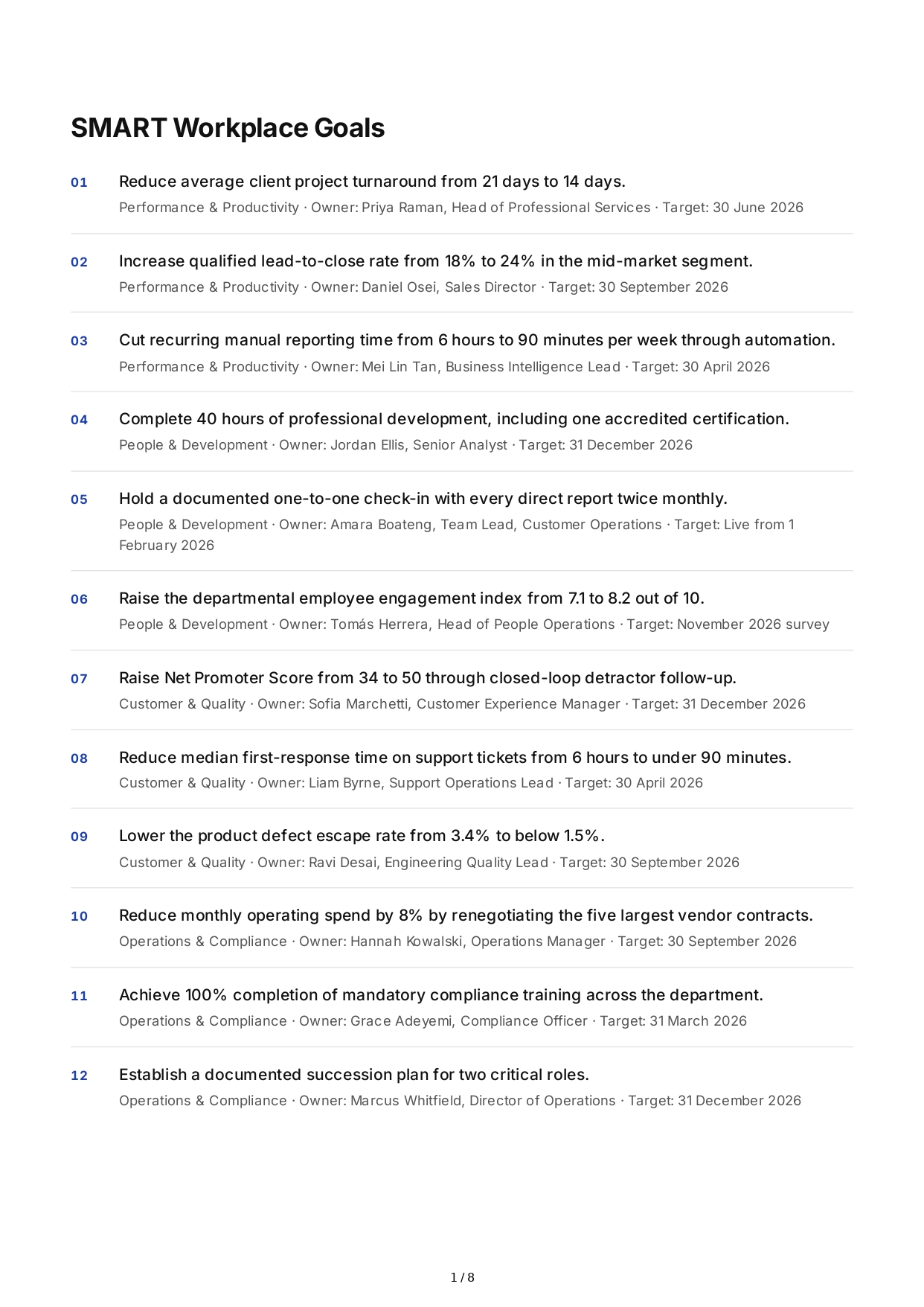
Businesses and teams can use SMART goals for revenue, customer service, productivity, marketing, projects, and operational improvements. SMART goals are also commonly used for team and business objectives.
Example: “We will increase qualified website leads by 20% during the next quarter by publishing two educational articles each week and improving three high-traffic landing pages.”
Productivity SMART Goals
Productivity goals help people improve time management, task completion, organization, and work routines.
Example: “I will complete my three highest-priority tasks before noon on at least four workdays each week for the next two months.”
Relationship and Family SMART Goals
These goals can provide measurable targets for communication, shared activities, family planning, or quality time.
Example: “We will have one technology-free family activity every Sunday for the next three months.”
How Do I Generate SMART Goals Using Proven Examples from Top Companies?
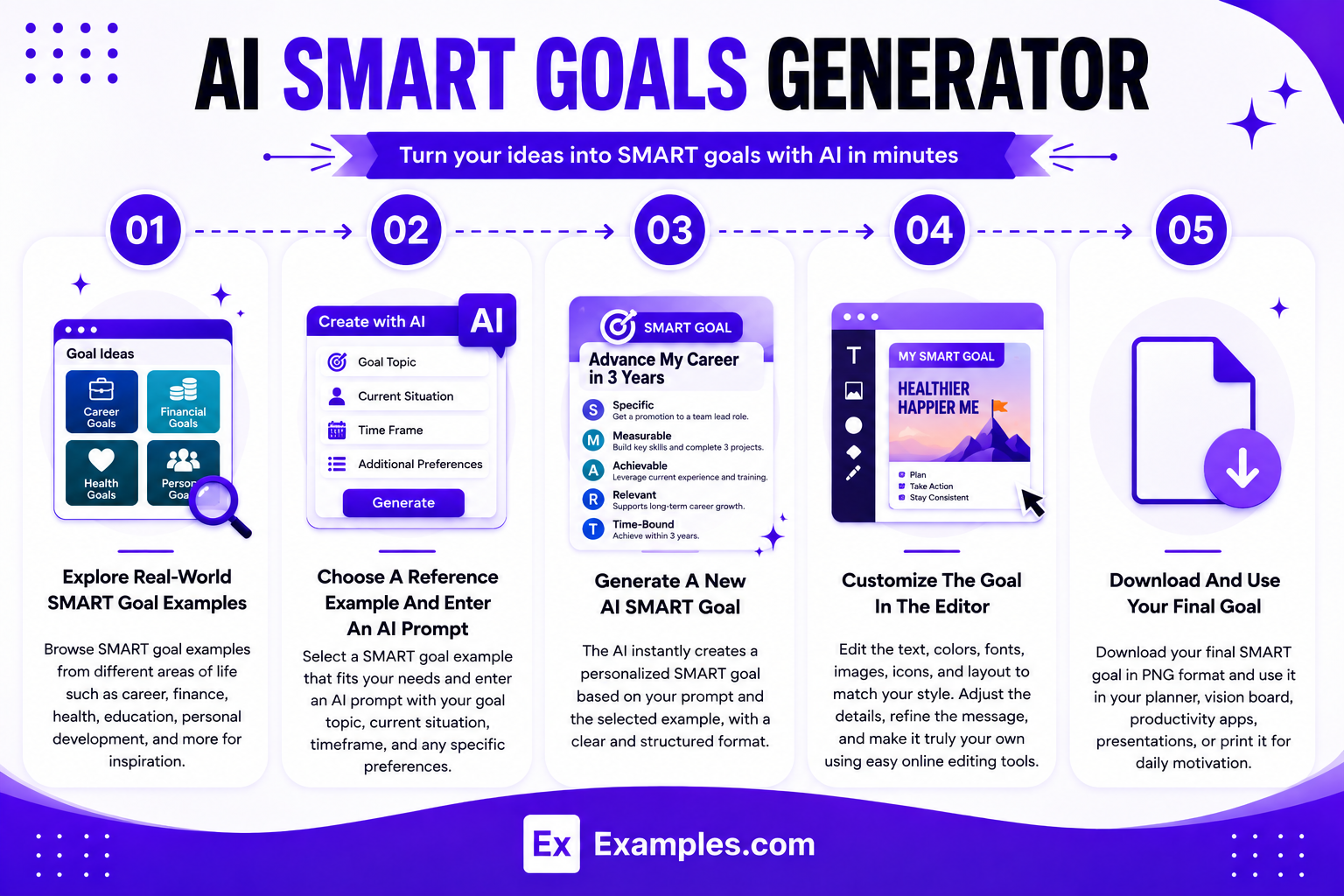
Creating SMART goals with AI can help users turn broad ideas into clear, measurable, achievable, relevant, and time-bound objectives using reference examples and customizable prompts.
Explore Real-World SMART Goal Examples
Browse real-world SMART goal examples across career, education, finance, health, personal development, productivity, business, and other categories. These examples help users understand how broad objectives can be transformed into specific and measurable goals.
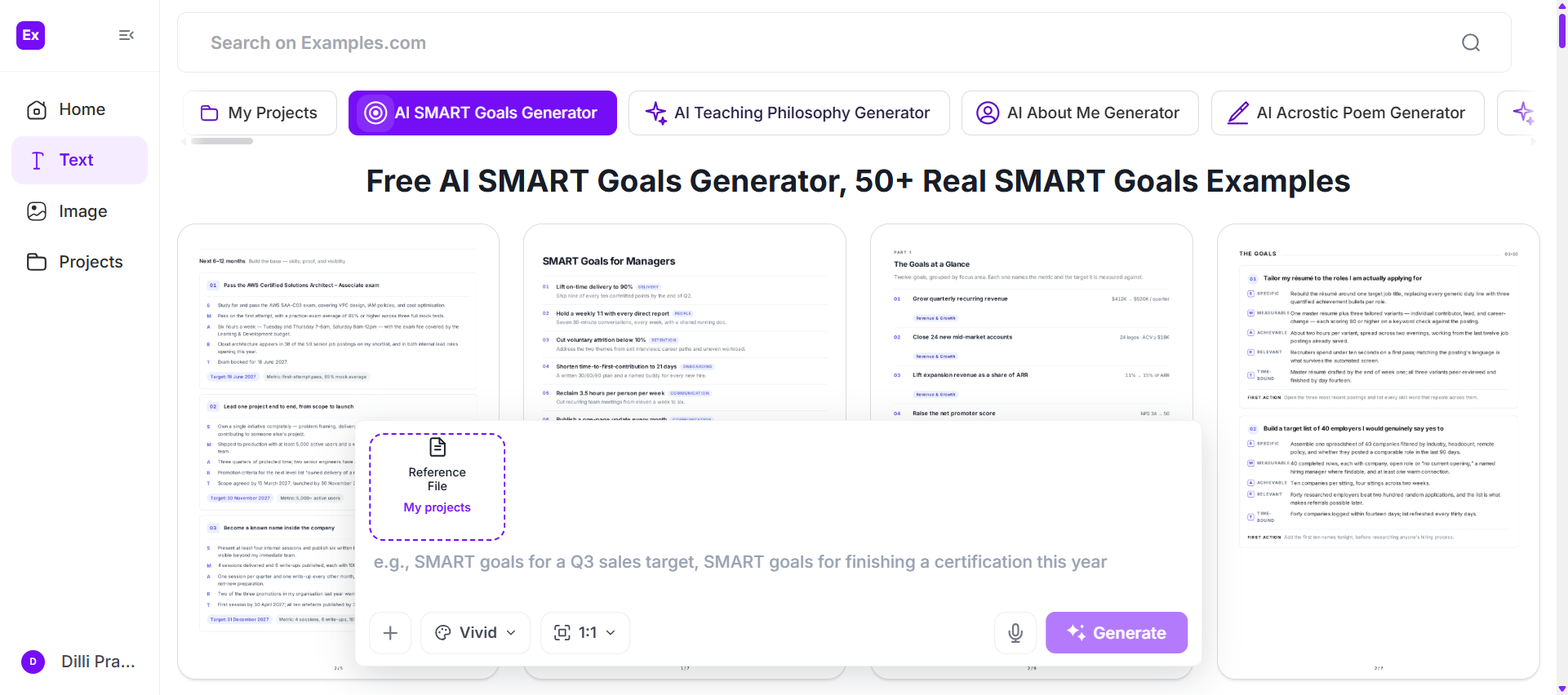
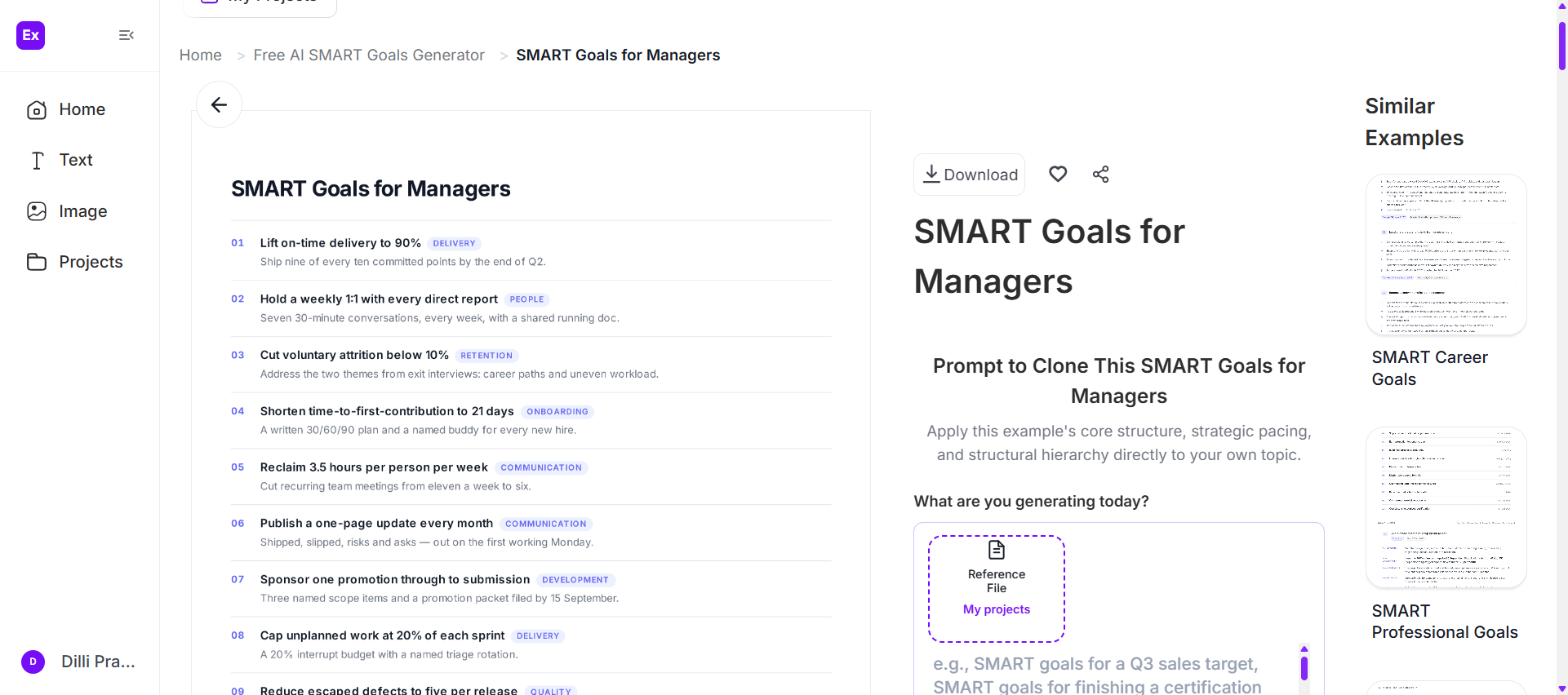
Choose A Reference Goal And Enter An AI Prompt
Select a SMART goal example that matches your objective and enter an AI prompt describing what you want to accomplish. Include your goal area, current situation, desired result, available resources, preferred timeframe, measurable targets, and other relevant details.
Generate A New AI SMART Goal
The AI generates a new SMART goal based on your prompt and selected reference. The result can organize your objective around Specific, Measurable, Achievable, Relevant, and Time-Bound criteria so the goal is clearer and easier to track.
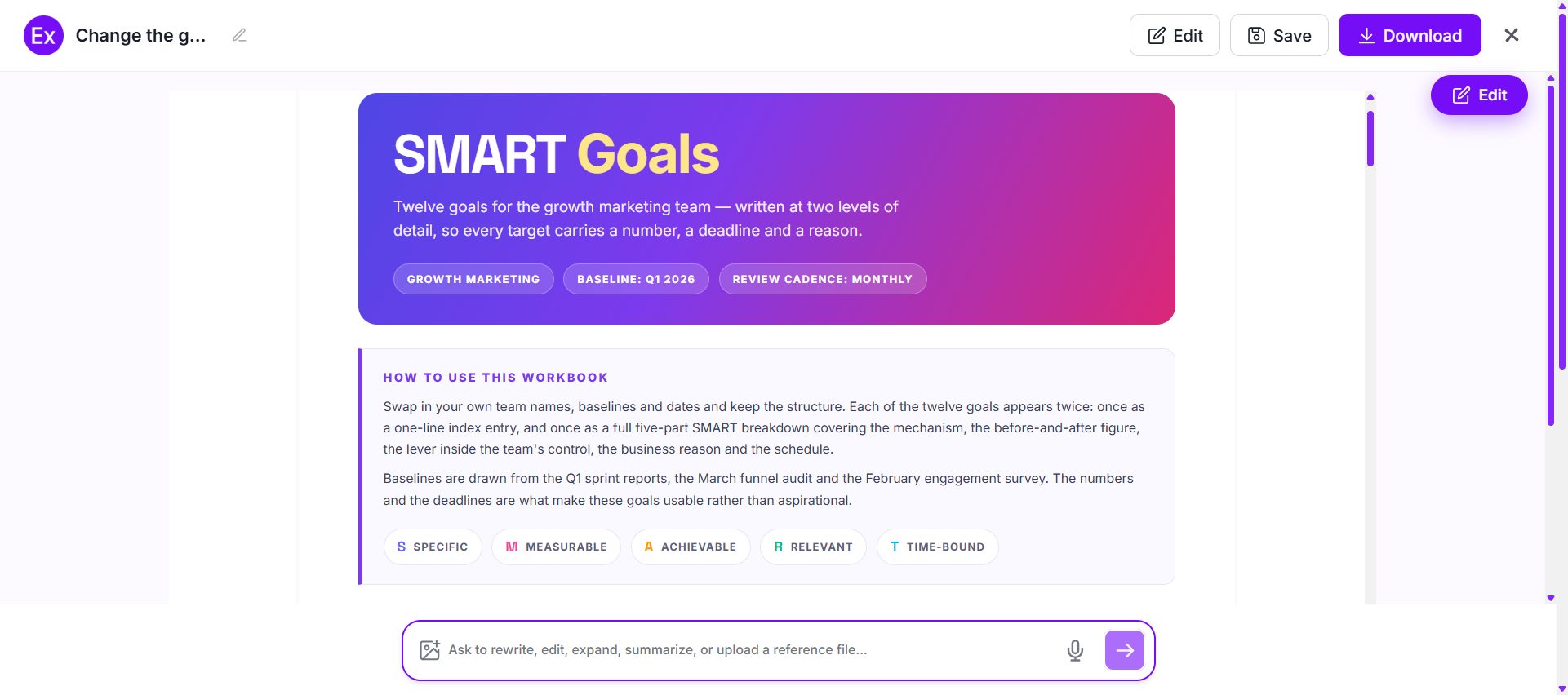
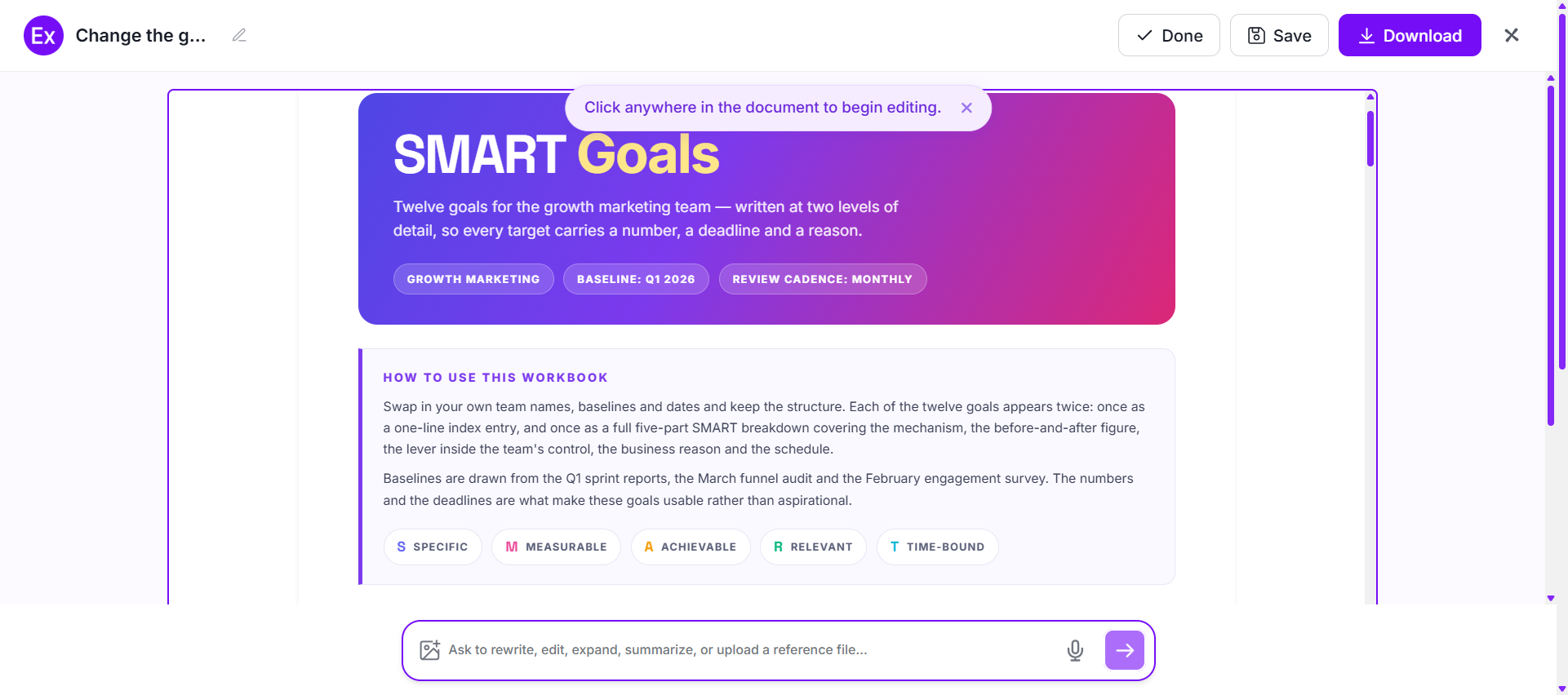
Customize The SMART Goal In The Online Editor
Open the generated SMART goal in the online editor to personalize the content. Adjust the wording, numbers, milestones, timeframe, layout, colors, graphics, and other design elements to match your intended use.
Download And Use The Final SMART Goal
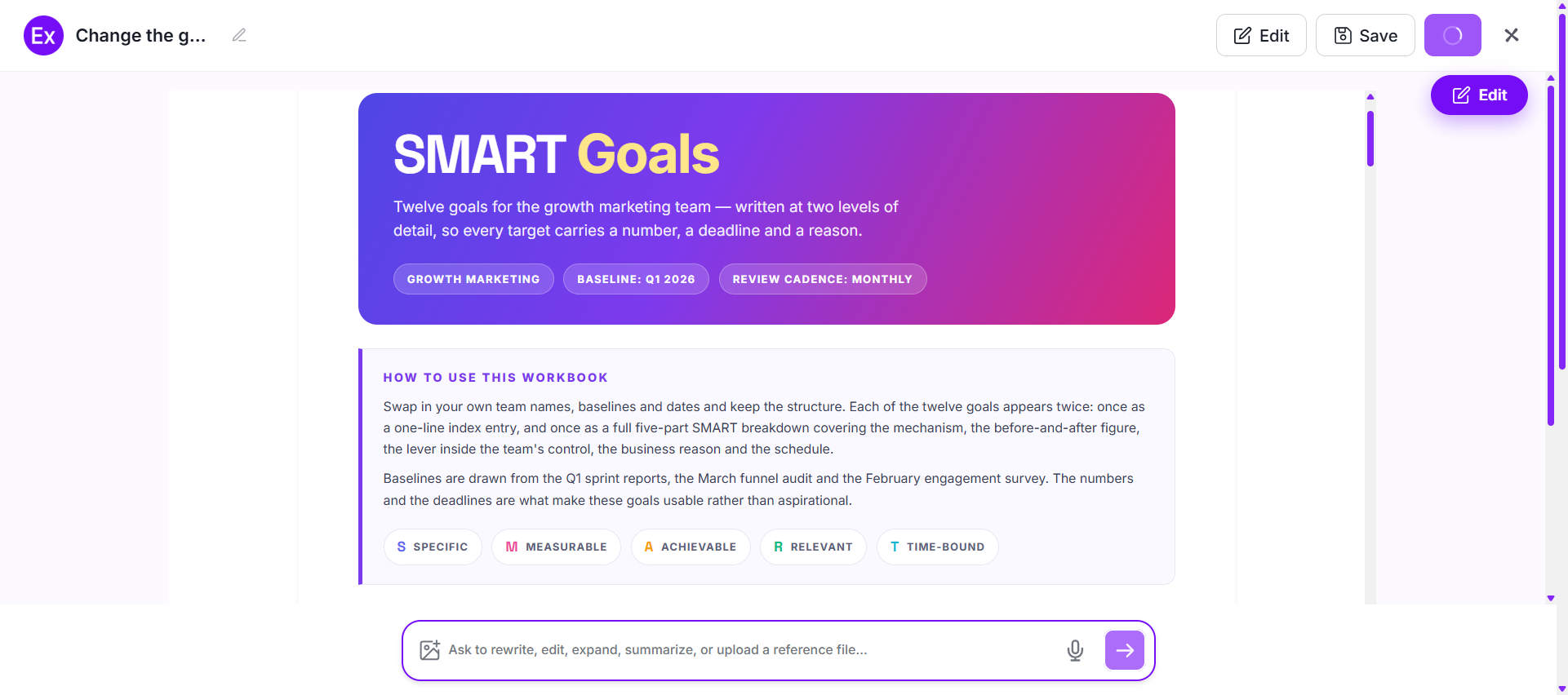
Once the SMART goal is finalized, download it in PNG format and use it in planners, presentations, productivity systems, goal-tracking documents, vision boards, educational materials, or workplace planning.
SMART Goals Examples for Different Areas
Here are practical examples that show how the SMART framework can be applied to different objectives.
Career SMART Goal Examples
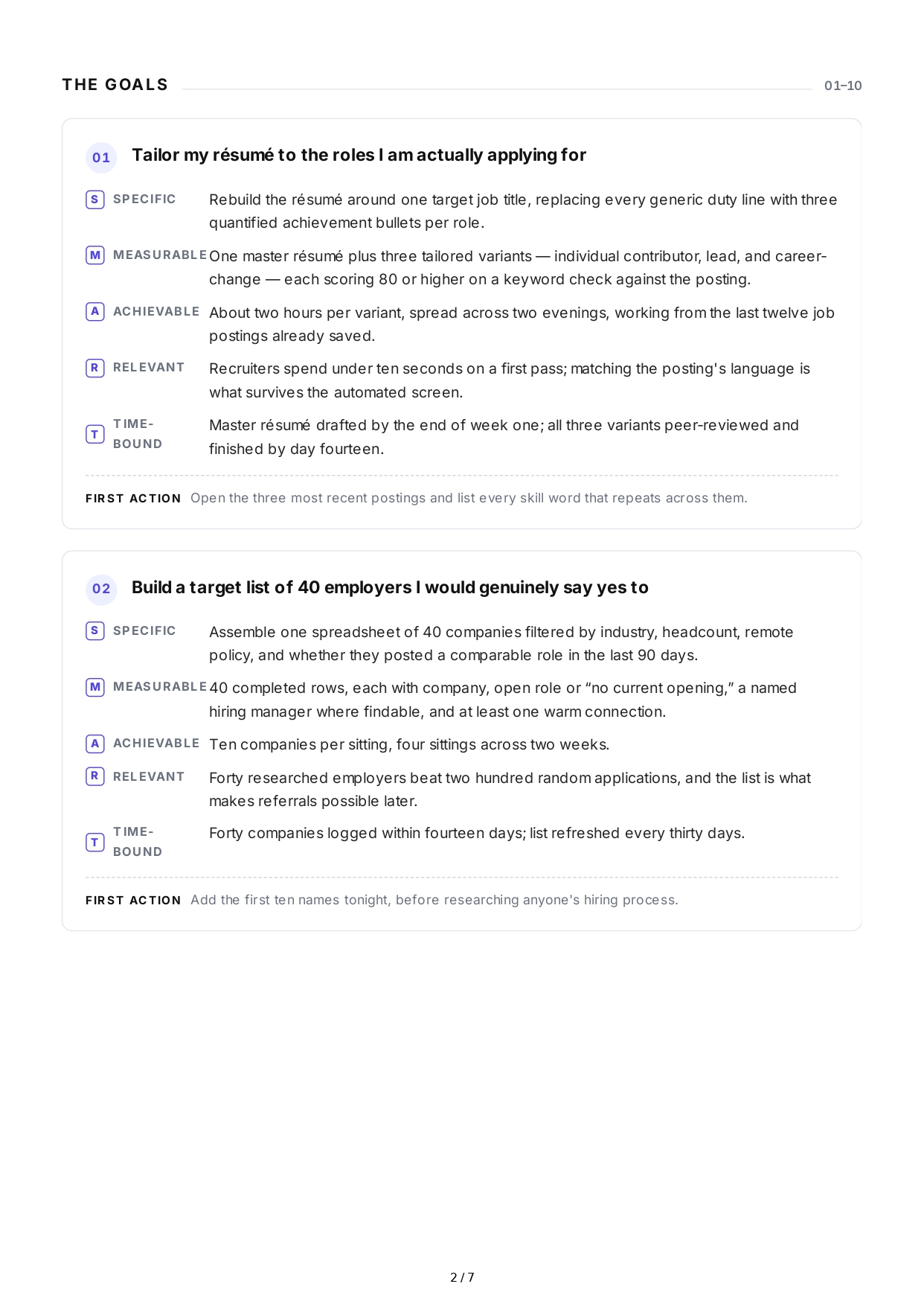
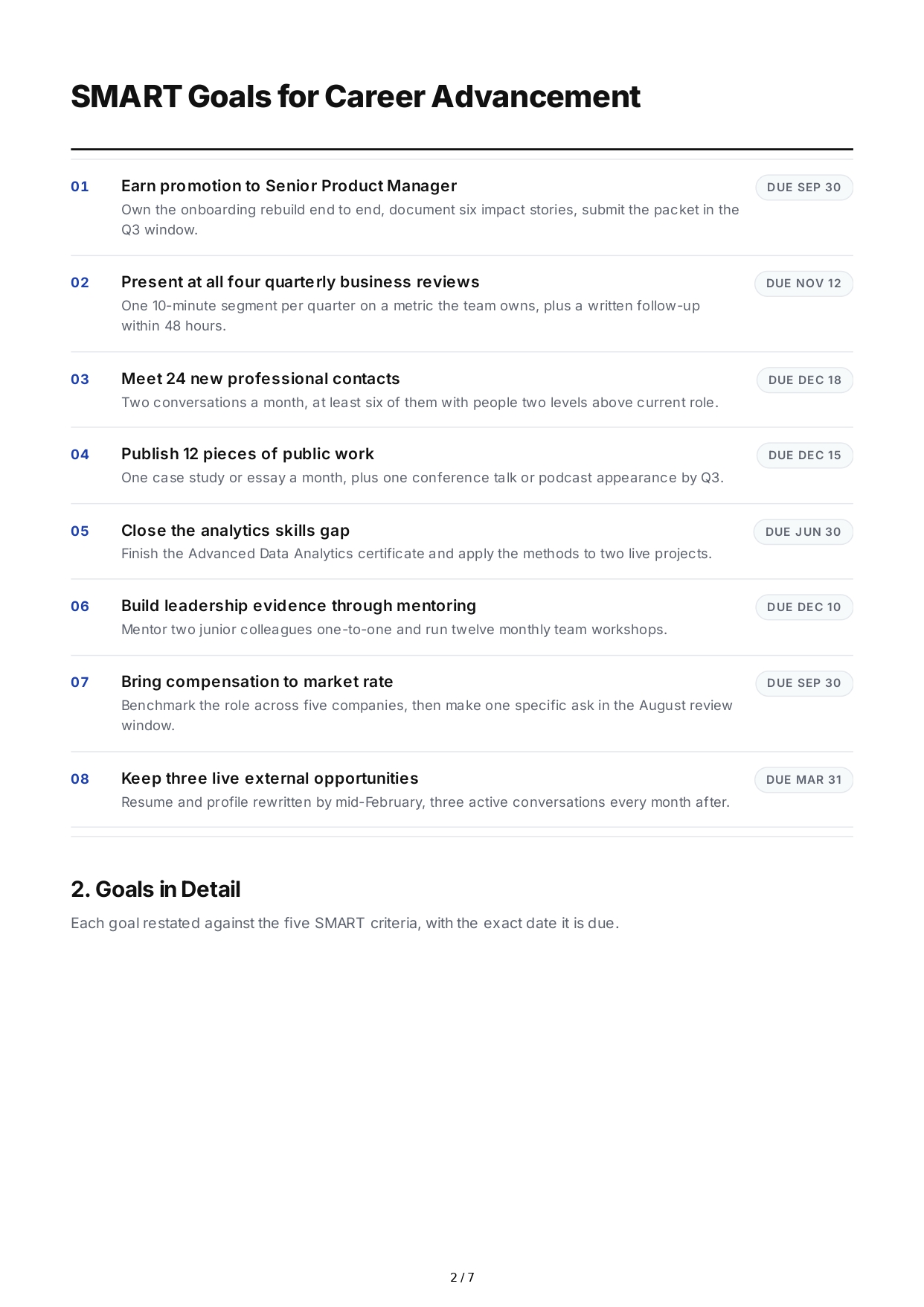
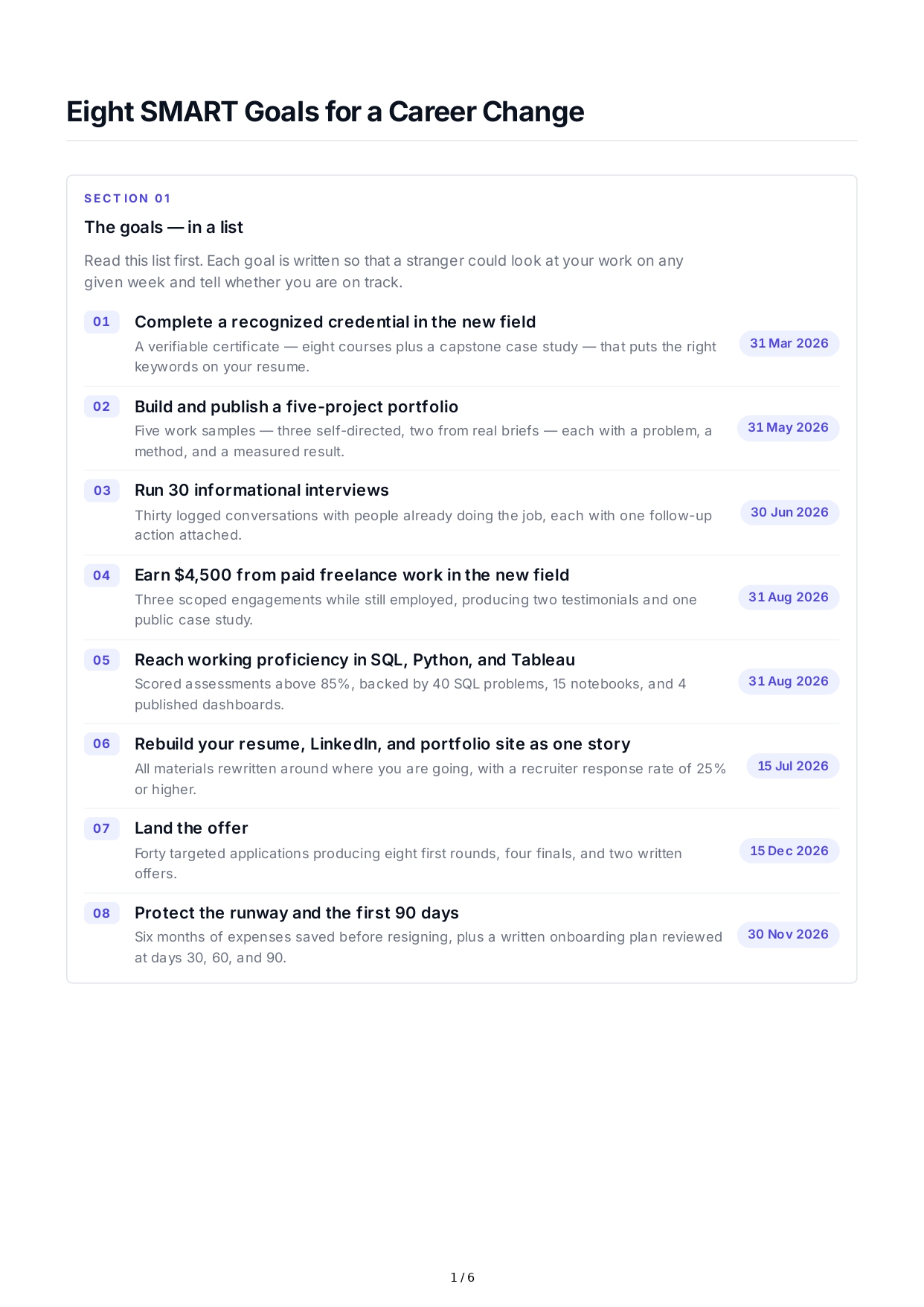
- Complete a professional certification within six months by studying four hours every week.
- Apply for five relevant leadership positions each month for the next three months.
- Improve presentation skills by delivering one work presentation every month for six months.
- Complete two industry-related courses before the end of the year.
- Build a professional network by connecting with five relevant professionals each month for six months.
Student SMART Goal Examples
- Raise my semester grade from 78% to 88% by studying one additional hour on four weekdays.
- Complete all weekly assignments at least two days before their deadlines for one semester.
- Read two academic research papers each week for the next three months.
- Complete a certification course before the end of the academic year.
- Improve exam performance by completing two practice tests every month before the final examination.
Student-focused SMART goals commonly use measurable study targets and defined completion periods.
Financial SMART Goal Examples
- Save $5,000 within 10 months by transferring $500 to a savings account each month.
- Reduce monthly discretionary spending by 15% over the next six months.
- Pay off a specific debt balance within 18 months using a fixed monthly payment.
- Build an emergency fund equal to three months of essential expenses within two years.
- Track all monthly expenses for six consecutive months to identify areas for savings.
Health SMART Goal Examples
- Exercise for 30 minutes four days a week for the next 12 weeks.
- Walk 8,000 steps per day at least five days a week for three months.
- Complete a beginner fitness program within eight weeks by following three scheduled workouts each week.
- Prepare home-cooked meals at least five days per week for the next two months.
- Establish a consistent bedtime routine on at least six nights each week for the next month.
Personal Development SMART Goal Examples
- Read one book every month for the next year.
- Complete a public speaking course within four months.
- Practice a new language for 20 minutes five days a week for six months.
- Write in a journal three times per week for the next 90 days.
- Complete one online skill-development course every quarter.
How to Turn a General Goal Into a SMART Goal
A simple goal can become more useful when you add measurable details and a deadline.
General goal:
“I want to improve my professional skills.”
SMART goal:
“I will complete an advanced communication course within four months and practice the techniques by delivering at least two presentations at work.”
The second version defines the skill, identifies an action, establishes measurable progress, and provides a deadline.
Use This SMART Goal Formula
I will [specific result] by [deadline] by [measurable actions], because [relevant reason].
For example:
“I will complete a data analytics certification by December by studying five hours each week and completing one practice assessment every month because the certification supports my career development.”
How to Make SMART Goals More Effective
A SMART goal should be clear enough that you can determine whether progress is actually happening. Consider these practices:
- Start with one clearly defined outcome.
- Add a number whenever progress can be quantified.
- Check whether the target fits your available time and resources.
- Connect the goal to a larger priority.
- Add a realistic deadline.
- Divide larger goals into milestones.
- Review progress regularly.
- Adjust the goal if circumstances or priorities change.
Breaking larger objectives into smaller, trackable components is a common recommendation for applying the SMART framework.
SMART Goals vs Regular Goals
| Regular Goal | SMART Goal |
|---|---|
| Improve my fitness | Exercise for 30 minutes four days a week for 12 weeks |
| Save more money | Save $500 each month for 10 months |
| Learn a skill | Complete a certification course within six months |
| Read more books | Read one book each month for one year |
| Improve at work | Complete two professional courses by December |
The key difference is that a SMART goal provides greater clarity about the desired outcome, measurement method, feasibility, relevance, and timeframe.
Common SMART Goal Mistakes to Avoid
Setting Goals That Are Too Vague
“Become healthier” does not explain what success looks like. Add a measurable behavior or outcome.
Choosing Unrealistic Targets
A goal should account for available time, skills, resources, and constraints. The achievable element exists to keep the target realistic.
Forgetting the Deadline
Without a defined timeframe, it becomes harder to determine when the objective should be completed.
Measuring the Wrong Thing
Choose measurements that actually demonstrate progress toward the intended result rather than tracking numbers that have little connection to the goal.
Creating Too Many Goals
Working on too many objectives at once can make priorities unclear. Start with the goals that have the strongest connection to your current priorities.
Frequently Asked Questions
What does SMART stand for?
SMART commonly stands for Specific, Measurable, Achievable, Relevant, and Time-bound. Some organizations use variations such as “Time-based” or “Realistic” for individual letters, so terminology can differ slightly between frameworks.
What is an example of a SMART goal?
An example is: “I will complete an online project management certification within six months by studying four hours each week and completing all required assessments.”
Why are SMART goals useful?
SMART goals provide a structured way to define objectives, establish measurable progress, connect actions to broader priorities, and set completion deadlines.
How do I write a SMART goal?
Define exactly what you want to accomplish, decide how progress will be measured, check whether the target is achievable, explain why it matters, and set a specific deadline.
Can SMART goals be used for personal goals?
Yes. SMART goals can be applied to personal development, fitness, finances, habits, learning, relationships, productivity, and other areas of life.
How many SMART goals should I set?
There is no universal number. Choose a manageable set that reflects your most important current priorities, then track progress consistently.
Can I change a SMART goal?
Yes. A goal can be reviewed and adjusted when circumstances, resources, priorities, or timelines change. The important point is to keep the objective clear and measurable after making an adjustment.