
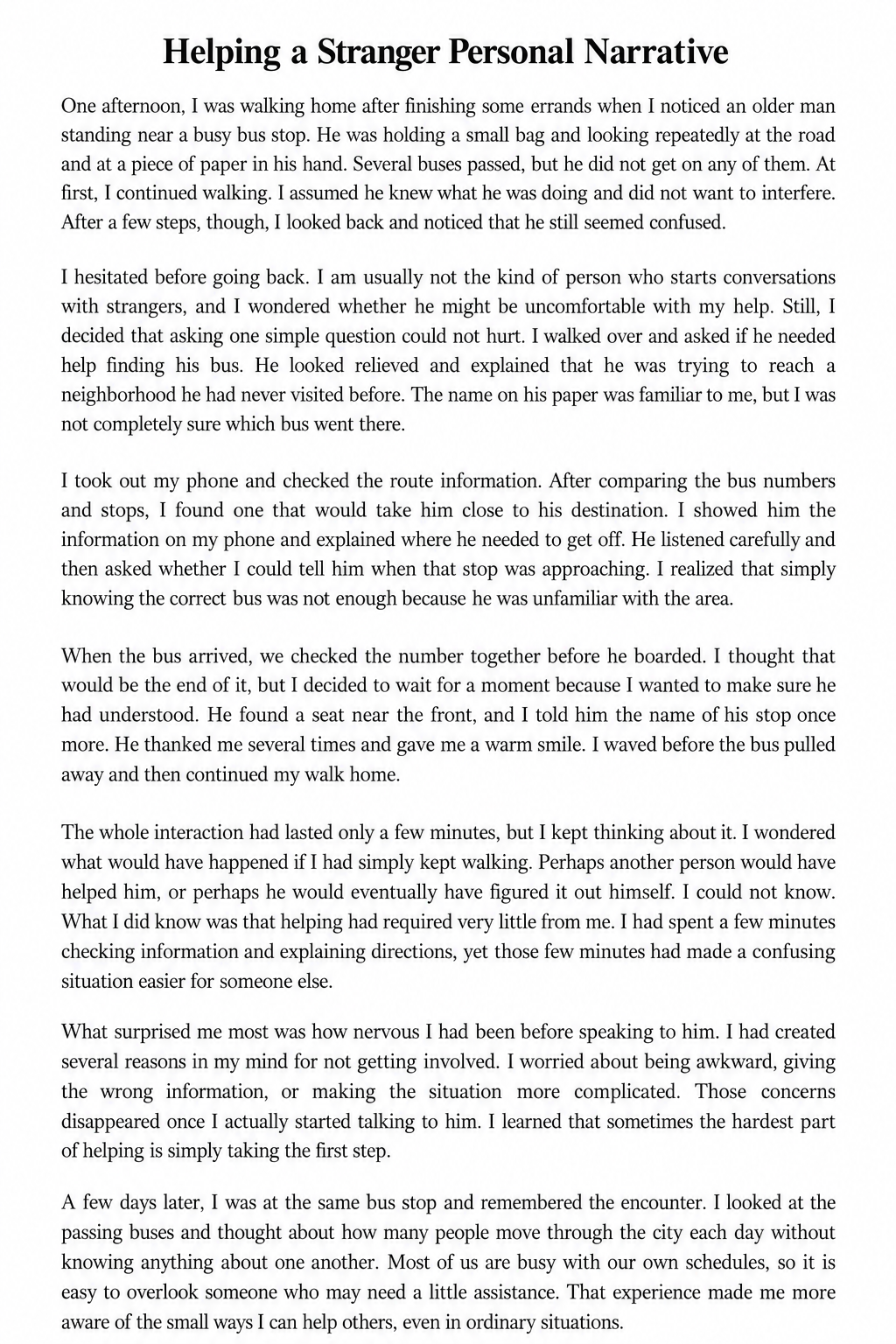
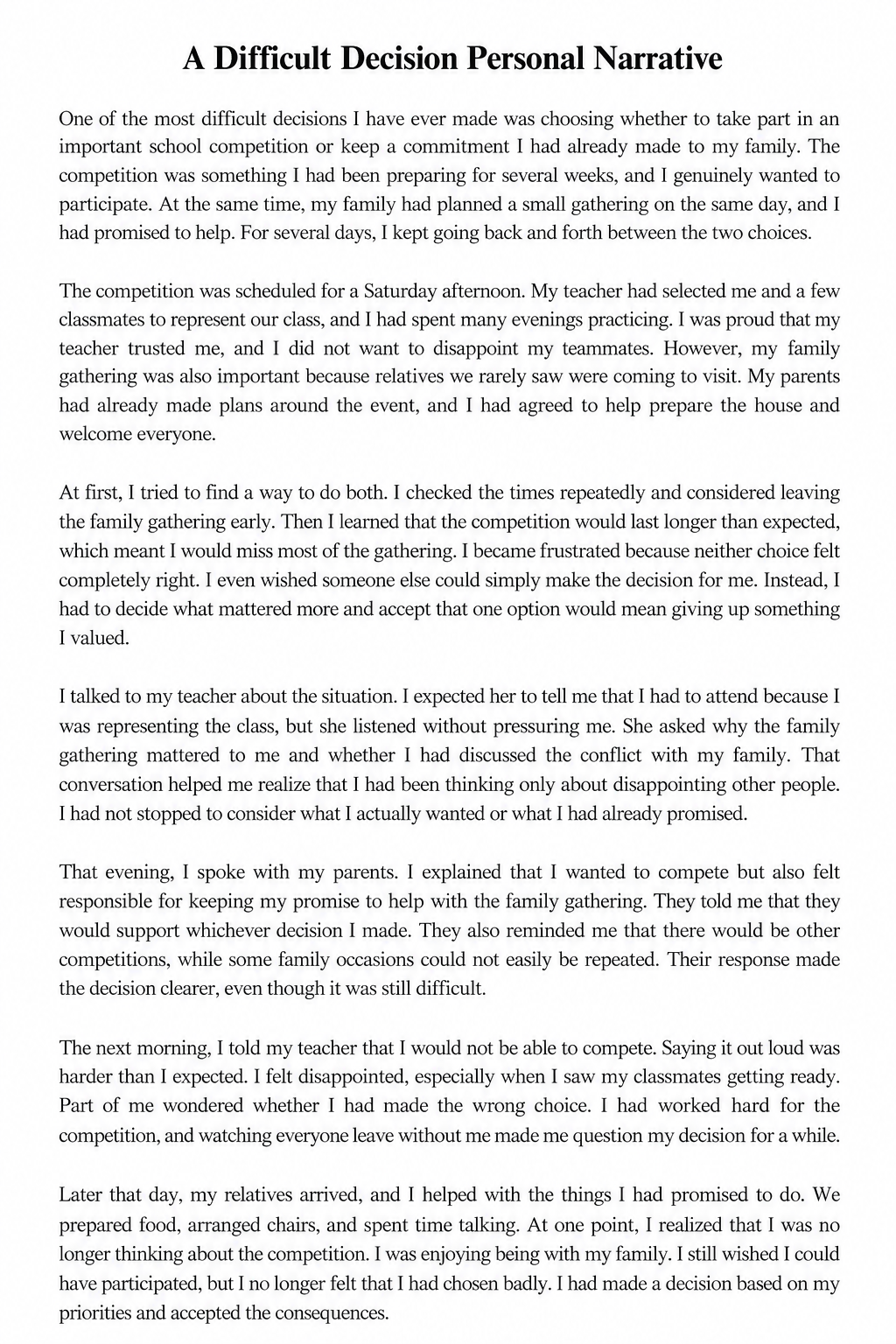
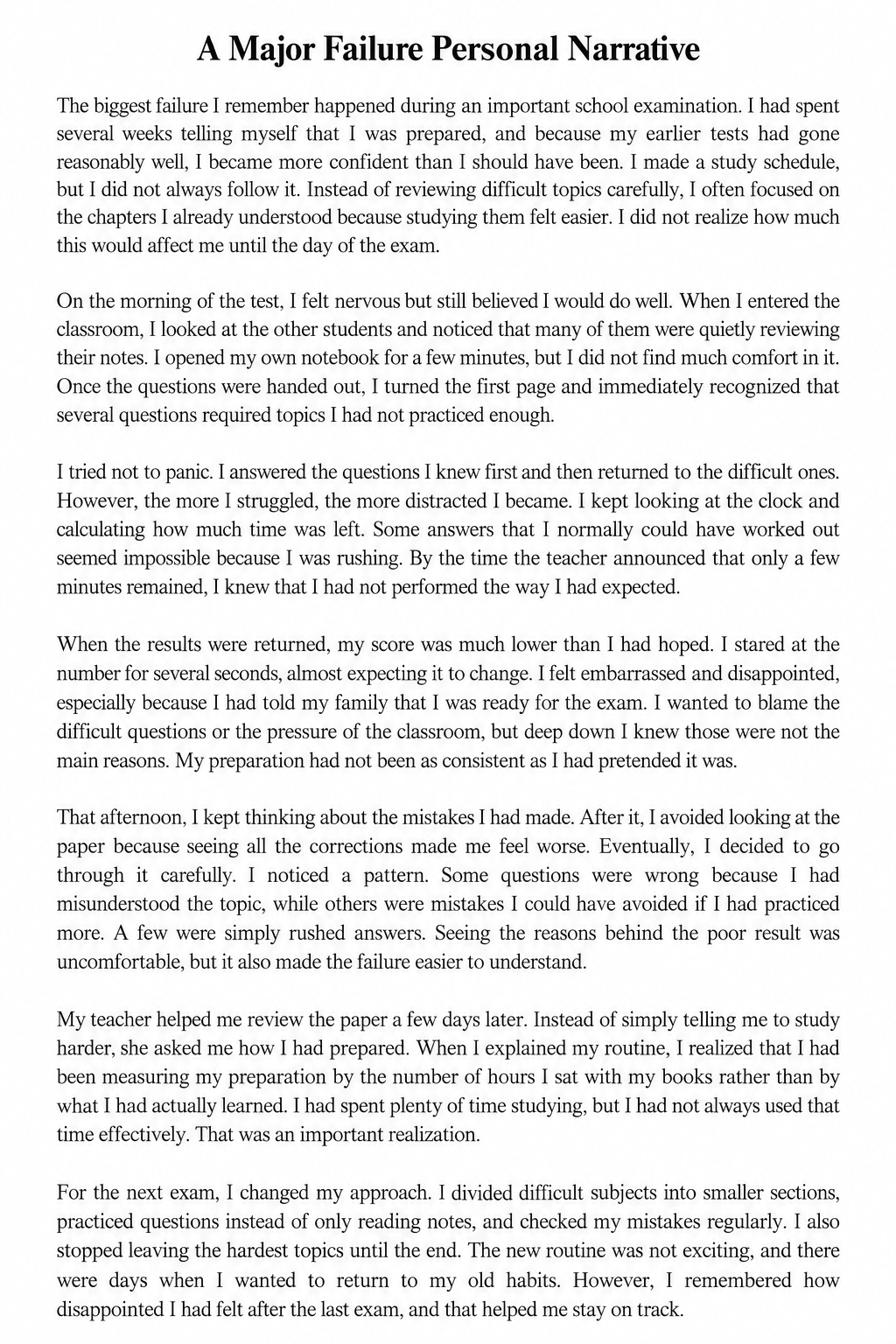
A personal narrative is a true, first-person story about a meaningful experience from your own life, focusing on one specific moment and the lesson or insight it reveals. The best personal narratives use “I,” “me,” or “my” to bring readers into the experience, include a clear challenge or turning point, and use sensory details to make the moment feel real. A strong personal narrative does more than describe what happened—it explains how the experience affected you, what you learned, and why the moment still matters. Whether you are writing about a difficult decision, an important achievement, a memorable relationship, or a moment of personal growth, a focused personal narrative helps you turn an experience into a story with meaning.
What Is A Personal Narrative?
A personal narrative is a true, first-person story about a meaningful experience from your own life. It focuses on one specific event or moment, uses details to bring the experience to life, and explains the lesson, feeling, or insight you gained from it.

How Do I Generate Personal Narratives Using Real Personal Narrative Examples?
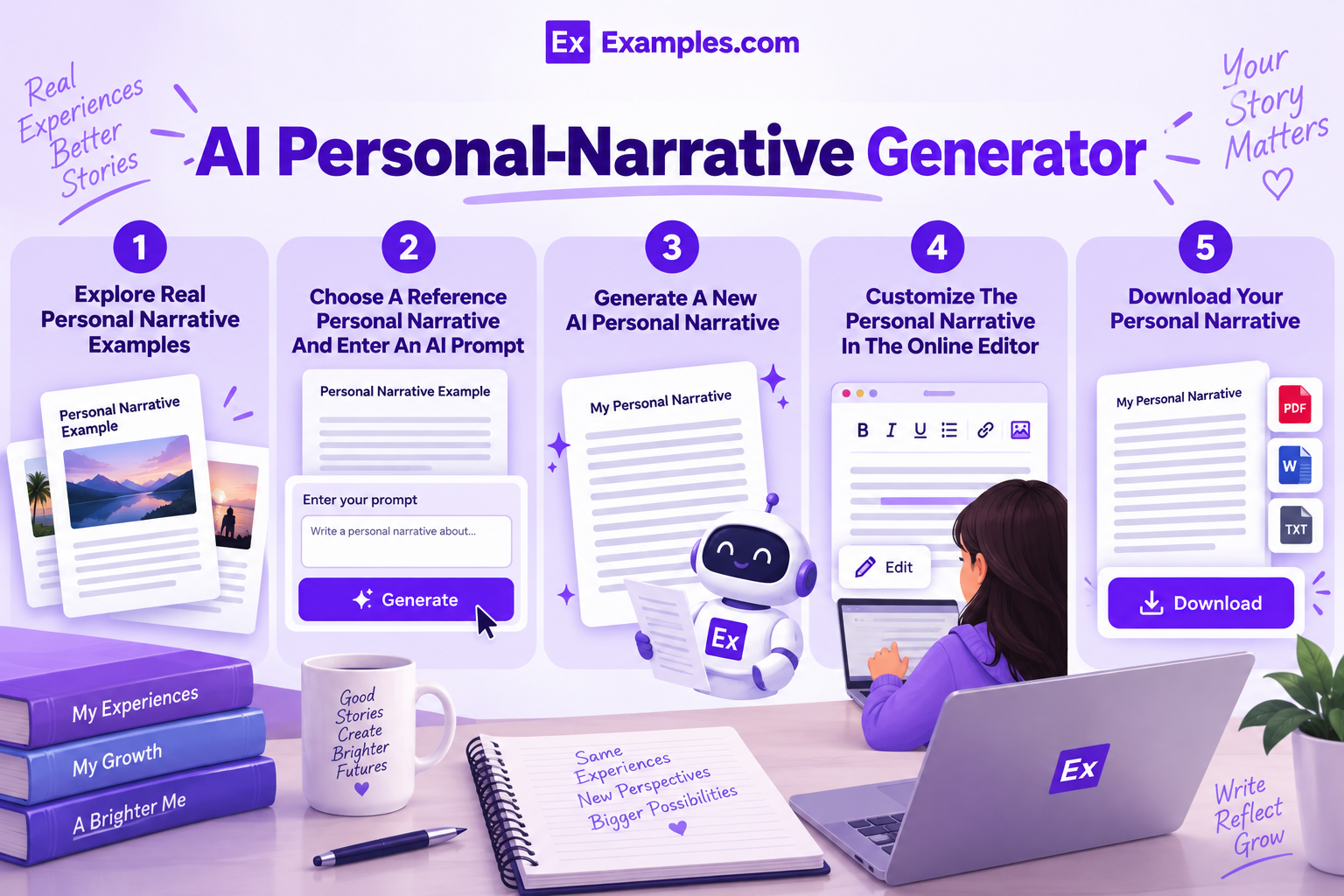
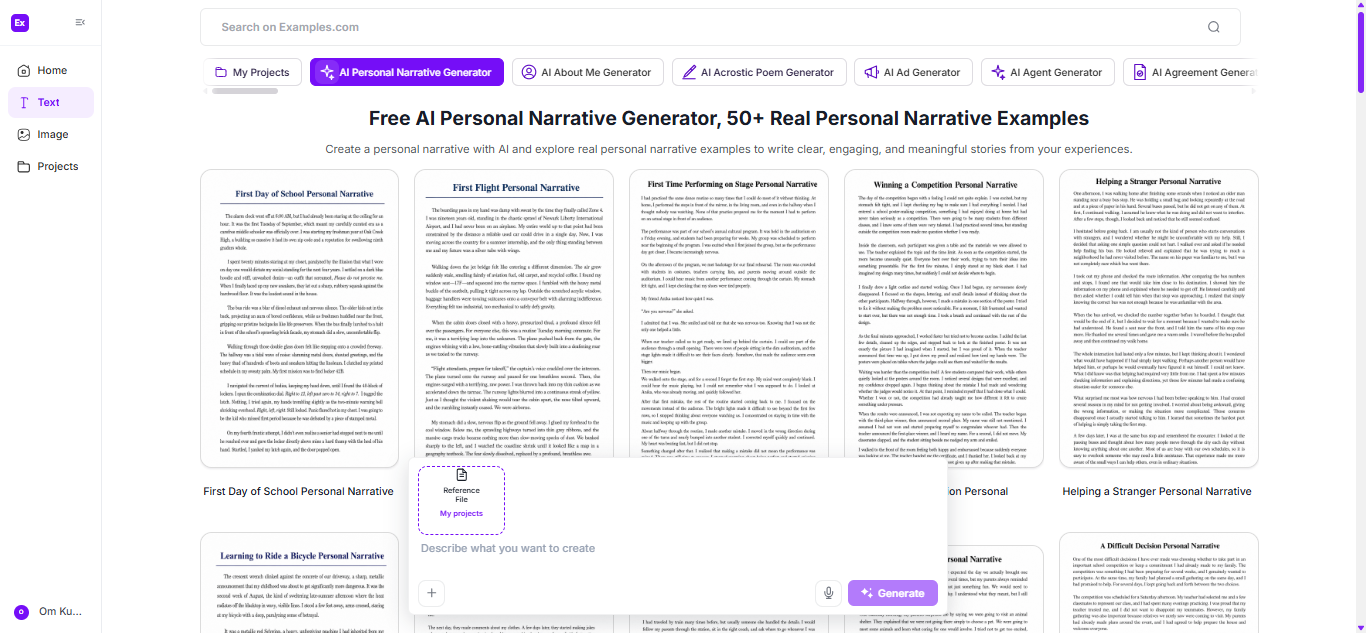
Explore Real Personal Narrative Examples
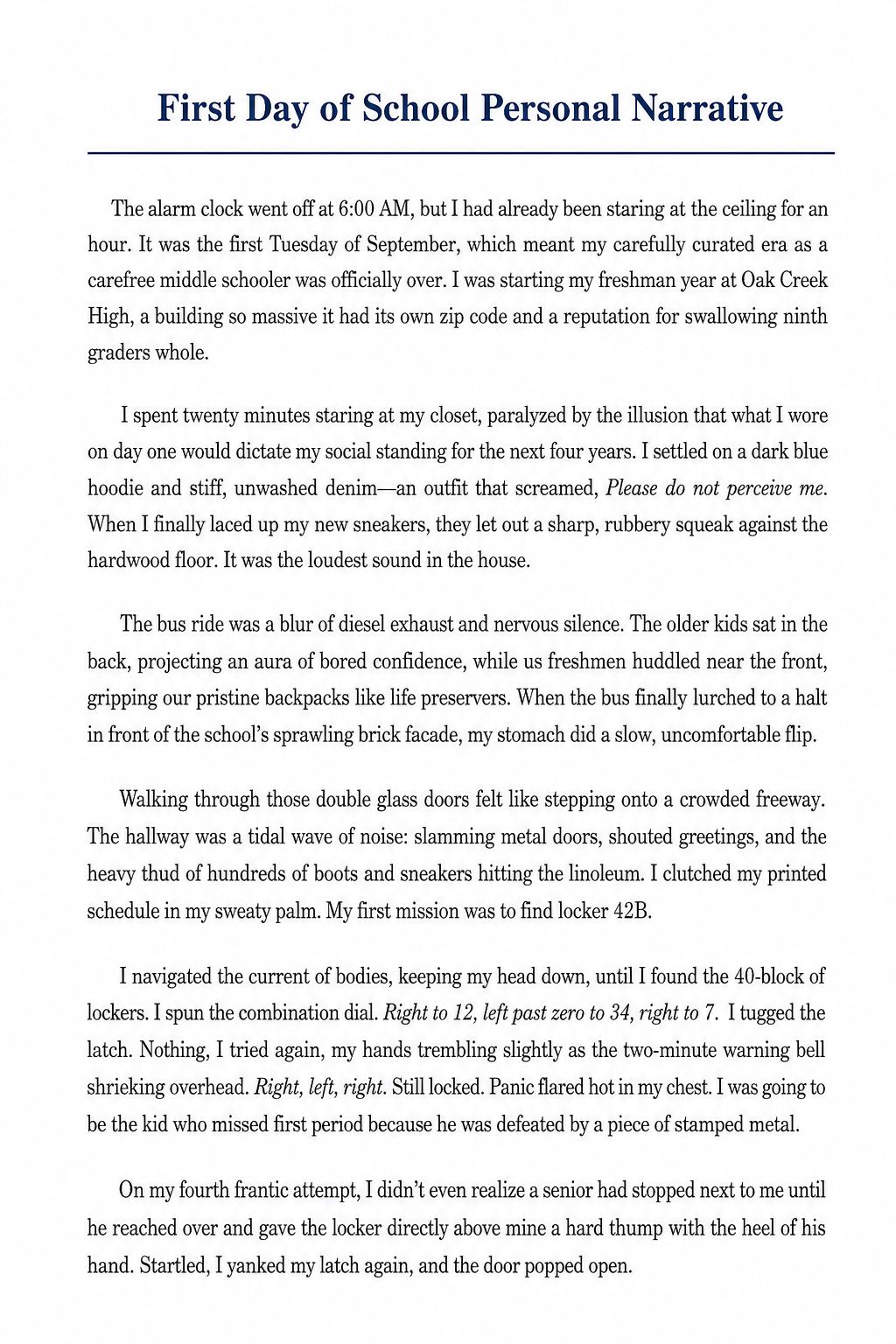
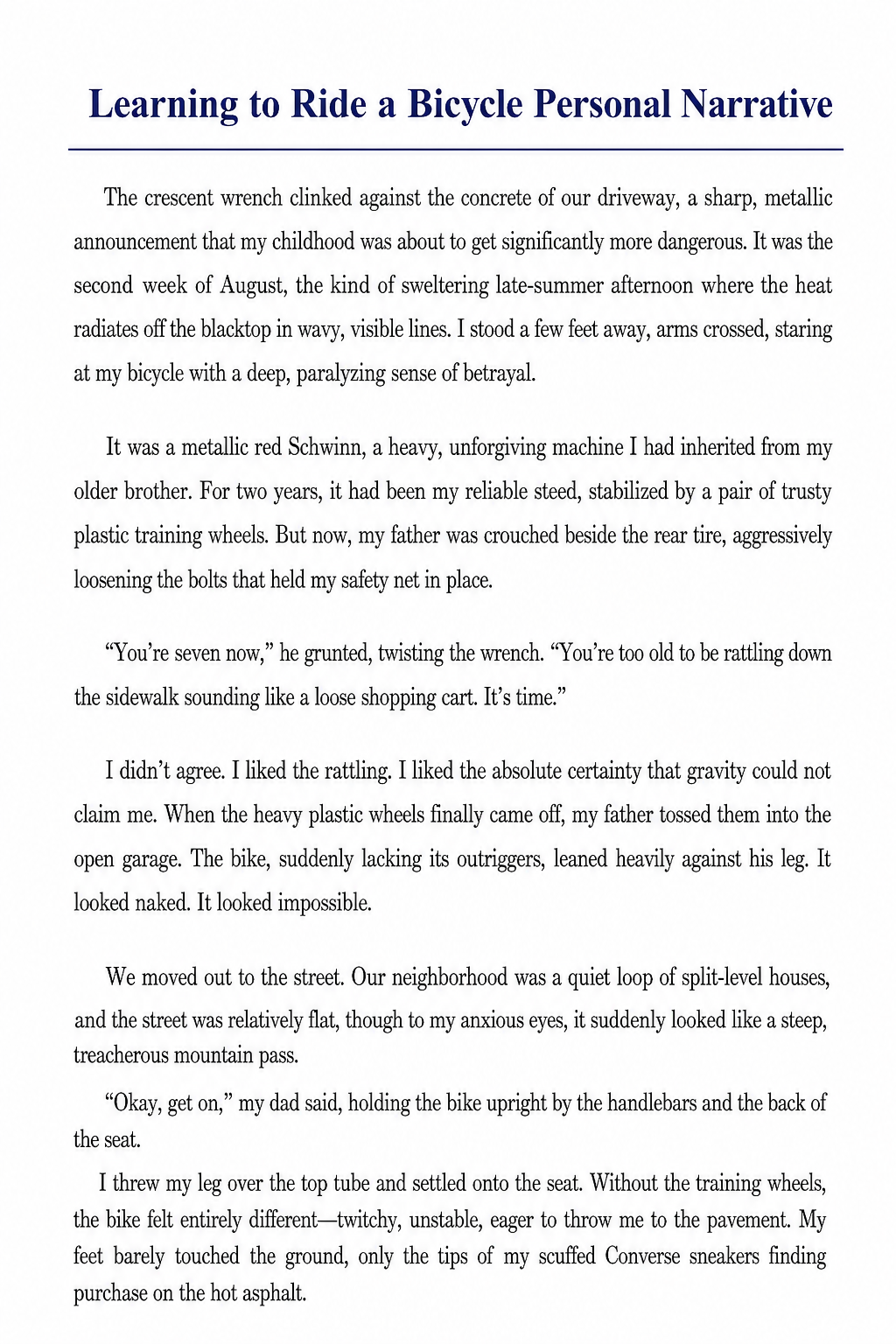
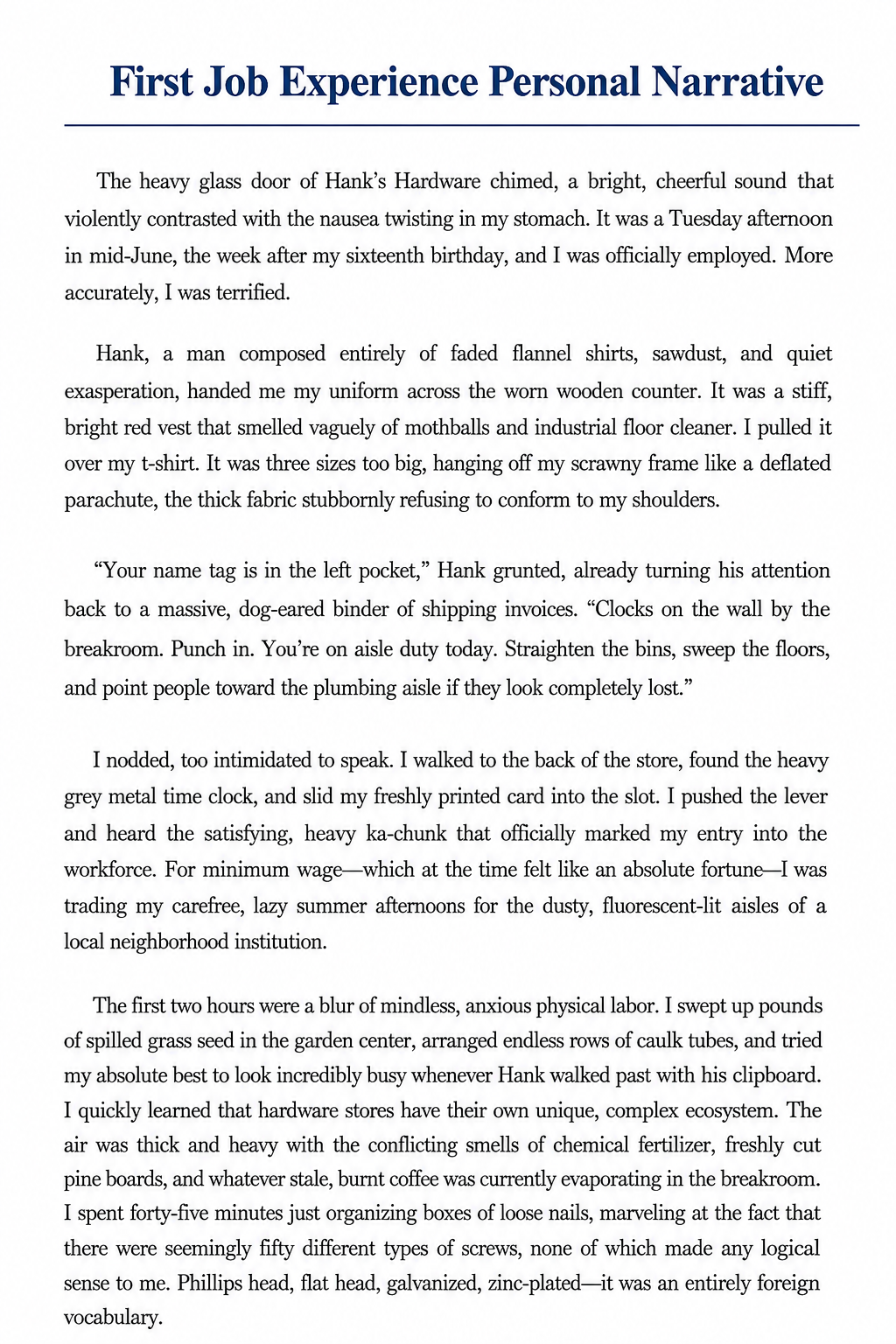
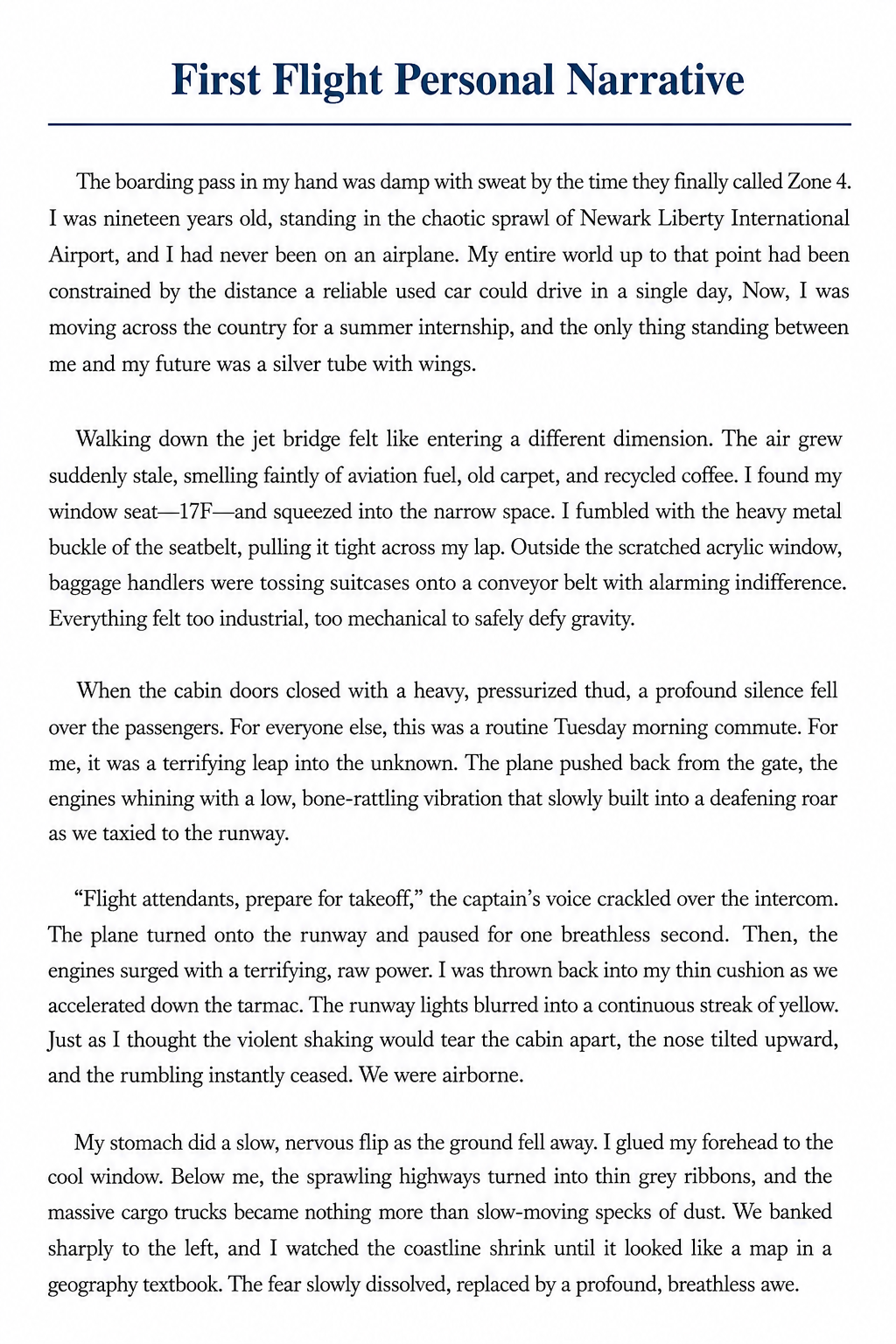
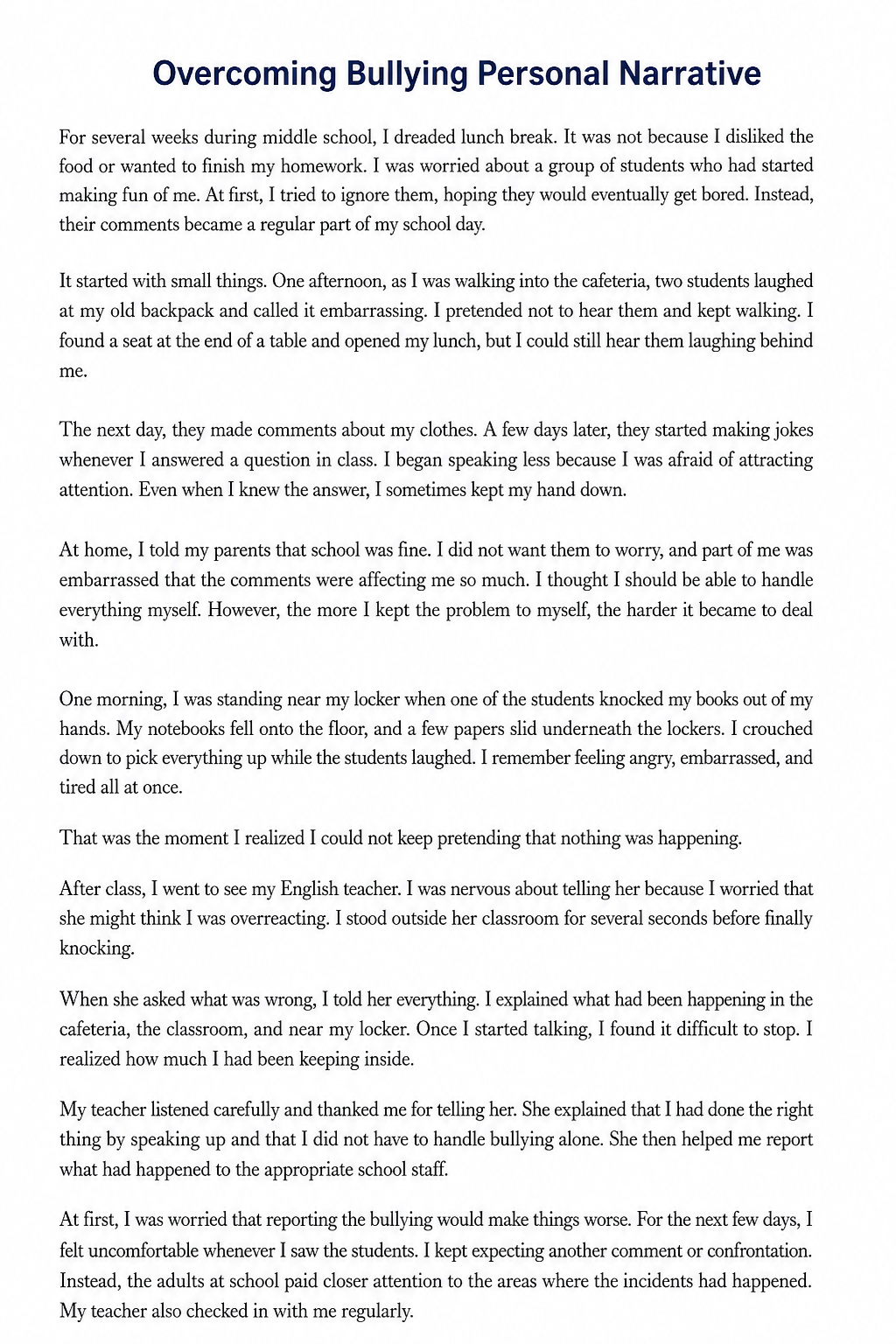
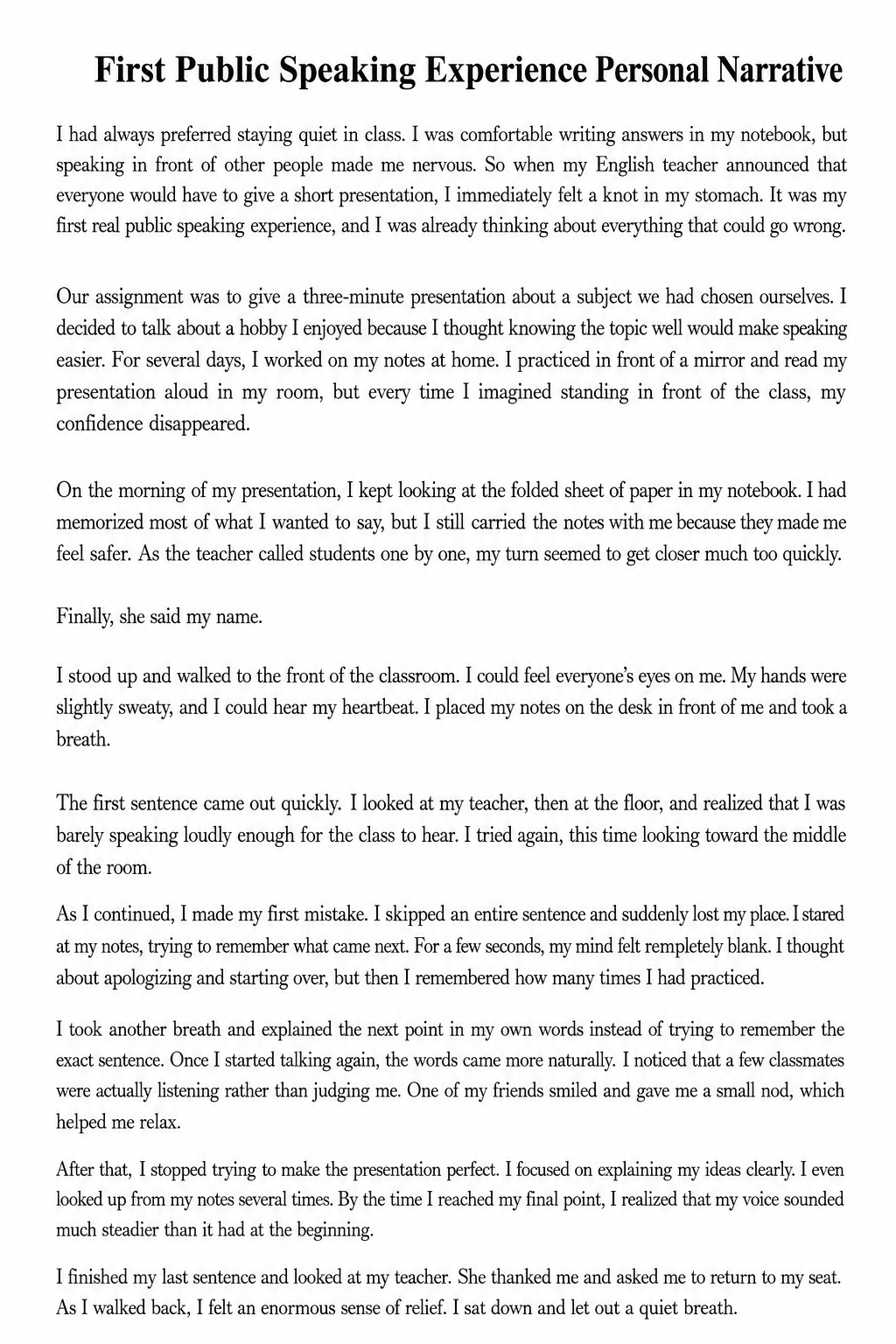
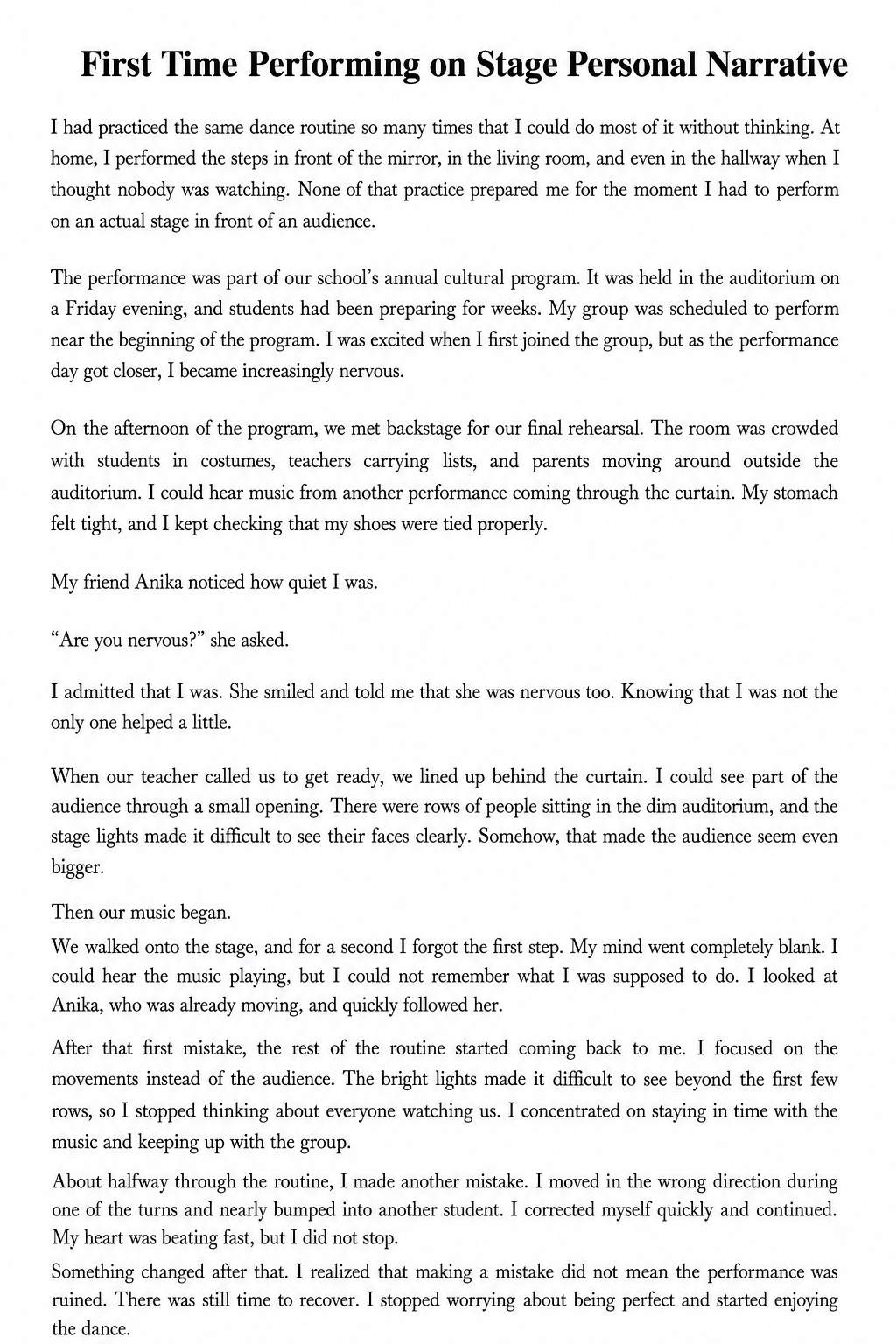
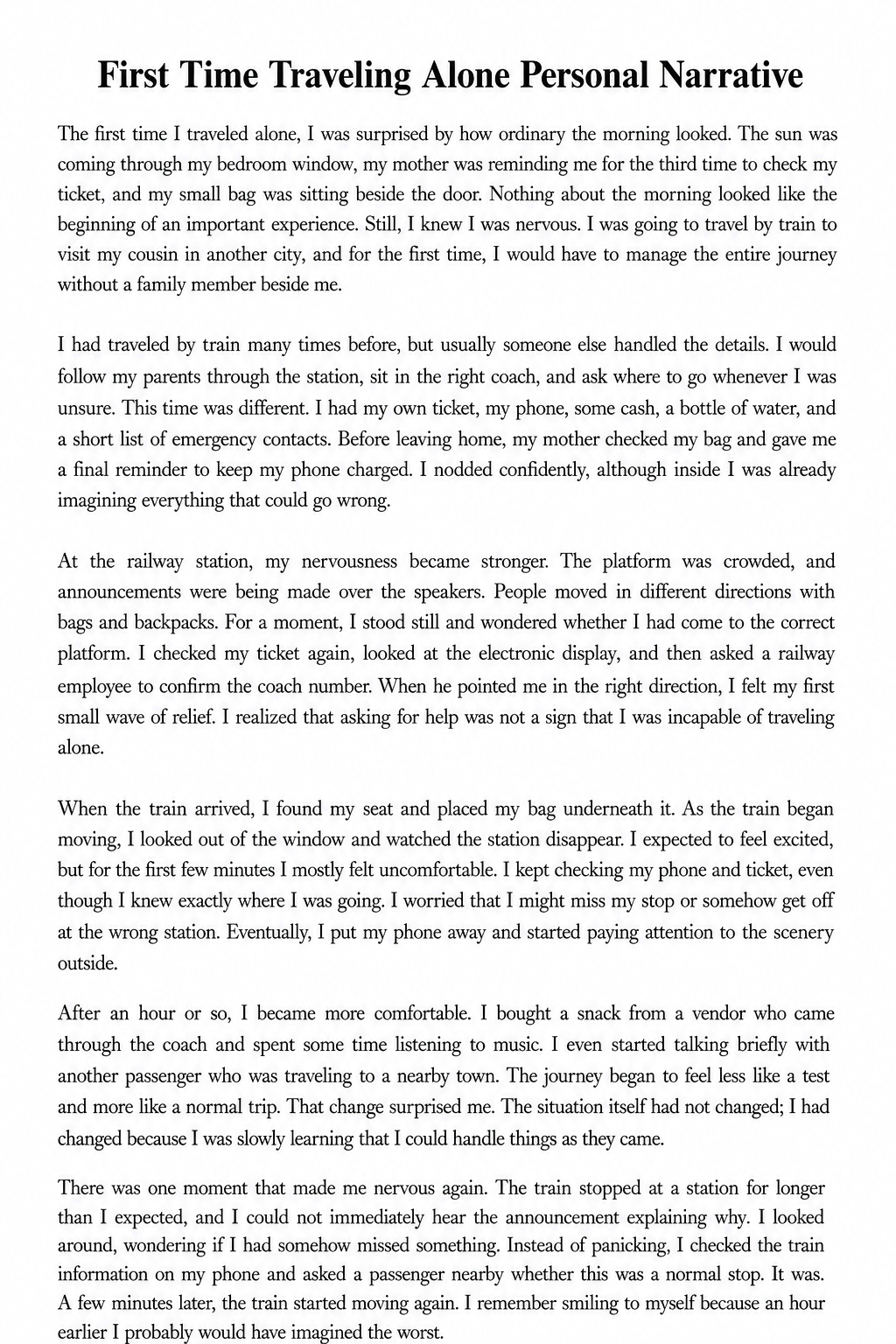
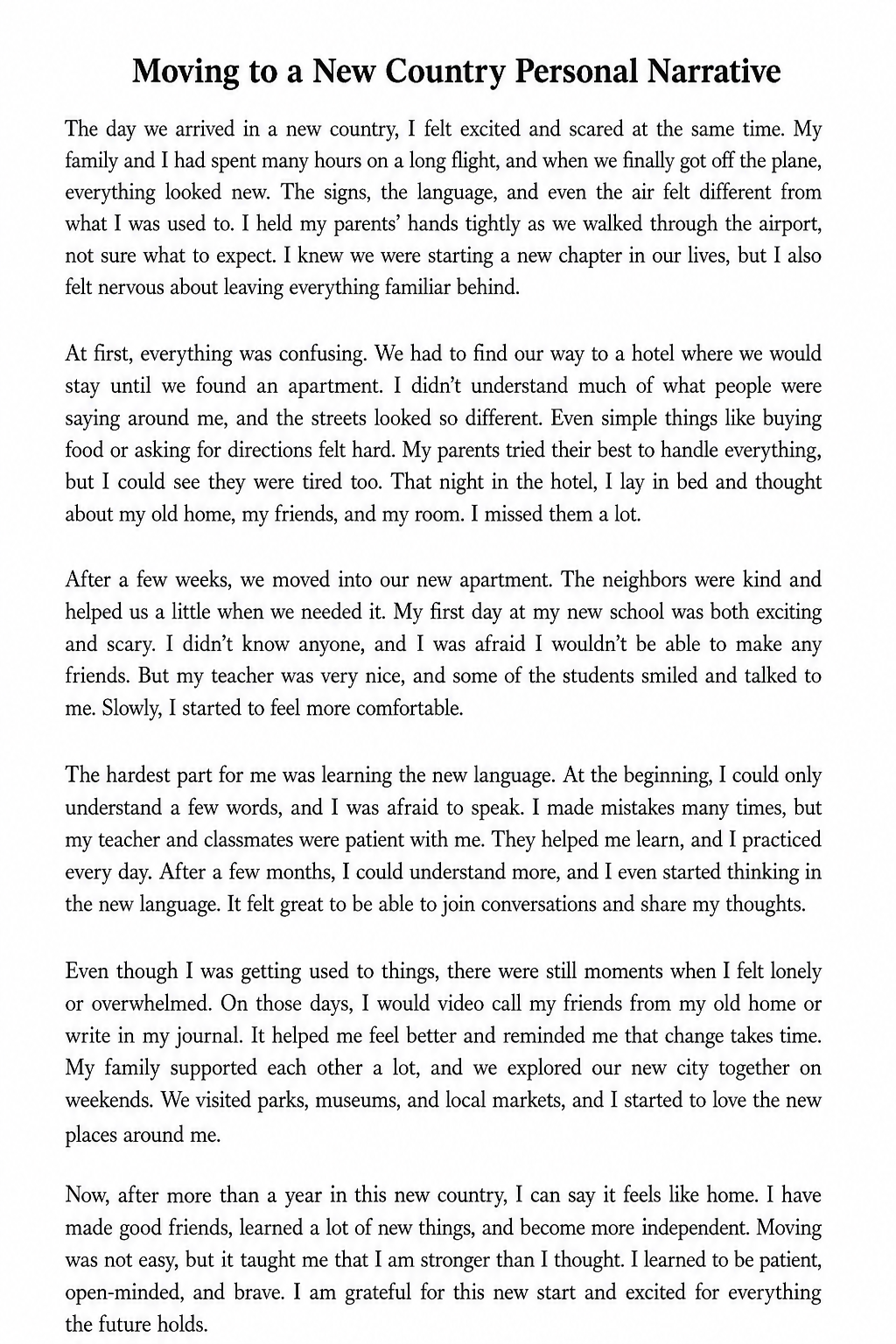
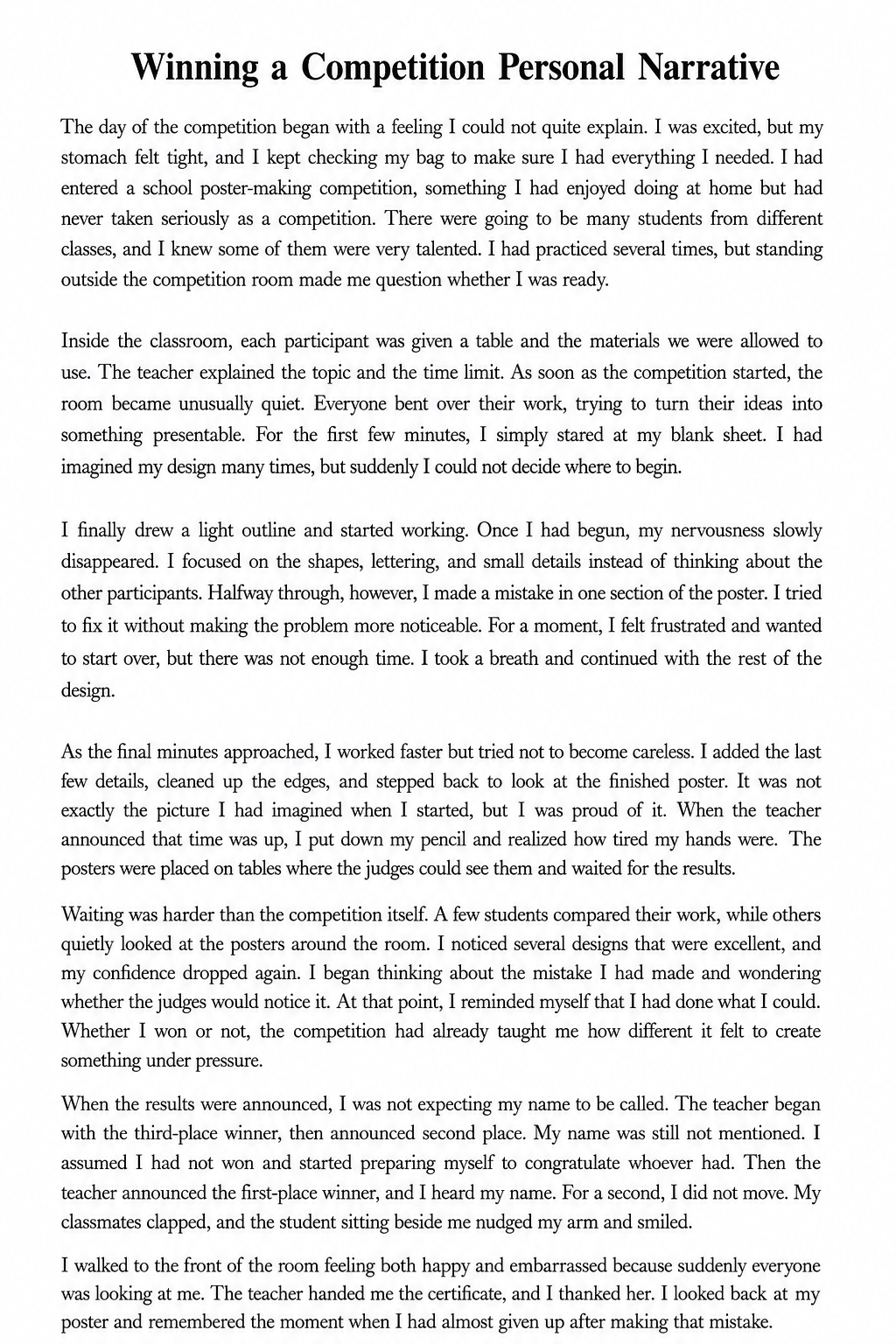
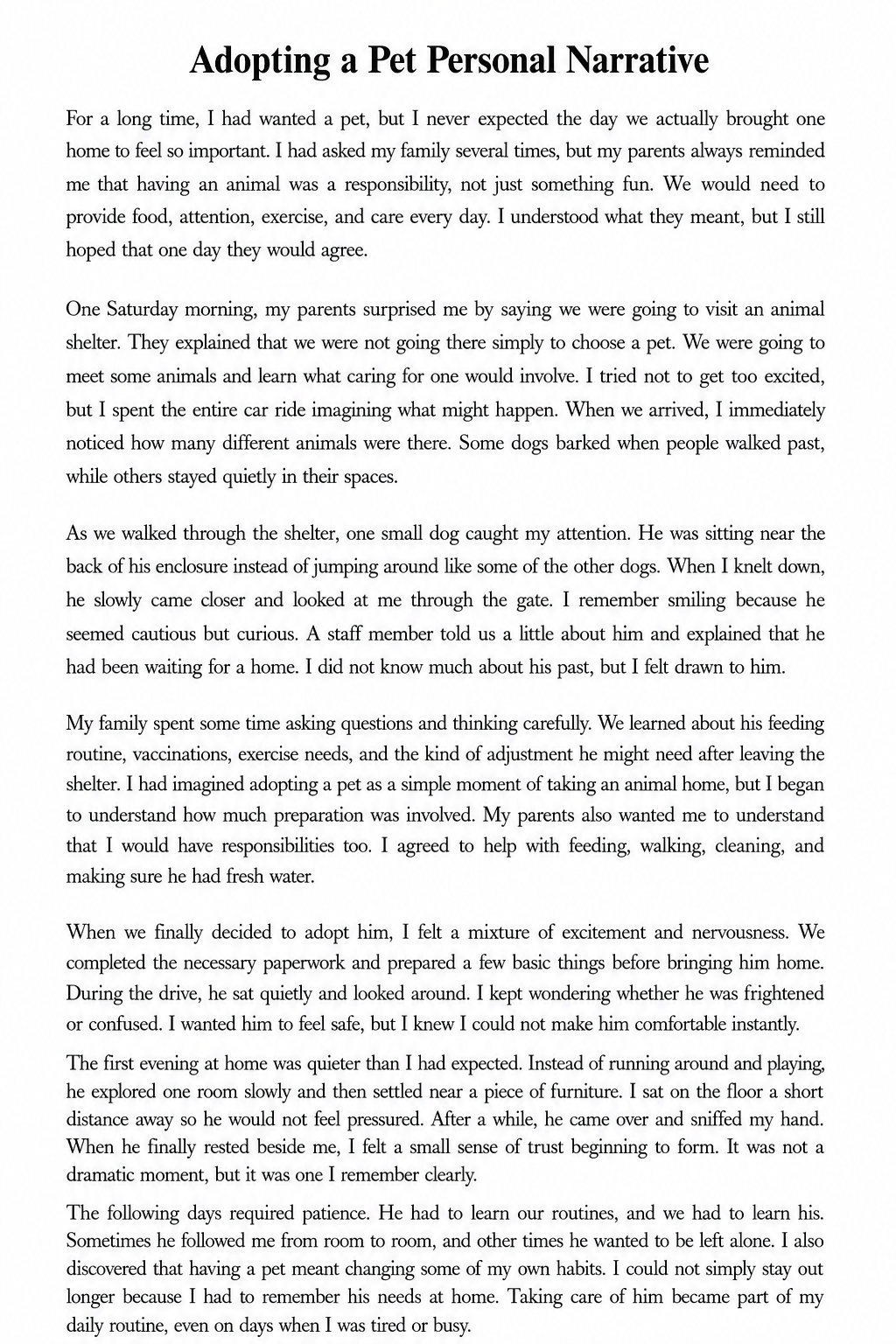
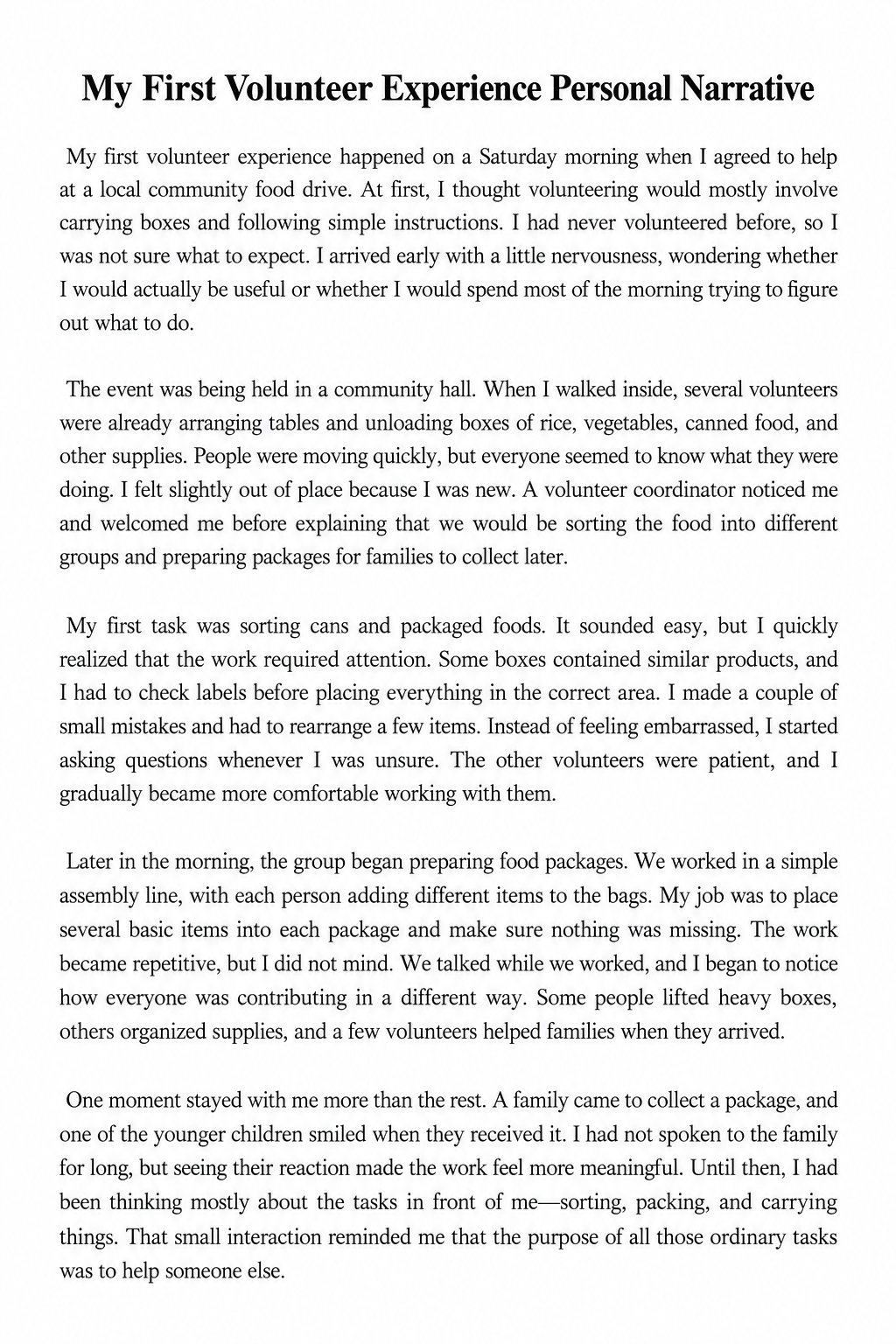
Browse professionally written personal narrative examples to understand storytelling, structure, point of view, sensory details, conflict, and reflection. Reviewing real examples helps you understand how meaningful experiences can be developed into focused and engaging narratives.
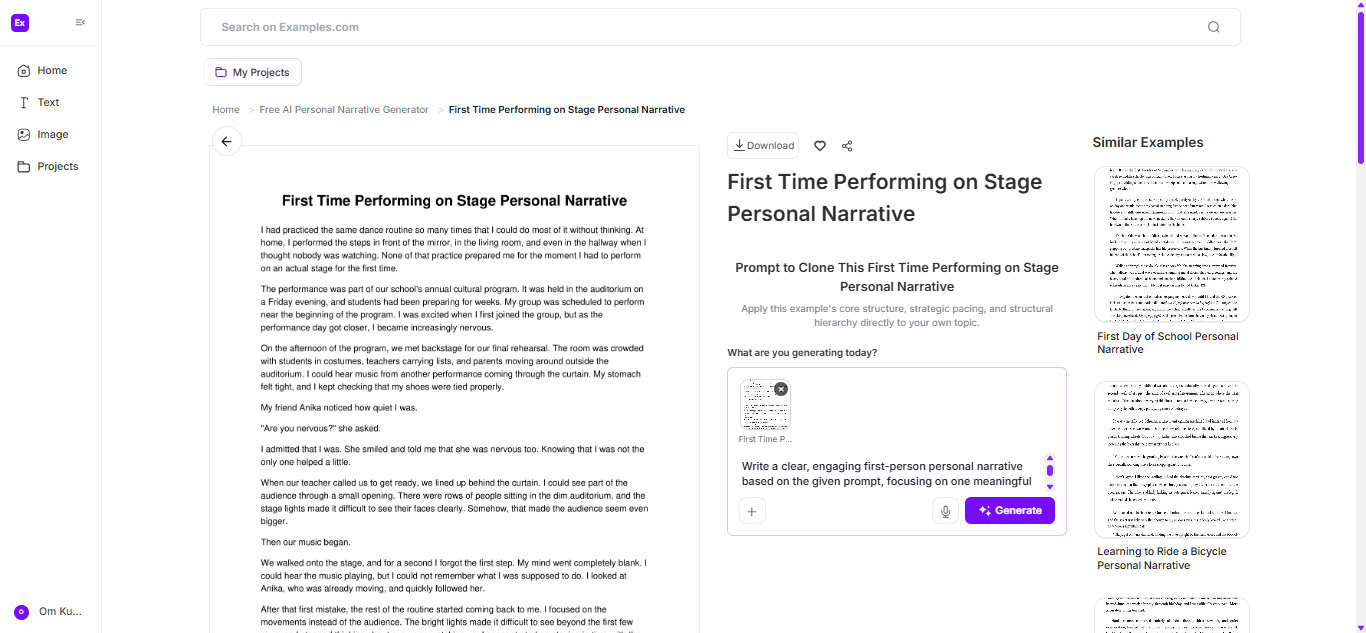
Choose A Reference Personal Narrative And Enter An AI Prompt
Select a reference personal narrative and describe your requirements, including the experience, setting, conflict, emotions, key events, point of view, and lesson or insight you want to express.
Generate A New AI Personal Narrative
The AI generates a personalized narrative based on your prompt, organizing the experience into an introduction, chronological events, conflict or turning point, and reflective conclusion.
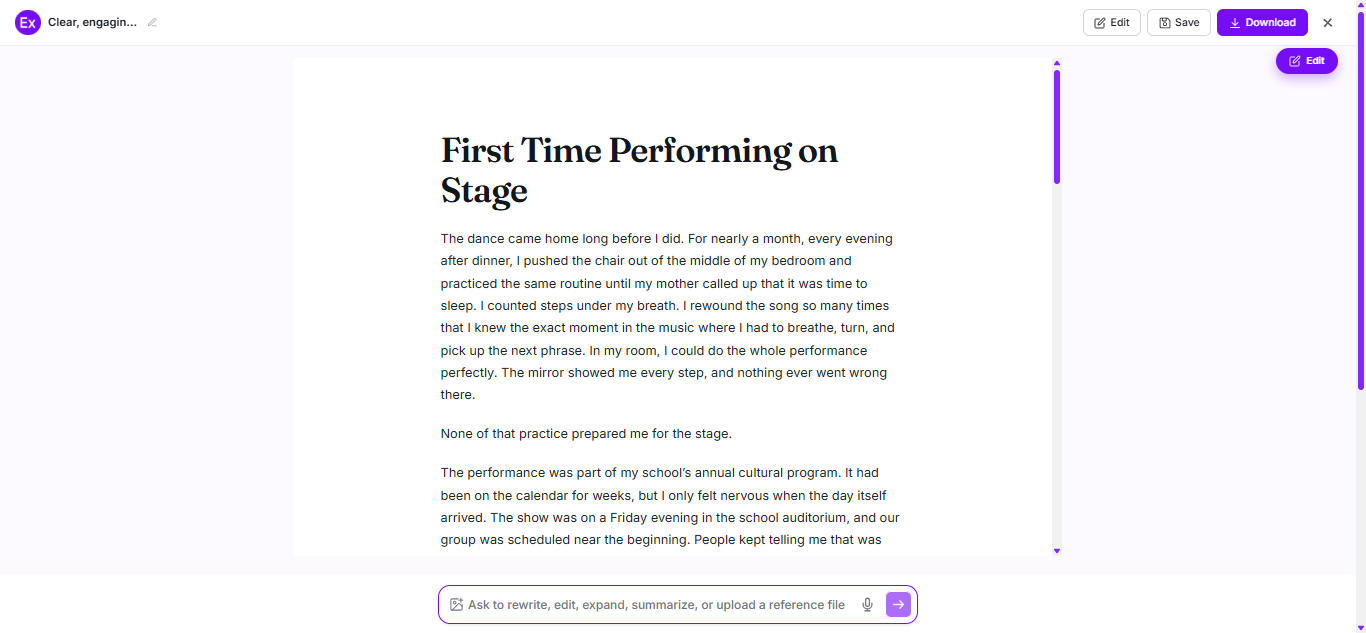
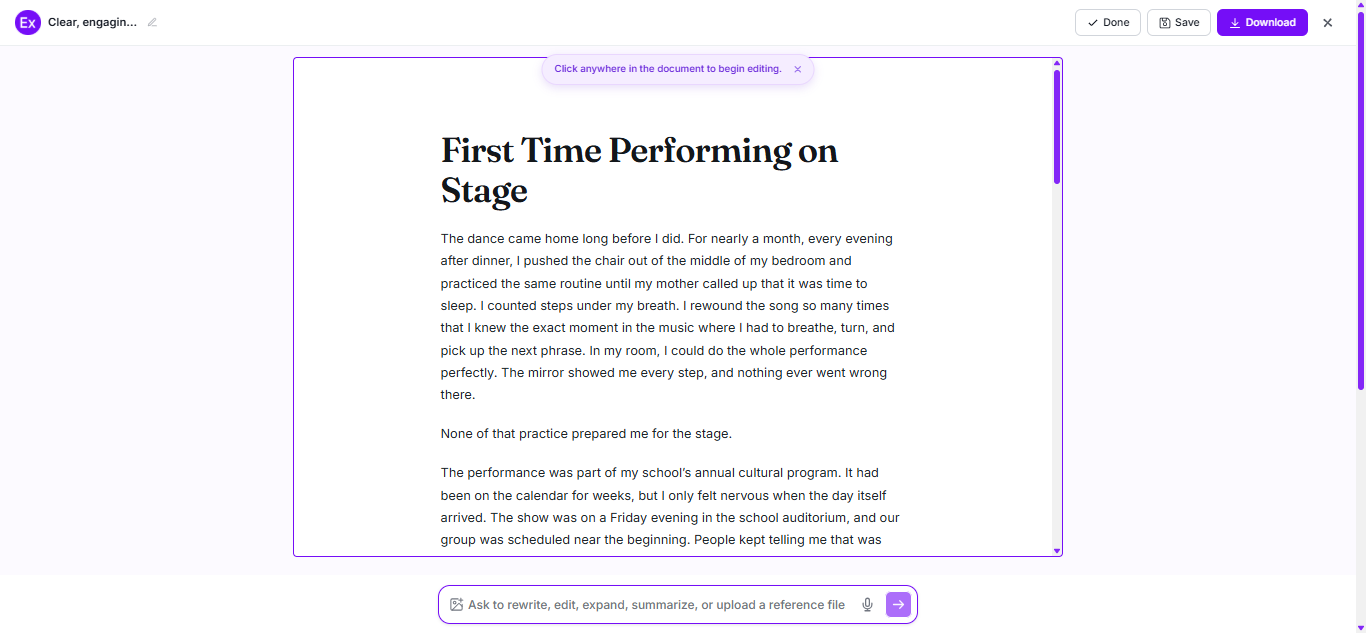
Customize The Personal Narrative In The Online Editor
Edit the experience, details, emotions, dialogue, sensory descriptions, events, and reflection to make the narrative more personal, authentic, and relevant to your chosen topic.
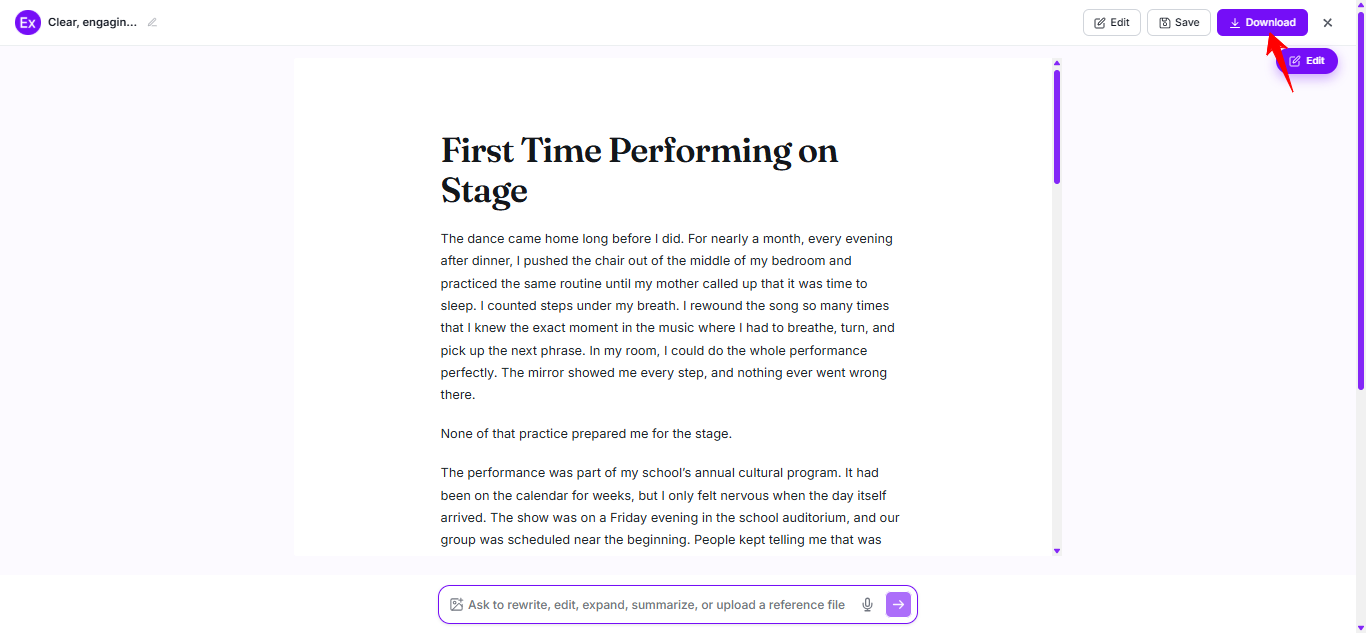
Download Your Personal Narrative
Download your completed personal narrative as a PDF for printing, reviewing, or keeping as a finished copy.
How Do I Organize a Personal Narrative?
- Introduction (Orientation): Introduce who, what, when, and where to establish the setting.
- Body (Chronology): Describe the main events in order, building toward the conflict or turning point.
- Conflict or Turning Point: Highlight the challenge, decision, or moment that changes the direction of the experience.
- Conclusion (Insight): Explain your feelings, what changed, and the lesson or insight you gained.
AI Personal Narrative Editing Features
AI Narrative Generation
Generate a personal narrative based on your experience, topic, point of view, conflict, emotions, and intended lesson.
Automatic Structure
Organize your narrative into an introduction, chronological body, turning point, and reflective conclusion for a clear story flow.
Personal Narrative Customization
Update experiences, settings, emotions, sensory details, characters, and other story elements to reflect your own perspective.
Grammar And Style Improvement
Improve grammar, sentence structure, word choice, clarity, and overall writing style while maintaining the personal voice of your narrative.
Instant PDF Download
Download your completed personal narrative as a PDF for printing, reviewing, or keeping as a finished copy.
Which Essential Elements Should I Include in Every Personal Narrative?
- First-Person Point of View: Tell the story using “I,” “me,” or “my” to present the experience from your perspective.
- Focused Experience: Center the narrative on one meaningful event, moment, or short period rather than an entire life story.
- Setting: Explain when and where the experience happened to establish the scene.
- Conflict or Challenge: Include a problem, obstacle, tension, or difficult situation that gives the story purpose.
- Sensory Details: Use details about what you saw, heard, felt, smelled, or experienced to make the moment vivid.
- Chronological Events: Present the important events in a logical sequence so readers can easily follow what happened.
- Emotions and Reactions: Describe your feelings and responses to show how the experience affected you.
- Reflection: Explain what you learned, how the experience changed you, or what insight you gained.
- Meaningful Conclusion: End by connecting the experience to its broader lesson, meaning, or personal significance.
How Do I Write a Personal Narrative?
Choose a Meaningful Experience
Select one real experience that had a strong emotional impact or taught you something important.
Start With a Strong Hook
Open with an engaging moment, thought, feeling, question, or statement that immediately places the reader in your experience.
Set the Scene
Introduce the people, place, time, and situation so readers understand where and when your story begins.
Describe the Main Events
Tell what happened in a logical sequence, using specific details and sensory descriptions to make the experience vivid.
Build Toward the Conflict
Explain the challenge, problem, or turning point that made the experience meaningful and shaped what happened next.
End With Reflection
Conclude by explaining your feelings, what you learned, how you changed, or why the experience still matters to you.
How Should I Start a Personal Narrative?
Start a personal narrative by placing the reader directly into a meaningful moment with a strong hook, vivid detail, feeling, or action. Quickly introduce the setting and situation while using first-person language to establish your perspective. Avoid lengthy background information and focus on the specific experience that will shape the rest of the story.
How Do I Make a Personal Narrative More Engaging?
Make a personal narrative more engaging by focusing on a meaningful experience and showing what happened through specific details, emotions, dialogue, and sensory descriptions. Build the story around a clear challenge or turning point, use natural first-person language, and end with thoughtful reflection that explains what you learned or how the experience changed you.
Why Should I Use Real Personal Narrative Examples to Create My Own Personal Narrative?
- Real personal narrative examples show how meaningful experiences can be developed into complete stories.
- They help you understand how to use first-person point of view naturally throughout the narrative.
- They demonstrate how writers focus on one specific experience instead of covering too many events.
- They provide examples of effective hooks, settings, conflict, sensory details, and reflection.
- They help you see how events can be organized in a clear beginning, middle, and conclusion.
- They can inspire ideas for choosing your own meaningful experiences and identifying the lessons behind them.
- They show how specific details and emotions can make a personal experience more vivid and engaging.
- They provide a useful reference for improving your own structure, storytelling, clarity, and writing style.
What Common Personal Narrative Mistakes Should I Avoid?
- Covering Too Many Experiences: Focus on one meaningful event or specific moment instead of trying to tell your entire life story.
- Using Too Much Background: Avoid lengthy introductions and move quickly into the main experience.
- Lacking a Clear Conflict: Include a challenge, problem, decision, or turning point that gives the narrative direction.
- Only Telling Instead of Showing: Use sensory details, emotions, actions, and dialogue to help readers experience the moment.
- Skipping Reflection: Explain what you learned, how you changed, or why the experience was meaningful.
- Using an Unclear Timeline: Present events in a logical order so readers can easily follow the story.
- Adding Unnecessary Details: Include details that support the experience rather than distracting information.
- Ending Abruptly: Finish with a meaningful insight or reflection that connects the experience to its larger significance.
What Makes a Good Personal Narrative?
A good personal narrative tells a true, meaningful experience from a clear first-person point of view and focuses on one specific event or moment. It uses a strong beginning, logical sequence of events, clear conflict or tension, sensory details, emotions, and thoughtful reflection. Most importantly, it helps the reader understand not only what happened, but also why the experience mattered and what you learned from it.
Personal Narrative Ideas for Different Experiences
- Overcoming a Challenge: Write about a difficult situation you faced and how you worked through it.
- A Memorable Achievement: Describe an accomplishment that made you feel proud and explain what it taught you.
- Learning From Failure: Share a time when something did not go as planned and how the experience changed your approach.
- Helping Someone: Tell the story of a moment when you supported someone and discovered something meaningful about yourself.
- Making a Difficult Decision: Describe a situation where you had to make an important choice and explain its outcome.
- Meeting Someone Influential: Write about an encounter with a person who changed your perspective or inspired you.
- A Moment of Personal Growth: Focus on an experience that helped you become more confident, responsible, patient, or independent.
- Facing a Fear: Describe how you confronted something that frightened or challenged you and what you learned from the experience.
- An Unexpected Experience: Tell the story of an event that surprised you and changed how you viewed a situation.
- A Meaningful Family Experience: Share a memorable family moment that taught you an important lesson or strengthened a relationship.
FAQs
What Is the Main Purpose of a Personal Narrative?
A personal narrative shares a meaningful life experience through storytelling while highlighting emotions, lessons, personal growth, or important insights.
Can a Personal Narrative Be About an Ordinary Experience?
Yes, an ordinary experience can become meaningful when it reveals personal growth, an important lesson, emotional change, or new perspective.
How Long Should a Personal Narrative Be?
A personal narrative should be long enough to develop the experience, conflict, details, and reflection without adding unnecessary information.
Should a Personal Narrative Always Have a Conflict?
A clear challenge or tension strengthens the story by creating movement, revealing emotions, and giving the experience greater meaning.
Can I Use Dialogue in a Personal Narrative?
Yes, realistic dialogue can make conversations more vivid while helping reveal characters, emotions, relationships, and important moments within the experience.
What Point of View Should a Personal Narrative Use?
Personal narratives typically use first-person point of view, allowing writers to describe experiences, thoughts, feelings, and reactions directly.
How Do Sensory Details Improve a Personal Narrative?
Sensory details help readers visualize scenes and understand what the writer experienced through sights, sounds, feelings, smells, and textures.
What Should the Ending of a Personal Narrative Include?
The ending should provide reflection by explaining what happened afterward, what you learned, or how the experience changed you.
How Can I Make My Personal Narrative Sound Authentic?
Use your natural voice, specific memories, genuine emotions, realistic details, and personal reflections instead of relying on generic descriptions.
Can I Create a Personal Narrative From a Real Example?
Yes, real examples can provide structural guidance and inspiration while your narrative should remain based on your own experience.