
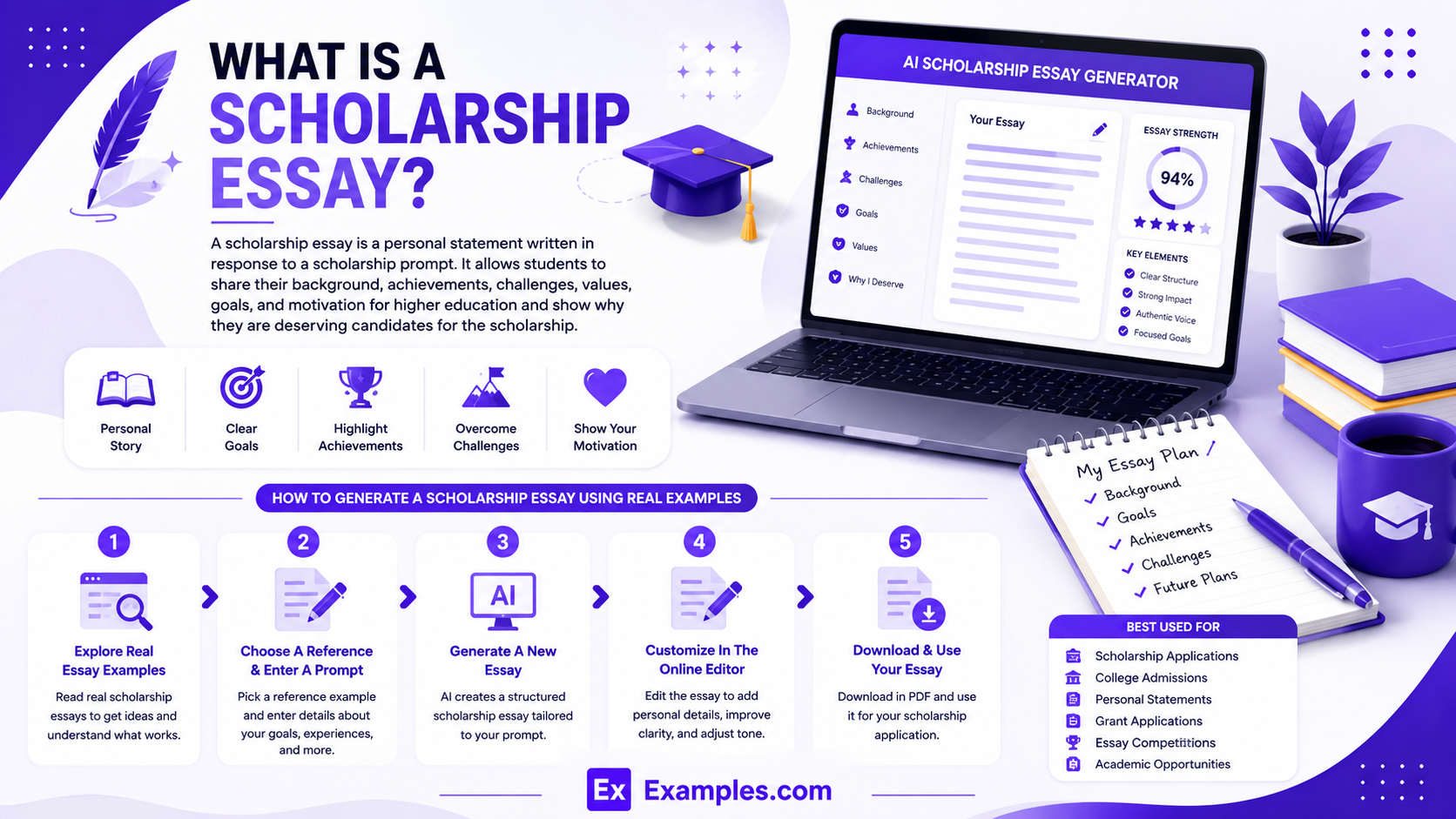
A scholarship essay is a personal written response that explains why a student is a strong candidate for financial support. It typically highlights the applicant’s academic goals, experiences, achievements, challenges, values, career plans, and reasons for pursuing education. Unlike a general academic essay, a scholarship essay is written for a selection committee and should show both the applicant’s qualifications and personal story.
What Is a Scholarship Essay?
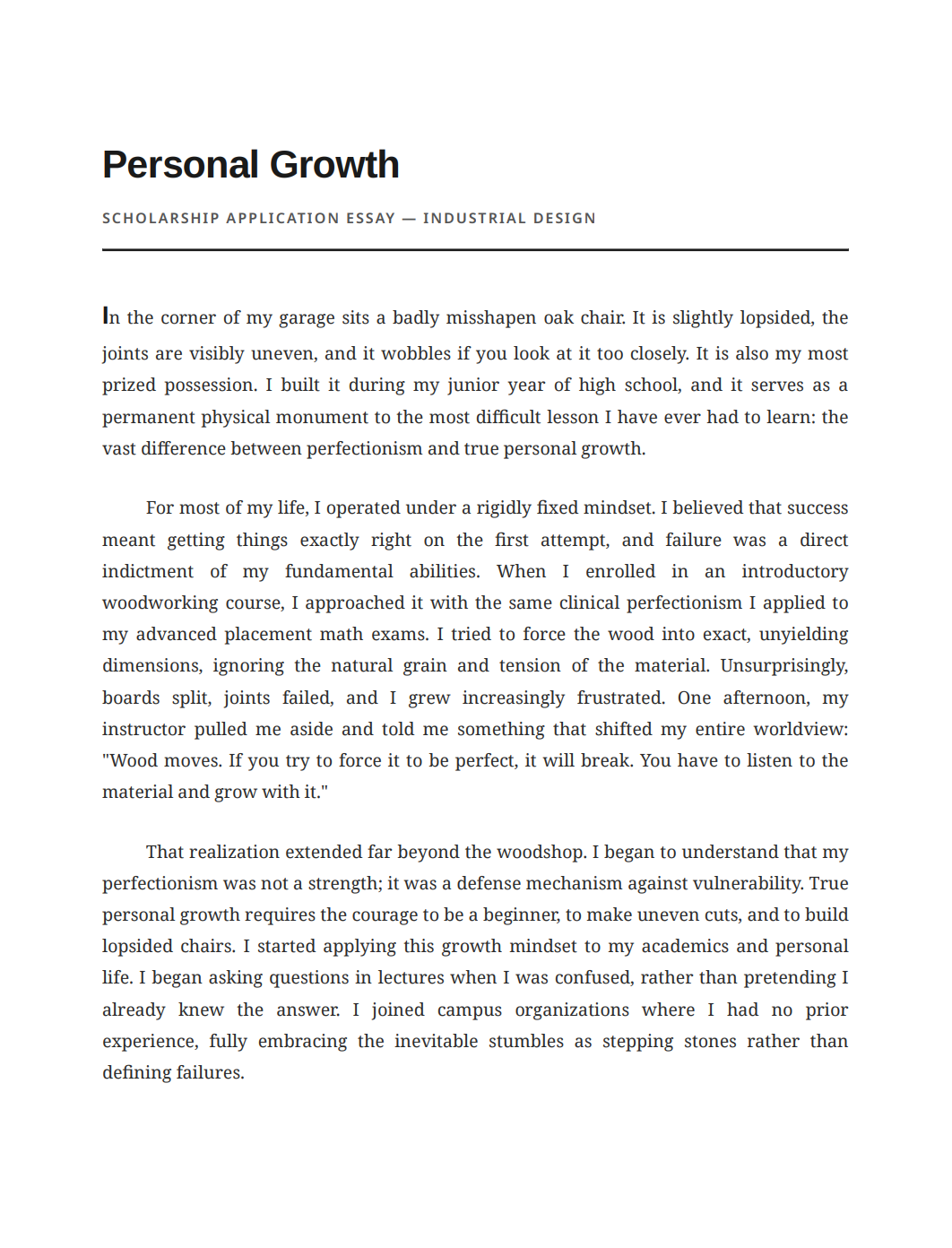
A scholarship essay is a personal statement written in response to a scholarship prompt. It gives students an opportunity to explain their background, goals, accomplishments, challenges, values, and motivation for pursuing higher education while showing why they are deserving candidates for the scholarship.
What Are the Different Types of Scholarship Essays?
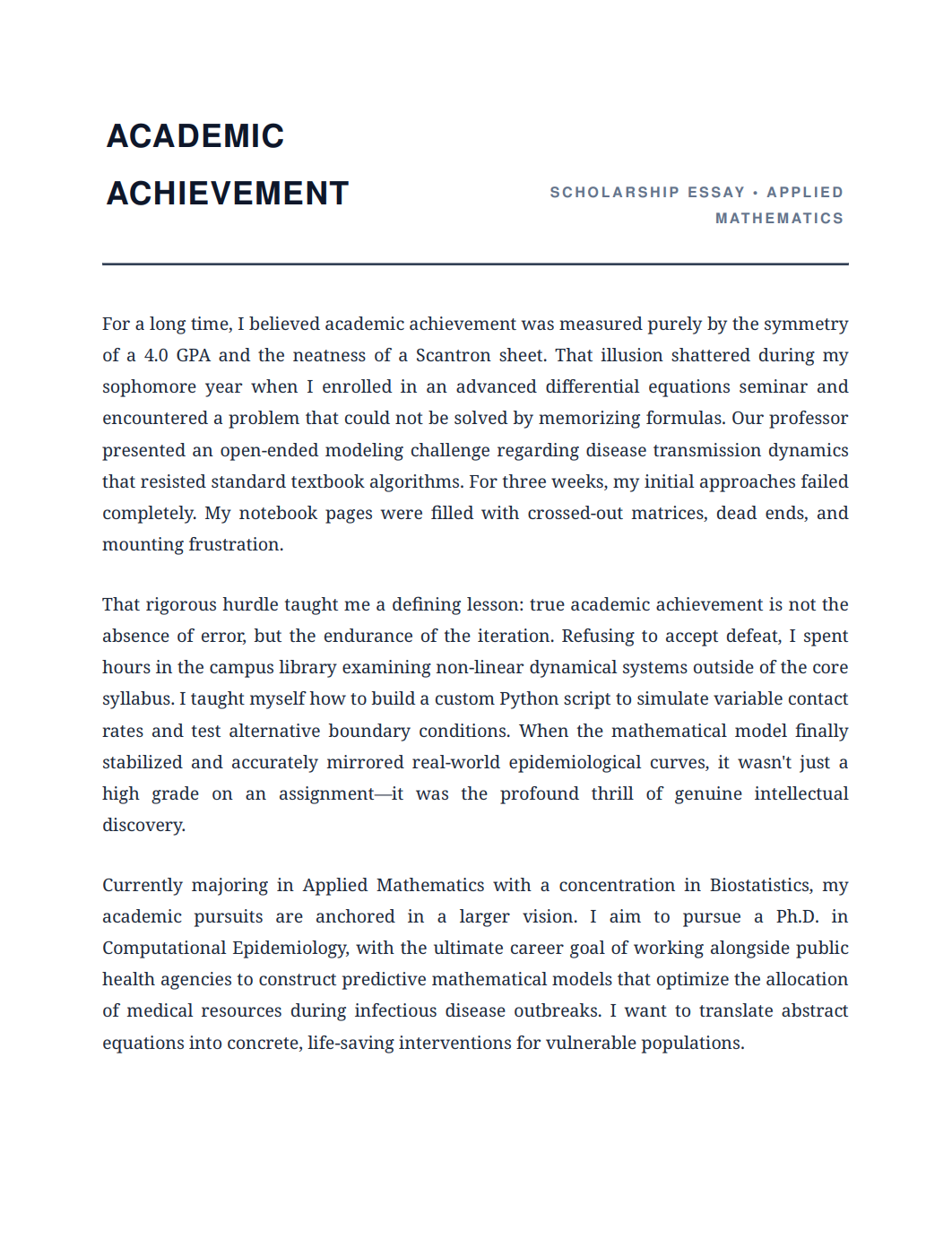
Academic Achievement
An Academic Achievement scholarship essay highlights academic performance, accomplishments, intellectual interests, and the applicant’s commitment to continued learning.
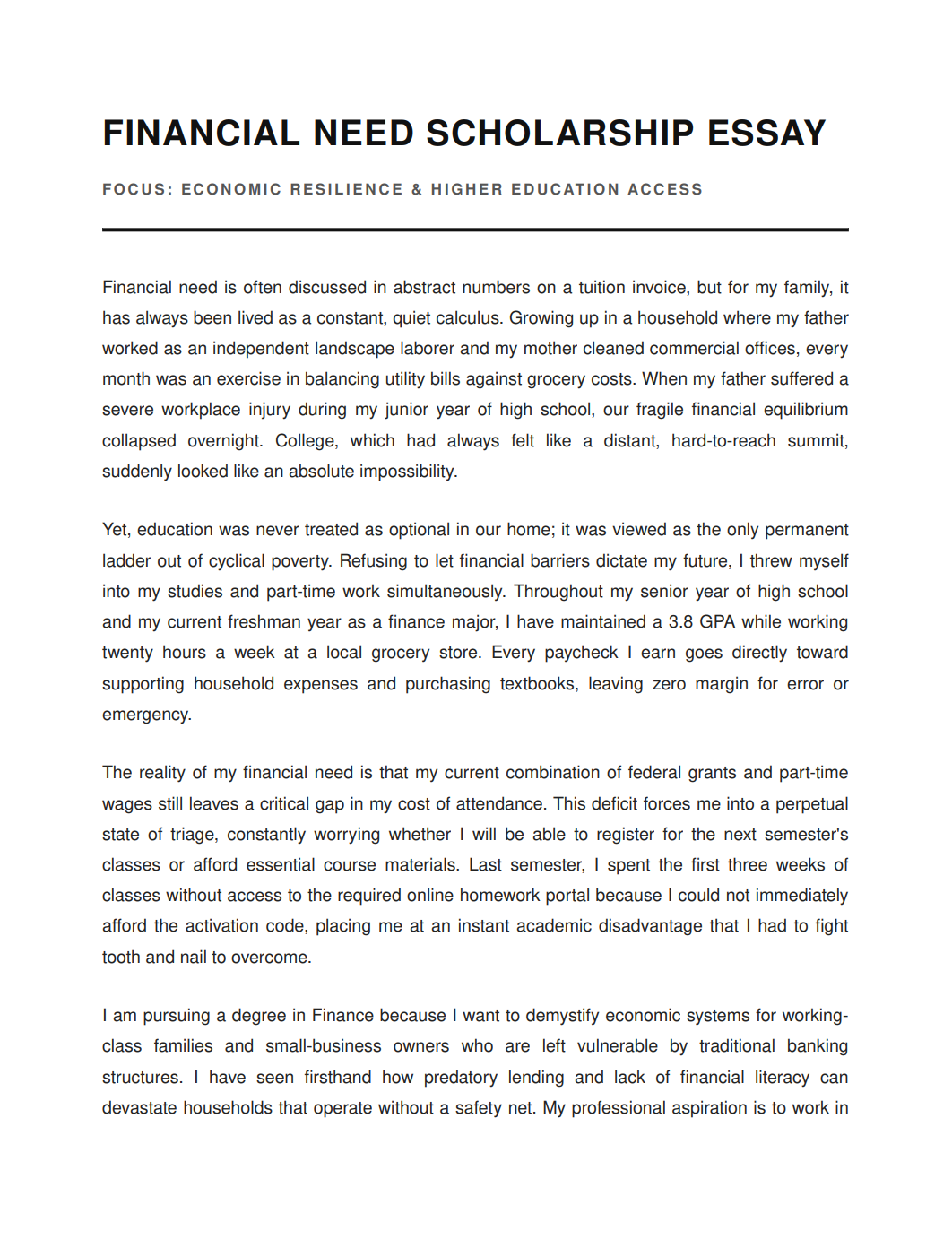
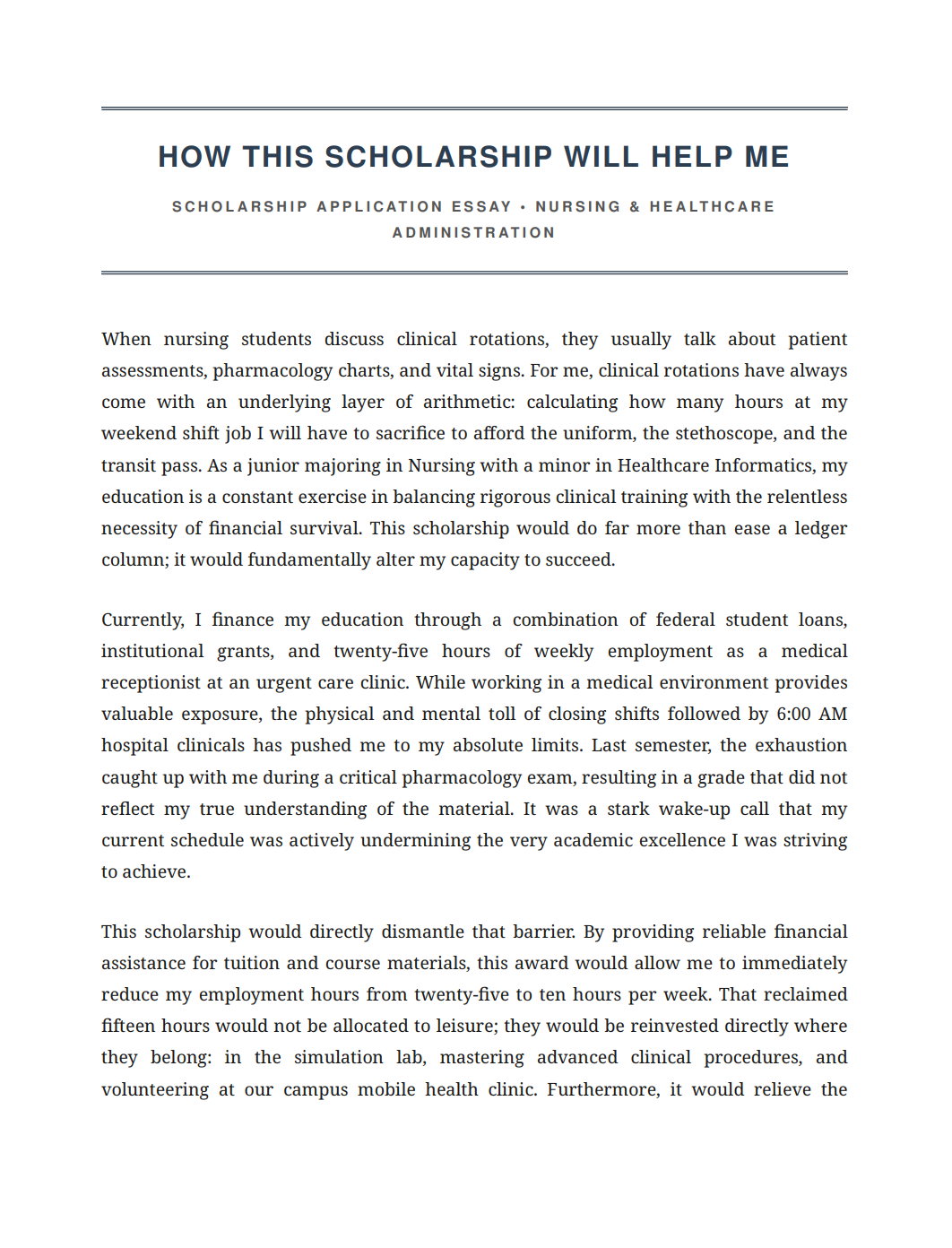
Financial Need
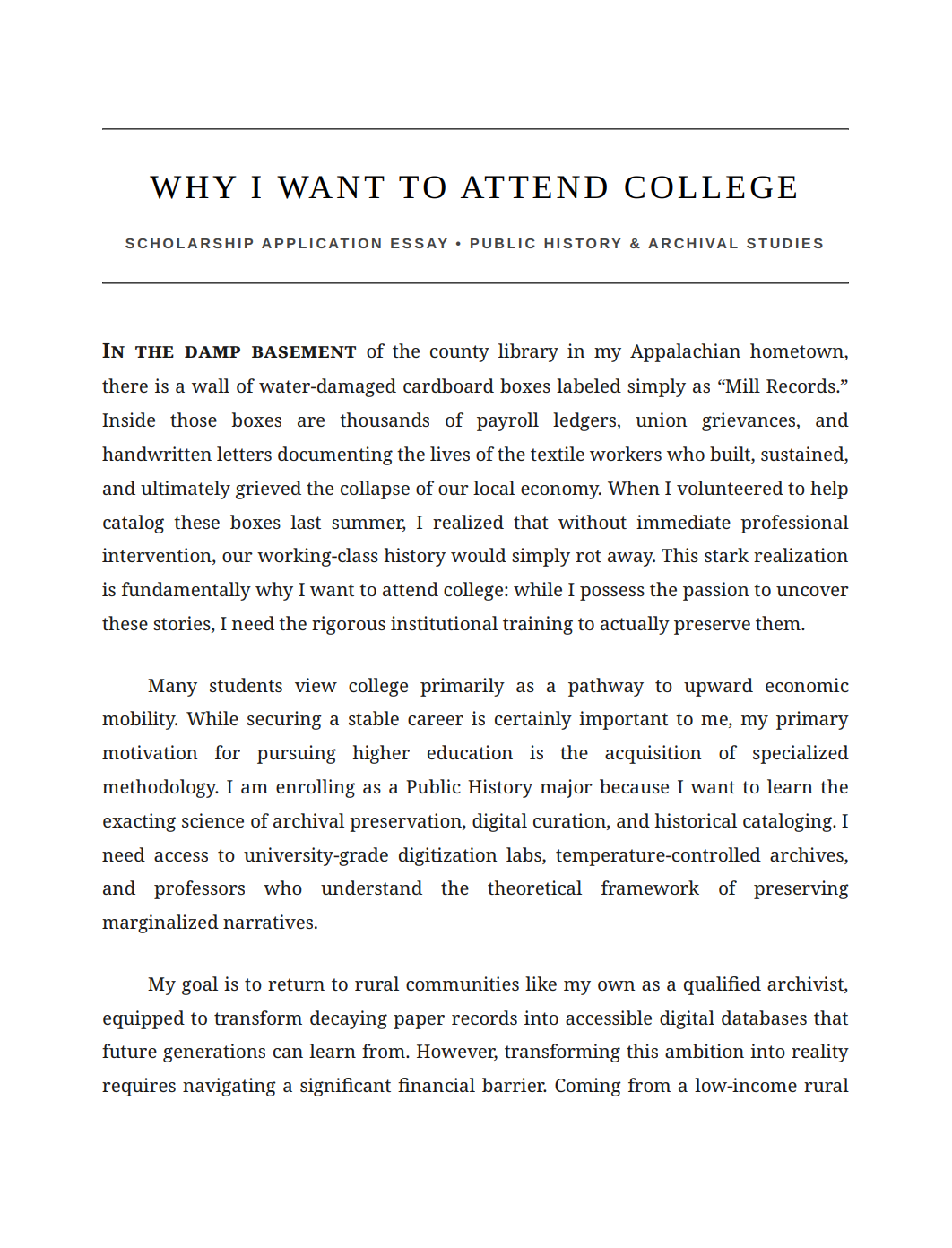
A Financial Need scholarship essay explains the financial circumstances affecting the student’s education and how scholarship support would help them continue their studies.
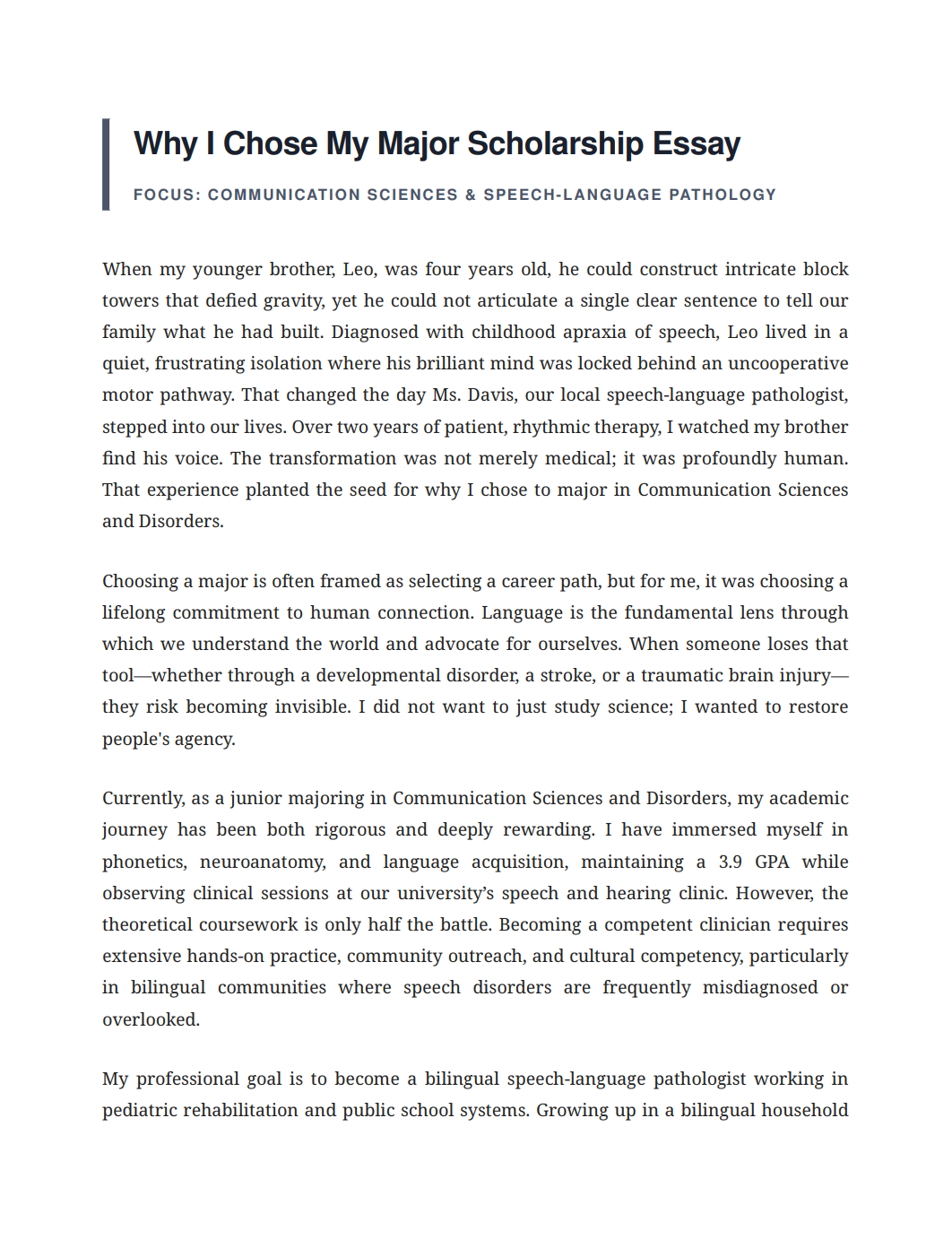
Personal Achievement
A Personal Achievement scholarship essay focuses on accomplishments, meaningful experiences, challenges overcome, and qualities that have contributed to the applicant’s growth.
Career Goals
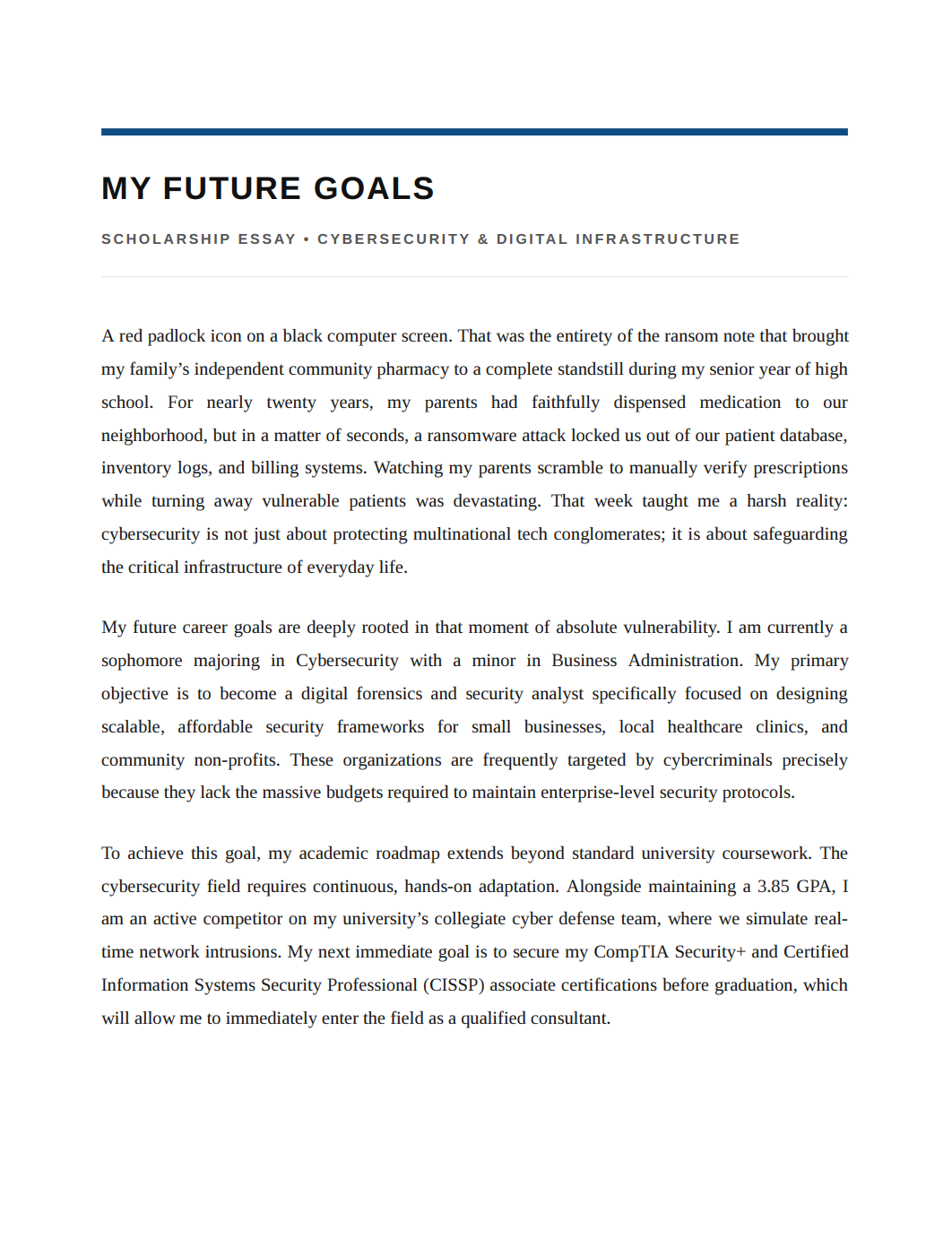
A Career Goals scholarship essay explains the applicant’s professional aspirations, educational plans, and how the scholarship would support their long-term career direction.
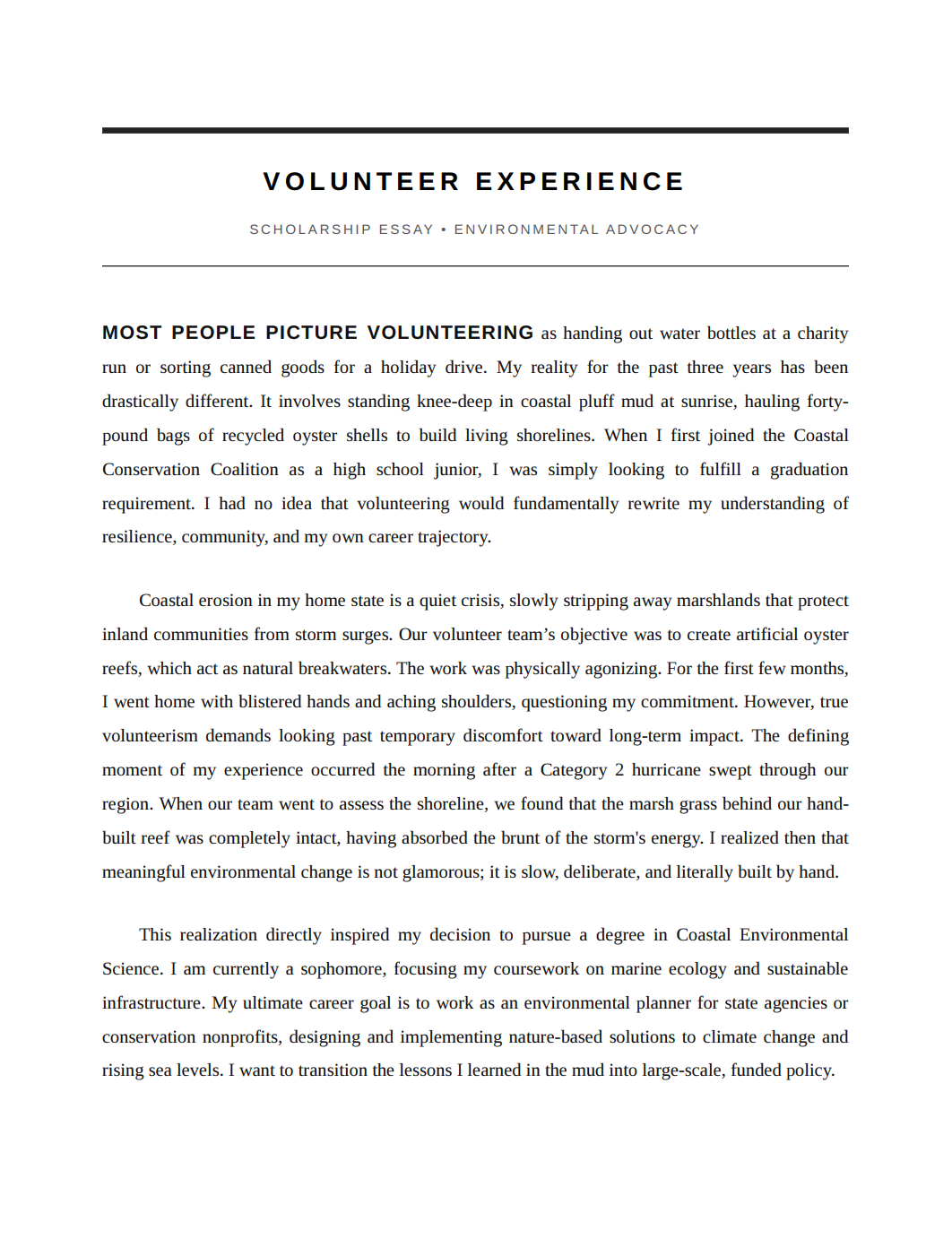
Community Service
A Community Service scholarship essay describes volunteer work, community involvement, leadership, and the applicant’s commitment to making a positive difference.
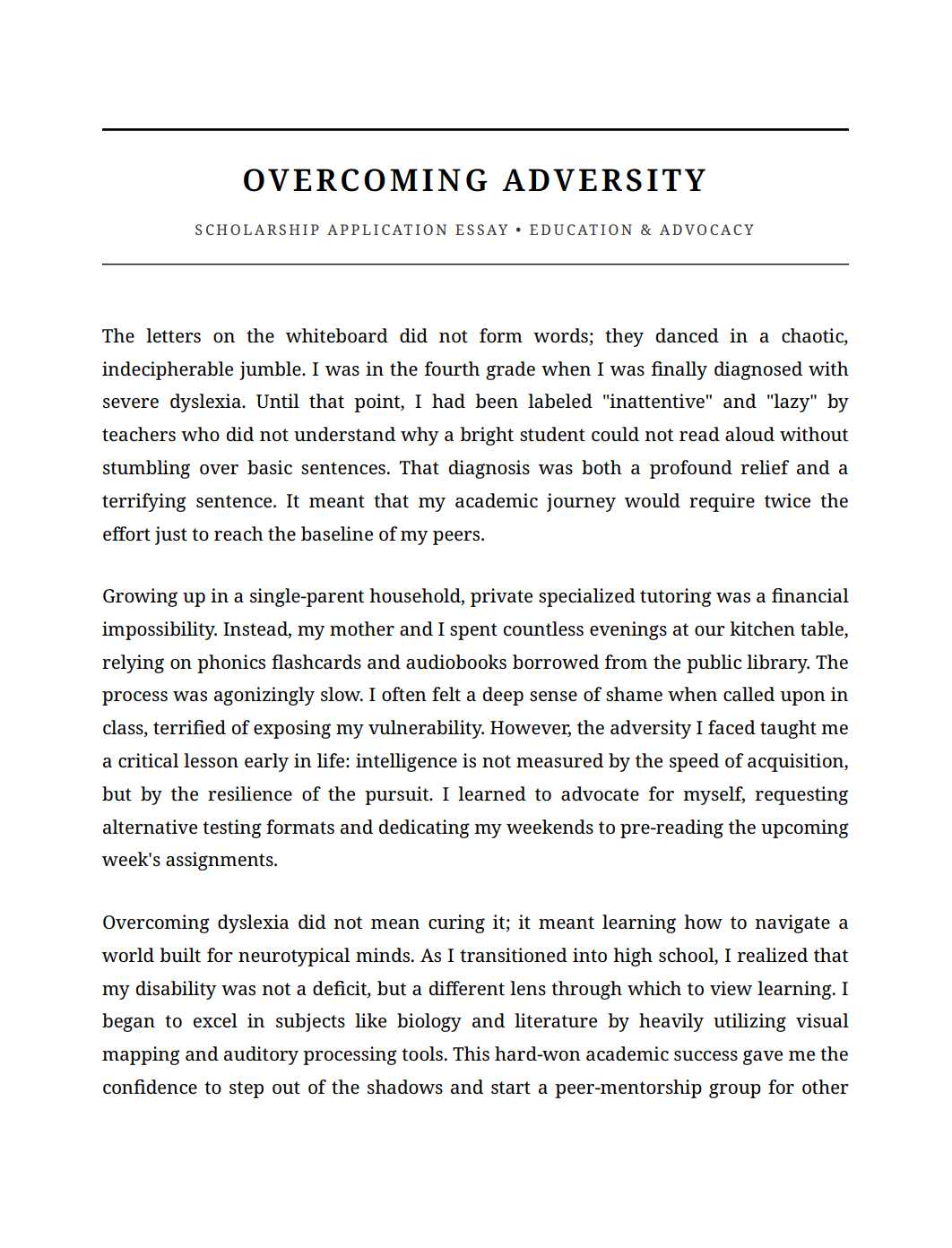
Overcoming Challenges
An Overcoming Challenges scholarship essay explains how significant difficulties or setbacks shaped the applicant’s character, perspective, resilience, and future goals.
Career and Professional Goals
A Career and Professional Goals essay connects educational plans with a specific career path and explains how the applicant intends to use their education in the future.
Personal Values
A Personal Values scholarship essay explores the principles, beliefs, experiences, or relationships that have influenced the applicant’s decisions and aspirations.
Leadership
A Leadership scholarship essay demonstrates how the applicant has guided, supported, organized, or motivated others through school, work, extracurricular activities, or community involvement.
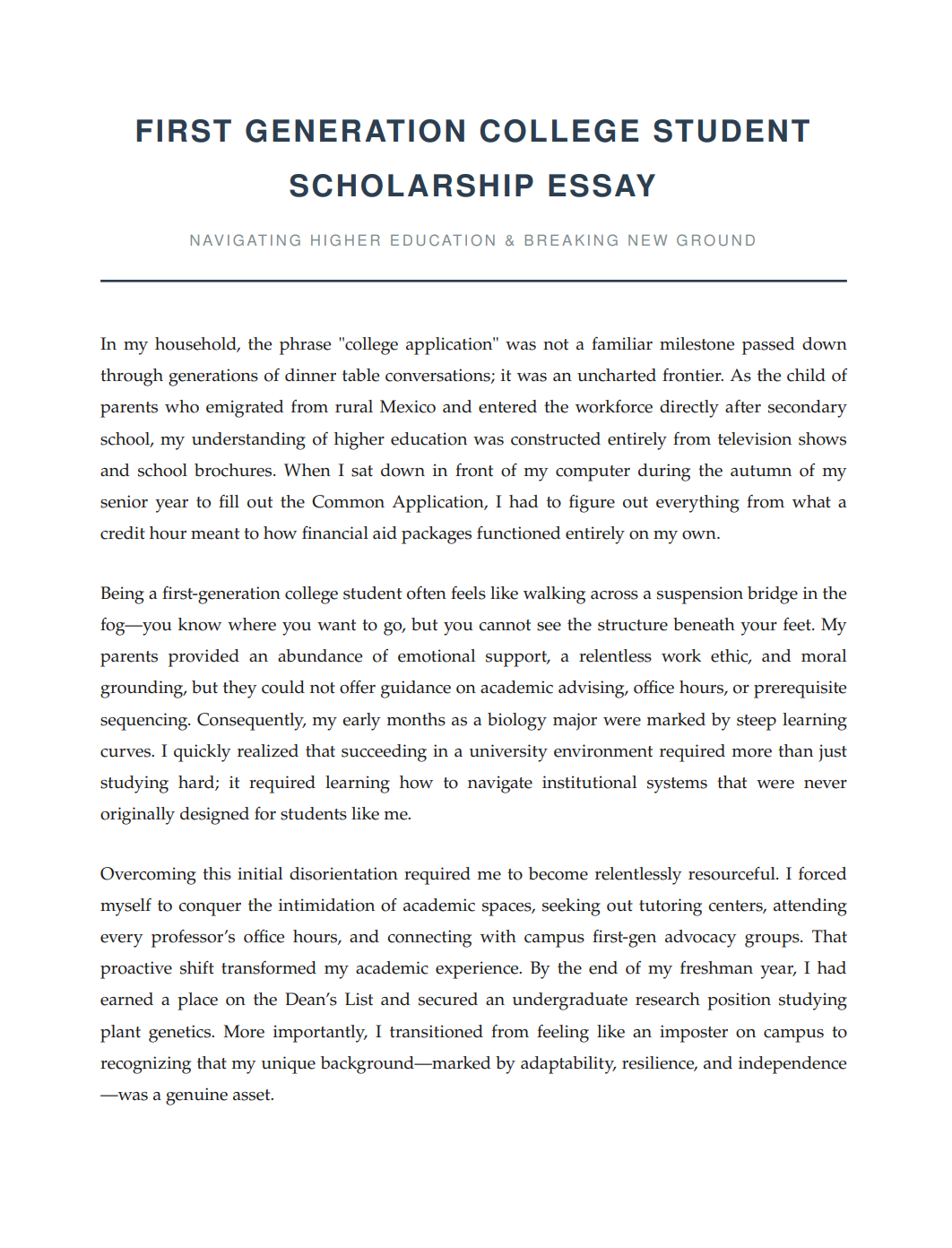
Diversity and Background
A Diversity and Background scholarship essay explains how an applicant’s background, experiences, perspective, or life circumstances have influenced their educational goals and contributions to their community.
How Do I Generate Scholarship Essays Using Real Examples?
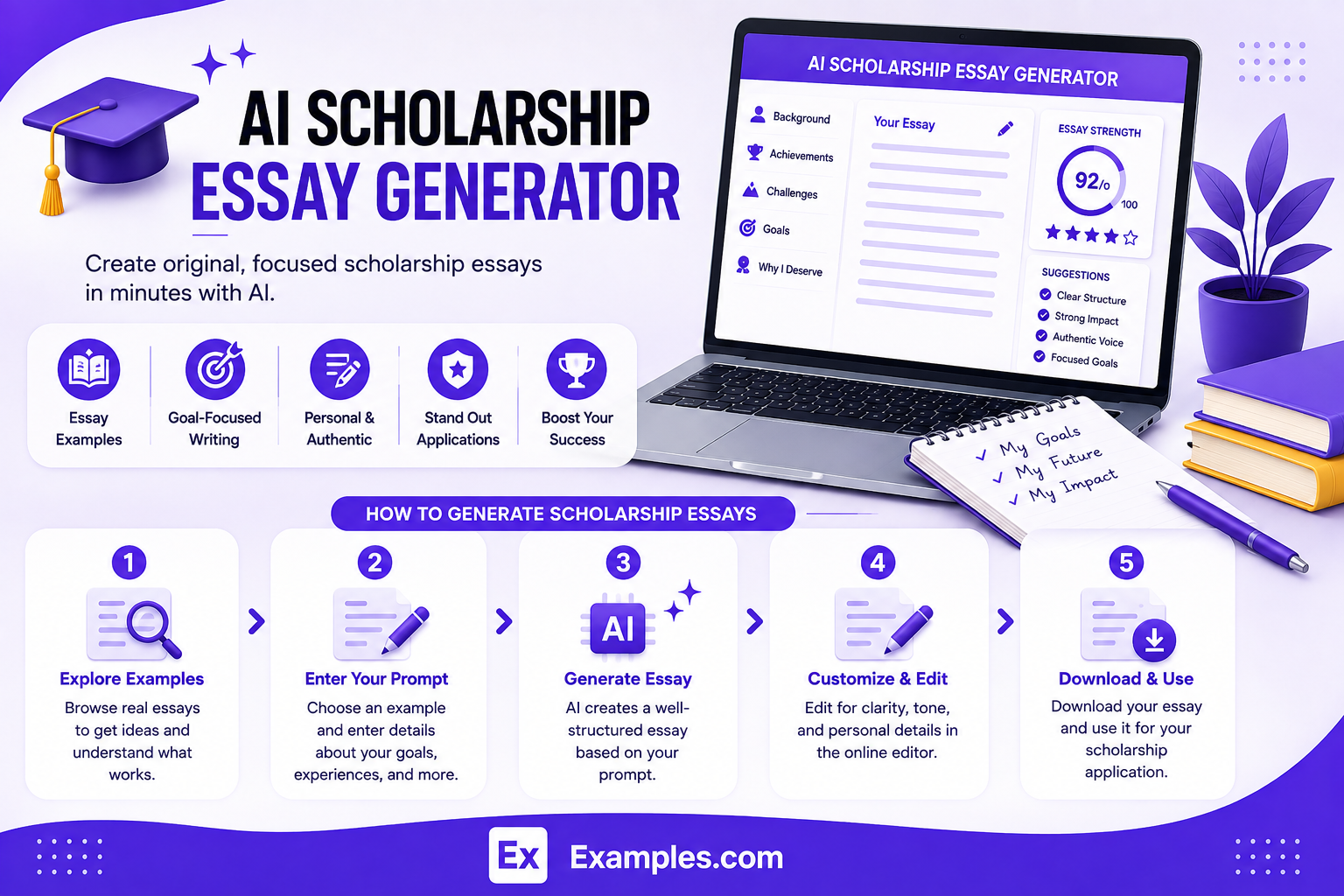
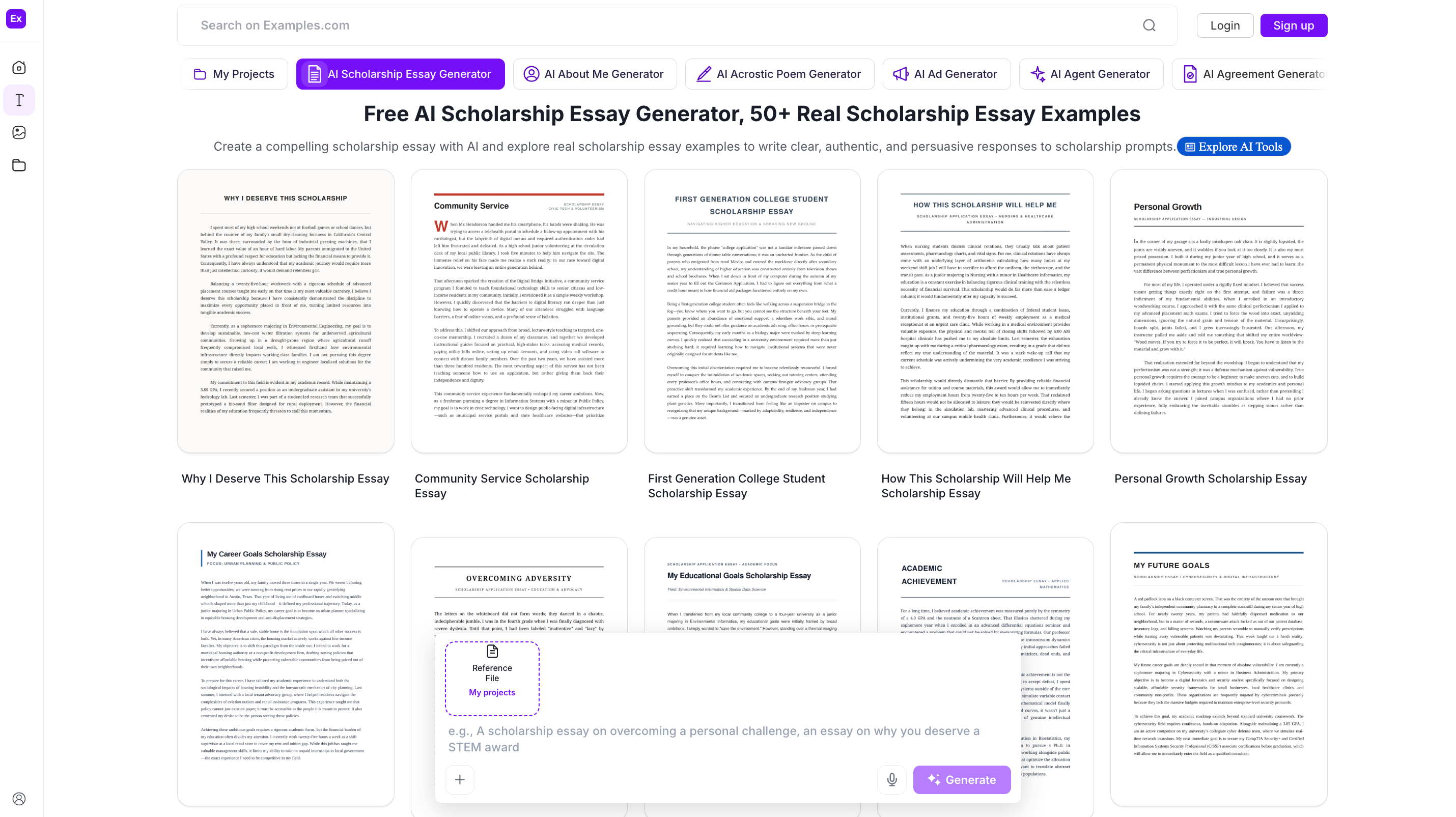
Explore Real Scholarship Essay Examples
Review real scholarship essay examples to understand how students introduce their experiences, explain their educational goals, address scholarship prompts, and connect their personal stories to their future plans.
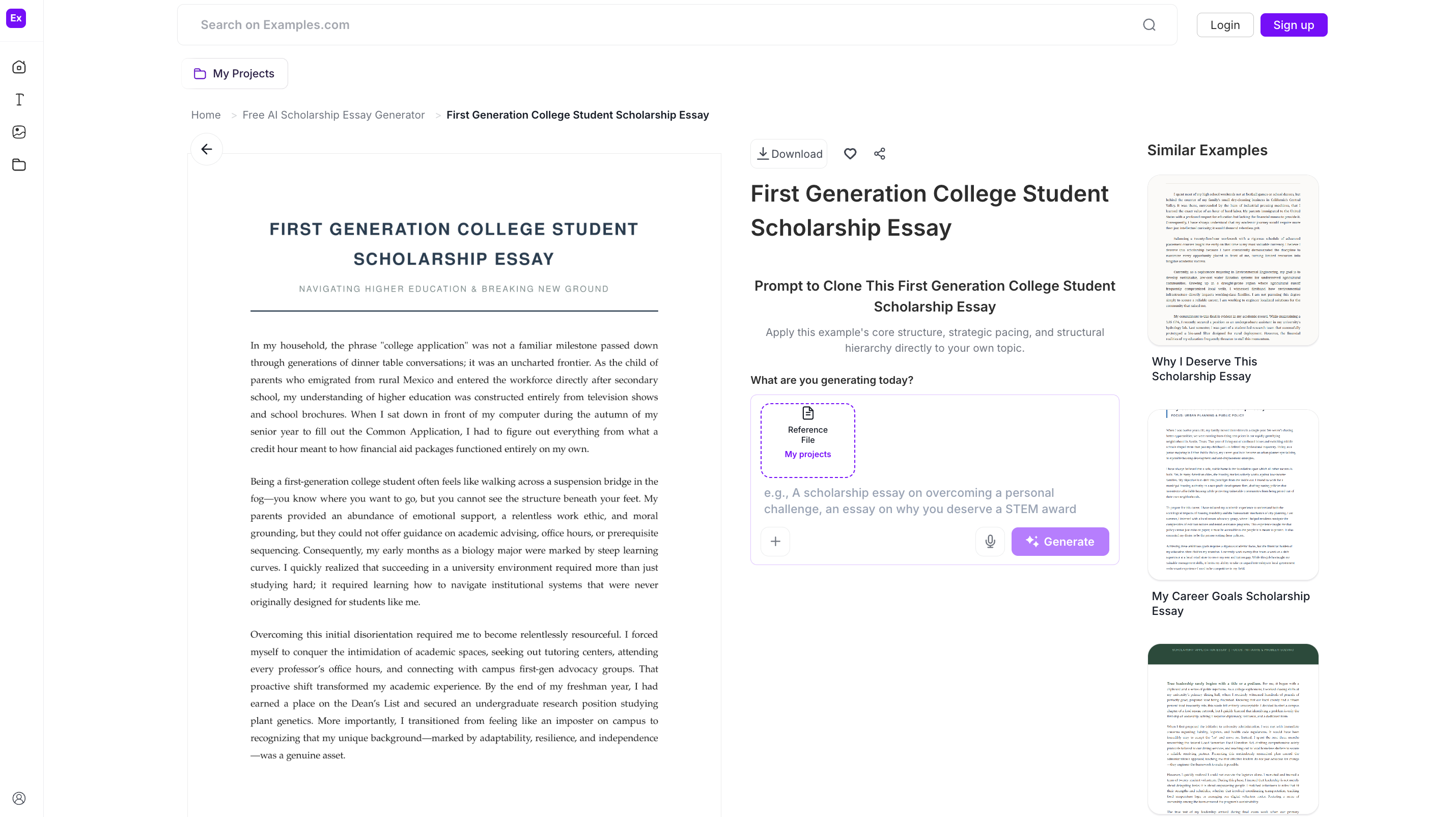
Choose A Reference Example And Enter An AI Prompt
Choose a reference scholarship essay and provide a detailed prompt describing your scholarship, educational goals, personal experiences, achievements, challenges, career plans, and desired tone. A specific prompt helps create a more relevant and personalized draft.
Generate A New AI Scholarship Essay
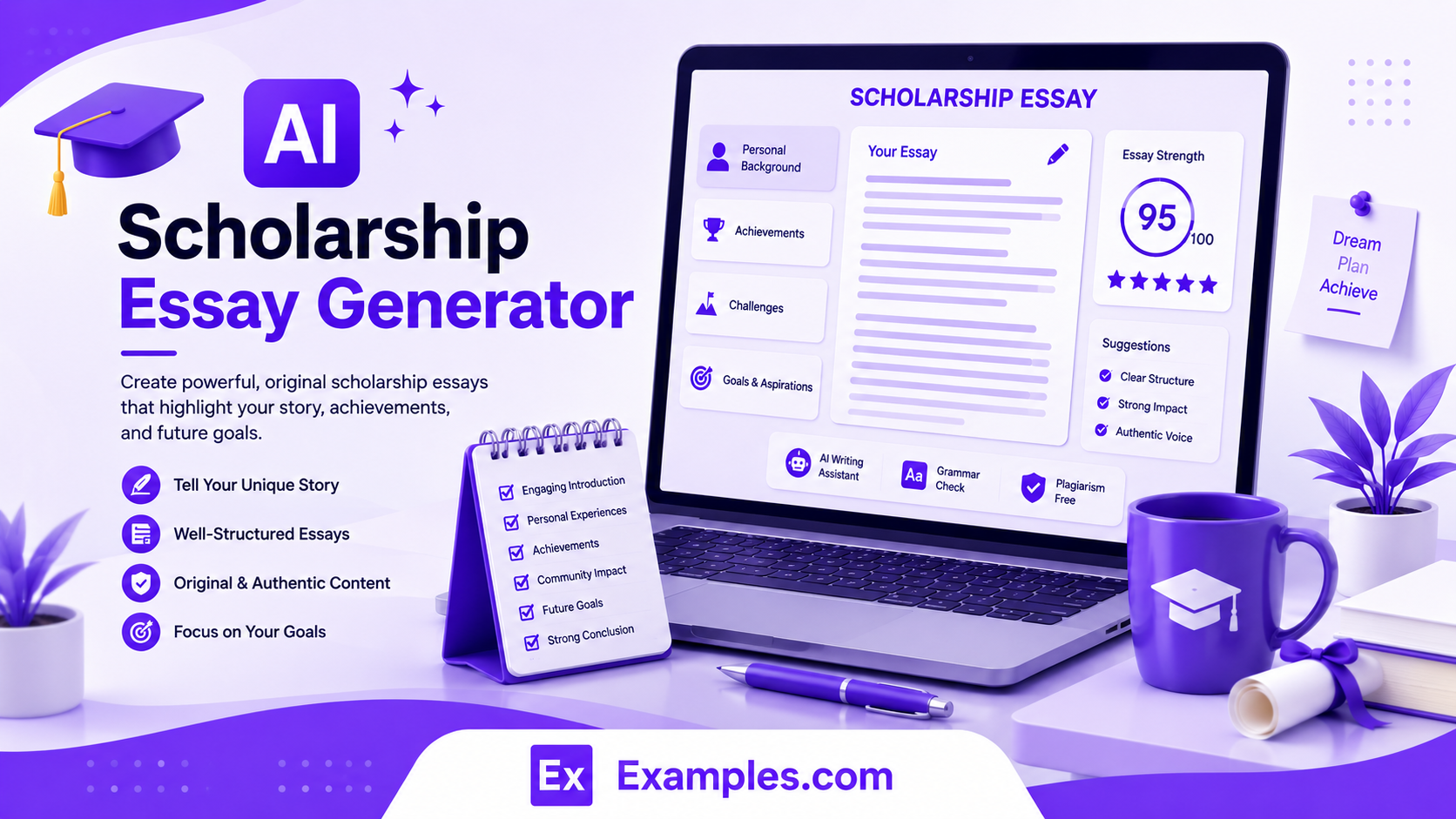
Generate a new scholarship essay based on your prompt. The AI can organize your experiences, goals, accomplishments, and motivations into a structured essay that directly addresses the scholarship question.
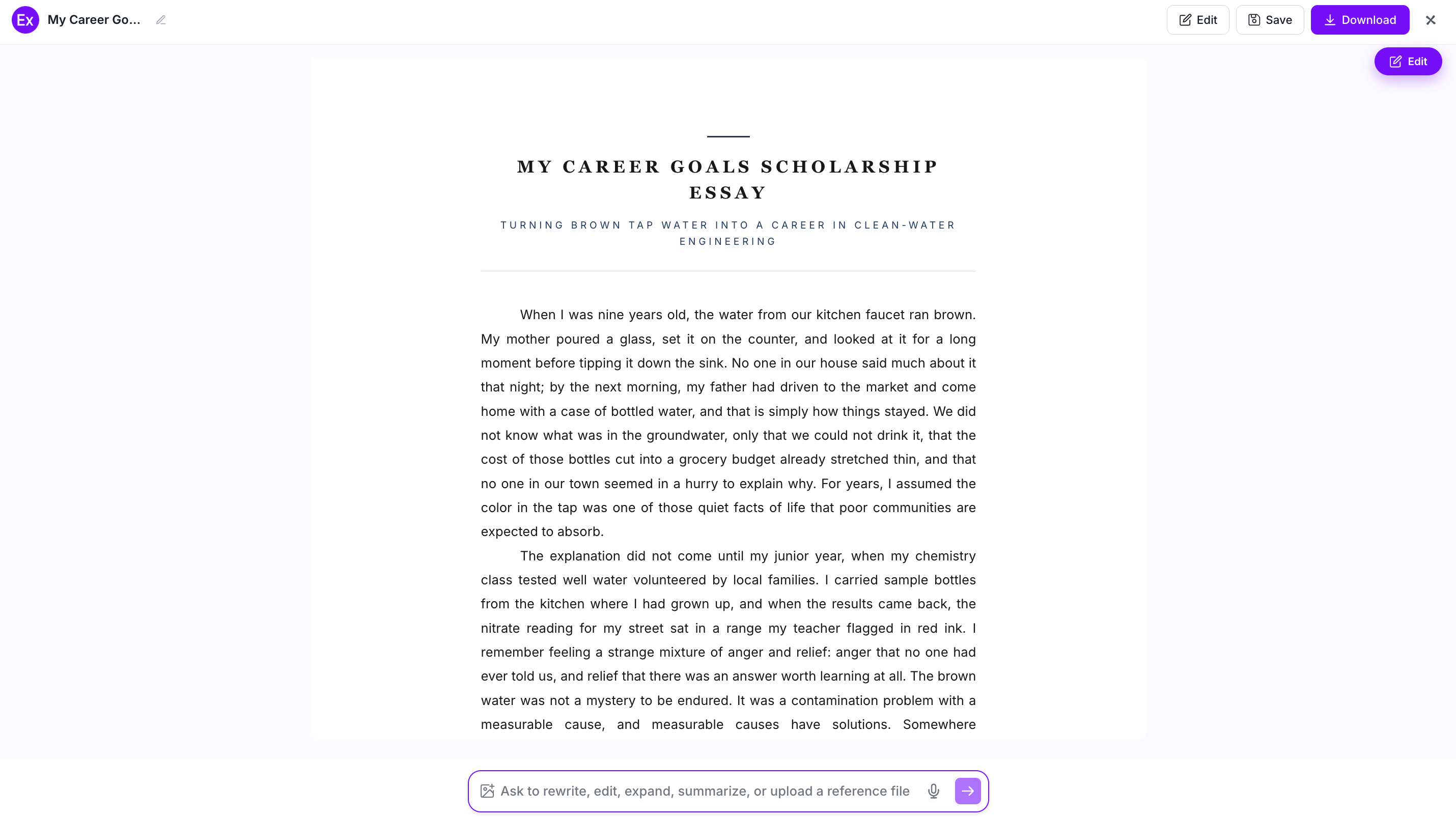
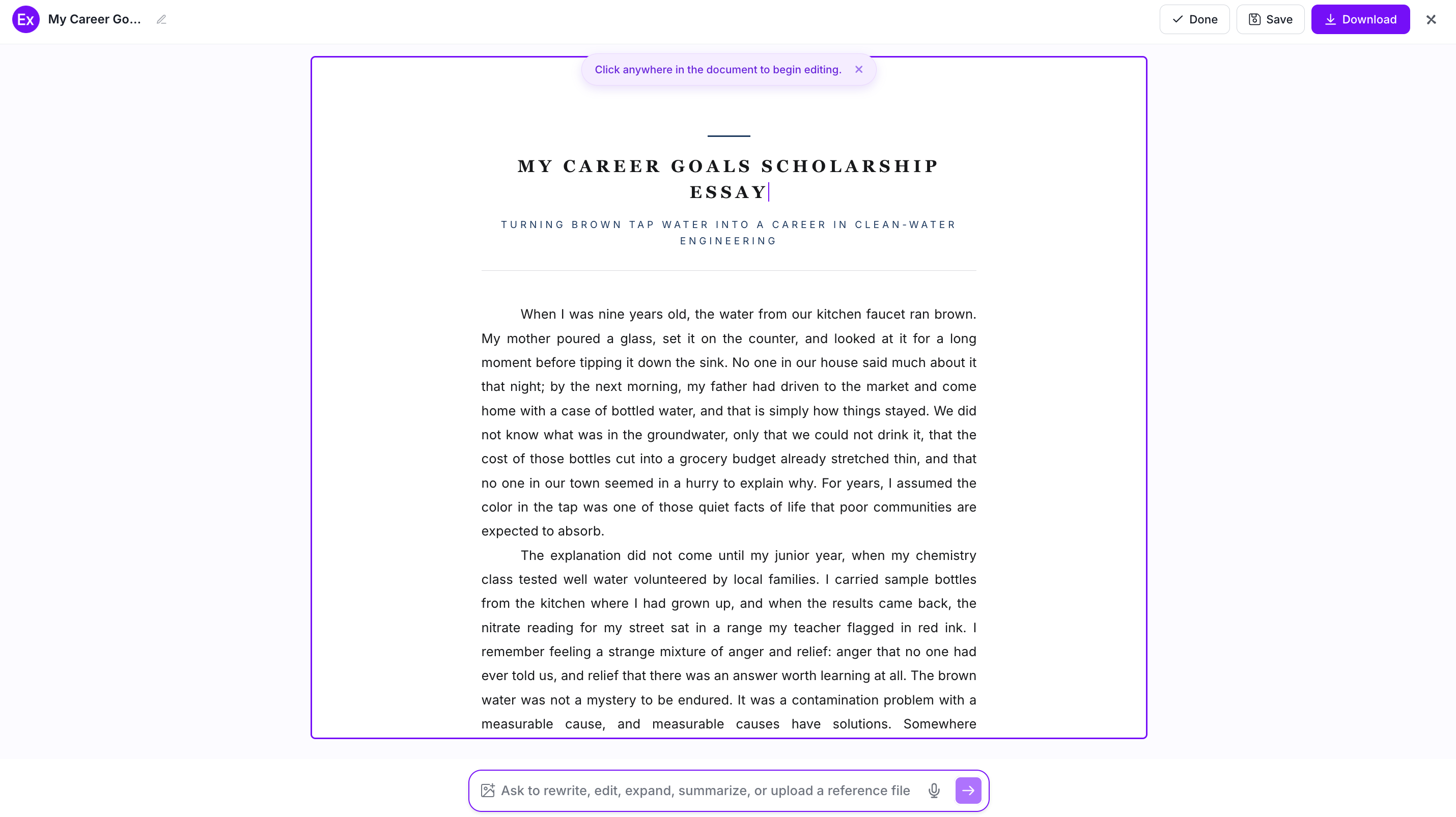
Customize The Scholarship Essay In The Online Editor
Refine the generated essay in the online editor by adding personal details, adjusting the tone, improving clarity, and ensuring the content accurately represents your experiences, goals, and qualifications.
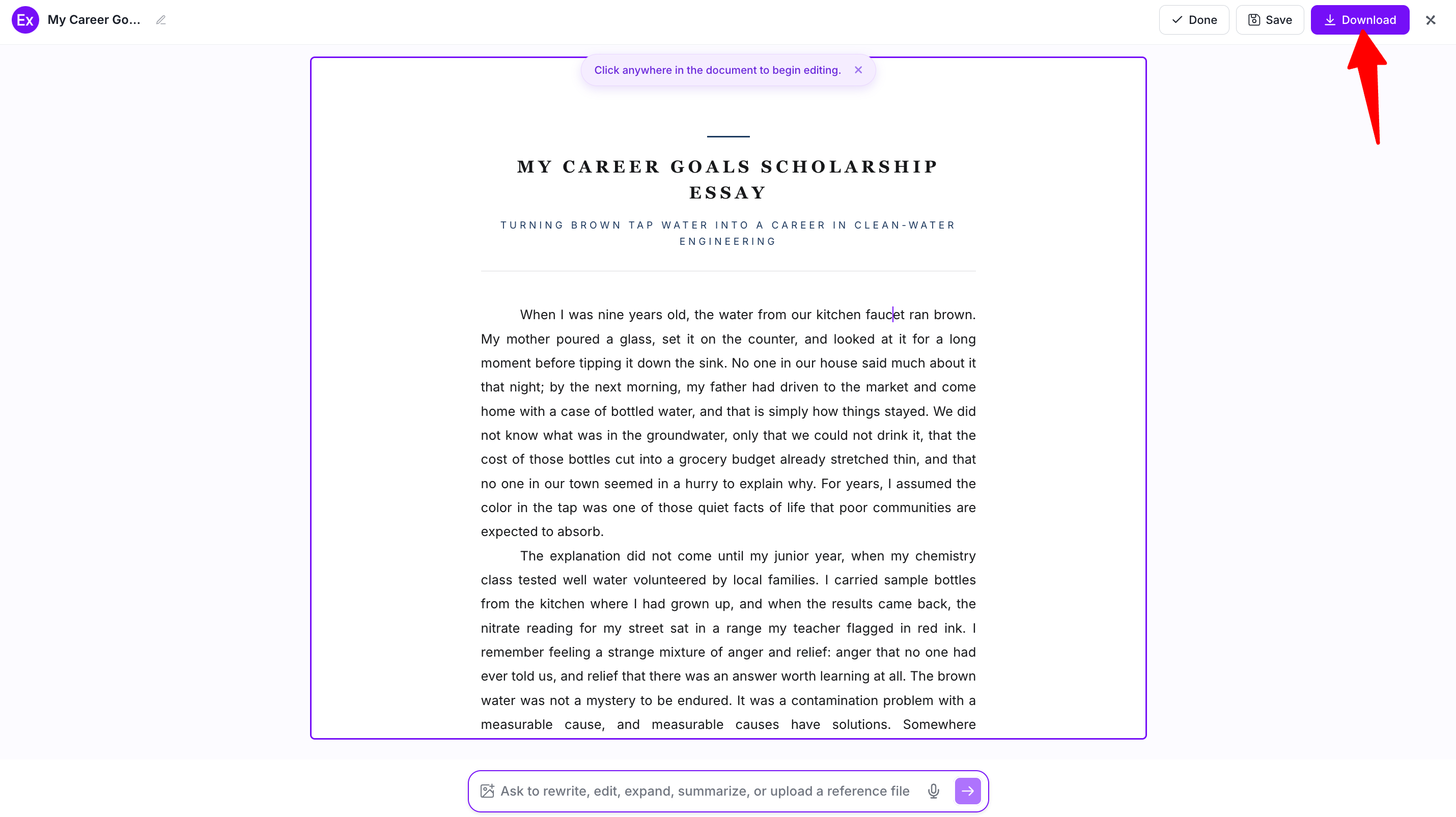
Download And Use Your Scholarship Essay
Download your completed scholarship essay in PDF format for reviewing, editing, sharing, organizing, or preparing your final application submission.
What Makes a Good Scholarship Essay?
A good scholarship essay is personal, specific, well-organized, and directly connected to the scholarship prompt. It should explain the applicant’s experiences, accomplishments, challenges, educational goals, and future plans while showing what makes them a strong candidate. Strong scholarship essays use specific examples instead of generic claims, maintain an authentic first-person voice, demonstrate personal growth, and clearly explain how the scholarship would support the applicant’s education or goals.
AI Scholarship Essay Editing Features
Scholarship Essay Generation
Generate a complete scholarship essay based on the scholarship prompt, applicant background, educational goals, experiences, and other information you provide.
Smart Essay Editing
Rewrite, shorten, expand, or refine a scholarship essay to improve its clarity, organization, grammar, and overall readability.
Prompt-to-Essay Conversion
Turn a scholarship question or application prompt into a structured essay that addresses the specific requirements of the scholarship.
Personal Story Development
Develop meaningful personal experiences, challenges, achievements, and lessons into a focused scholarship essay narrative.
Goal and Achievement Refinement
Strengthen explanations of academic accomplishments, career goals, community involvement, leadership, and future plans.
Instant PDF Download
Download your completed scholarship essay in PDF format for reviewing, editing, organizing, or preparing for an application.
What Are the Essential Elements of a Scholarship Essay?
- Scholarship Prompt: Address the exact question or topic provided by the scholarship organization.
- Personal Introduction: Begin with an engaging introduction that establishes your experience, motivation, or central message.
- Personal Story: Include meaningful experiences that help the reader understand your background and perspective.
- Academic Goals: Explain what you plan to study and why your education matters to your future.
- Achievements: Highlight relevant academic, professional, extracurricular, leadership, or community accomplishments.
- Challenges and Growth: Describe significant obstacles when relevant and explain what you learned or how you developed.
- Career Goals: Connect your education to your intended career and long-term professional plans.
- Scholarship Connection: Explain how receiving the scholarship would support your educational or career goals.
- Authentic Voice: Write naturally and honestly so the essay reflects your actual experiences, personality, and aspirations.
- Strong Conclusion: End by reinforcing your goals, motivation, and the contribution you hope to make through your education.
How Do I Write a Scholarship Essay?
- Read the Scholarship Prompt: Understand exactly what the scholarship committee is asking you to explain or demonstrate.
- Research the Scholarship: Learn about the organization, scholarship values, eligibility requirements, selection criteria, and word limit.
- Identify Your Main Message: Decide what experience, goal, achievement, challenge, or quality you want the reader to remember.
- Choose Relevant Experiences: Select personal, academic, professional, volunteer, or extracurricular experiences that support your message.
- Create an Outline: Organize your introduction, personal experience, achievements, goals, scholarship connection, and conclusion before drafting.
- Write a Strong Introduction: Start with a specific experience, observation, challenge, or motivation rather than a generic opening.
- Tell Your Story: Explain what happened, how you responded, what you learned, and how the experience influenced your goals.
- Connect Your Goals: Show how your education and career plans connect to the experiences discussed in the essay.
- Explain the Scholarship’s Impact: Clearly describe how the scholarship would help you pursue your education or achieve your goals.
- Review and Refine: Check the essay for clarity, authenticity, grammar, organization, prompt alignment, word count, and unnecessary repetition.
Why Should I Use Real Scholarship Essay Examples to Create My Own Scholarship Essay?
- Real examples show how applicants turn personal experiences into compelling scholarship narratives.
- They help you understand how to respond directly to different scholarship prompts.
- They provide useful examples of introductions, transitions, personal stories, and conclusions.
- They demonstrate how students connect their experiences with academic and career goals.
- They help you avoid generic statements and focus on specific experiences and meaningful details.
- They make it easier to understand how to balance personal storytelling with evidence of achievement and potential.
- They can provide inspiration for organizing your own original scholarship essay without copying another applicant’s story.
What Common Scholarship Essay Mistakes Should I Avoid?
- Ignoring the Prompt: Make sure your essay directly answers the scholarship question instead of discussing unrelated experiences.
- Using Generic Statements: Avoid vague claims such as “I have always worked hard” without providing specific experiences or evidence.
- Telling Instead of Showing: Use meaningful details and examples to demonstrate your qualities rather than simply listing them.
- Making It Only About Financial Need: When appropriate, explain your financial circumstances while also showing your goals, accomplishments, motivation, and potential.
- Listing Achievements: Do not simply create a résumé in paragraph form; explain why your experiences matter and what you learned from them.
- Using an Inauthentic Voice: Avoid language that does not sound like you or exaggerates your experiences.
- Focusing Only on the Past: Connect your experiences and accomplishments to your educational and career goals.
- Ignoring the Scholarship Organization: Show why your goals and values connect with the purpose of the scholarship when relevant.
- Exceeding the Word Limit: Follow the scholarship’s stated word or character limit and remove unnecessary repetition.
- Submitting Without Proofreading: Check grammar, spelling, sentence structure, formatting, names, and scholarship-specific details before submitting.
What Is the Difference Between a Scholarship Essay and a Personal Statement?
| Scholarship Essay | Personal Statement |
|---|---|
| A written response submitted as part of a scholarship application. | A personal essay commonly used in college, university, or other application processes. |
| Often responds to a specific scholarship prompt. | May respond to a broader personal or admissions prompt. |
| Focuses on experiences, goals, achievements, values, challenges, and qualifications relevant to the scholarship. | Focuses primarily on the applicant’s identity, experiences, perspective, and personal development. |
| Often explains how financial support would contribute to educational goals. | Usually focuses more broadly on who the applicant is and what they may contribute to an academic community. |
| Can be tailored to the mission and selection criteria of a scholarship organization. | Is generally tailored to the institution or application context. |
| May emphasize academic goals, leadership, service, financial need, career plans, or specific achievements depending on the prompt. | Usually emphasizes personal qualities, experiences, growth, and perspective. |
Scholarship Essay Ideas for Different Prompts
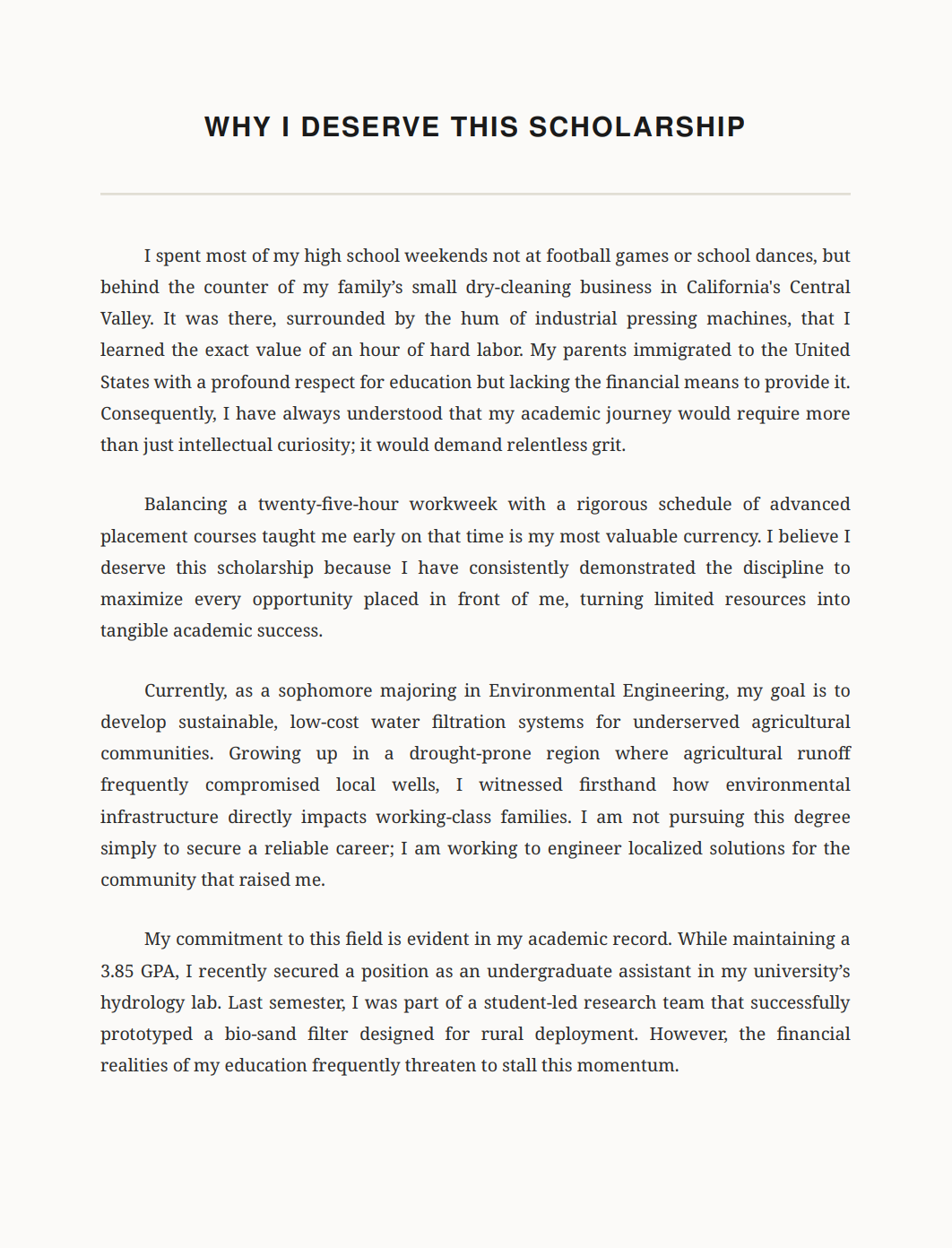
- Why I Deserve This Scholarship: Explain the experiences, achievements, goals, and qualities that make you a strong candidate for the scholarship.
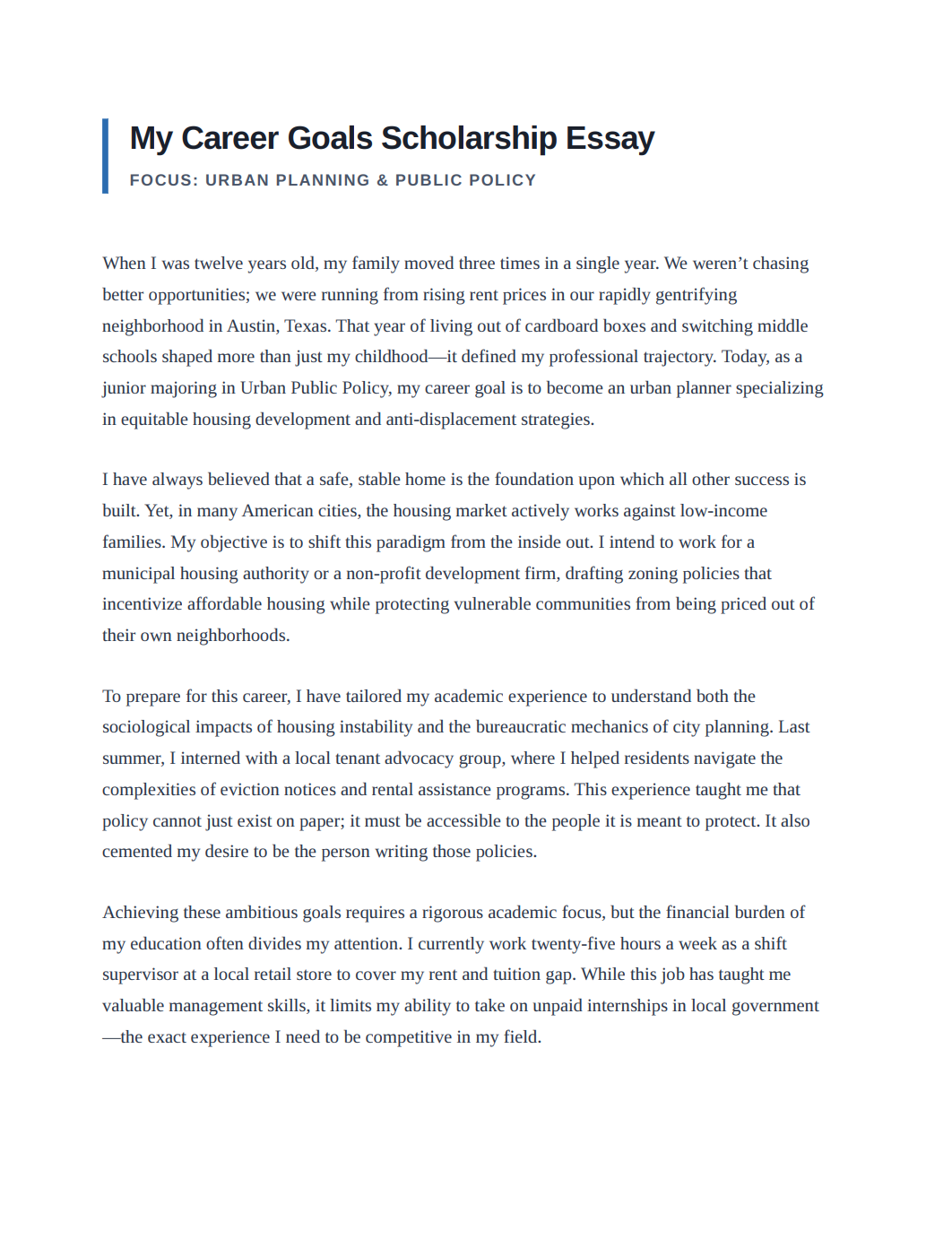
- Career Goals: Describe your intended career, what motivated your choice, and how your education will help you reach your professional goals.
- Financial Need: Explain your financial circumstances honestly and how scholarship support would help you continue your education.
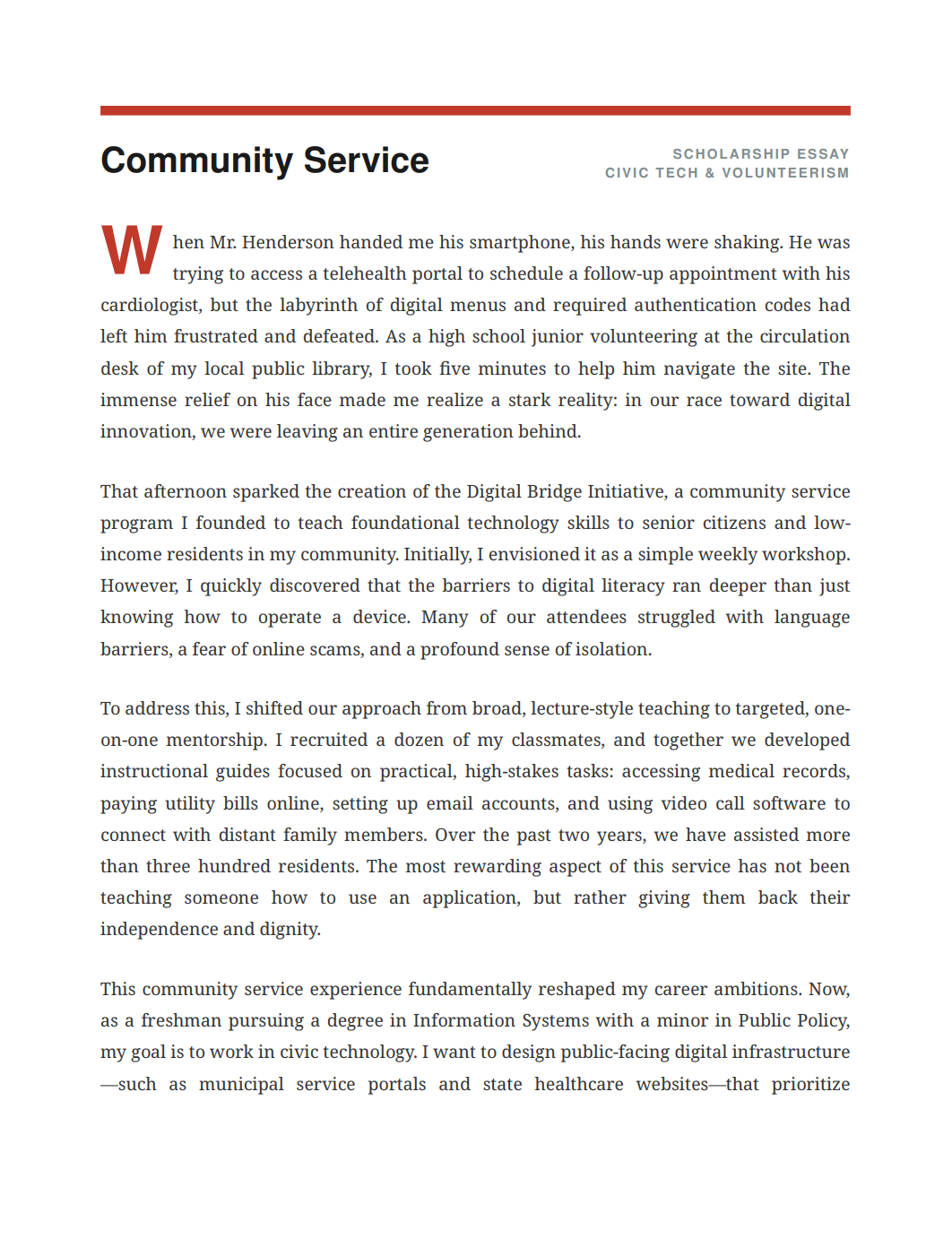
- Community Service: Discuss your volunteer experiences, the people or community you served, and what those experiences taught you.
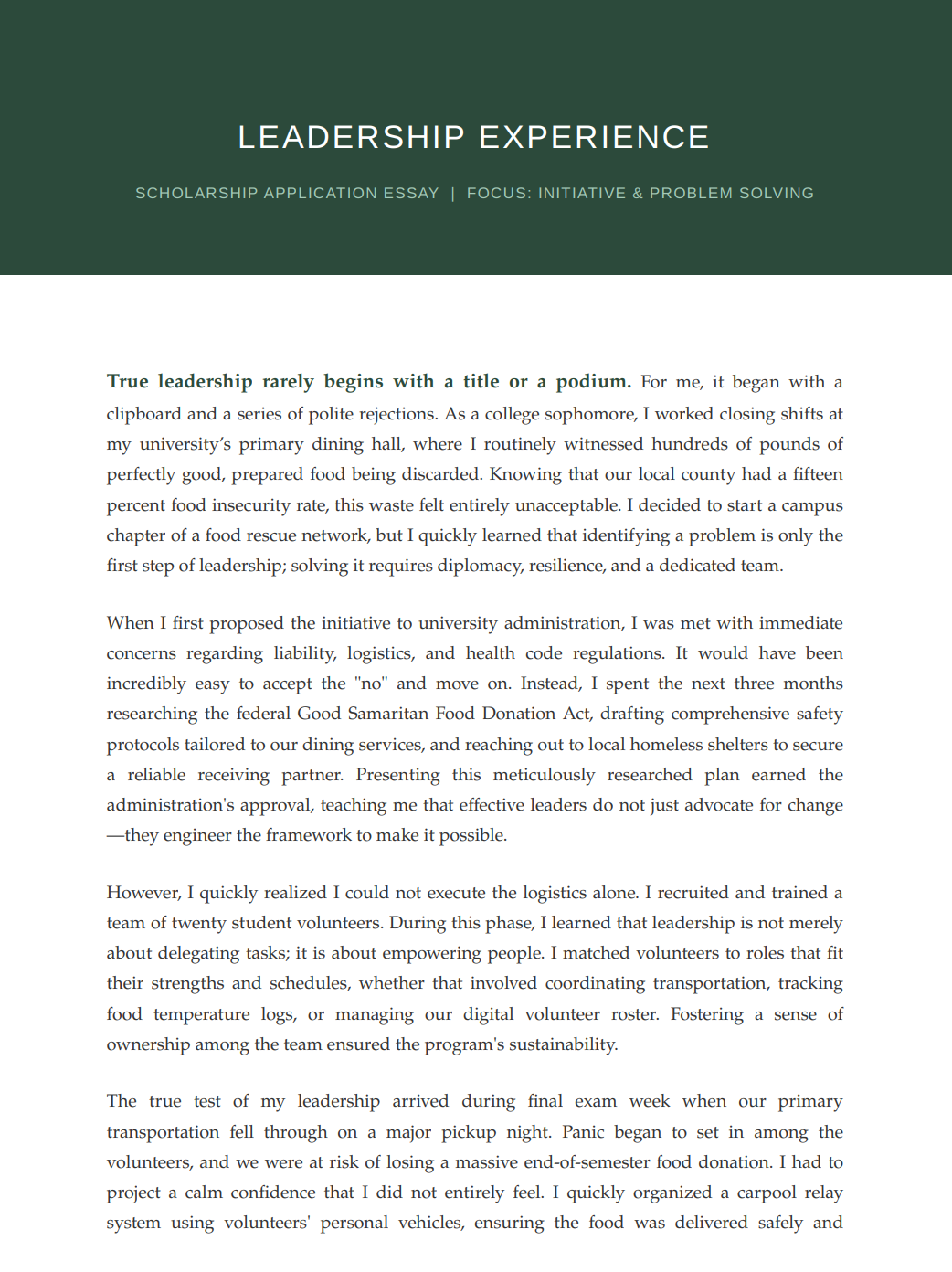
- Leadership: Describe a leadership experience and explain how it shaped your approach to responsibility, collaboration, or problem-solving.
- Overcoming Adversity: Explain a significant challenge, how you responded to it, and how the experience influenced your character or goals.
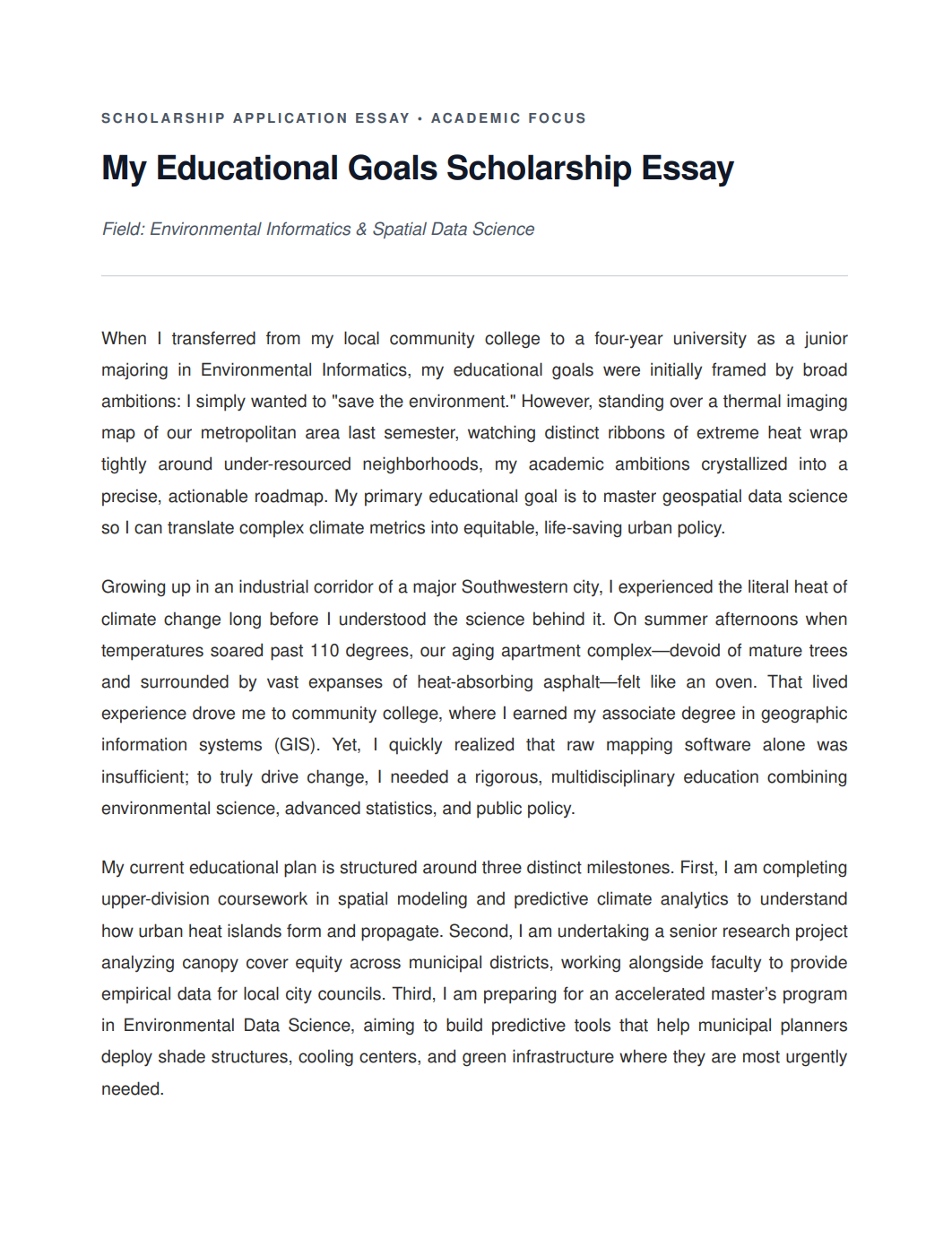
- Academic Goals: Describe what you hope to study, why the field interests you, and what you hope to accomplish through your education.
- Personal Growth: Discuss an experience that changed your perspective, strengthened your character, or helped you better understand yourself.
- Future Impact: Explain how you intend to use your education, career, or skills to contribute to your community or field.
- Why Education Matters: Explore how education has influenced your goals, opportunities, perspective, or plans for the future.
FAQs
A scholarship essay is a personal essay that responds to a scholarship prompt and explains an applicant’s experiences, goals, achievements, challenges, values, or qualifications.What Is a Scholarship Essay?
The required length depends on the scholarship. Always follow the organization’s stated word or character limit rather than using a fixed length for every application.How Long Should a Scholarship Essay Be?
Write about experiences, achievements, challenges, educational goals, career plans, community involvement, values, or other information that directly answers the scholarship prompt.What Should I Write About in a Scholarship Essay?
Start with a specific experience, observation, challenge, motivation, or moment that introduces your main message and gives the reader a reason to continue.How Do I Start a Scholarship Essay?
Yes. Scholarship essays are generally personal responses, so using first person can help communicate your experiences, perspectives, goals, and motivations authentically.Should a Scholarship Essay Be Written in First Person?
If the scholarship prompt asks about financial need, explain your circumstances honestly and connect the support to your educational goals. If it does not ask about financial need, focus primarily on the requested topic.Should I Talk About Financial Need in a Scholarship Essay?
A strong scholarship essay uses specific personal experiences, demonstrates genuine reflection, directly answers the prompt, clearly communicates goals, and gives the selection committee a memorable understanding of the applicant.What Makes a Scholarship Essay Stand Out?
You can reuse relevant ideas, experiences, or sections, but it is better to customize each essay to the specific prompt, scholarship organization, eligibility criteria, and word limit.Can I Use the Same Scholarship Essay for Multiple Scholarships?
A scholarship essay is usually written to address a specific scholarship prompt and selection criteria, while a personal statement generally focuses more broadly on an applicant’s experiences, identity, perspective, and personal development.How Is a Scholarship Essay Different From a Personal Statement?
Yes. AI can help brainstorm ideas, organize experiences, improve wording, and refine a draft, but the final essay should accurately represent your own experiences, goals, and voice.Can AI Help Me Write a Scholarship Essay?