
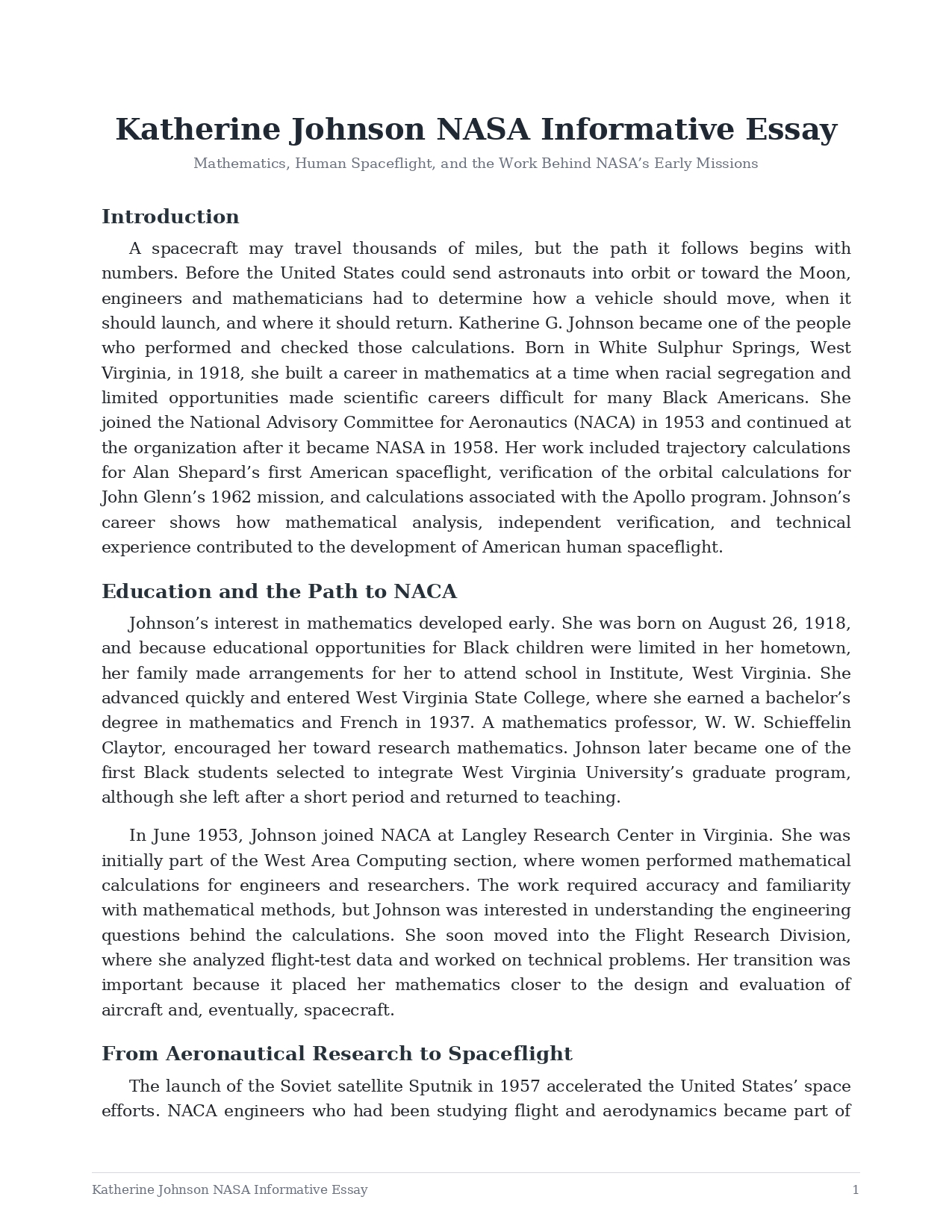
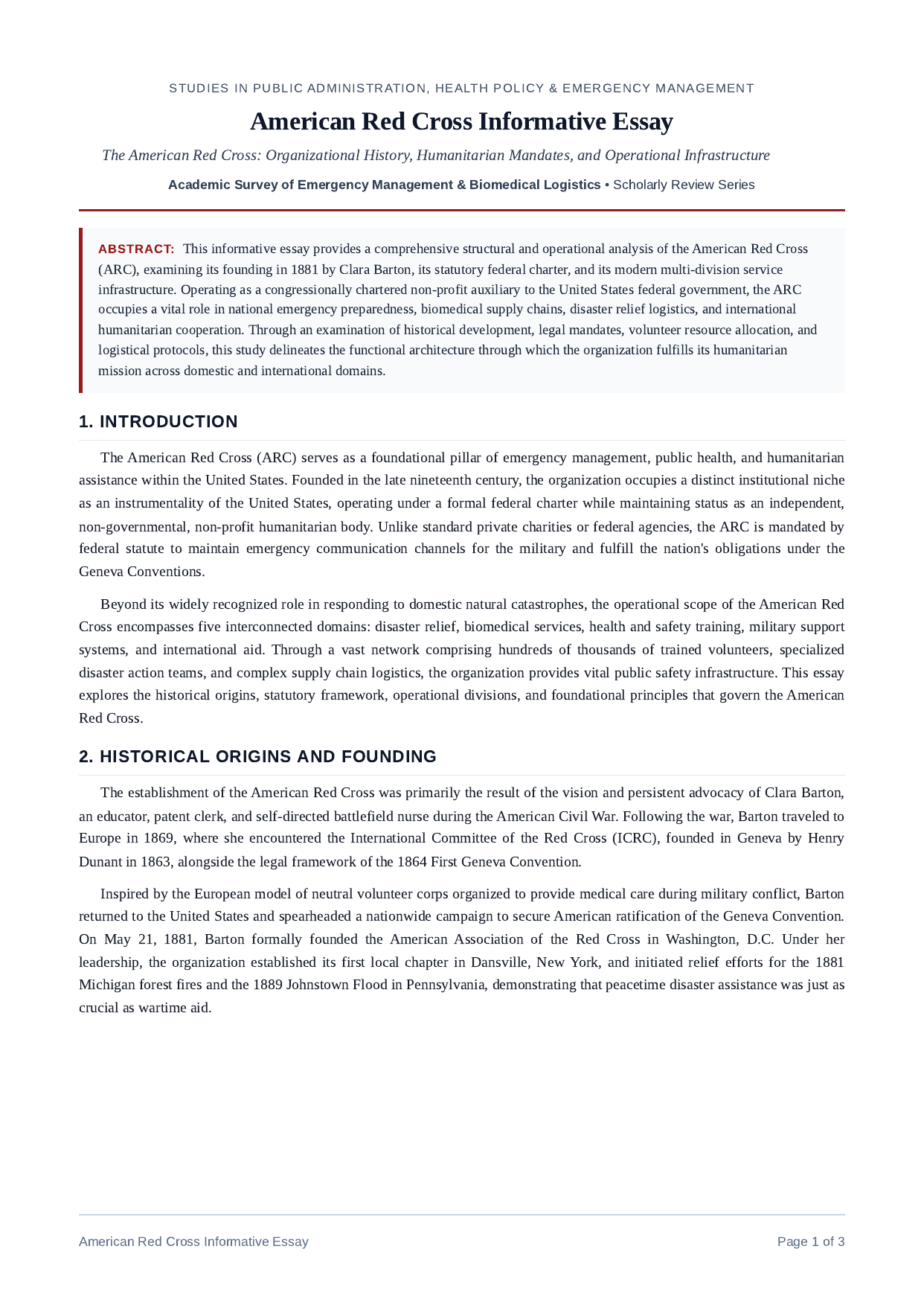
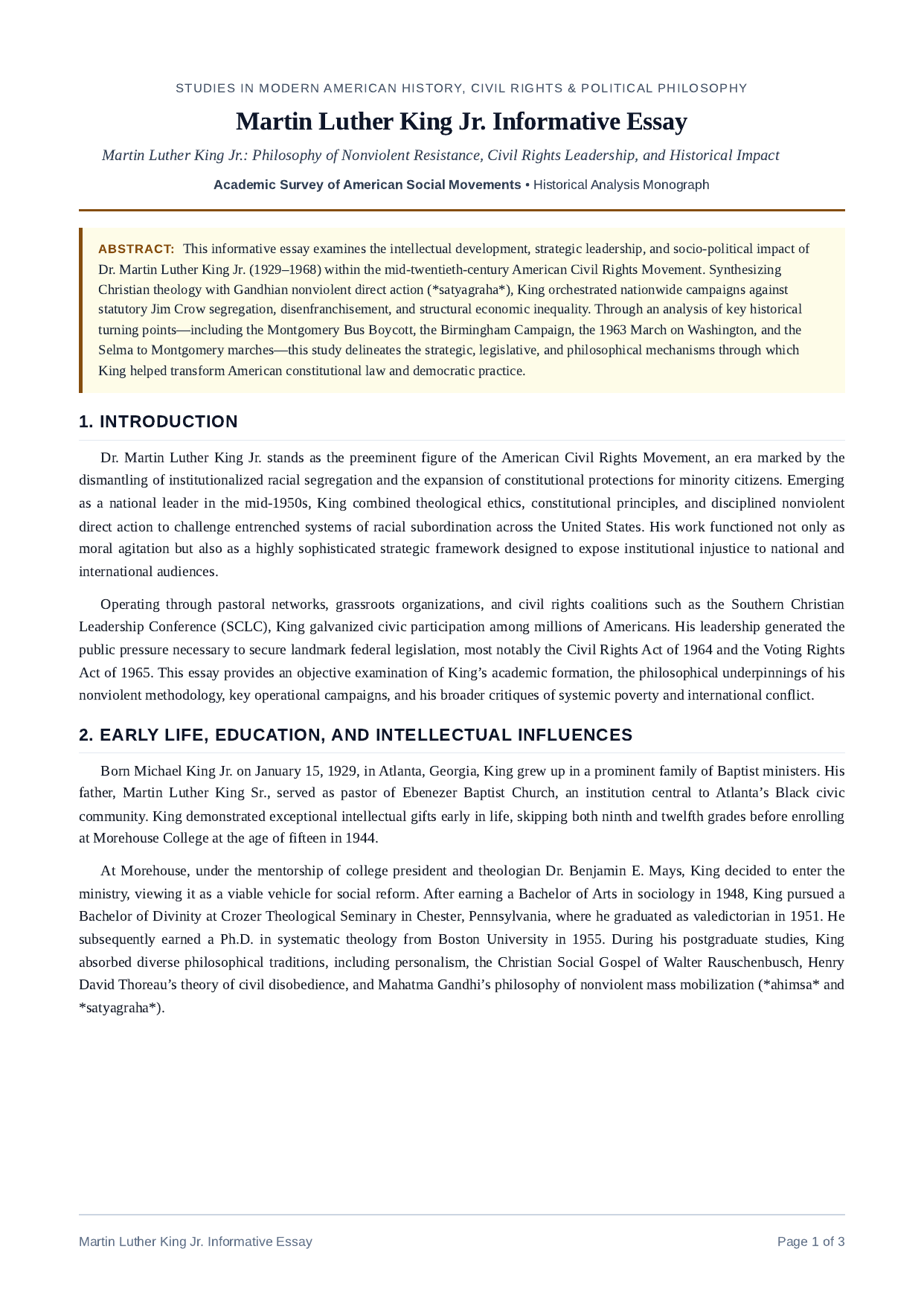
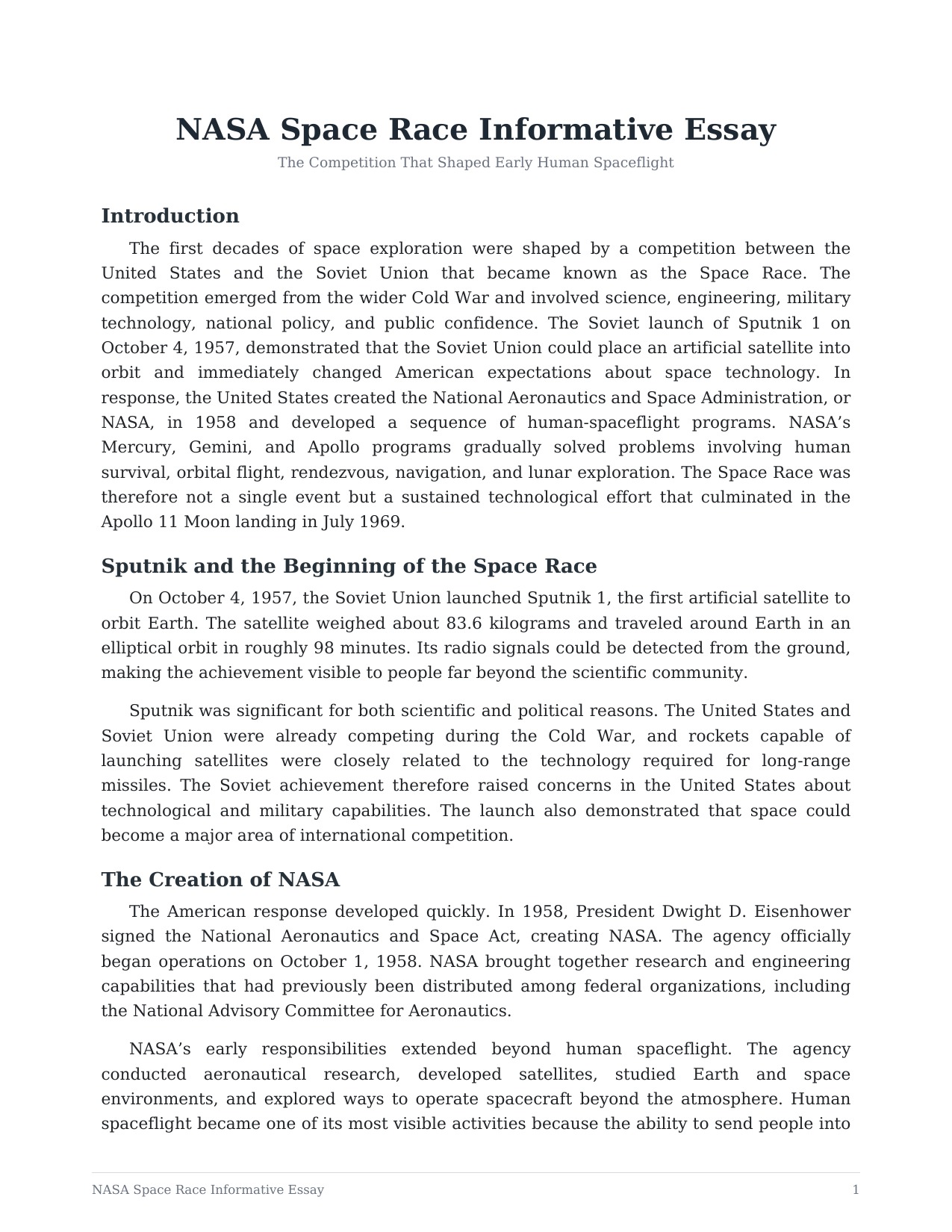
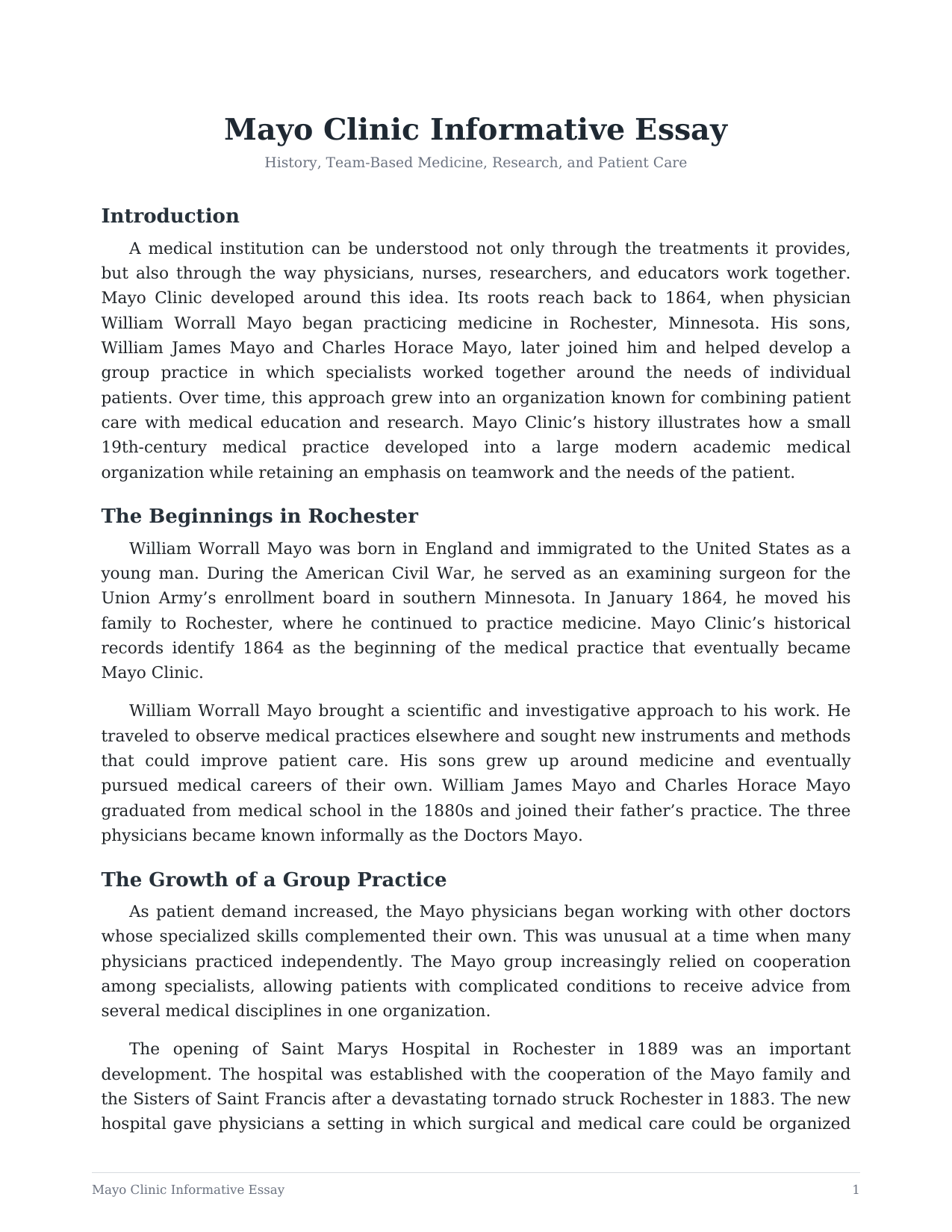
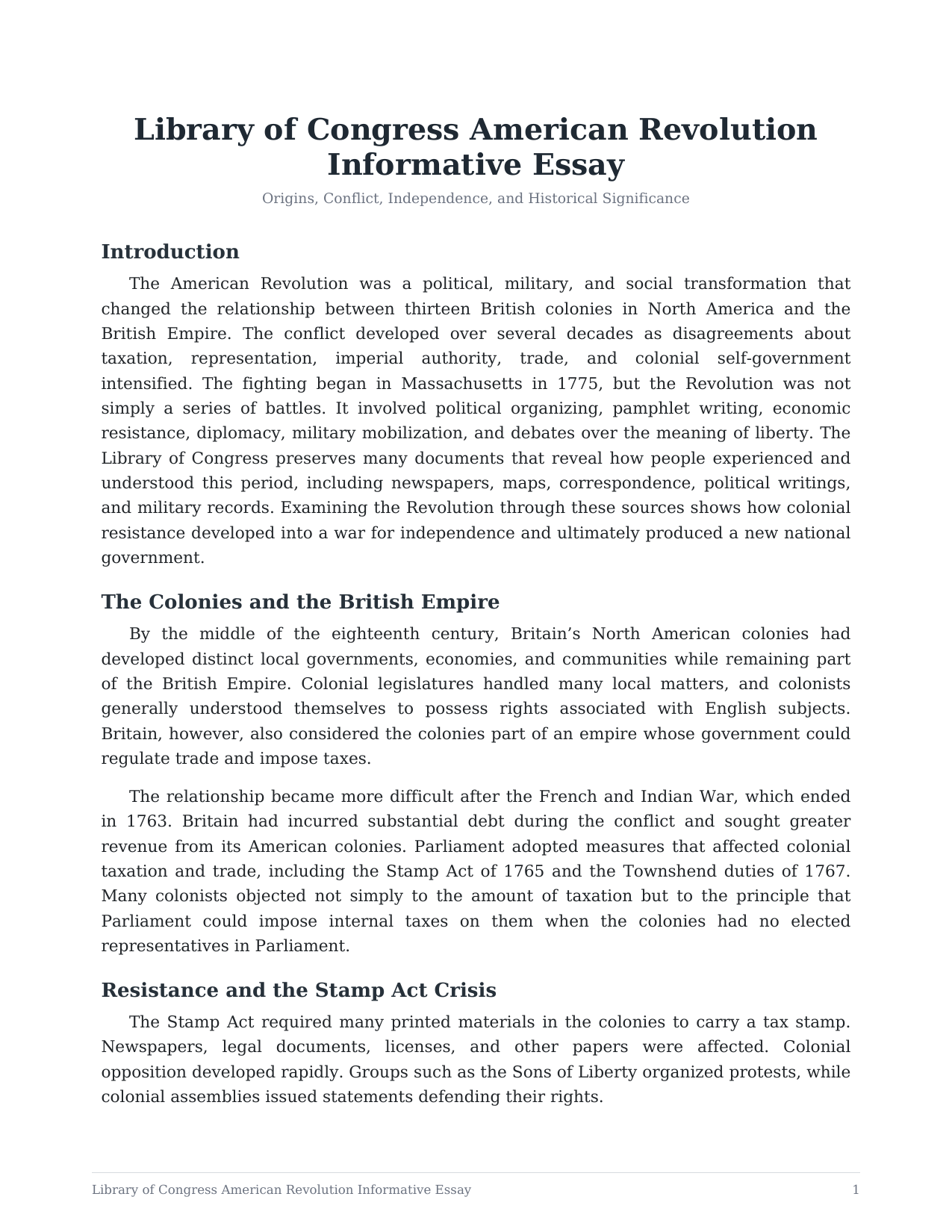
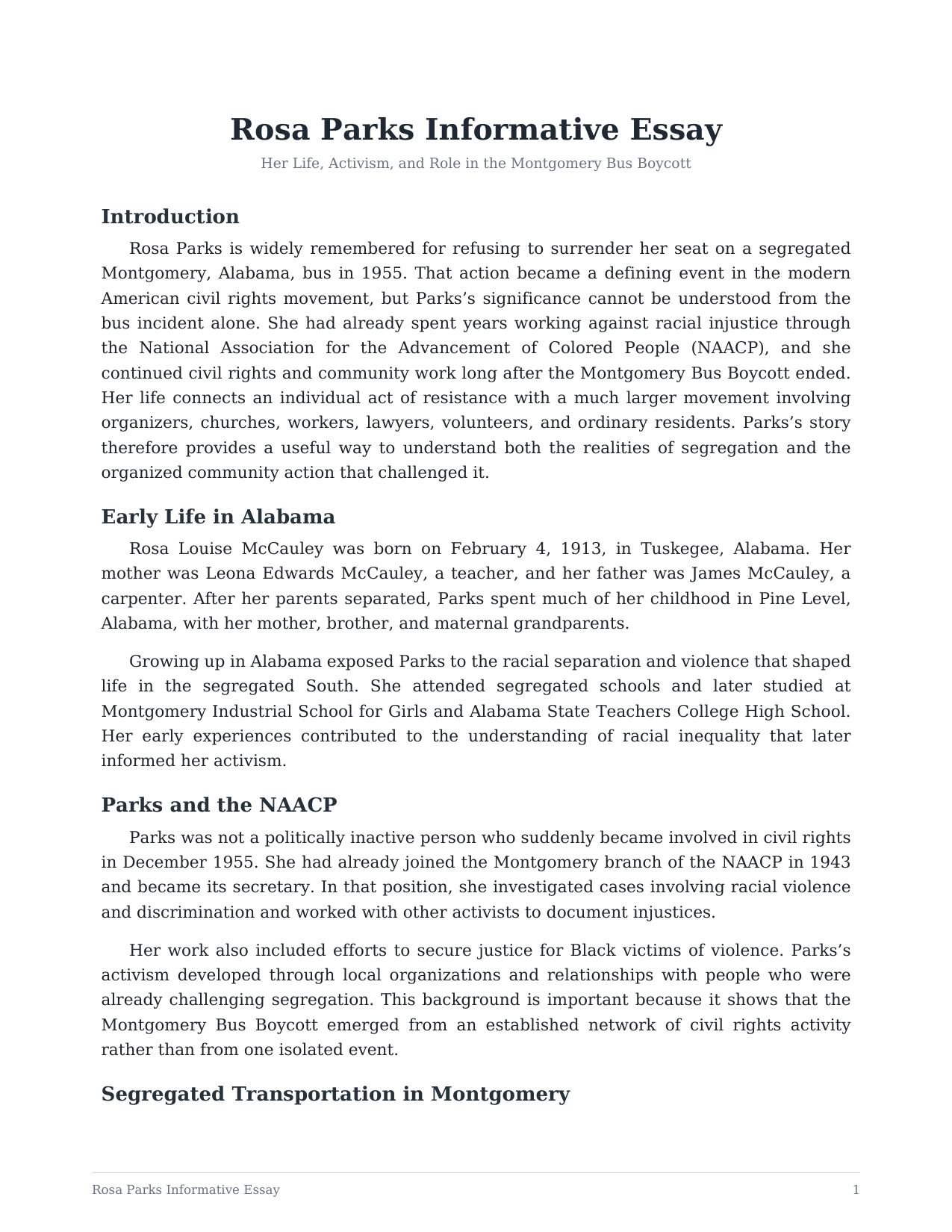
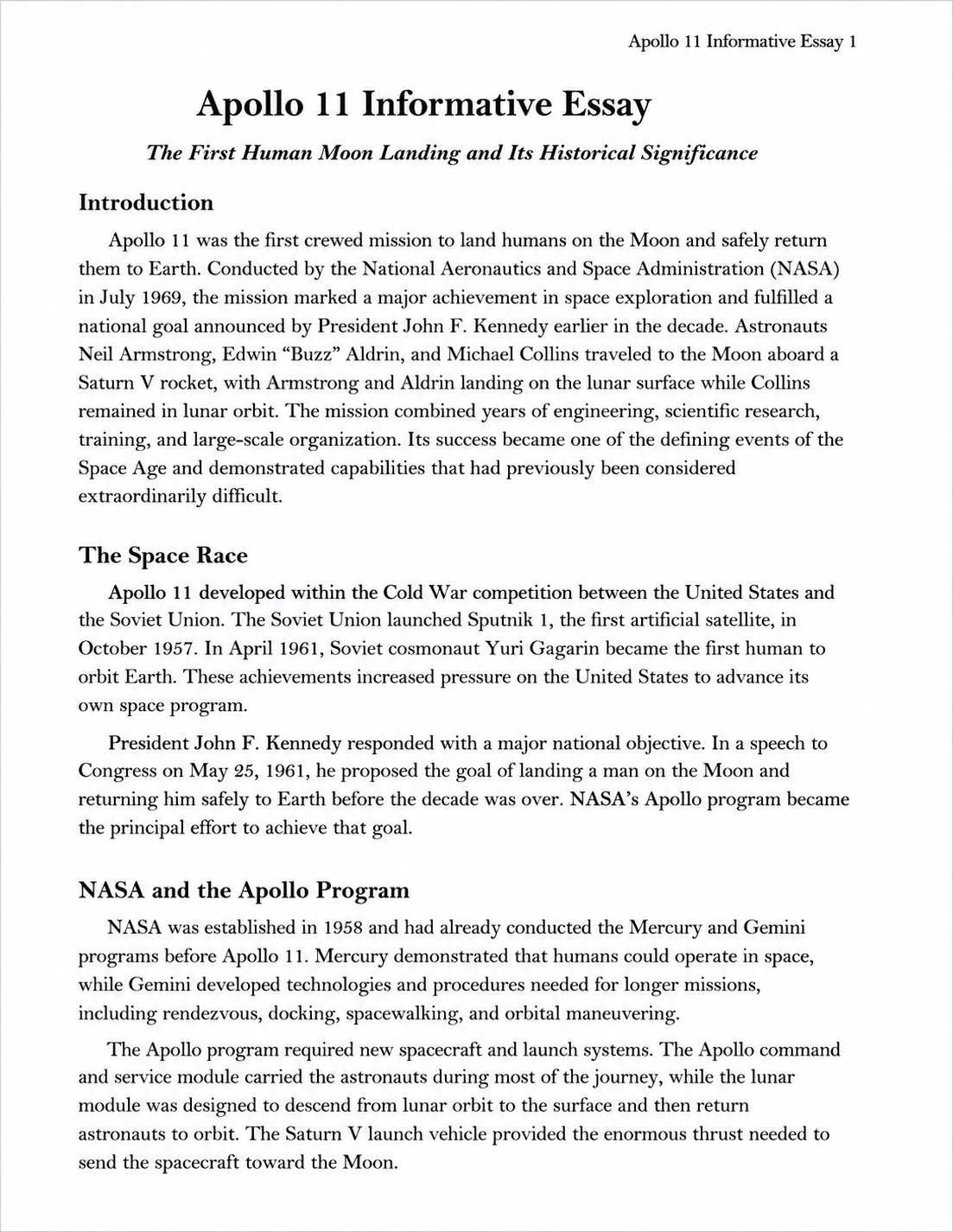
An informative essay explains a topic using clear facts, evidence, and examples rather than personal opinions. It presents information objectively and organizes ideas logically so readers can understand the subject easily. A strong informative essay includes an introduction, well-developed body paragraphs, and a clear conclusion.
What Is An Informative Essay?
An informative essay is a nonfiction piece of writing that explains a specific topic using facts, evidence, and clear examples. It presents information objectively, helping readers understand a subject without relying on personal opinions or persuasion.
What Are the Different Types of Informative Essays?
Expository Thesis Statement
An Expository Thesis Statement explains the main topic or idea that an informative essay will develop using facts and clear explanations.
Argumentative Thesis Statement
An Argumentative Thesis Statement presents a clear position on an issue and gives the main reason or reasons supporting that position.
Analytical Thesis Statement
An Analytical Thesis Statement breaks down a topic into key parts and explains the main insight or conclusion drawn from the analysis.
Compare-and-Contrast Thesis Statement
A Compare-and-Contrast Thesis Statement identifies the main similarities, differences, or relationships between two or more subjects.
Cause-and-Effect Thesis Statement
A Cause-and-Effect Thesis Statement explains the main causes of an event or condition and the effects that result from it.
Problem-and-Solution Thesis Statement
A Problem-and-Solution Thesis Statement identifies a specific problem and presents the main approach for addressing or solving it.
Descriptive Thesis Statement
A Descriptive Thesis Statement identifies the subject and establishes the main aspects that the essay will describe or explain.
Definition Thesis Statement
A Definition Thesis Statement clearly identifies a concept or term and explains the key characteristics that define it.
Historical Thesis Statement
A Historical Thesis Statement presents the central idea about a historical event, period, development, or its significance.
Process Thesis Statement
A Process Thesis Statement identifies the process being explained and highlights the main stages or steps readers will learn.
How Do I Generate Informative Essays Using Real Informative Essay Examples?
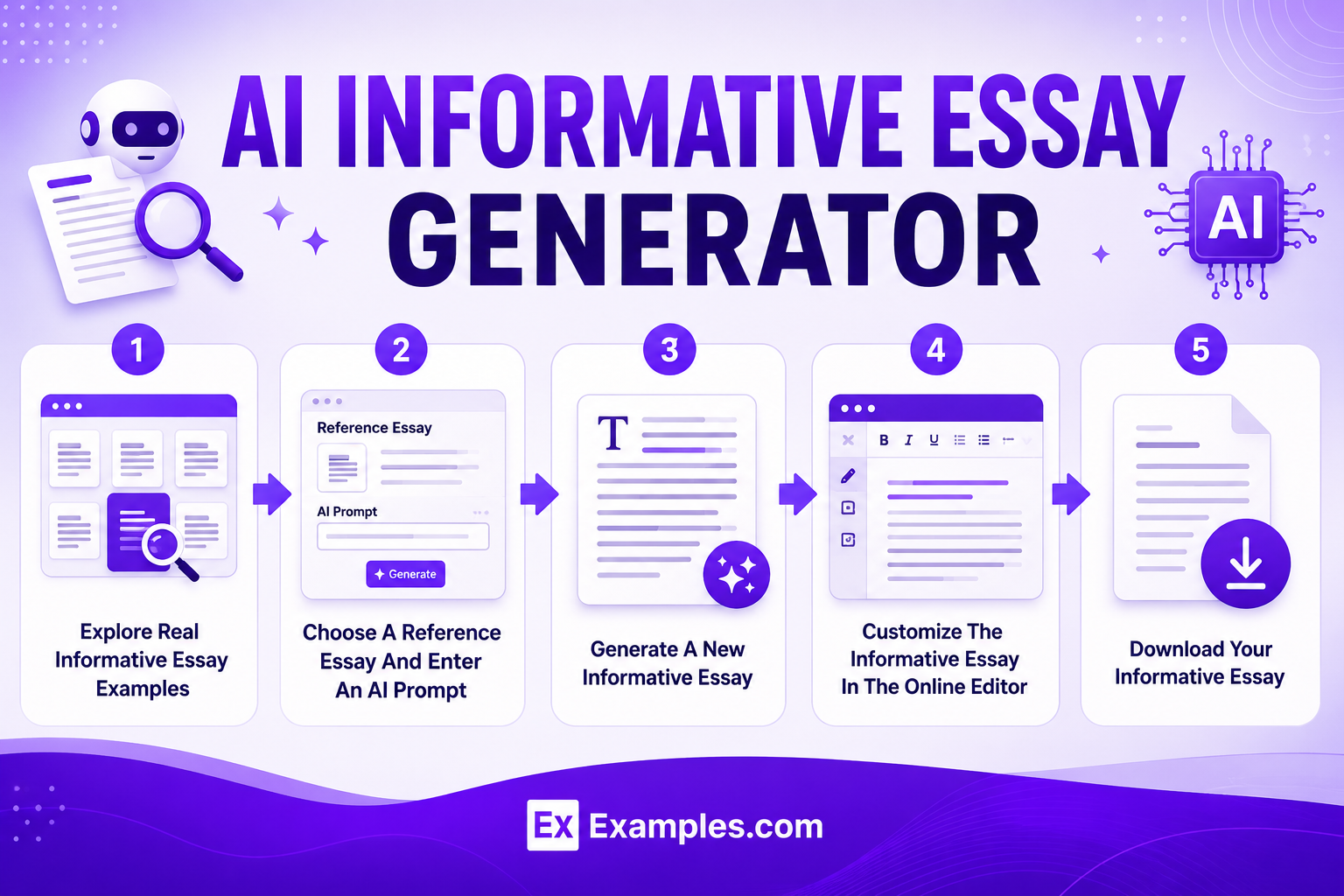
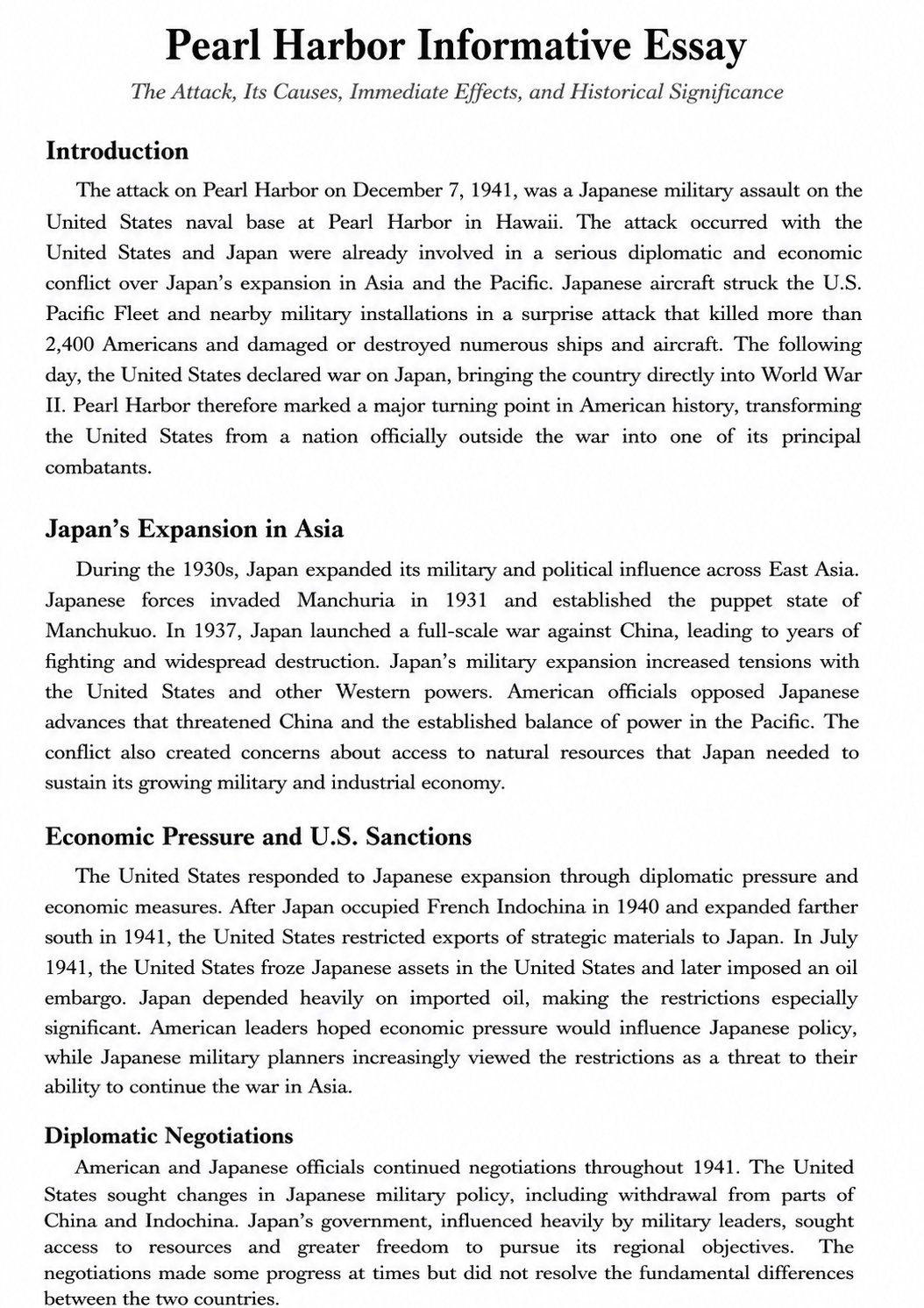
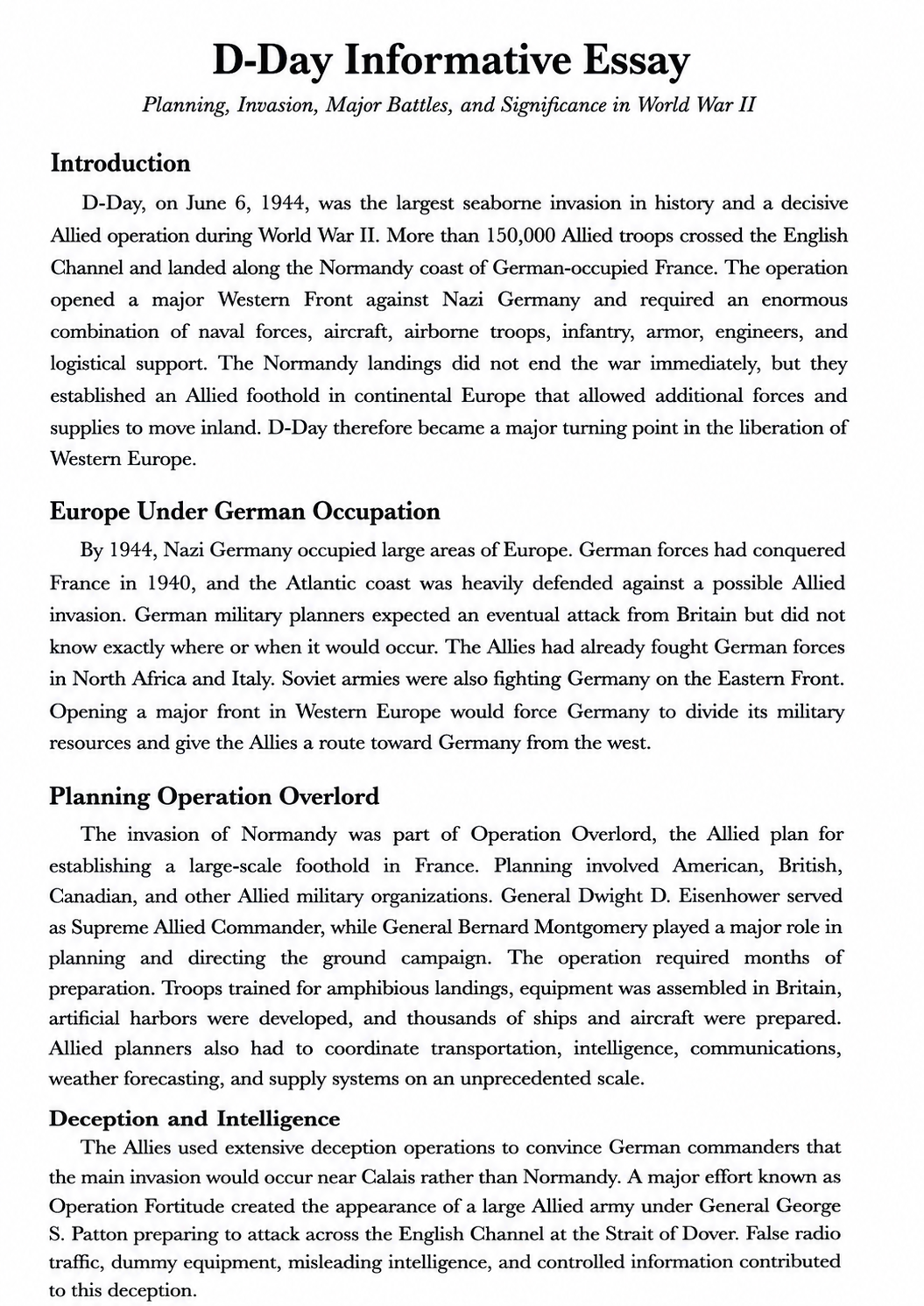
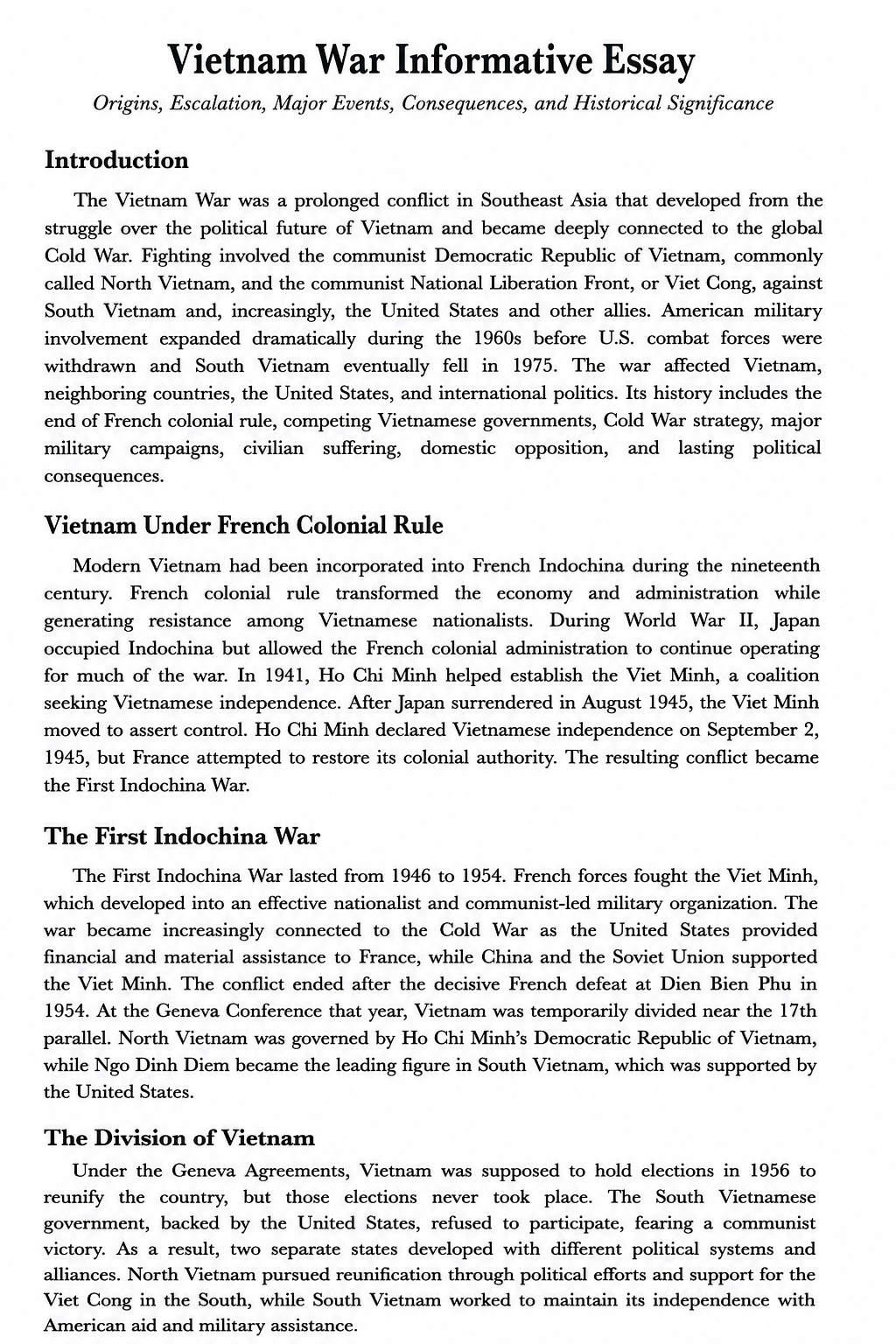
Explore Real Informative Essay Examples
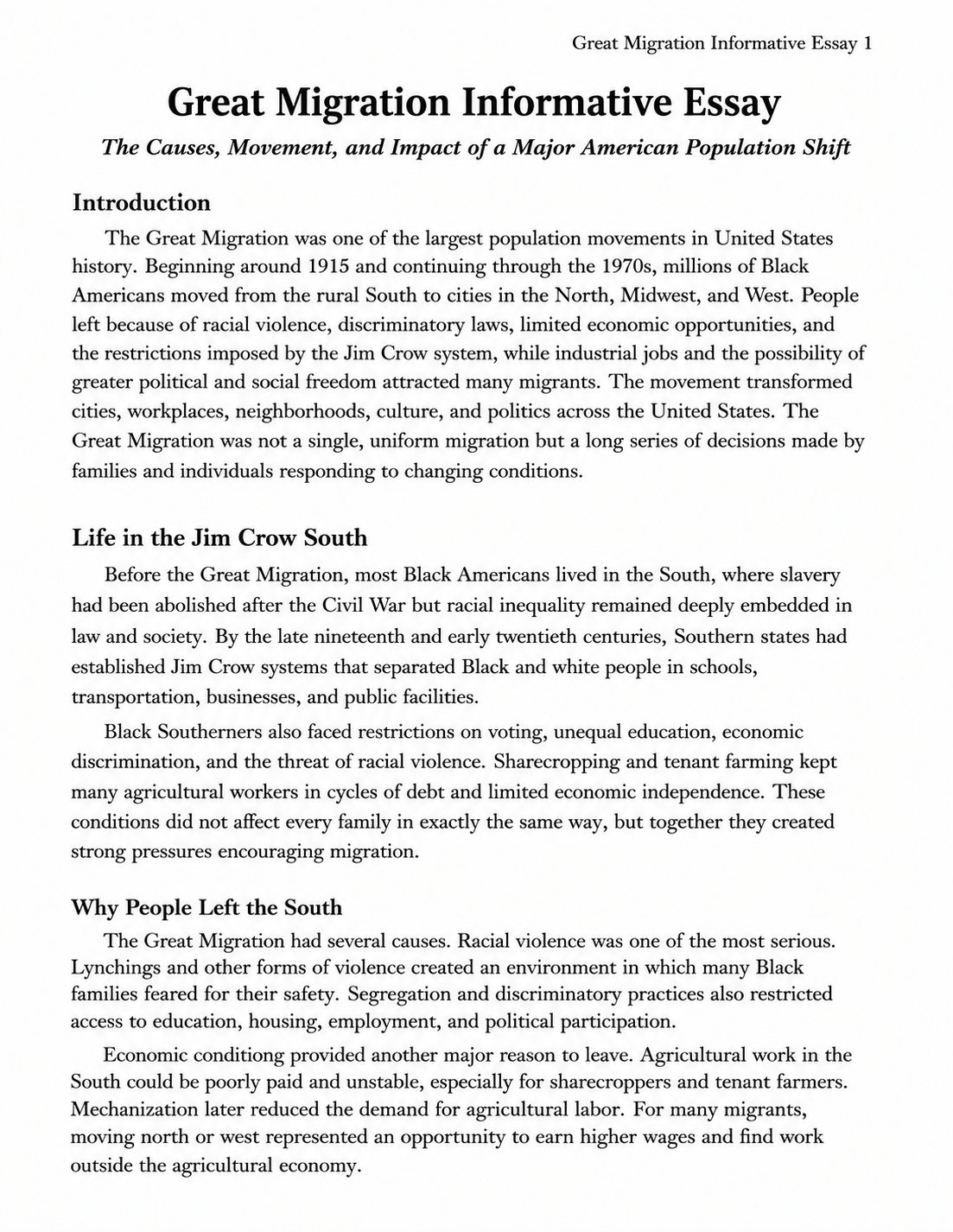
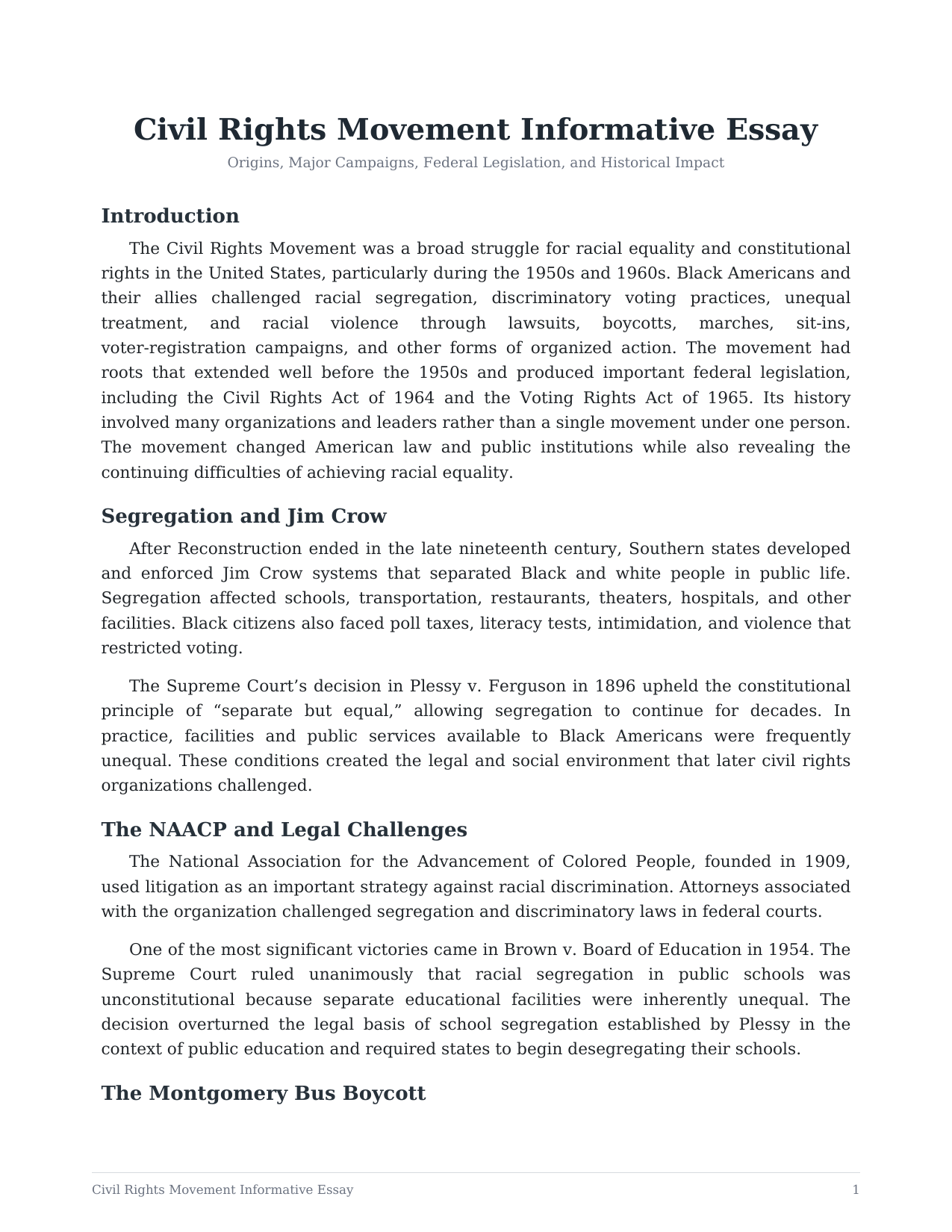
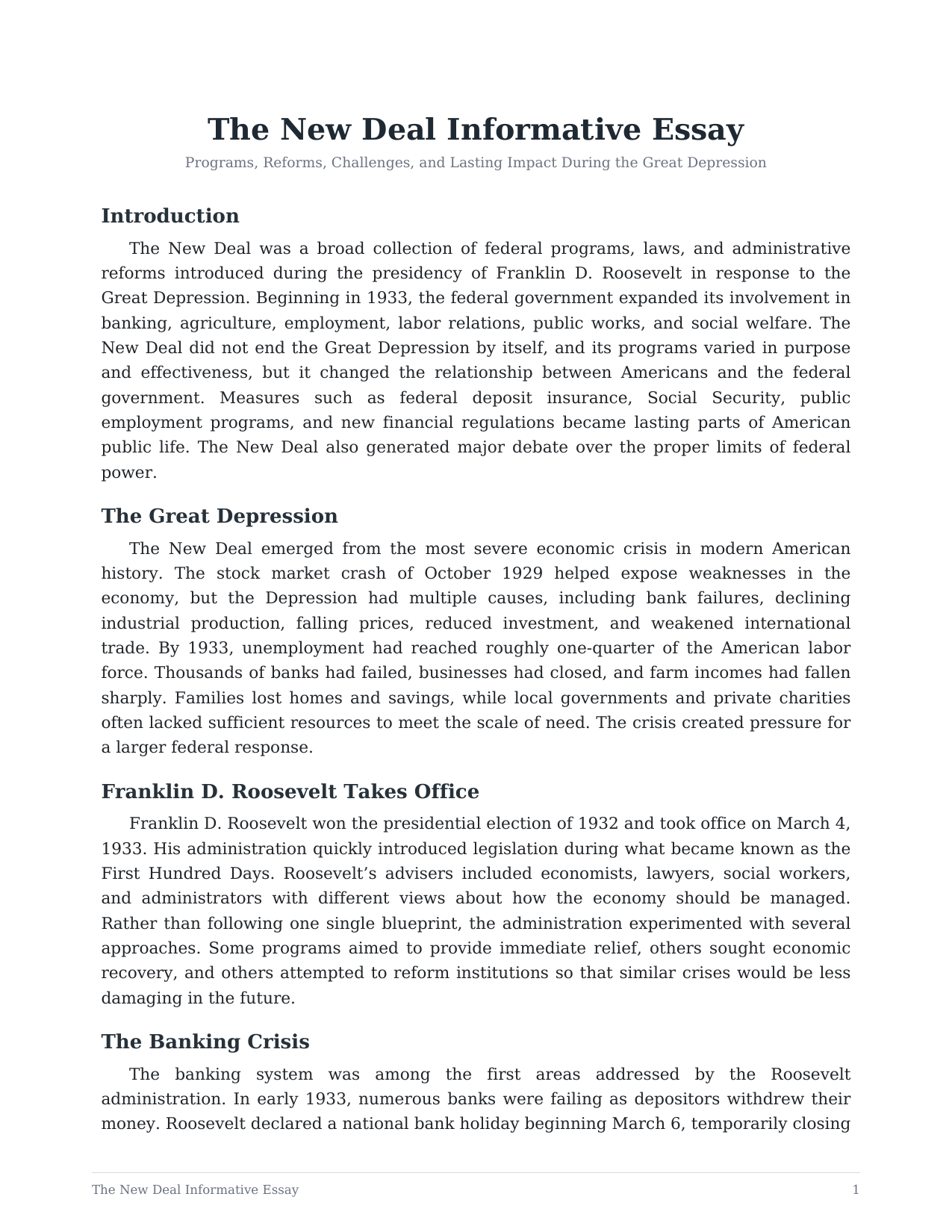
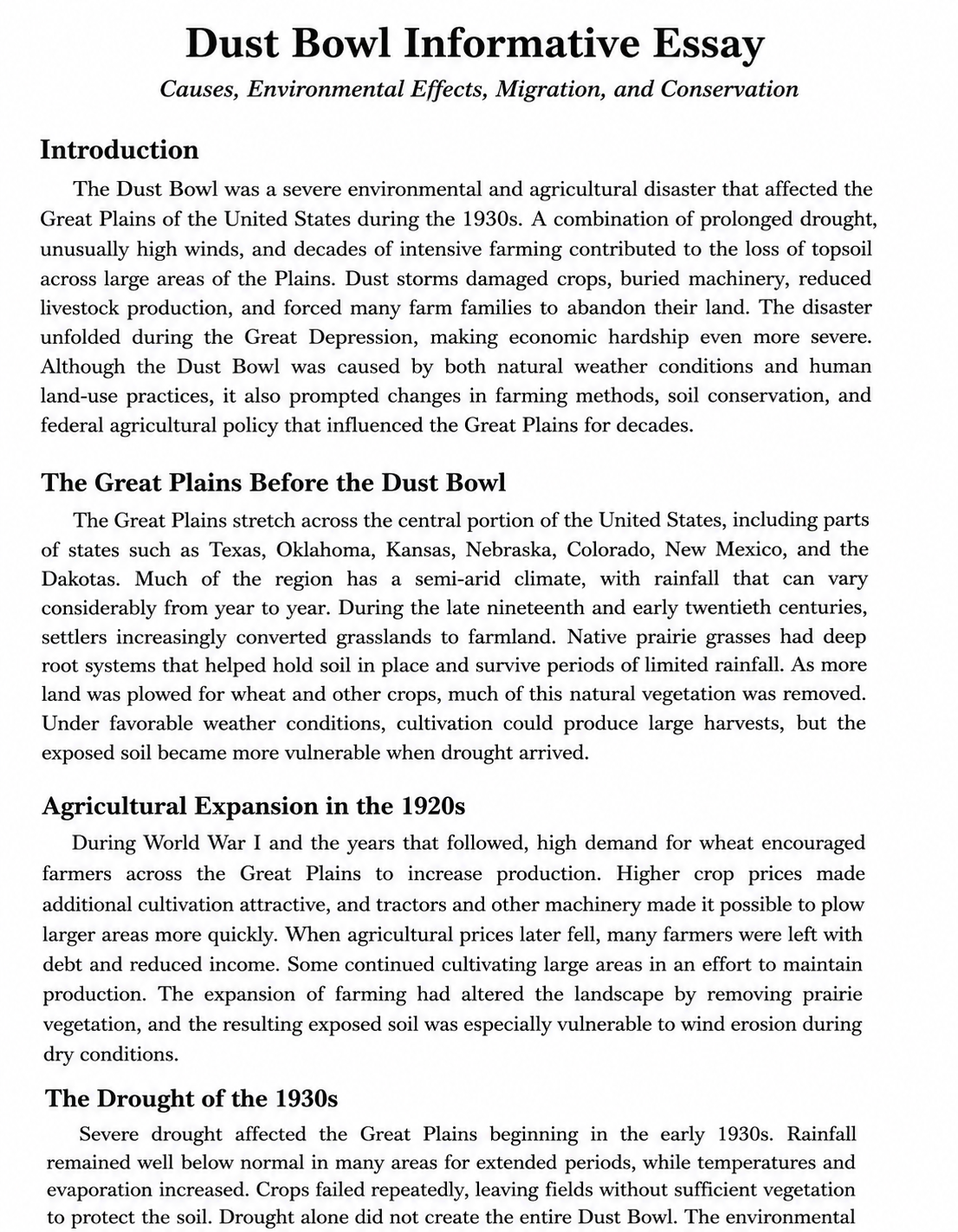
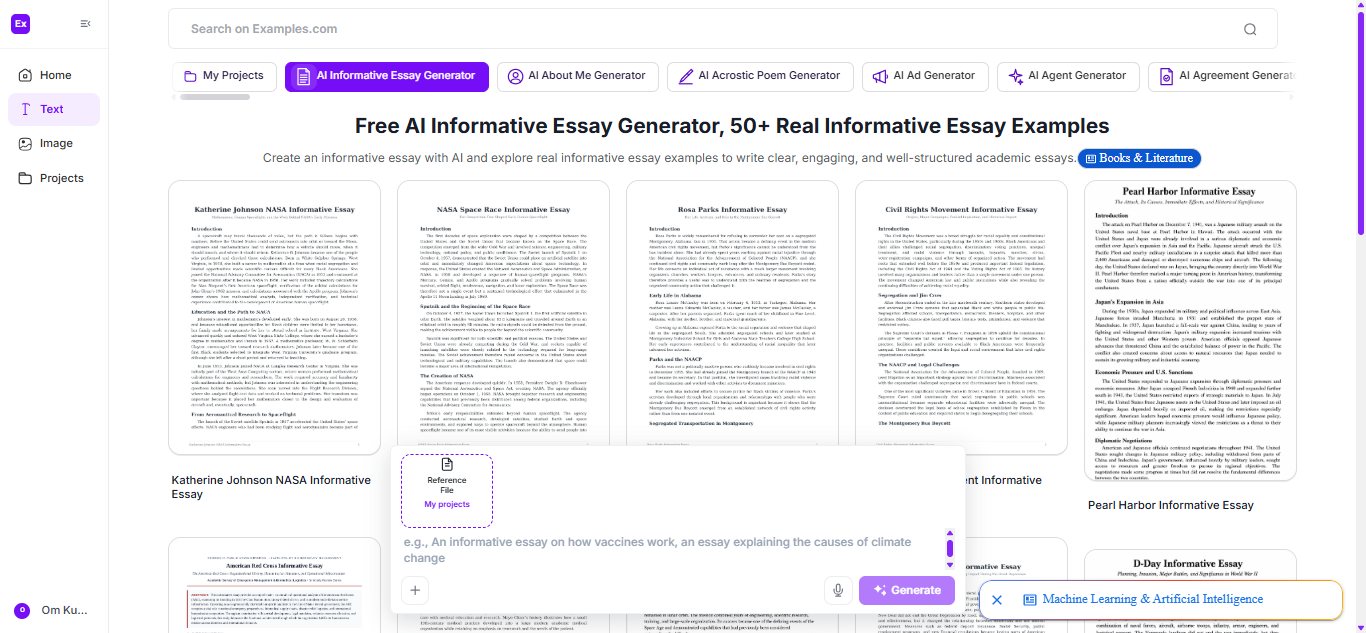
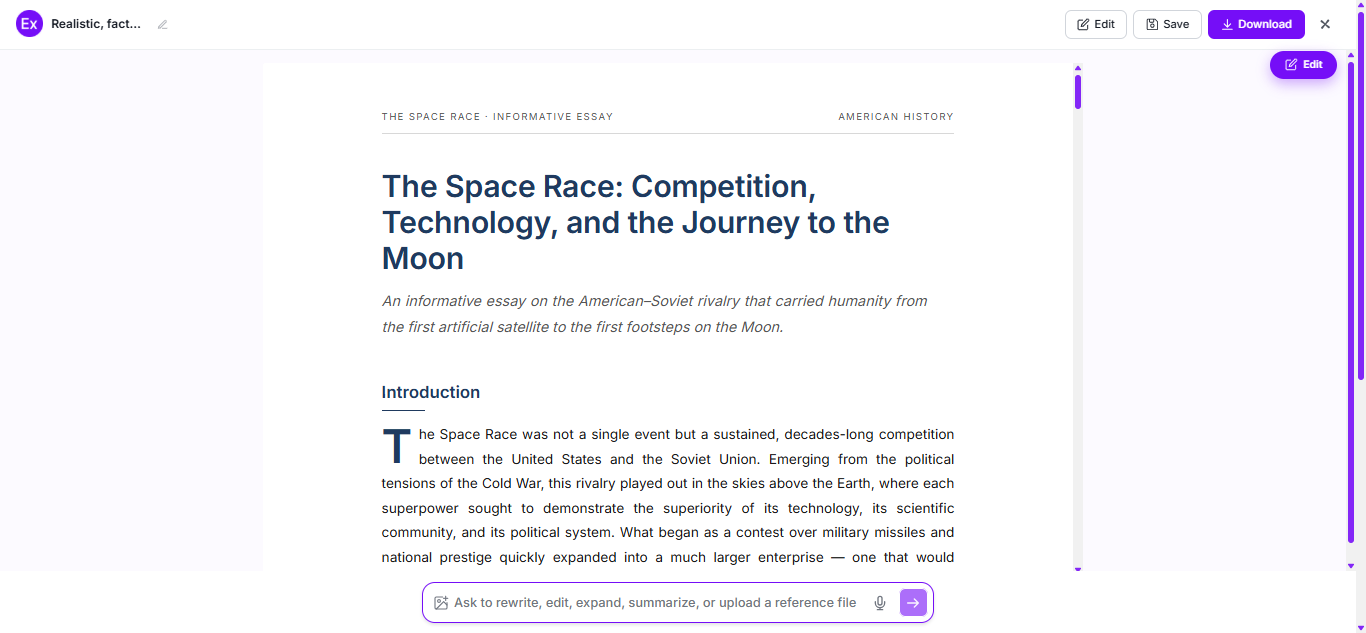
Browse real informative essay examples to understand essay structure, topic development, factual writing, evidence, and clear explanations. Reviewing examples can help you understand how strong informative essays organize information and present ideas objectively.
Choose A Reference -Essay And Enter An AI Prompt
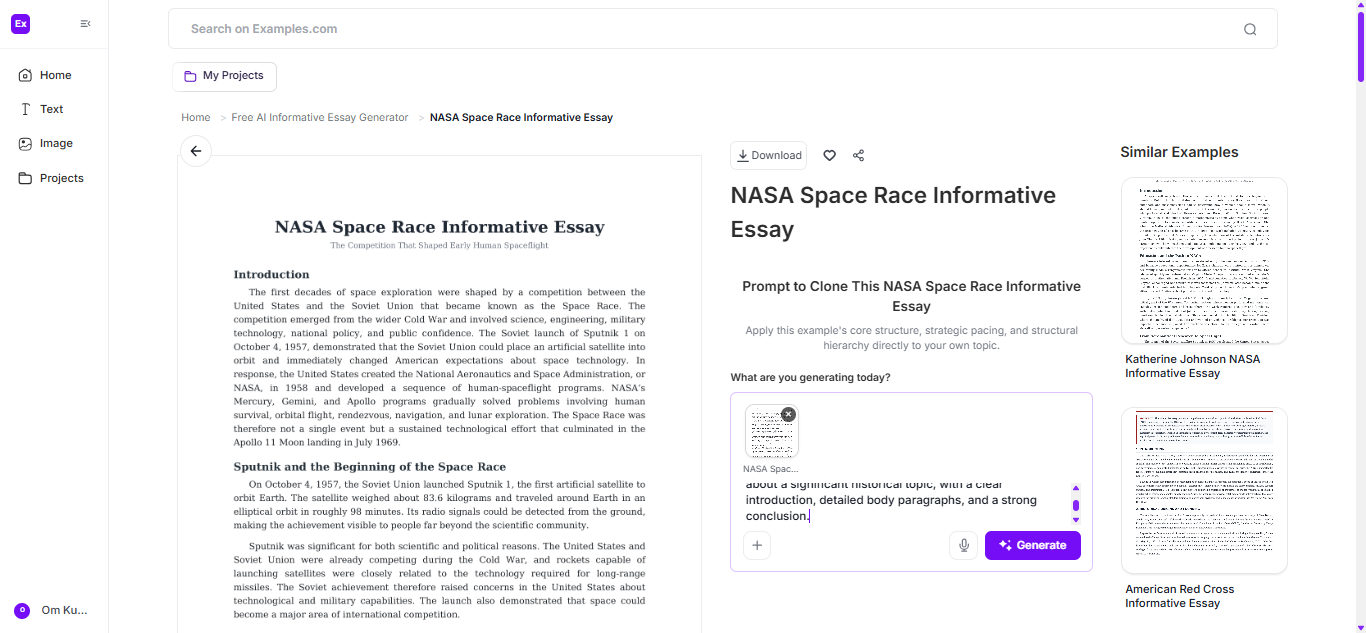
Select a reference essay and describe your requirements, including the topic, audience, length, key points, tone, and information you want the essay to explain.
Generate A New Informative Essay
Generate a customized informative essay based on your instructions, with a clear introduction, focused body paragraphs, factual evidence, examples, explanations, and a logical conclusion.
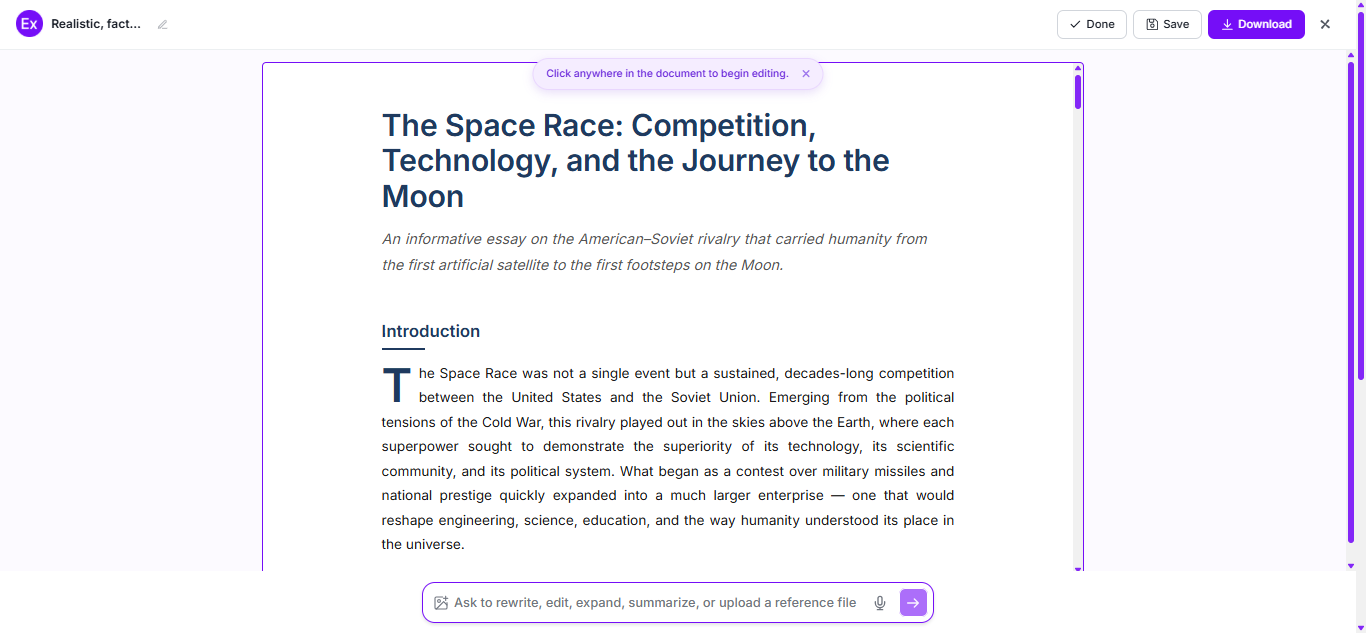
Customize The Informative Essay In The Online Editor
Edit the topic, thesis statement, supporting details, examples, paragraph structure, wording, and formatting to make the informative essay fit your specific requirements.
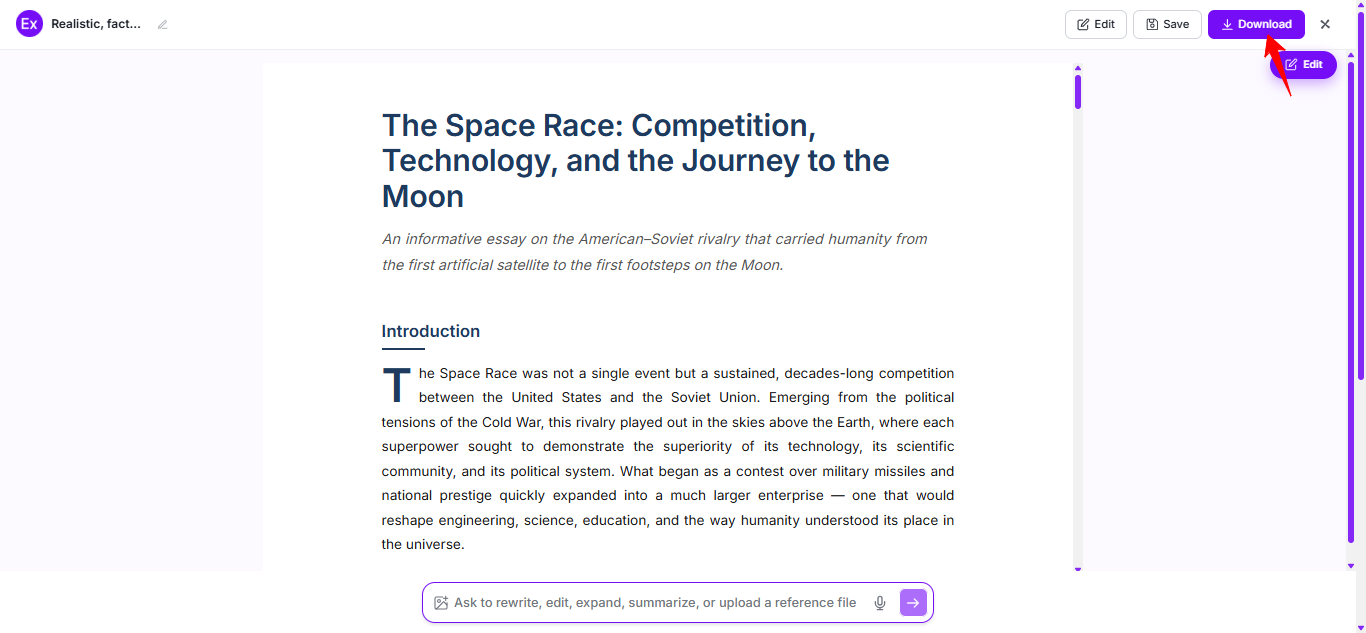
Download Your Informative Essay
Download your completed informative essay in PDF format for convenient reading, printing, or keeping as a reference.
What Is the Purpose of an Informative Essay?
The purpose of an informative essay is to explain a topic clearly and objectively using facts, evidence, and examples. It helps readers understand a subject, process, idea, or event without relying on personal opinions or persuasion.
AI Informative Essay Editing Features
AI Content Generation
Generate informative essay content based on your chosen topic, requirements, key points, and desired writing style.
Smart Content Editing
Add, remove, or revise sentences, paragraphs, examples, and supporting details to improve your informative essay.
Auto Formatting
Organize the introduction, body paragraphs, headings, and conclusion into a clear and consistent essay structure.
Essay Customization
Update the topic, thesis statement, tone, length, examples, and other content to match your specific requirements.
Instant PDF Download
Download your completed informative essay as a PDF for reading, printing, or keeping as a reference.
How Do I Start an Informative Essay?
- Choose a focused topic: Select a clear subject that can be explained with factual information and evidence.
- Understand your audience: Consider what readers already know and what they need to learn.
- Write an engaging hook: Begin with an interesting fact, question, brief example, or relevant statement.
- Provide background information: Give readers enough context to understand the topic.
- Introduce the main idea: Clearly state what the essay will explain or examine.
- Create a clear thesis statement: Summarize the central focus of the informative essay in one concise statement.
- Plan the main points: Identify the key ideas that each body paragraph will develop.
Which Essential Elements Should I Include in Every Informative Essay?
- Clear Topic: Identify the specific subject the essay will explain.
- Strong Introduction: Introduce the topic, provide background, and capture the reader’s interest.
- Thesis Statement: State the central idea or focus of the essay clearly.
- Topic Sentences: Begin each body paragraph with a sentence that introduces its main point.
- Facts and Evidence: Support important ideas with accurate facts, research, and relevant information.
- Examples: Use specific examples to make explanations easier to understand.
- Clear Explanations: Explain how the facts and examples connect to the main idea.
- Logical Organization: Arrange information in a sequence that is easy for readers to follow.
- Objective Tone: Present information fairly without relying on personal opinions or persuasion.
- Strong Conclusion: Summarize the key points and reinforce the essay’s central idea.
How Do I Write an Informative Essay?
Choose a Clear Topic
Select a focused topic that can be explained using accurate facts, evidence, and relevant examples.
Write a Strong Introduction
Introduce the topic, provide useful background information, and present a clear thesis statement.
Develop the Body Paragraphs
Organize the main ideas into focused paragraphs, with each paragraph explaining one important aspect of the topic.
Add Facts and Evidence
Support your main points with reliable facts, relevant evidence, statistics, and examples that strengthen the explanation.
Explain the Information Clearly
Connect each fact or example to the main idea so readers understand why the information matters.
Maintain an Objective Tone
Focus on factual information and clear explanations instead of personal opinions, emotional language, or persuasion.
Write a Clear Conclusion
Restate the main idea, summarize the key information, and provide a final thought that reinforces the topic.
Why Should I Use Real Informative Essay Examples to Create My Own Informative Essay?
- Real informative essay examples show how factual information can be organized into a clear and logical structure.
- They help you understand how an effective introduction presents the topic, provides background, and establishes a focused thesis statement.
- Examples demonstrate how body paragraphs use topic sentences, facts, evidence, examples, and explanations to develop the main idea.
- Reviewing different essays can help you recognize the difference between objective informative writing and writing that relies mainly on personal opinions or persuasion.
- Real examples provide practical guidance on paragraph organization, transitions, tone, and the overall flow of ideas.
- They can help you identify appropriate ways to explain complex topics so that information is easier for readers to understand.
- Studying examples makes it easier to see how evidence supports individual points rather than simply adding facts without explanation.
- They can inspire ideas for approaching a topic while helping you develop your own structure, wording, and explanations.
- Comparing several examples can help you identify common elements of effective informative essays and apply those principles to your own writing.
- Using examples as references can make the writing process more manageable while still allowing you to create an original essay based on your own topic and research.
What Common Informative Essay Mistakes Should I Avoid?
- Choosing a topic that is too broad: Focus on a specific subject that can be explained clearly within the required length.
- Using personal opinions: Keep the essay objective and focus on facts, evidence, examples, and clear explanations.
- Writing a weak thesis statement: Make the thesis specific enough to establish exactly what the essay will explain.
- Adding unsupported information: Use accurate facts and relevant evidence instead of making claims without support.
- Repeating the same ideas: Give each paragraph a distinct purpose and avoid unnecessary repetition.
- Poor paragraph organization: Arrange ideas logically and use clear topic sentences and transitions.
- Listing facts without explanation: Explain how each important fact or example connects to the main point.
- Ignoring the conclusion: End by bringing the key ideas together and reinforcing the essay’s central focus.
- Using an inconsistent tone: Maintain a clear, objective, and informative tone throughout the essay.
- Forgetting to revise: Review the essay for clarity, accuracy, grammar, organization, and unnecessary content before completing it.
How Do I Organize Informative Essay Paragraphs?
- Introduction: Begin by introducing the topic, providing essential background information, and presenting a clear thesis statement that establishes what the essay will explain.
- Body Paragraph 1: Start with a focused topic sentence that introduces the first main point. Follow it with relevant facts, evidence, examples, and explanations.
- Body Paragraph 2: Develop the next important aspect of the topic. Use supporting information and connect it logically to the previous paragraph.
- Body Paragraph 3: Continue with another significant point, providing additional evidence, examples, or details that help readers understand the subject.
- Transitions: Use clear transitions between paragraphs to show relationships between ideas and create a smooth flow from one point to the next.
- Conclusion: Summarize the most important information, restate the central idea in a fresh way, and provide a clear closing statement.
Informative Essay Ideas for Different Subjects
- History: Explain the causes, events, and effects of a historical event such as the American Revolution, the Industrial Revolution, or the Civil Rights Movement.
- Science: Explore topics such as photosynthesis, the water cycle, climate change, the solar system, or how vaccines work.
- Technology: Explain how artificial intelligence, smartphones, search engines, renewable technology, or computer networks work.
- Environment: Discuss topics such as deforestation, ocean pollution, recycling, endangered species, or renewable energy.
- Health: Explain subjects such as nutrition, sleep, exercise, the human immune system, or how the digestive system functions.
- Education: Explore topics such as online learning, study habits, classroom technology, literacy, or the importance of critical thinking.
- Literature: Explain the themes, historical context, writing style, or literary techniques used in a specific work.
- Geography: Explore topics such as natural disasters, climate zones, population growth, landforms, or the formation of rivers and mountains.
- Social Studies: Explain topics such as cultural traditions, migration, urbanization, communities, or the development of democratic institutions.
- Everyday Processes: Explain how common processes work, such as making paper, growing food, treating drinking water, or producing electricity.
FAQs
What Is the Main Goal of an Informative Essay?
An informative essay aims to educate readers about a topic by presenting factual information, evidence, examples, and clear explanations objectively.
How Long Should an Informative Essay Be?
The ideal length depends on assignment requirements, but every paragraph should provide relevant information without unnecessary repetition or filler.
Does an Informative Essay Need a Thesis Statement?
Yes, a clear thesis statement identifies the essay’s central focus and guides readers toward the information developed throughout the essay.
Can I Include My Opinion in an Informative Essay?
Informative essays should remain objective, emphasizing factual evidence and explanations rather than personal opinions, emotional arguments, or persuasive claims.
What Should the First Paragraph of an Informative Essay Include?
The introduction should provide a relevant hook, background information, the topic’s focus, and a clear thesis statement for readers.
How Many Body Paragraphs Should an Informative Essay Have?
An informative essay can have as many body paragraphs as needed to explain the topic thoroughly and support its central focus.
What Kind of Evidence Should an Informative Essay Use?
Use accurate facts, statistics, research findings, examples, and other relevant evidence that directly supports the information presented in each paragraph.
How Is an Informative Essay Different From an Argumentative Essay?
An informative essay explains a topic objectively, while an argumentative essay presents a position and uses evidence to persuade readers.
What Makes an Informative Essay Effective?
An effective informative essay combines accurate information, logical organization, clear explanations, relevant evidence, and an objective tone throughout the writing.
How Can I Improve My Informative Essay?
Improve your essay by strengthening the thesis, organizing ideas logically, adding evidence, clarifying explanations, and carefully revising the final draft.