
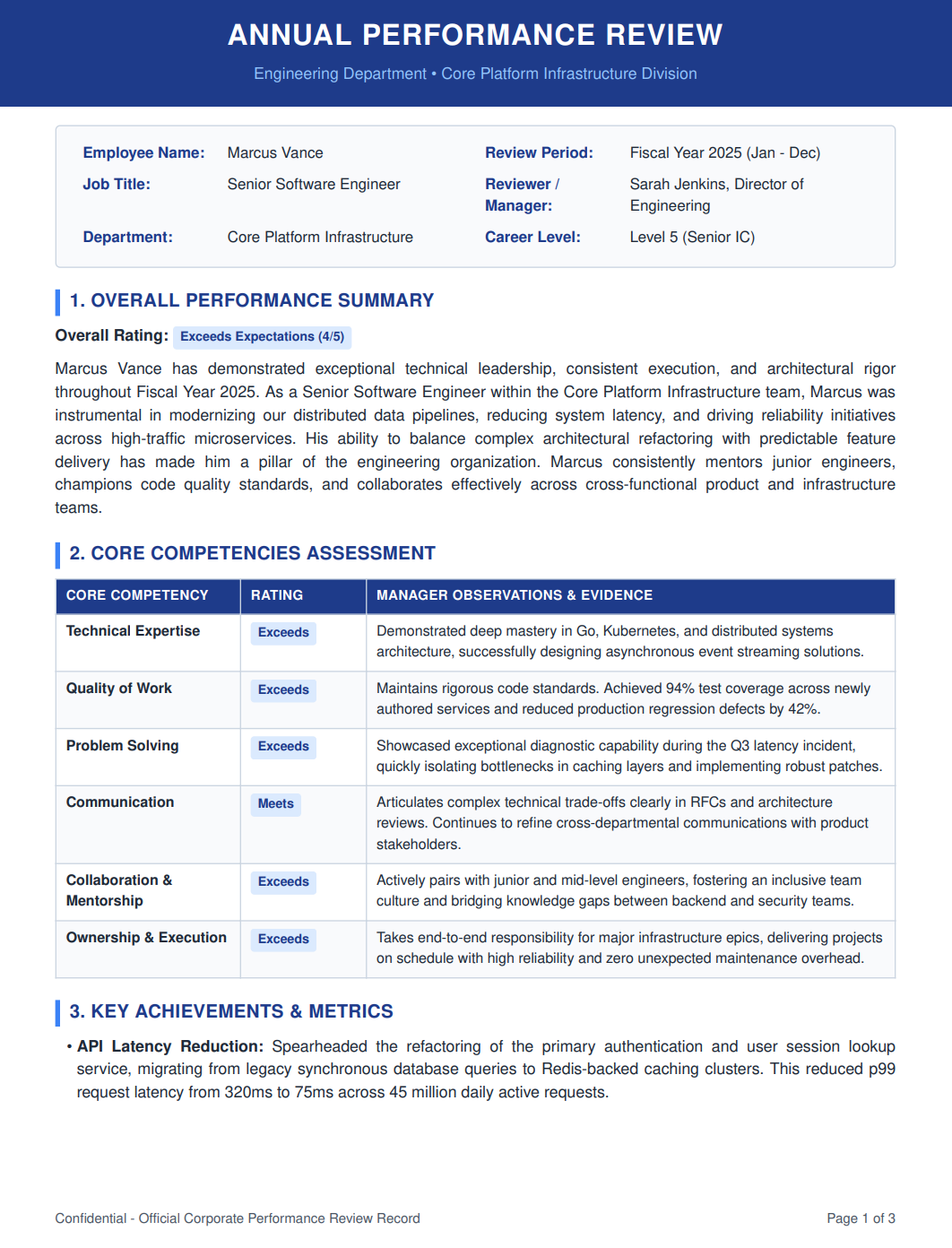
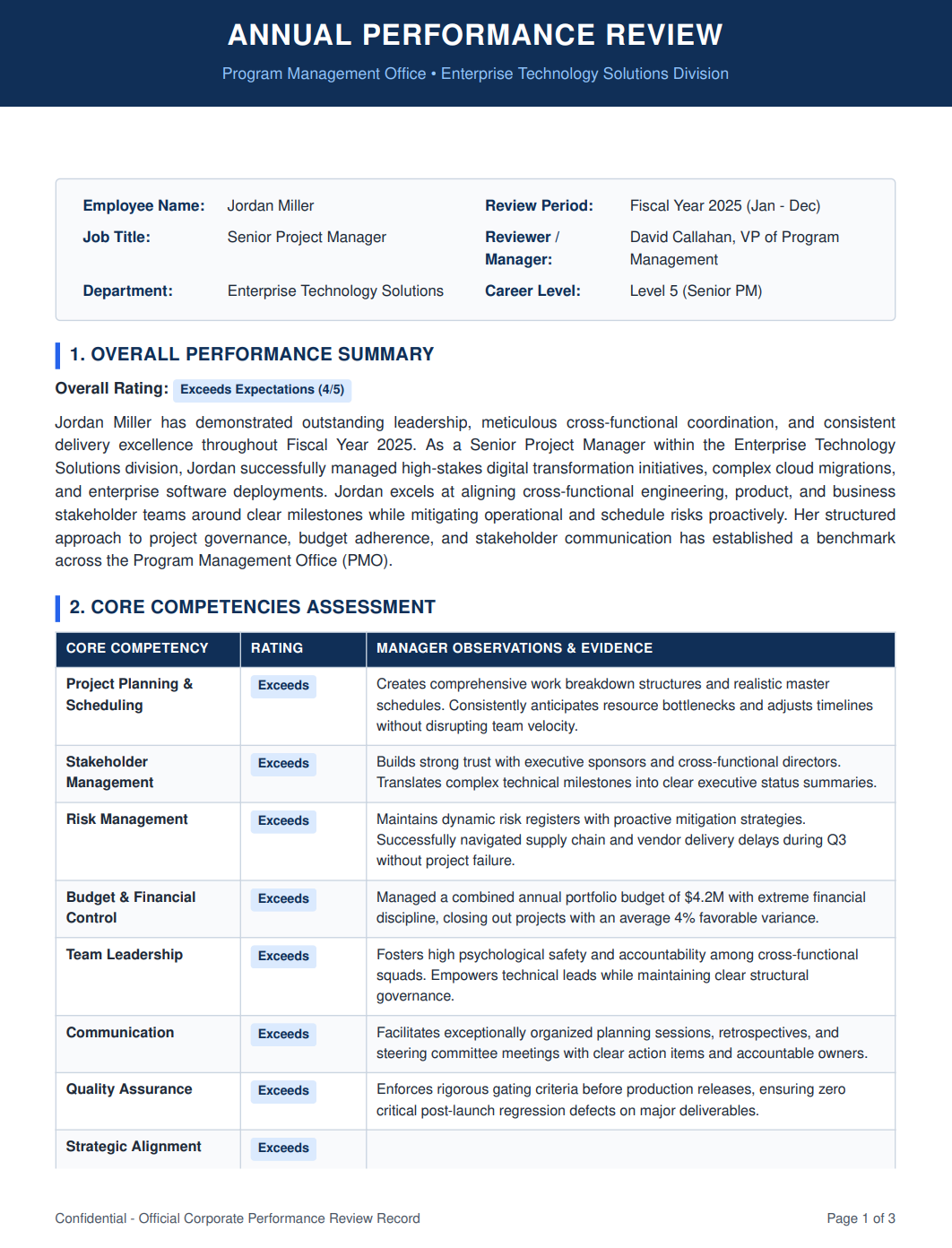
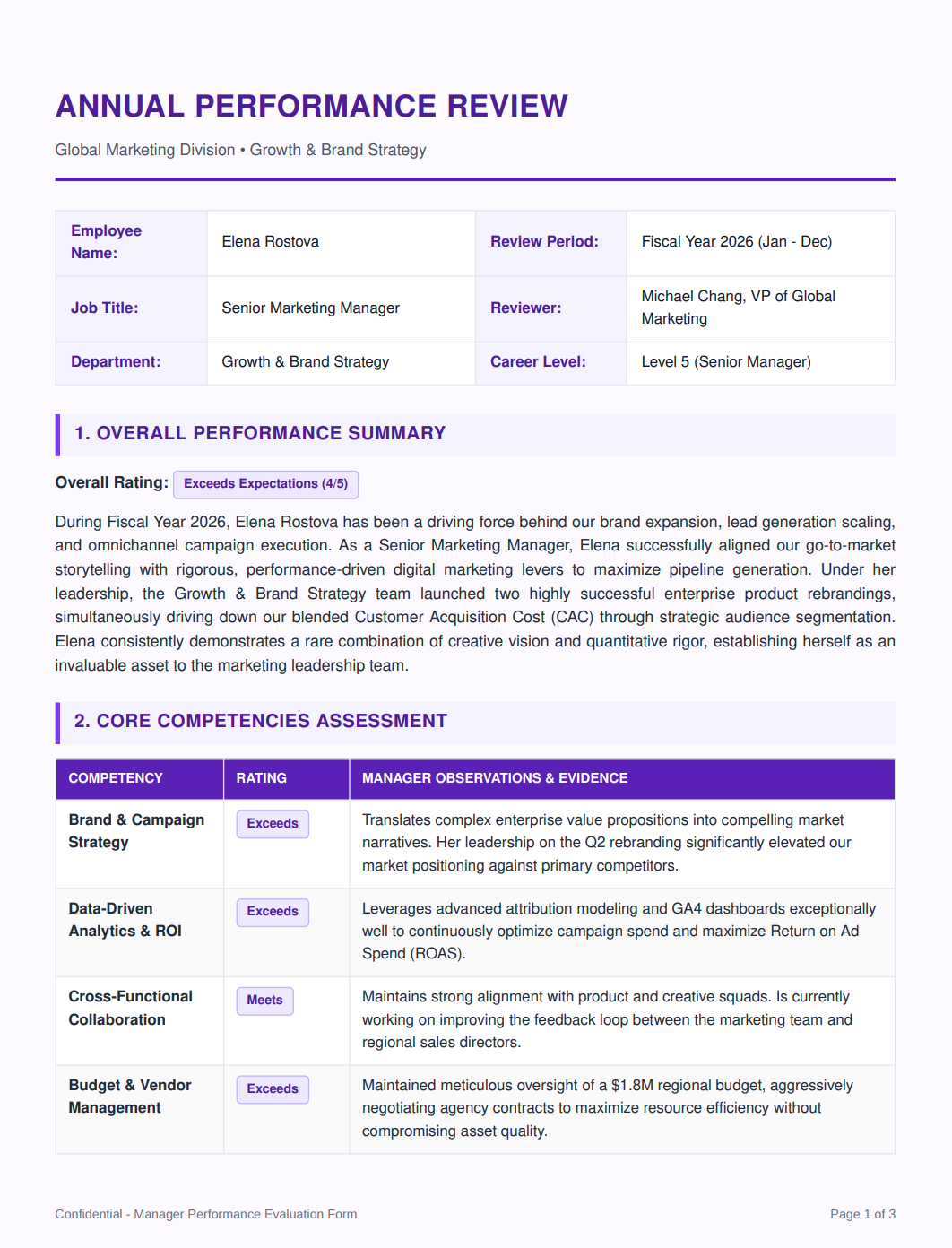
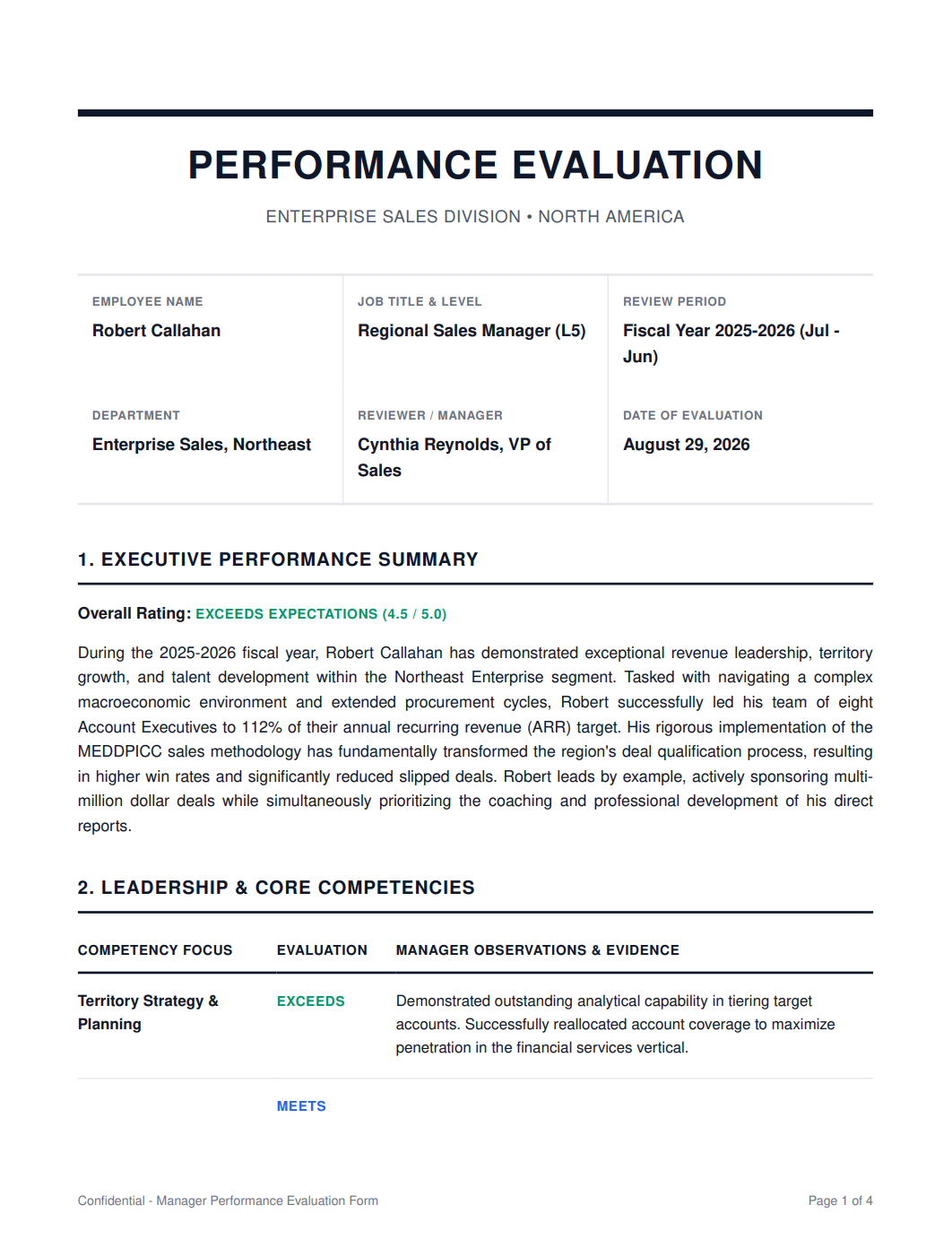
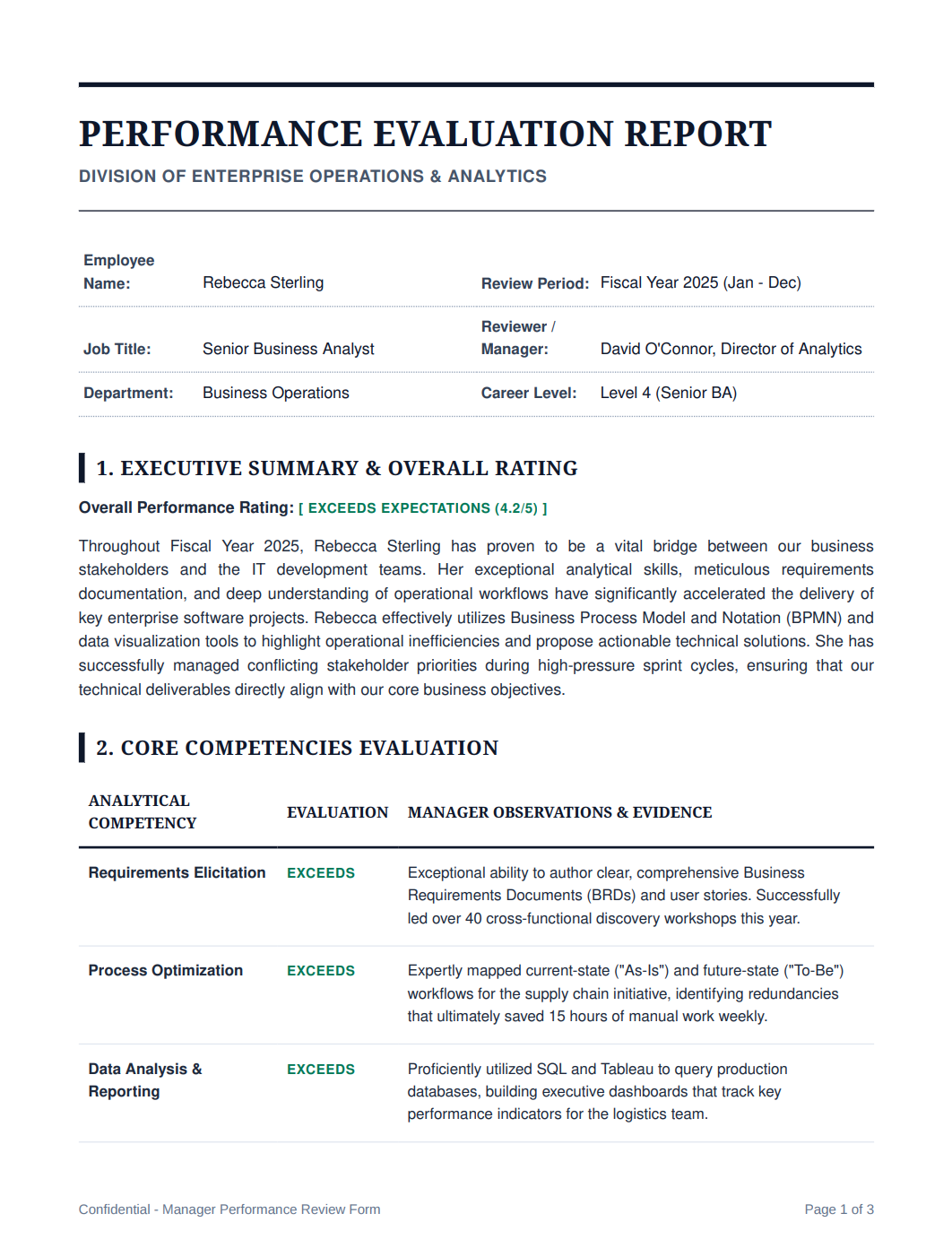
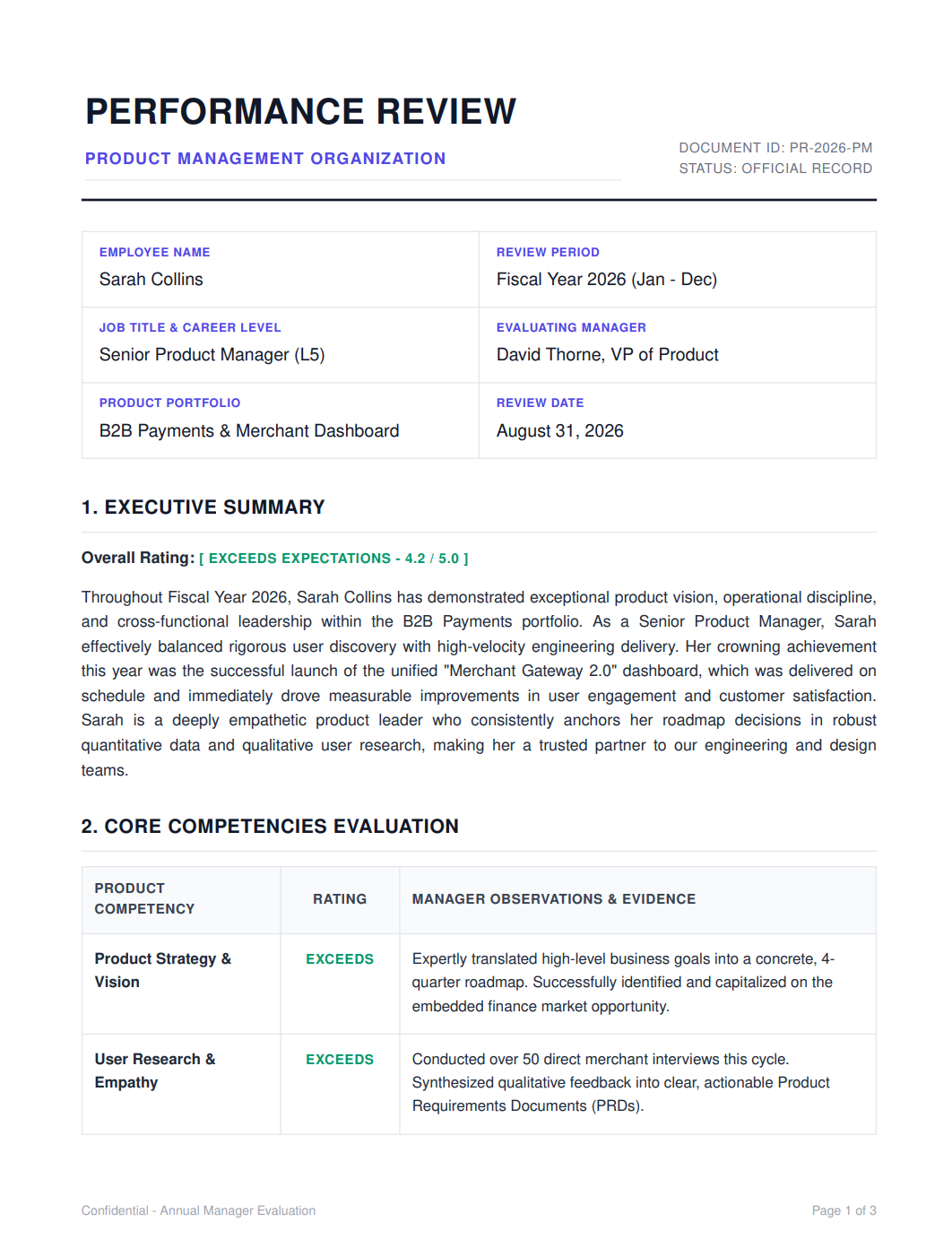
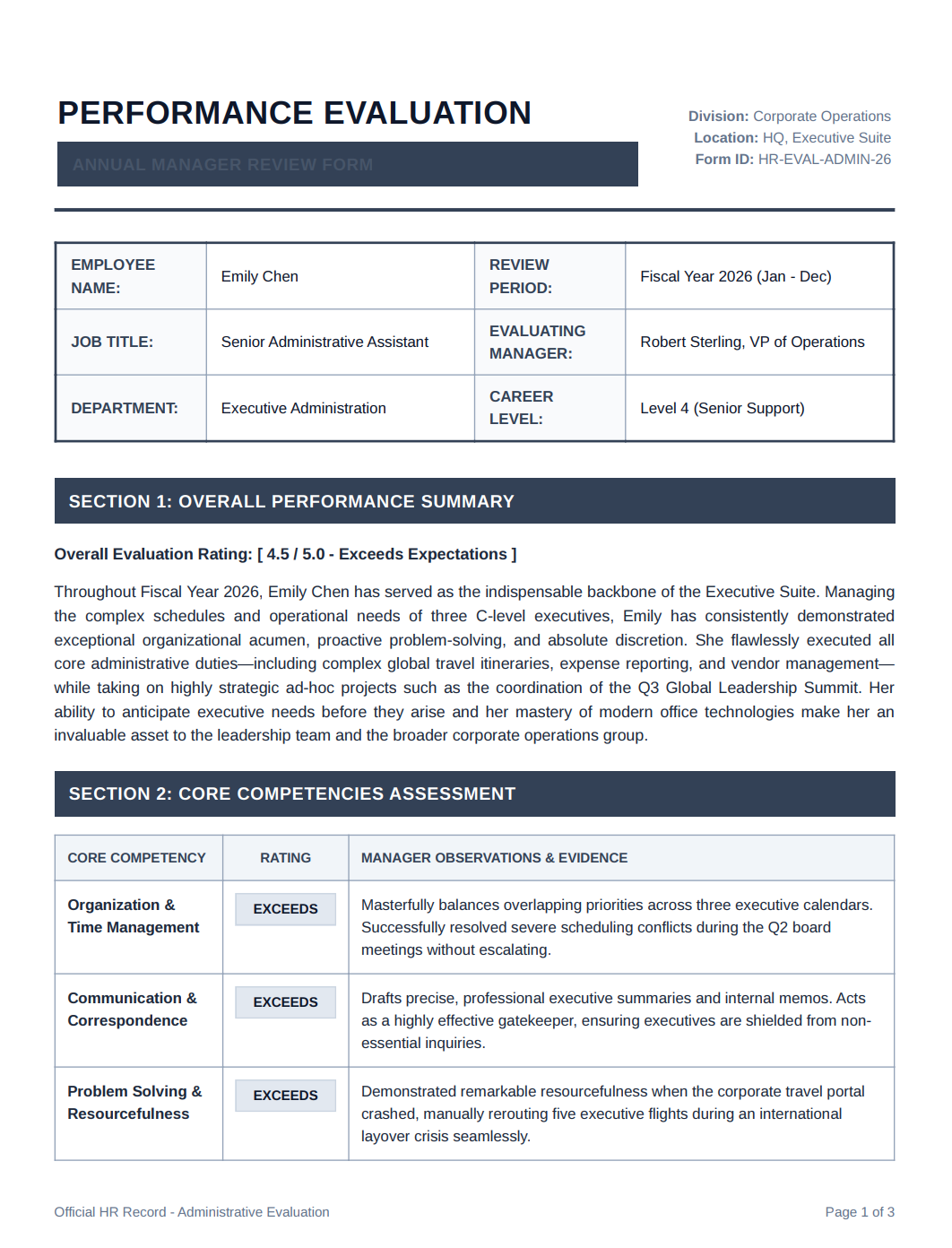
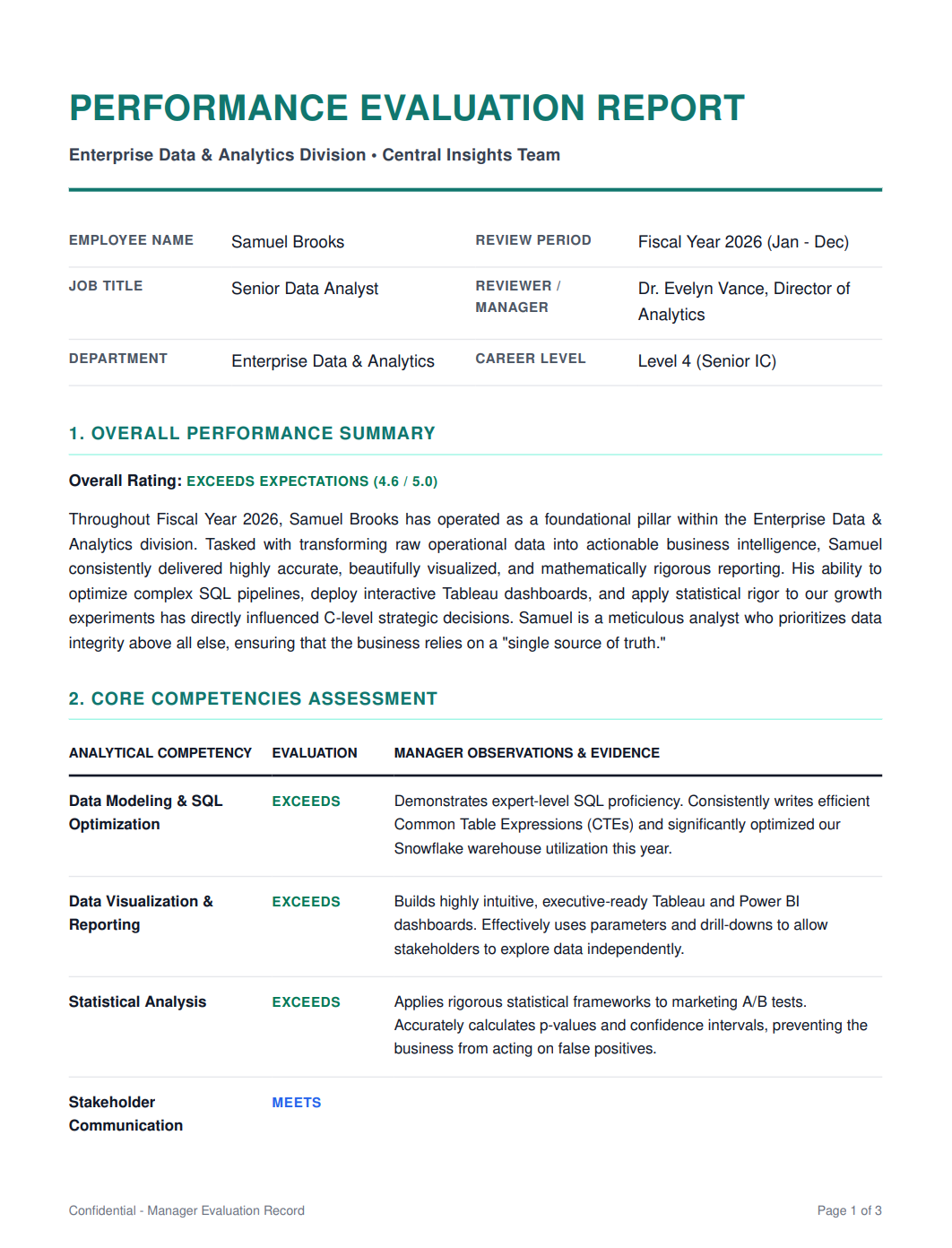
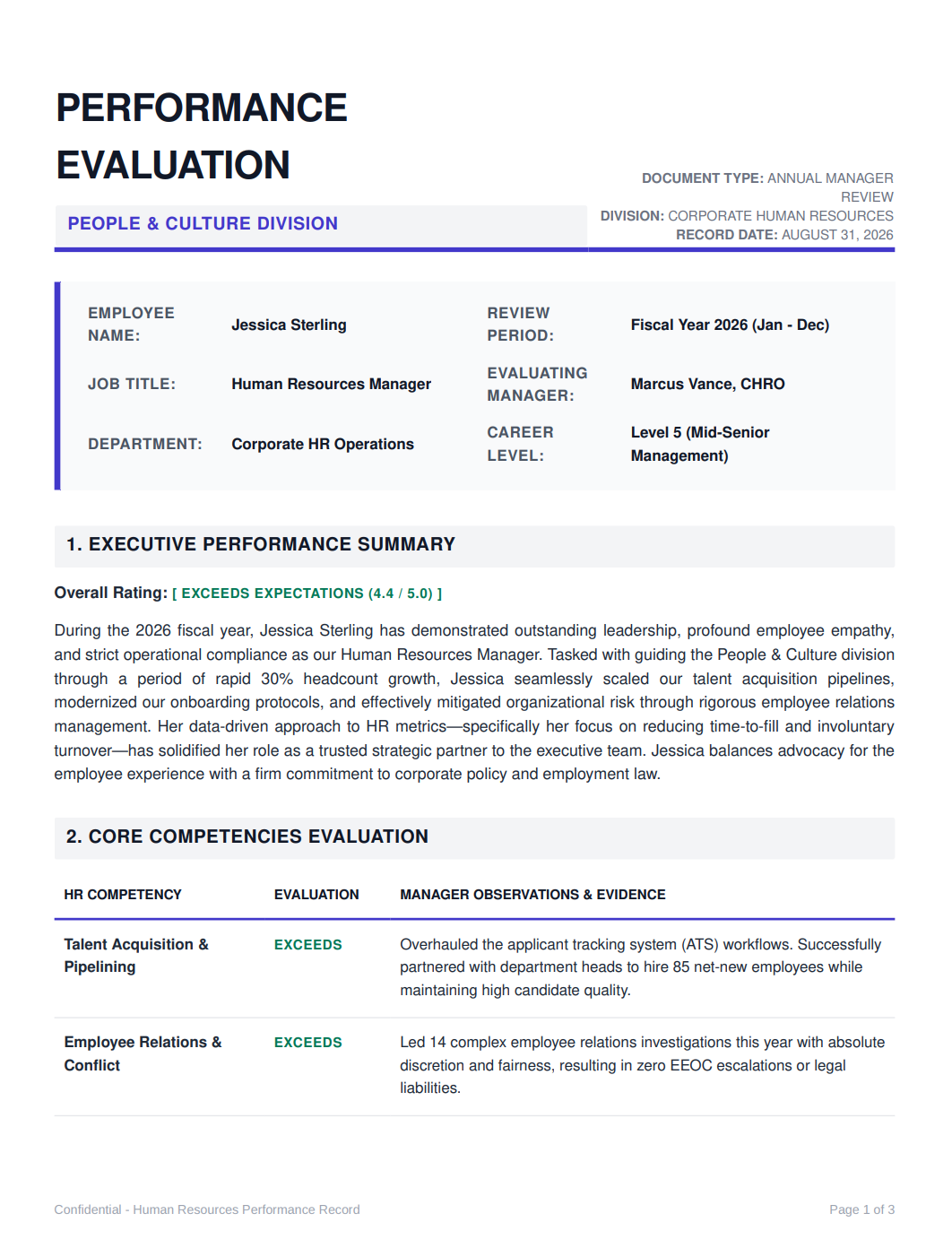
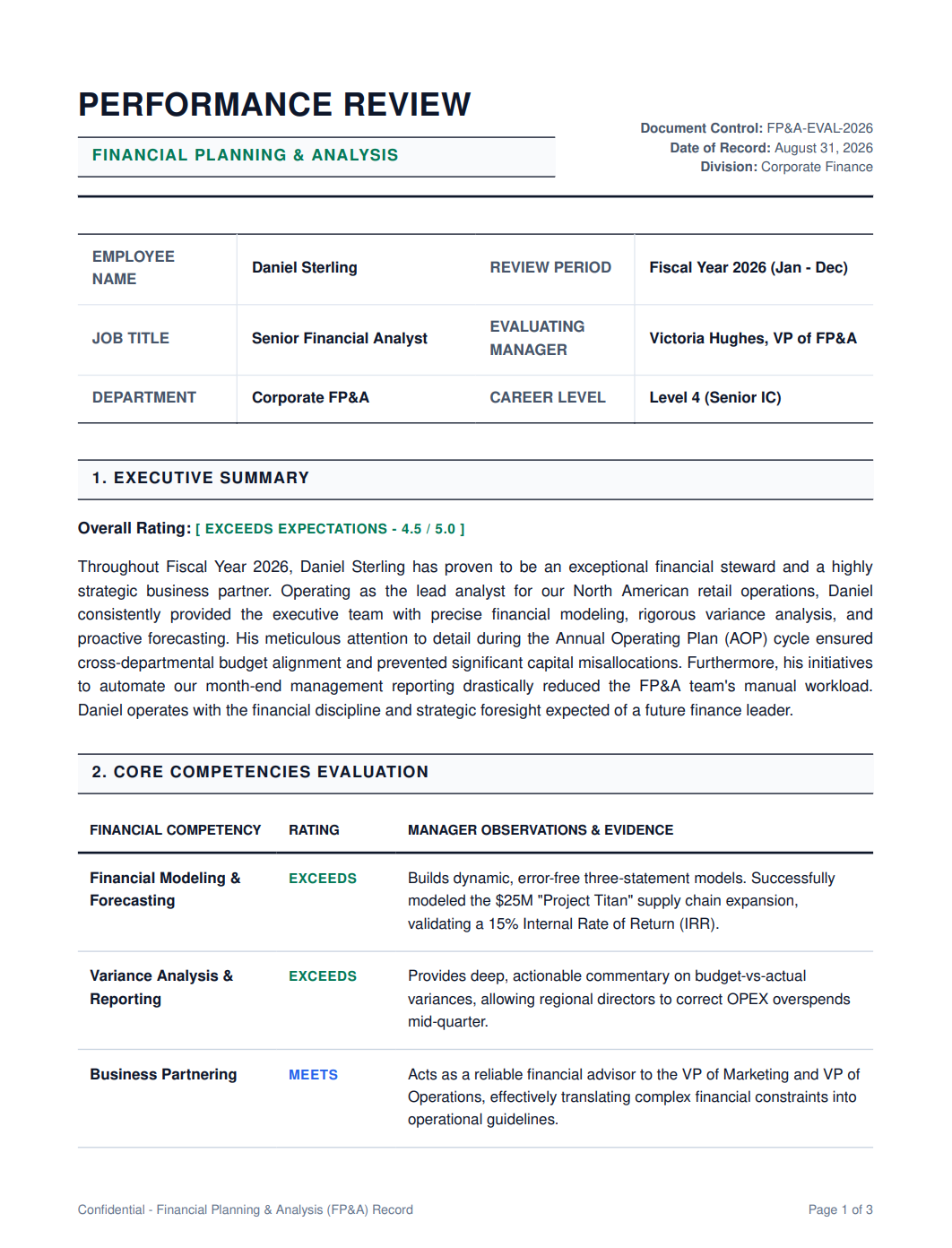
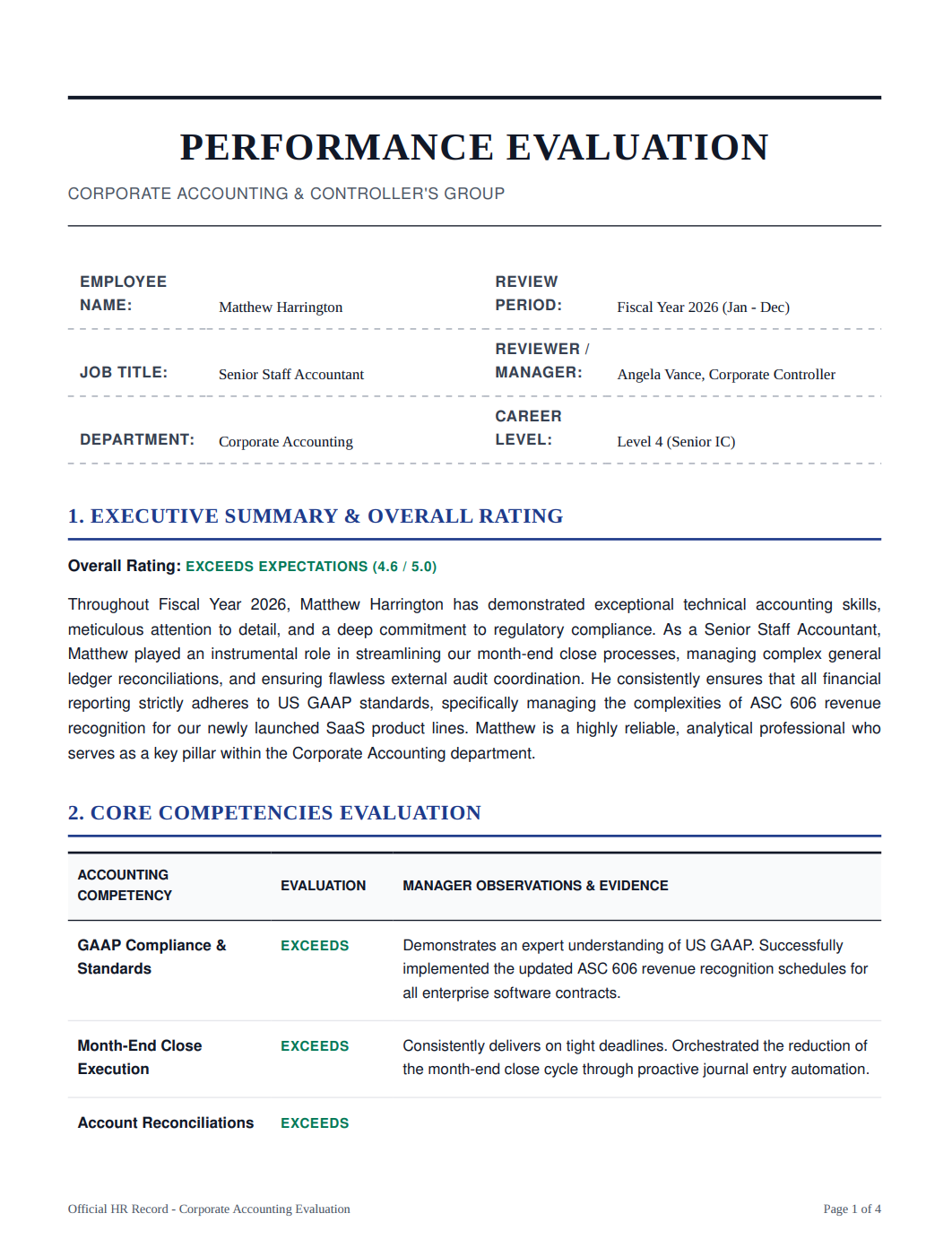
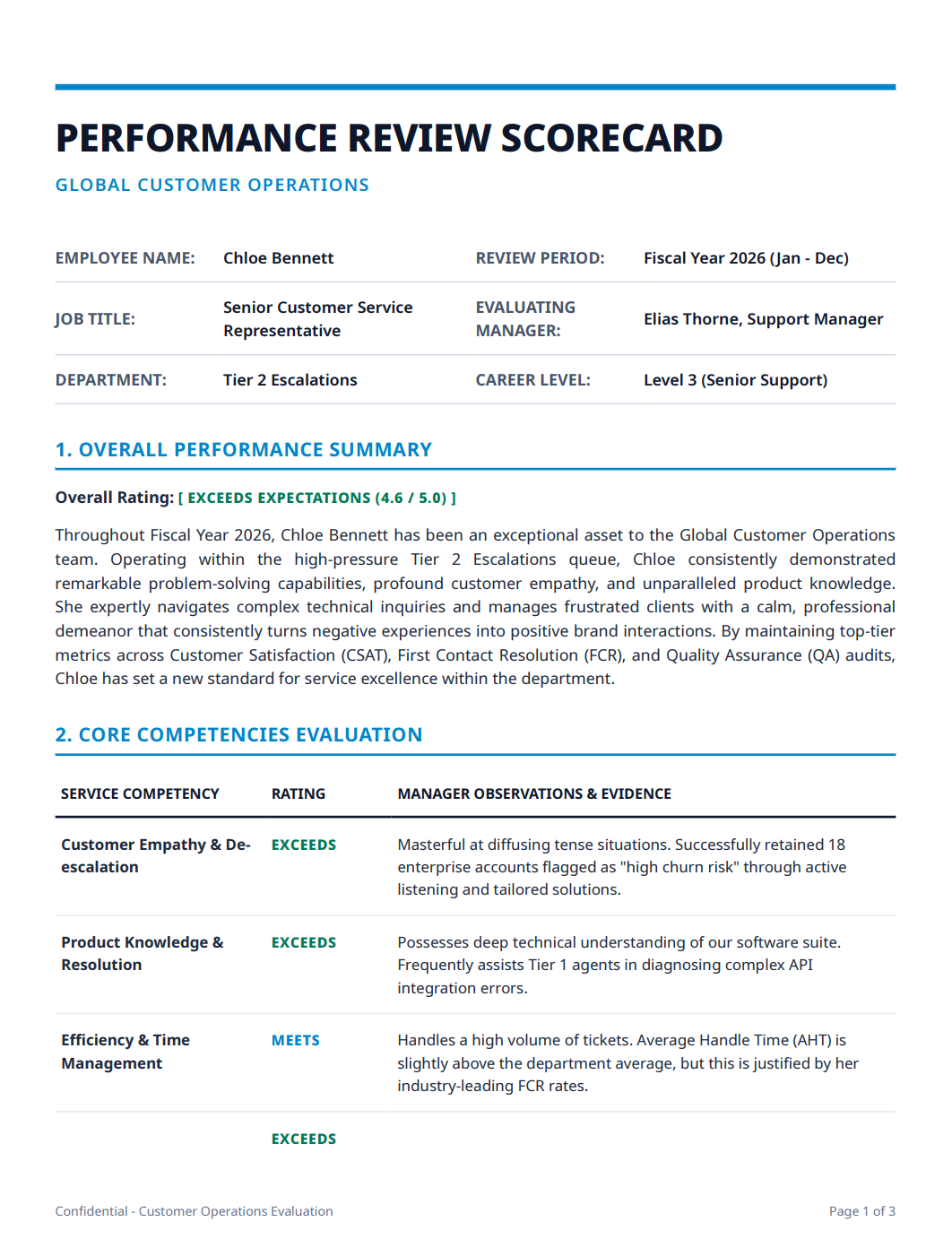
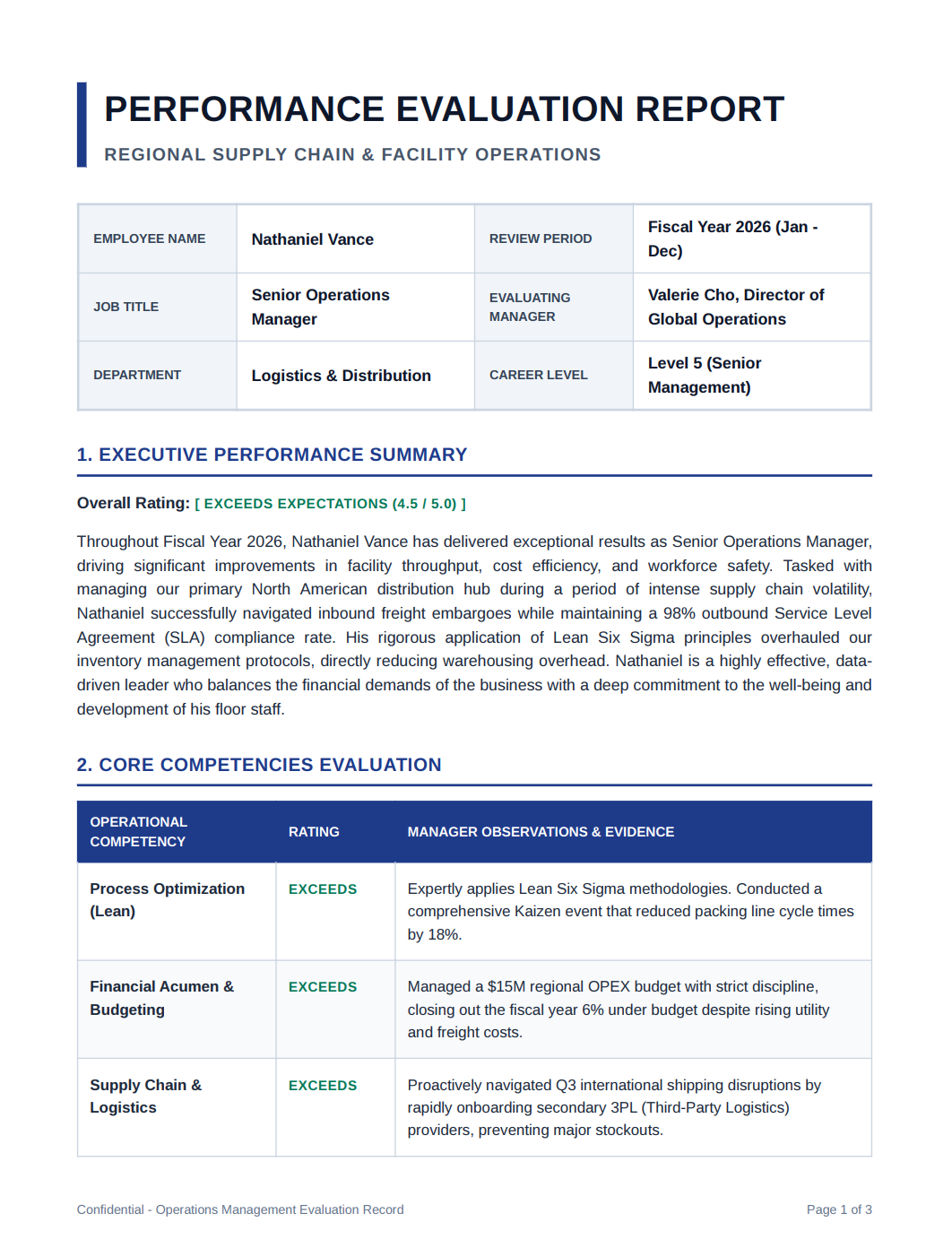
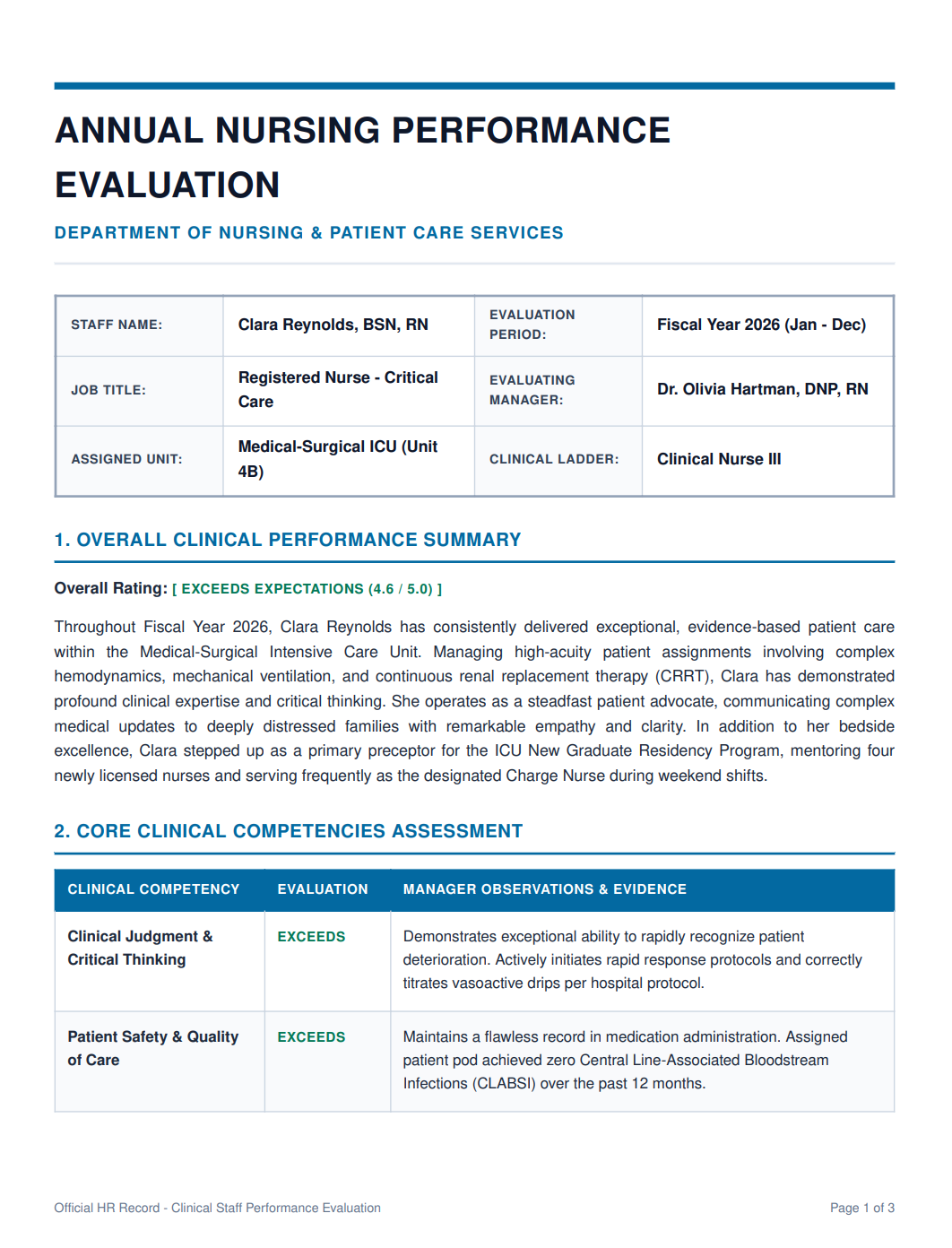
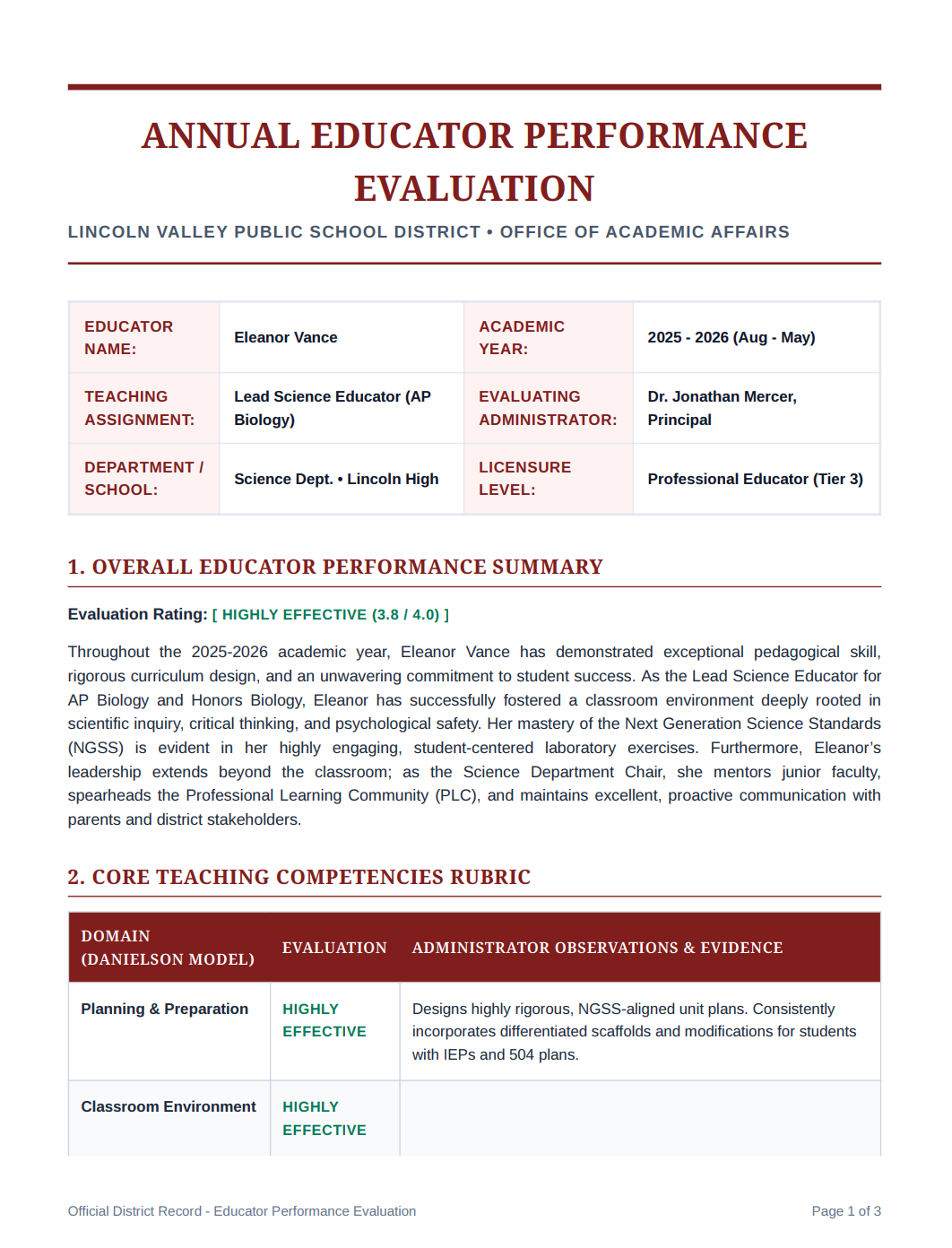
A performance review is a formal evaluation of an employee’s work performance, accomplishments, skills, strengths, and areas for improvement during a specific period. It helps managers and employees assess progress, provide constructive feedback, recognize contributions, identify development needs, and establish clear goals for future performance.
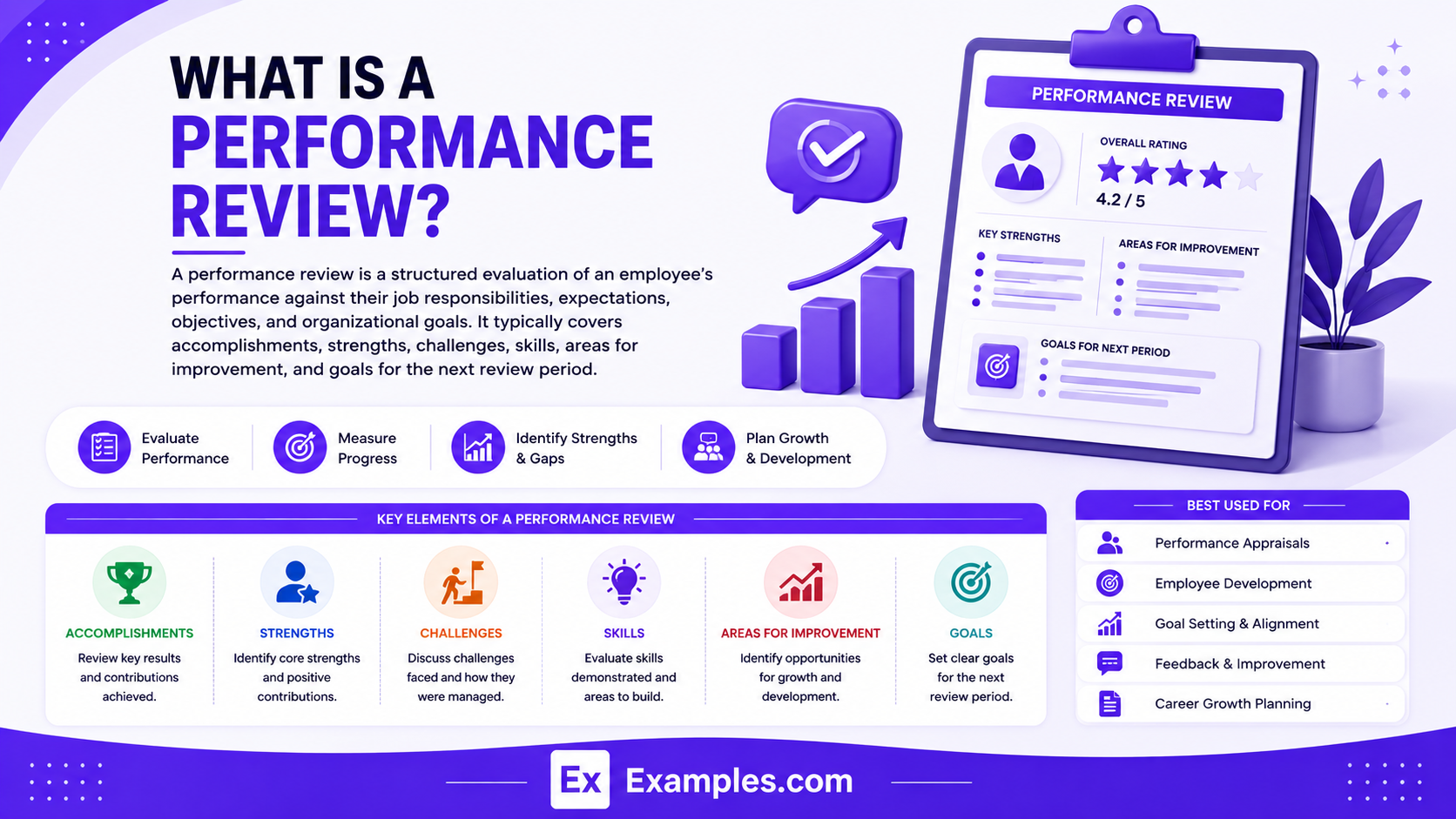
A performance review is a structured evaluation of an employee’s performance against their job responsibilities, expectations, objectives, and organizational goals. It typically covers accomplishments, strengths, challenges, skills, areas for improvement, and goals for the next review period.What Is a Performance Review?
What Are the Different Types of Performance Reviews?
Annual Performance Review
An Annual Performance Review evaluates an employee’s accomplishments, responsibilities, strengths, challenges, and professional development throughout the year.
Quarterly Performance Review
A Quarterly Performance Review assesses progress, achievements, challenges, and goals during a three-month performance period.
Goal-Based Performance Review
A Goal-Based Performance Review evaluates how effectively an employee achieved specific individual, team, or organizational objectives during the review period.
Performance Improvement Review
A Performance Improvement Review focuses on performance gaps, challenges, expected improvements, and specific actions required to meet job expectations.
Team Performance Review
A Team Performance Review evaluates collaboration, communication, teamwork, contributions, and the employee’s impact on shared team objectives.
Career Development Review
A Career Development Review focuses on professional growth, skills, training, career objectives, and opportunities for increased responsibilities.
Promotion Performance Review
A Promotion Performance Review highlights accomplishments, leadership, increased responsibilities, skills, and results that demonstrate readiness for career advancement.
Probation Performance Review
A Probation Performance Review evaluates the performance, skills, work quality, behavior, and progress of an employee during an initial employment or probationary period.
Continuous Performance Review
A Continuous Performance Review provides regular feedback on achievements, challenges, development, and goals instead of relying on one formal annual evaluation.
Project Performance Review
A Project Performance Review evaluates an employee’s contributions, responsibilities, results, collaboration, and problem-solving during a specific project.
How Do I Generate a Performance Review Using Real Examples?
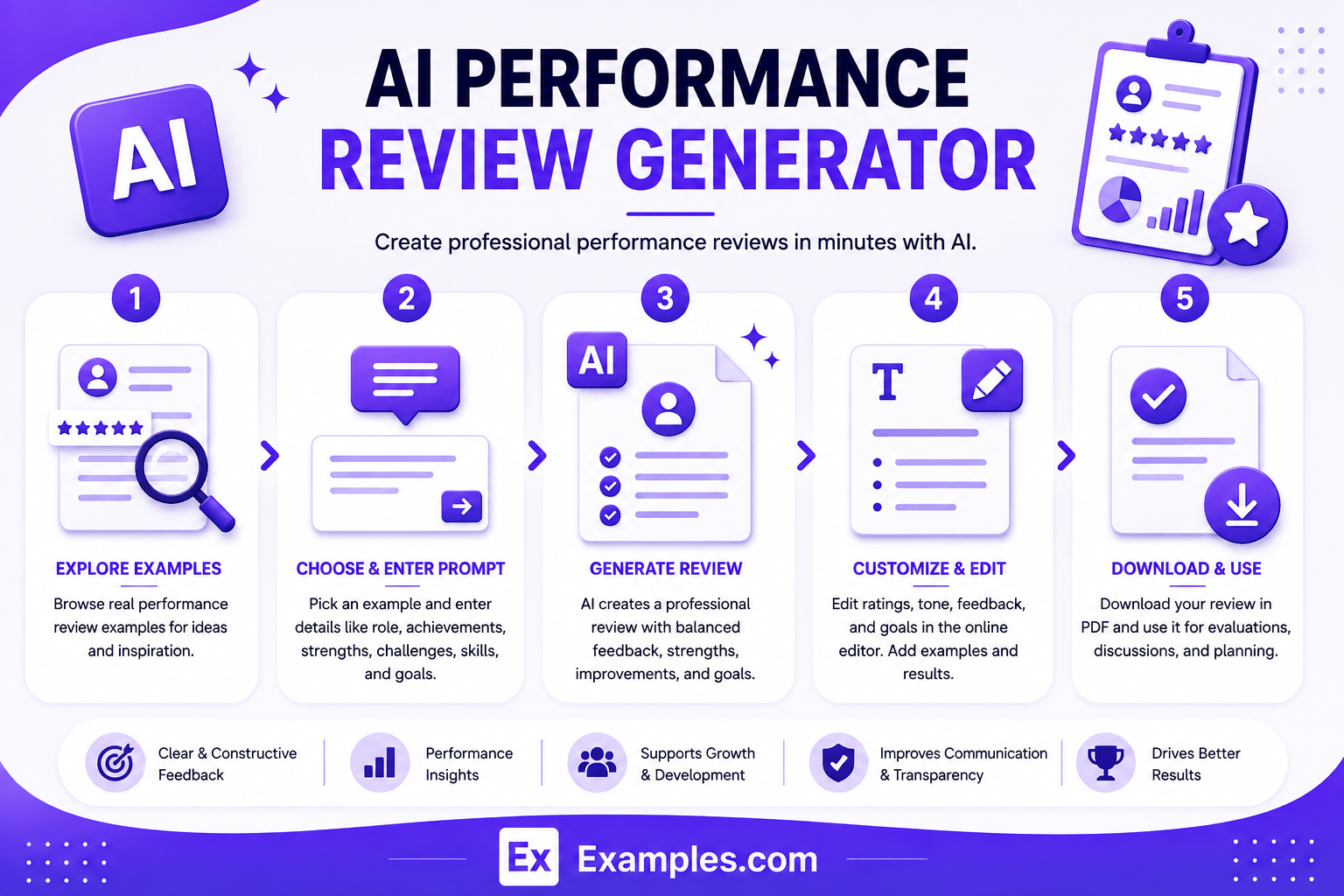
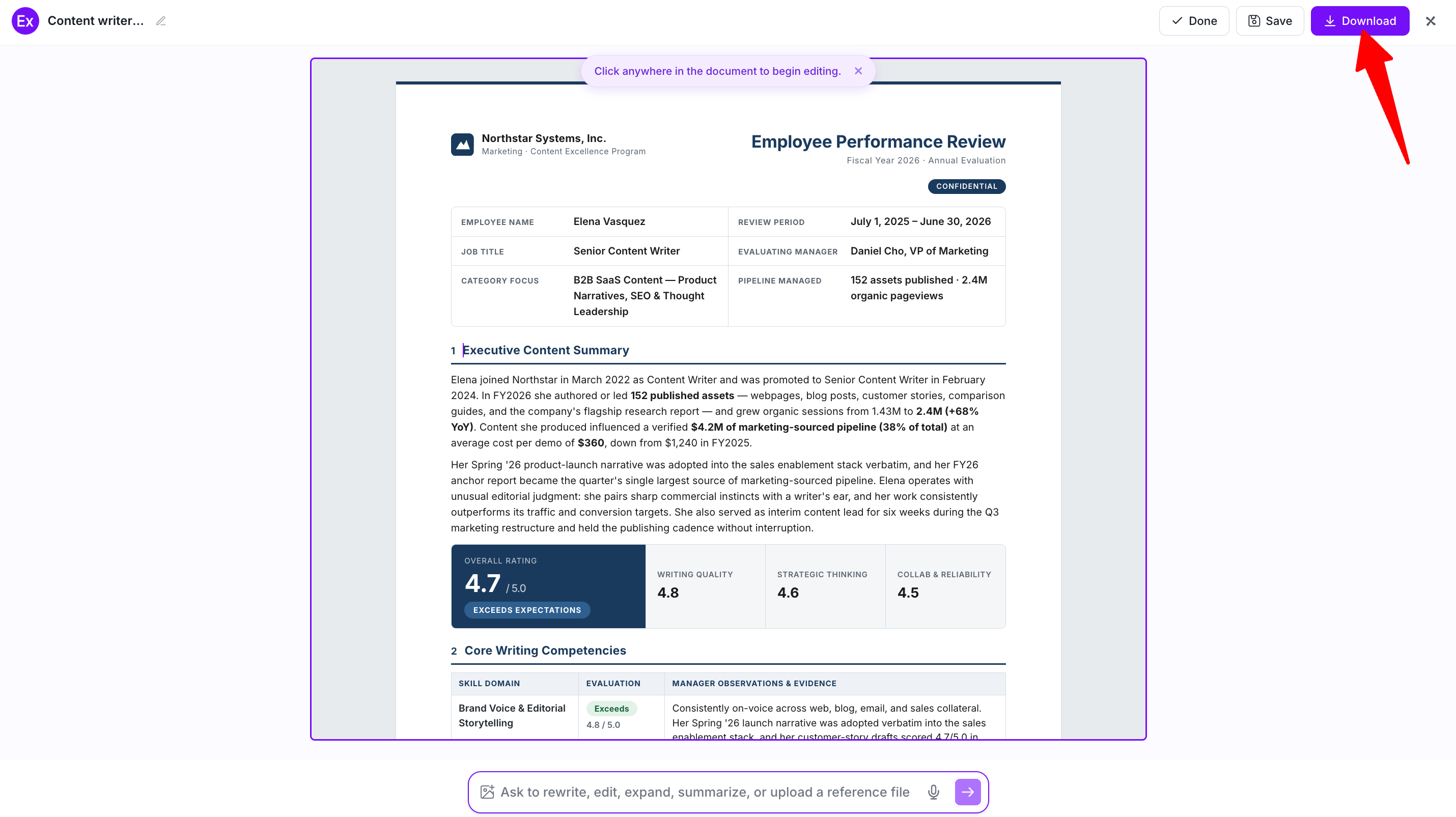
Review real performance review examples to understand how managers and organizations describe employee achievements, strengths, areas for improvement, performance challenges, and professional goals. Examples can help you create clear and constructive performance feedback. Choose a reference performance review and describe what you need in your prompt, including the employee’s role, responsibilities, accomplishments, strengths, challenges, skills, performance results, and development goals. A specific prompt helps produce relevant and focused feedback. Generate a new performance review from your prompt. The AI can organize employee information into professional feedback covering accomplishments, strengths, areas for improvement, contributions, and future objectives. Refine the wording, tone, performance ratings, achievements, feedback, and development goals in the online editor. Add specific examples, measurable results, responsibilities, and relevant observations to make the review accurate and useful. Download your completed performance review in PDF format for reviewing, printing, organizing, sharing, or using as a reference during employee evaluations, feedback discussions, and professional development planning.Explore Real Performance Review Examples
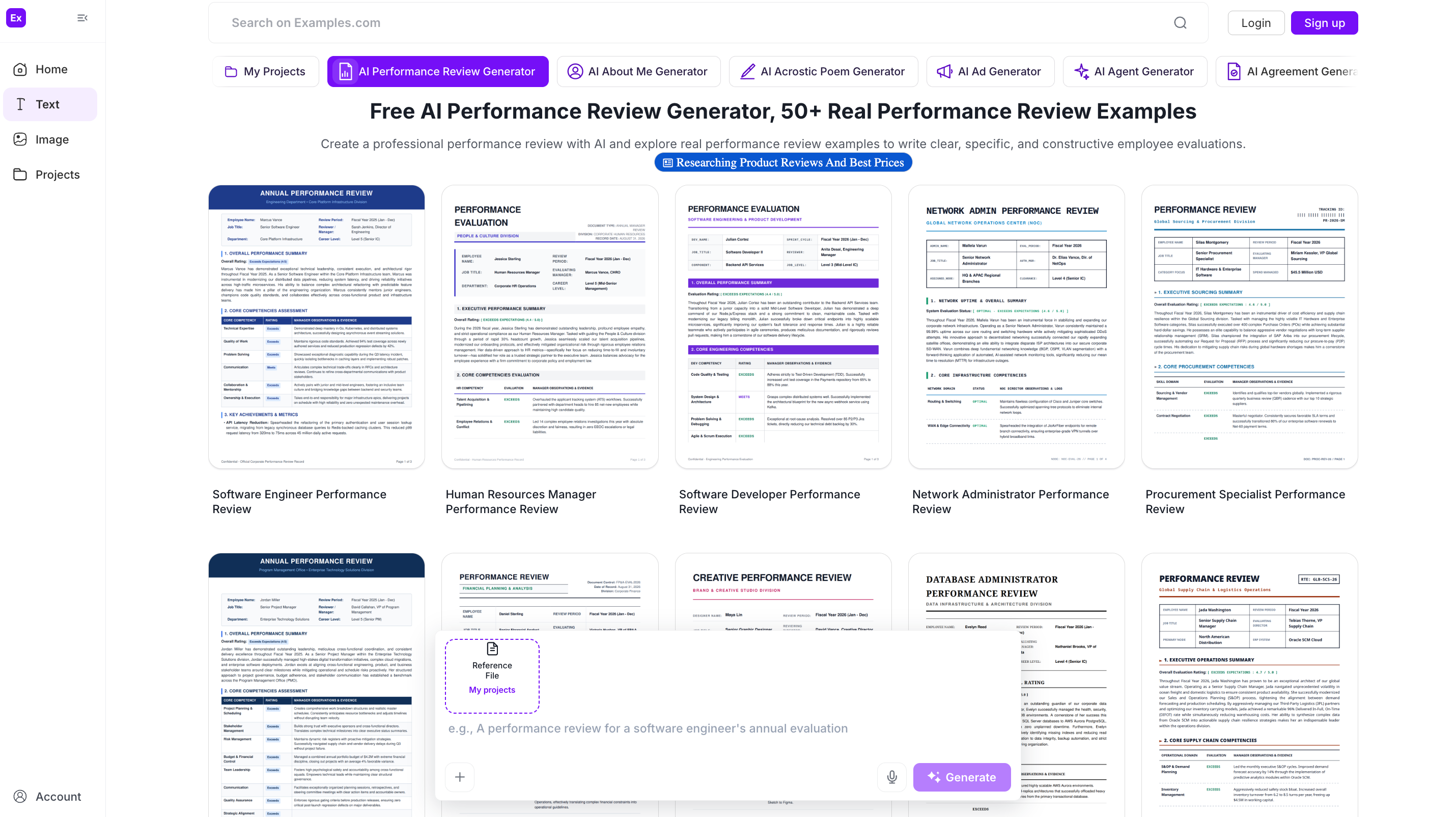
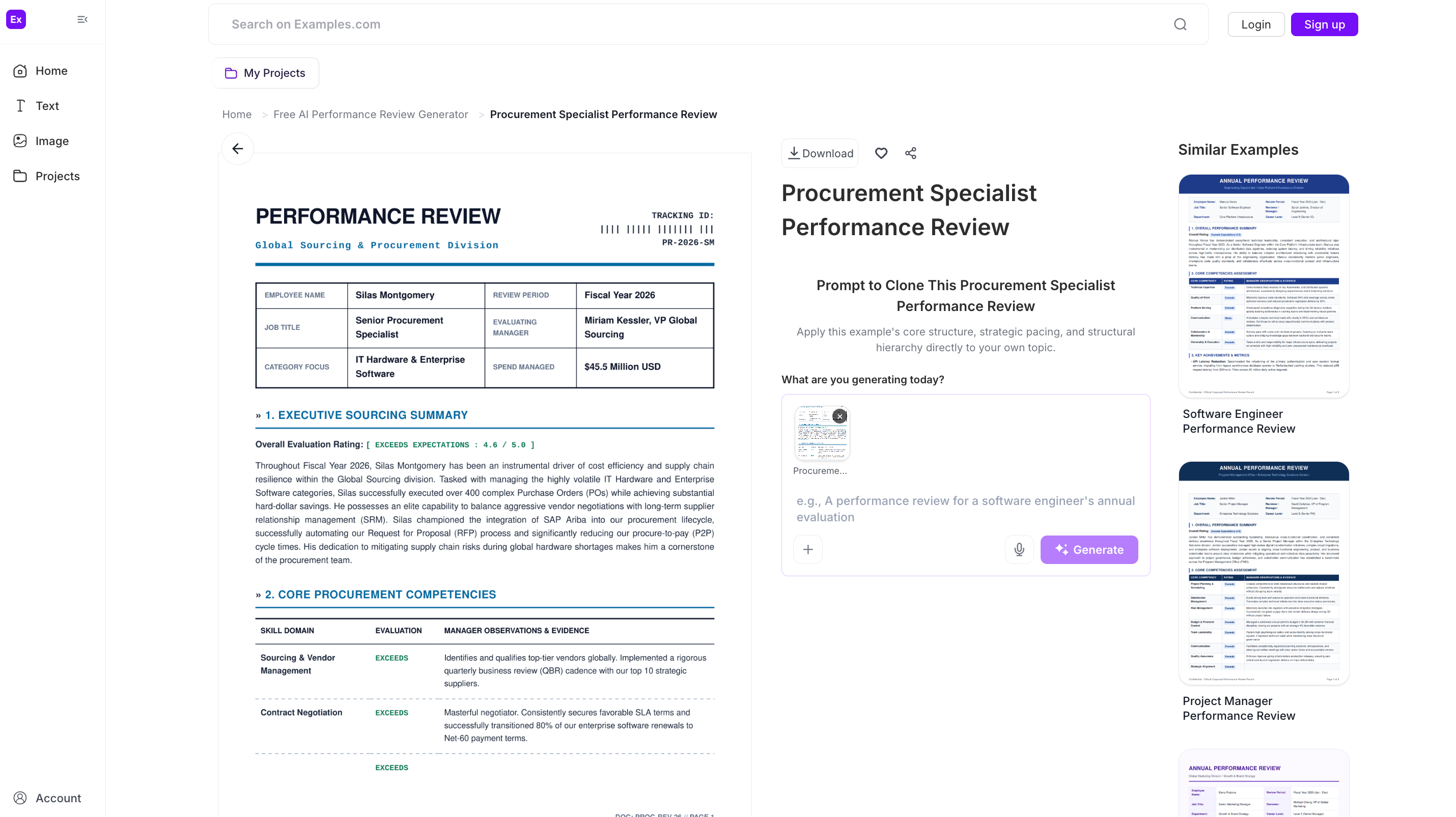
Choose a Reference Example and Enter an AI Prompt
Generate a New AI Performance Review
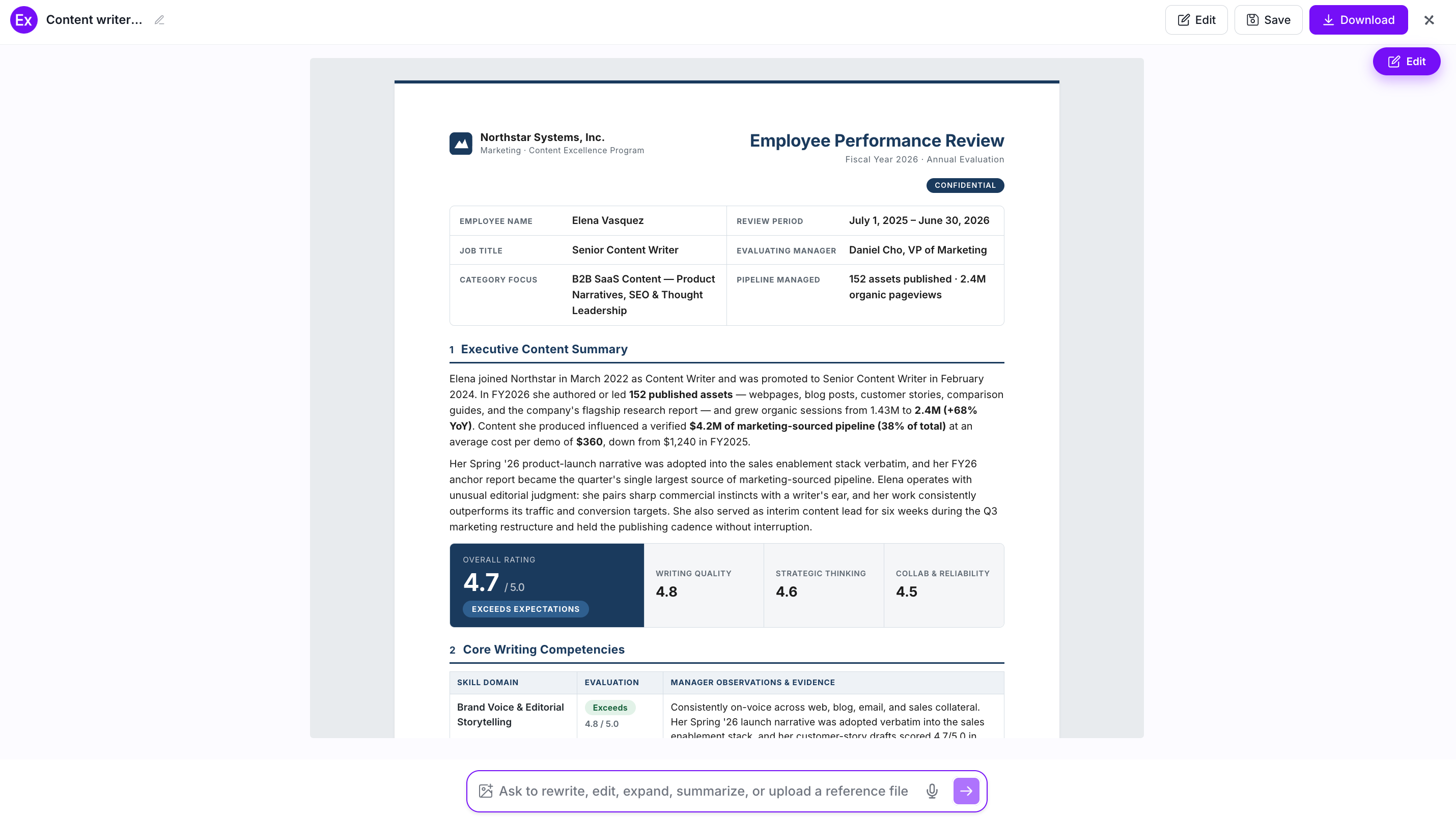
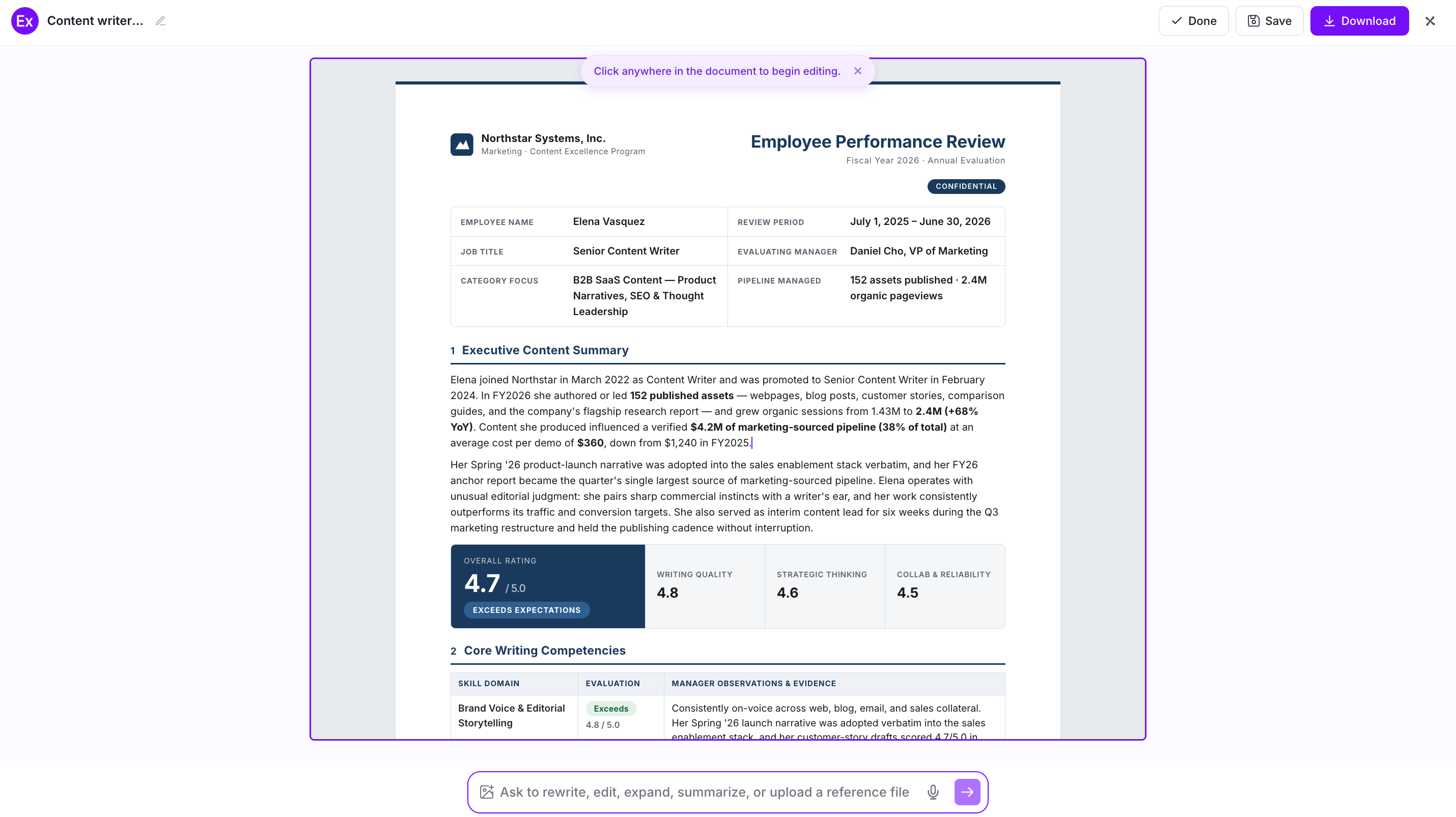
Customize the Performance Review in the Online Editor
Download and Use Your Performance Review
What Makes a Good Performance Review?
A good performance review is clear, objective, specific, balanced, and focused on an employee’s actual work and results. It should recognize meaningful accomplishments, explain strengths, address areas for improvement, provide constructive feedback, and establish realistic goals. Strong performance reviews use specific examples and measurable outcomes when available instead of vague or subjective statements. They should also maintain a professional tone and provide actionable guidance for continued growth.
AI Performance Review Editing Features
Generate professional performance reviews based on an employee’s role, responsibilities, accomplishments, strengths, challenges, performance results, and goals. Rewrite, shorten, expand, or refine performance feedback to make accomplishments, observations, and development recommendations clearer. Turn employee accomplishments, completed projects, and measurable results into clear and professional performance review statements. Adjust the wording, tone, focus, and level of detail to create a review that matches the employee’s position and evaluation requirements. Organize performance gaps, skills, challenges, and development opportunities into constructive feedback that supports employee growth. Download your completed performance review in PDF format for reviewing, printing, organizing, sharing, or keeping as a professional record.AI Performance Review Generation
Smart Review Editing
Achievement-to-Feedback Conversion
Performance Review Customization
Development Feedback Refinement
Instant PDF Download
What Are the Essential Elements of a Performance Review?
- Employee Information: Include the employee’s name, role, department, reviewer, and relevant review period.
- Job Responsibilities: Describe the primary duties, responsibilities, and expectations associated with the employee’s role.
- Key Achievements: Highlight important accomplishments, completed projects, improvements, and contributions.
- Performance Results: Explain the outcomes and impact of the employee’s work using measurable evidence when available.
- Professional Strengths: Identify skills, behaviors, and qualities that contribute to effective performance.
- Team Contributions: Describe collaboration, communication, leadership, and contributions to team objectives.
- Areas for Improvement: Identify specific performance or development areas that require additional attention.
- Constructive Feedback: Provide clear observations and actionable recommendations for continued improvement.
- Professional Development: Mention training, skills, knowledge, or experiences that can support future growth.
- Future Goals: Establish clear and relevant performance objectives for the next review period.
How Do I Write a Performance Review?
Why Should I Use Real Performance Review Examples to Create a Performance Review?
What Common Performance Review Mistakes Should I Avoid?
- Using Vague Feedback: Avoid statements such as “good worker” or “needs improvement” without explaining why.
- Focusing Only on Weaknesses: Recognize accomplishments and strengths while addressing development areas.
- Ignoring Measurable Results: Include relevant numbers, outcomes, completed projects, or other evidence when available.
- Making Personal Judgments: Focus on observable work behavior, responsibilities, and results rather than personal opinions.
- Using an Overly Negative Tone: Frame improvement areas constructively and provide actionable guidance.
- Repeating Job Responsibilities: Evaluate how effectively the employee performed those responsibilities instead of simply listing them.
- Ignoring Employee Development: Include relevant skills, training, career development, and future growth opportunities.
- Setting Unclear Goals: Establish specific objectives that employees can understand and work toward.
- Comparing Employees Unfairly: Evaluate performance against relevant responsibilities, expectations, and objectives.
- Copying Generic Examples: Use examples as guidance, but customize the final review according to the employee’s actual performance.
What Is the Difference Between a Performance Review and a Self Performance Review?
| Performance Review | Self Performance Review |
|---|---|
| Usually written or conducted by a manager or supervisor. | Written by the employee about their own performance. |
| Provides an organizational or manager perspective. | Provides the employee’s perspective on their work. |
| Evaluates accomplishments, strengths, challenges, and areas for improvement. | Reflects on personal accomplishments, strengths, challenges, and development. |
| Often assesses performance against organizational expectations. | Often explains how the employee believes they performed against expectations. |
| Provides feedback and recommendations from the reviewer. | Provides self-reflection and personal development goals. |
| Can be part of a formal employee evaluation process. | Often supports preparation for a formal performance discussion. |
Performance Review Ideas for Different Job Roles
- Software Engineer: Evaluate code quality, project delivery, technical problem-solving, collaboration, system improvements, and technical development.
- Marketing Manager: Evaluate campaign performance, strategy, audience growth, engagement, conversions, leadership, and marketing results.
- Sales Representative: Evaluate sales targets, revenue, customer acquisition, client relationships, retention, and pipeline development.
- Project Manager: Evaluate project delivery, deadlines, budgets, stakeholder communication, risk management, and process improvements.
- Teacher: Evaluate lesson planning, student engagement, classroom management, teaching strategies, and professional development.
- Customer Service Representative: Evaluate customer satisfaction, response times, issue resolution, communication, and service quality.
- HR Manager: Evaluate recruitment, employee engagement, training, retention, workplace initiatives, and HR process improvements.
- Financial Analyst: Evaluate financial analysis, reporting accuracy, forecasting, cost management, data analysis, and business insights.
- Graphic Designer: Evaluate design quality, completed projects, creativity, brand consistency, client feedback, and design skills.
- Administrative Assistant: Evaluate organization, scheduling, communication, documentation, workflow management, and administrative efficiency.
FAQs
What Is a Performance Review?
A performance review is a formal evaluation of an employee’s work performance, accomplishments, strengths, areas for improvement, and progress during a specific period.
What Should Be Included in a Performance Review?
A performance review should include job responsibilities, achievements, performance results, strengths, team contributions, challenges, areas for improvement, feedback, professional development, and future goals.
How Do I Start a Performance Review?
Start by identifying the employee’s role, responsibilities, and review period. Then provide a brief overview of their overall performance before discussing specific accomplishments and development areas.
How Long Should a Performance Review Be?
A performance review should be detailed enough to cover the employee’s important achievements, strengths, challenges, development areas, and goals without unnecessary information. The length can vary depending on the organization and review process.
How Do You Give Negative Feedback in a Performance Review?
Present negative feedback constructively by describing the specific performance issue, explaining its impact, and providing clear recommendations or support for improvement.
Should a Performance Review Include Measurable Results?
Yes. When available, measurable results such as completed projects, productivity improvements, sales results, customer satisfaction, cost savings, or other relevant metrics can make performance feedback more specific.
How Do You Write a Performance Review for an Employee?
Review the employee’s responsibilities and goals, identify achievements and strengths, evaluate challenges and areas for improvement, provide constructive feedback, and establish goals for the next review period.
How Do You Write a Performance Review for a Poor Performer?
Focus on specific performance gaps, observable behavior, missed expectations, and their impact. Explain the expected standard and provide clear, achievable steps for improvement rather than using personal or insulting language.
Can a Performance Review Help With Employee Development?
Yes. A performance review can identify skill gaps, training opportunities, career goals, and development priorities that help employees improve their performance and prepare for future responsibilities.
Can AI Help Me Write a Performance Review?
Yes, AI can help organize employee information and create professional performance feedback. Provide accurate details about the employee’s role, accomplishments, strengths, challenges, and goals, then review and personalize the generated content before using it.